XtremeAg farmers in Maryland and North Carolina manage impact of drought on early planted corn and soybeans.
Kevin Matthews - East Bend, North Carolina
Kevin Matthews and his wife, Cindy, are fourth-generation farmers in East Bend and Yadkinville, North Carolina. Matthews Family Farms, Deep Creek Grain, and Precision Nutrient Management farm corn, soybeans, wheat, and barley.
The drought continues. The forecast has been very encouraging, 40% to 70% chance of precipitation at least 9 or 10 days of the 12-day forecast. If you’re fortunate enough to receive a rain shower in this area, they are light. Seems like they fall in the same area, but we are fortunate that some farms received rain.
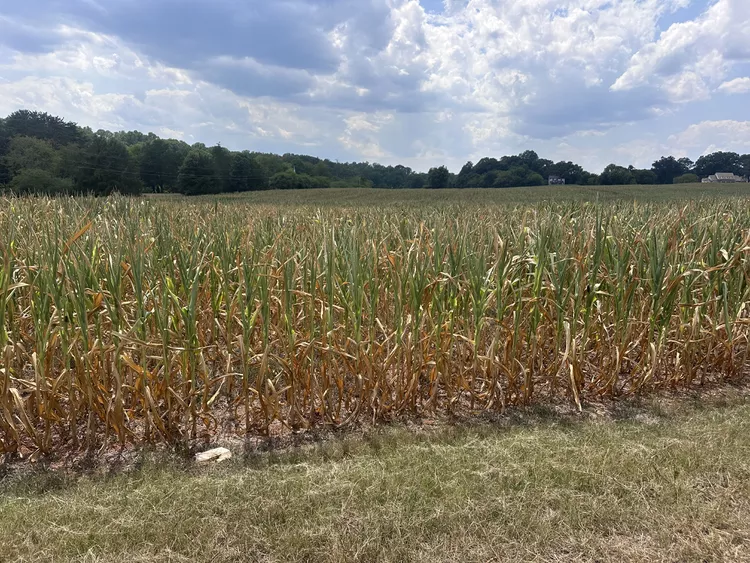
Irrigation has been a blessing on those few acres that have not received any showers, however this is our first crop to be totally raised on irrigation and let me tell you, if a drip tape or sprinkler isn’t doing its job the crop will show you quickly. Our early corn is very rough, and the mid plantings are fair with the later just begging for rains before it tassels. Those acres are getting Veltyma, BoronMax with Fulltec, Finishline, Sweet Success, and of course, Terramar to help it begin a successful pollination.
Soybeans continue to hold on. The deer damage is horrendous, they can eat them faster than they can grow with such little moisture. It’s interesting that this year the deer are going after the corn over the soybeans. If they have a choice, we think the soybeans are just tough with little moisture and they chew on the corn stalks while leaving the leaves of the plant laying on the ground! I’ve never seen this widespread issue before.
:max_bytes(150000):strip_icc():format(webp)/North-Carolina-drought-monitor-4de0dc9c54684152924a1096ba78f6a4.png)
Matt Miles - McGehee, Arkansas
Matt Miles is a fourth-generation farmer in southeast Arkansas. Miles farms 3,500 acres of corn, 3,500 acres of soybeans, 1,500 acres of cotton, and 1,500 acres of rice.
We have now entered the fourth quarter of the 2024 crop. It has definitely been a challenging year. Wet early and dry late. We had high hopes to get some moisture from tropical storm Beryl, but we did not have success.
Our corn is approaching black layer and the soybeans are at R6. The February-planted soybeans will get one more watering and then desiccation. Looking back, I wish I had planted 1,000 acres at that time, but you just never know.
I do think that our soybean crop looks really good, but the corn may be a little off this year. It had such a rough start, and never really made that difference up. We are forecasted to have a really hot and dry September, which should aid in a good harvest. We are about 30 to 45 days out in corn harvest, so I will definitely know something soon.
Temple Rhodes - Centreville, Maryland
Temple Rhodes is a fifth-generation farmer in Centreville, Maryland. Chestnut Manor Farms operates 3,000 acres of soybeans, 1,500 acres of corn, and 1,500 acres of wheat. His family also runs a hunting operation.
Early-planted corn on the east coast is extremely bad. The drought area affected goes from Pennsylvania to Georgia. It’s the worst I’ve ever seen in my career as a farmer. A lot of areas are a zero yield. We have a little bit of rain relieving heat and drought for a small amount of time and it could help late-May-planted corn, but we think the damage has been done at this point.
The early-planted soybeans struggled with wet weather early, then severe drought. Soybeans are extremely short and struggled to canopy. Somehow, they are still holding on for the time being. There was a window in mid- to late May where the soybeans were planted that actually look fair. A fair amount of double crop soybeans was replanted because there was just enough moisture at planting to germinate them, then they died.
All in all, the crops in the east are a complete disaster.
Source - https://www.agriculture.com