Farmers who grow fresh fruits and vegetables are often finding crop insurance prohibitively expensive — or even unavailable — as climate change escalates the likelihood of drought and floods capable of decimating harvests.
Their predicament has left some small farmers questioning their future on the land.
Efforts to increase the availability and affordability of crop insurance are being considered in Congress as part of the next farm bill, but divisions between the interests of big and small farmers loom over the debate.
The threat to farms from climate change is not hypothetical. A 2021 study from researchers at Stanford University found that rising temperatures were responsible for 19 percent of the $27 billion in crop insurance payouts from 1991 to 2017 and concluded that additional warming substantially increases the likelihood of future crop losses.
About 85 percent of the nation’s commodity crops — which include row crops like corn, soybeans and wheat — are insured, according to the National Sustainable Agriculture Coalition, a nonprofit promoting environmentally friendly food production.
In contrast, barely half the land devoted to specialty crops — supermarket staples like strawberries, apples, asparagus and peaches — was insured in 2022, federal statistics show.
Among those going without insurance is Bernie Smiarowski, who farms potatoes on 700 acres in western Massachusetts, along with 12 acres for strawberries. His soil is considered some of the nation’s most fertile. The trade-off is the proximity to the Connecticut River, a bargain that grows more tenuous as a warming world heightens the likelihood of flooding.
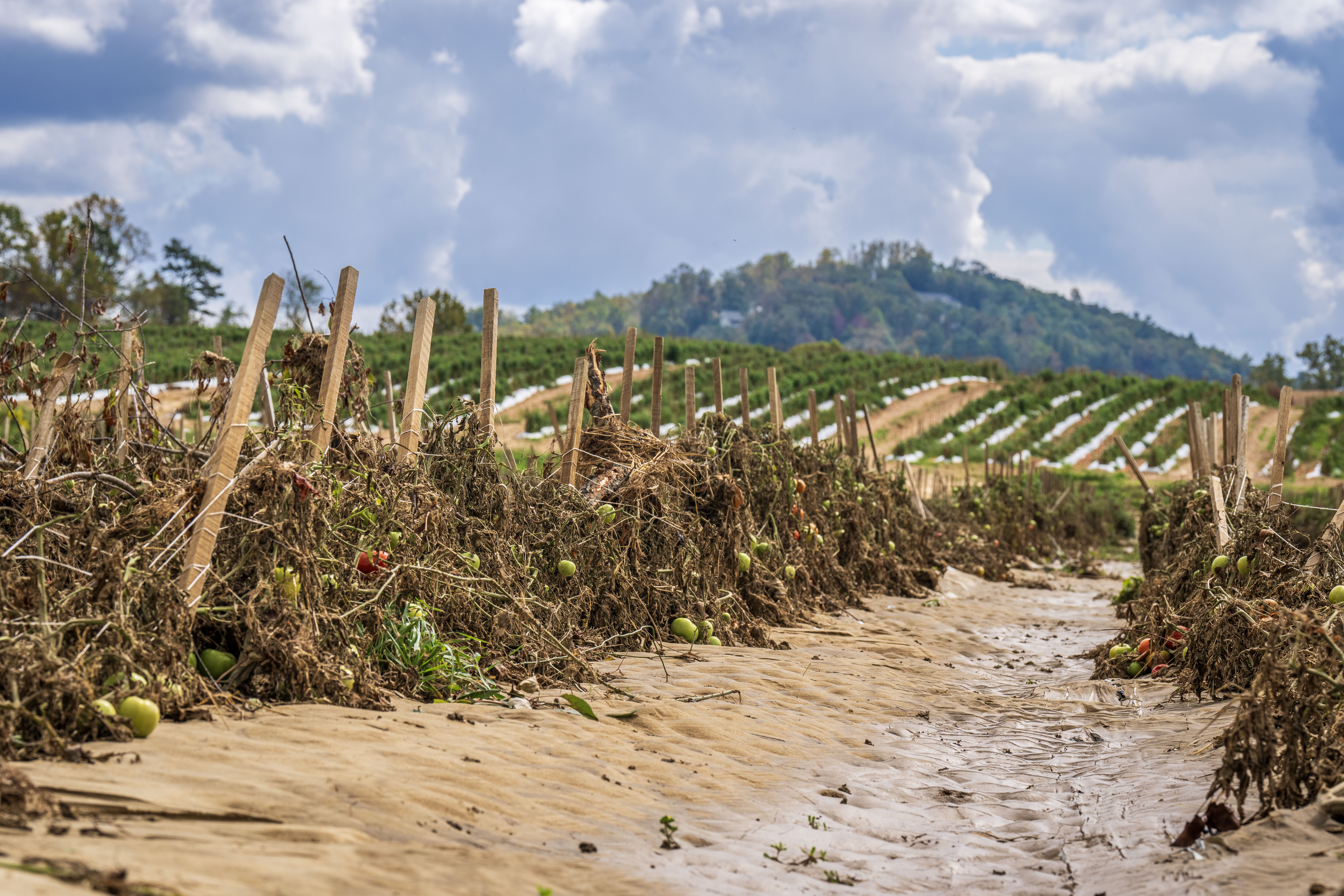
Mr. Smiarowski lost nearly $1.25 million worth of potatoes to floods last year, when heavy rains pummeled the area and water from the river seeped into his fields. It was the third straight year of challenging weather.
“We had two extremely wet years, sandwiched around one of the driest years I’ve ever seen,” he said. “We can’t sustain another year like last year.”
Even in an ordinary year, his expenses of $2,000 an acre yield returns ranging from a 20 percent profit to just breaking even. Mr. Smiarowski said the least expensive plans quoted to him — around $170 an acre annually — would be a significant outlay but would cover only 60 percent of the potatoes’ wholesale price.
He sees the case for insurance, but for now, he’s simply hoping for the best.
And specialty farmers say few agents will work with them. “I know of only one in the state,” said Mike Koeppl, who grows strawberries on seven acres near Oshkosh, Wis.
Their reluctance is financial, experts say. Agents make more money insuring vast tracts of corn and soybeans. The average American farm is 445 acres, according to the U.S. Department of Agriculture, but the average specialty farm is considerably smaller.
And most insurance plans cover a single crop, meaning specialty farmers growing a variety of fruits and vegetables need to buy multiple policies.
Companies offering crop insurance stress that their plans must offer payouts that roughly equal the insurance premiums taken in.
Kristen Ward, regional vice president for crop insurance for Farm Credit Mid-America, said that her company worked with farmers in six states, covering crops from barley to grapes, but that it could not do so in places where conditions were not conducive to specialty fruits and vegetables.
Premiums offered to farmers are based on risk, “which is rated accordingly for where the crop is grown,” she said. “That may look different in a different parts of the country.”
Products to fill such gaps have emerged, including whole farm revenue protection, a comprehensive insurance policy for farms growing multiple crops.
More than 220,000 American farms grow specialty crops, according to the American Farm Bureau Federation, a trade group. But only 18,659 whole farm revenue plans have been sold in the decade they have been offered, federal statistics show.
Advocates for the small specialty farmers are looking to Washington for relief.
The federal crop insurance program was born during the Great Depression, when the Dust Bowl ravaged the farm belt. Under the $18 billion program, the government pays half a farmer’s crop insurance premium to guarantee a secure food supply.
In December, Congress extended the current farm bill through 2024, but lawmakers have been unable to agree on what will follow.
The National Sustainable Agriculture Coalition recently released a set of recommendations including easing access to whole farm revenue insurance and expanding disaster relief.
“Floods, drought and hurricanes are all becoming more frequent and strong,” said Billy Hackett, a policy specialist for the coalition. “That’s why it’s important to have a safety net.”
Senator Debbie Stabenow, a Michigan Democrat, has proposed language in the farm bill giving specialty farmers access to highly subsidized insurance policies and streamlining the application process for products like whole farm revenue coverage. “I will always fight to make sure that specialty crops are a central part of farm policy,” Ms. Stabenow said in a statement.
A stand-alone bill, whose co-sponsors include Senator Cory Booker, Democrat of New Jersey, provides incentives for insurance agents to work with small and specialty crop farmers. The bill bases subsidies on the complexity of an insurance plan, rather than the size of the premium.
But commodity farmers are wary of modifications to the crop insurance program.
Growers of corn, soybeans and wheat worry about “changing how the program functions broadly in a way that sets everyone back rather than helping to fill the gaps that exist for certain crops,” said Danny Munch, an economist for the American Farm Bureau Federation.
Some lawmakers oppose changes because of those concerns.
“For years, Iowa farmers have told me to leave crop insurance alone in the next farm bill,” Senator Charles E. Grassley, Republican of Iowa — a state heavily dependent on commodity crops like corn and soybeans — said in a statement. “There’s no need to fiddle with something that’s not broken.”
The impasse has led some farmers to pursue other sorts of assistance.
After Mr. Smiarowski’s Massachusetts crop was ruined last year, he and other farmers affected by the flood appealed to Gov. Maura Healey for help, which came in the form of disaster relief. Mr. Smiarowski was grateful, but he said his share covered only about 20 percent of his losses.
The support was also temporary, leaving him with no option but to wish for more favorable weather in the future.
“When times are bad, you get what you can and you hope for a better year next year,” he said.
Source - https://www.nytimes.com