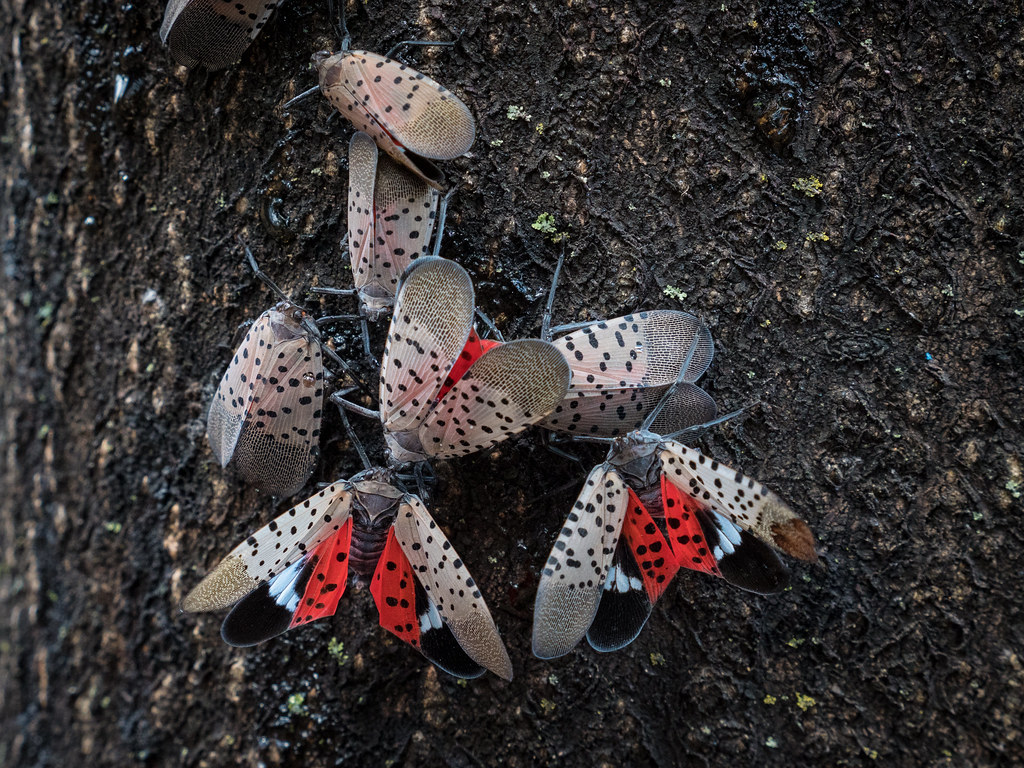
Get your best stomping shoes on, folks. Spotted lanternflies are on the way back.
Since the first sighting of the bug in the United States in 2014, the creatures have been causing havoc.
While they aren't harmful to humans directly, despite being annoying, the invasive species, which is native to Asia, can cause environmental problems and affect the income of farmers and agricultural workers through crop damage.
That's why one New York City resident was disturbed to see one crawling along the floor, observing that they weren't prepared to deal with them again after their experience the previous year.
"Is this a spotted lanternfly?" Aimee (@bayyyl33) asked on TikTok. "Because they're all over. When I say 'all over,' I mean all over."
Commenters confirmed the identification quickly, with one user noting that this particular bug was a young one.
"Those are the babies they laid last year emerging this spring," they said.
"Lawd have mercy thought they behinds was gone," replied Aimee.
The advice to squish the bugs and report sightings to relevant local authorities is not surprising. They can lay 30 to 50 eggs each, according to the Pennsylvania Department of Agriculture, meaning they can spread rapidly without intervention.
"The spotted lanternfly causes serious damage including oozing sap, wilting, leaf curling and dieback in trees, vines, crops, and many other types of plants," the department noted. It observed that they secrete a sugary substance called "honeydew" that can encourage the growth of black mold on plants.
Spotted lanternflies can be identified by their spotty grey forewings and polka-dotted red backwings. Immature bugs, like the one in Aimee's video, are black with white spots.
Penn State's College of Agricultural Sciences has warned that, left unchecked, the lanternfly could result in $324 million in damages each year throughout the state and the loss of 2,700 jobs.
It's not just bugs that can be invasive, either. Homeowners have struggled with plants like English ivy, kudzu, and mint, which can similarly grow out of control if left to their own devices.
That's why it's crucial to ensure whatever you plant in your garden is a native species. These will be suited to local soil types and weather conditions and aren't as likely to creep into your neighbor's garden.
Back to the bugs, though: The U.S. Animal and Plant Health Inspection Service calls on citizens to regularly check plants and trees for signs of lanternflies and keep car windows closed to reduce the chances of them spreading to new locations. If you see egg masses in trees, smash them, ensure they have been killed with hand sanitizer, seal them in a zip-locked bag and throw them in the trash.
Source - https://www.thecooldown.com