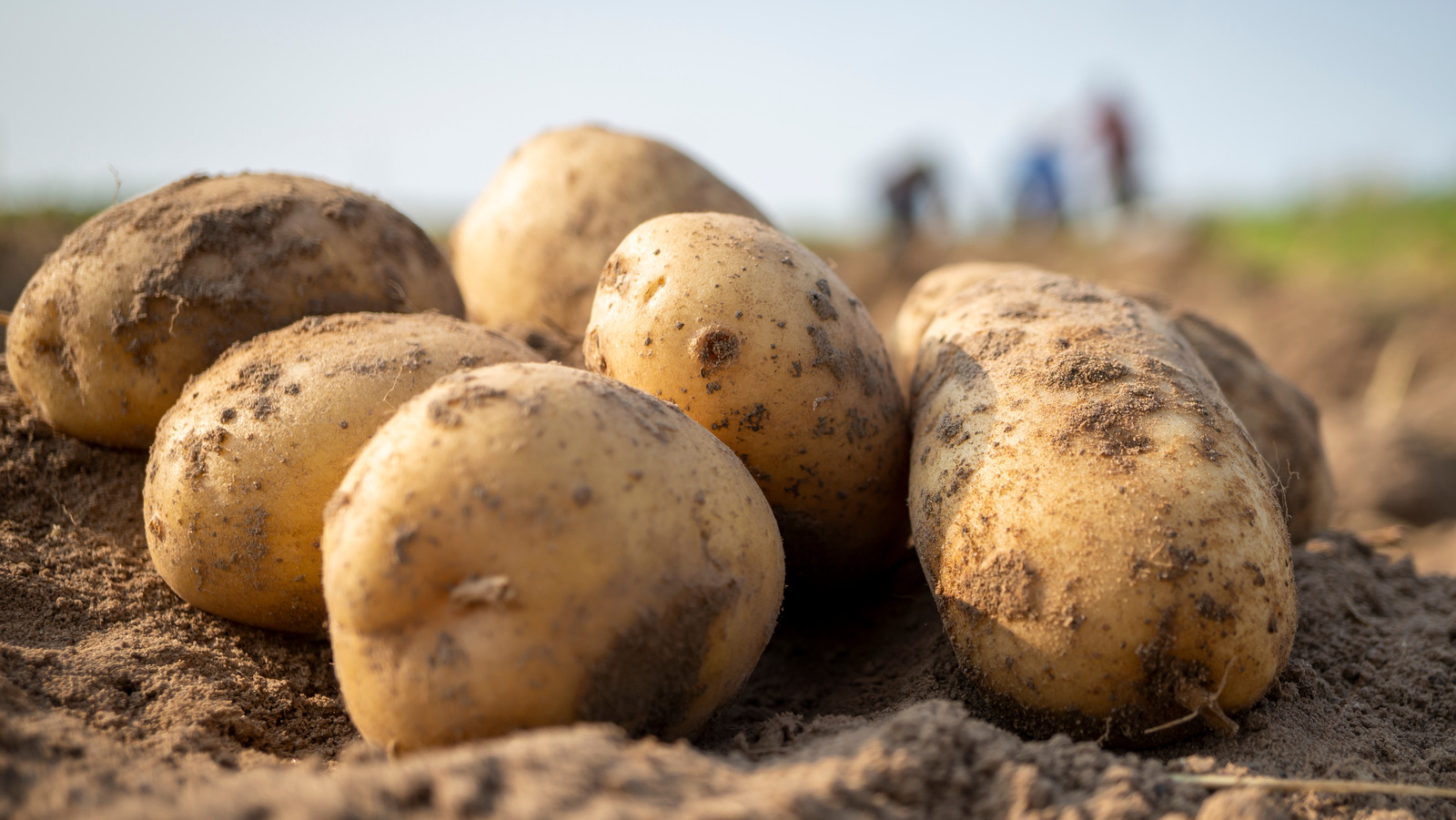
As the home of beloved snack companies like Martin’s Potato Chips, Utz and Snyder’s of Hanover, Pennsylvania values its potatoes. Tasty tubers across the state may face the threat of newly identified pathogen strains, though, according to Penn State researchers who are aiming to develop management strategies.
They published their findings in the journal Systematic and Applied Microbiology.
The researchers collected potato stems or tubers that exhibited symptoms of black leg or soft rot — including wilting, stunting, black lesions and rotting tubers, among others, — from 26 potato fields in Pennsylvania. These diseases, which can lead to crop loss, are caused caused predominantly by bacteria in the Pectobacterium species and more recently the Dickeya species.
The researchers isolated, cultured and identified 456 samples of bacteria infecting the potatoes, including six species of Pectobacterium and one strain of Dickeya that previously had not been reported in Pennsylvania. One species of Pectobacterium previously had not been reported in the U.S.
Carolee Bull, corresponding author and professor of bacterial systematics and plant pathology, of plant pathology and of environmental microbiology, said the findings could inform methods for detecting and quantifying the pathogens causing blackleg and soft rot in Pennsylvania and beyond.
“In addition to surveillance, these insights could also help us better understand disease epidemiology,” Bull said. “For example, the pathogens may have different optimum temperatures for growing or for producing these symptoms in the potatoes. So, the severity of the disease may change depending on different climate conditions.”
While researchers have long been aware of certain species of Pectobacterium, Bull said a significant number of new Pectobacterium and Dickeya species have been observed during the past few years. These pathogens have also led to significant yield losses across the northeast U.S., particularly in Maine and New York, in recent years.
These outbreaks led to a renewed interest in monitoring not just pathogens already found in the U.S., Bull added, but also those not yet reported in the country — in particular, the bacteria Dickeya solani, which was previously associated with severe disease outbreaks in Europe.
“The losses in the Maine potato industry, as well as the importance of the potato industry here in Pennsylvania and to the potato chip industry, necessitated that we determine what pathogens may be causing these outbreaks,” Bull said. “We were worried that new pathogens had entered the U.S., including the very devastating Dickeya solani.”
Growers will benefit from the analysis, Bull said, by knowing which organisms were found on which potato varieties.
Among the pathogens identified were P. actinidiae, P. polonicum, P. polaris, P. punjabense, P. parmentieri and P. versatile, marking the first time these bacteria were reported in Pennsylvania. Additionally, this was the first time P. actinidiae was reported in the entire U.S. The pathogens P. carotovorum, D. dianthicola and P. brasiliense were also reported, which the researchers said they had expected.
In the future, the researchers said they will continue their work by testing the effects of these pathogens on potatoes, developing surveillance tools for each of these pathogens and evaluating the need for new management practices.
Amanda M. Mainello-Land, previously a graduate research assistant at Penn State; Shaheen Bibi, previously a postdoctoral researcher at Penn State; and Beth Gugino, professor of vegetable pathology at Penn State, also co-authored the study.
The United States Department of Agriculture and the USDA National Institute of Food and Agriculture helped support this research.
Source - https://www.morningagclips.com