Slugs ravaged Pennsylvania grain fields this spring, leaving some farmers trying to fill bare spots and control the slimy pests.
Elizabethtown farmer Jim Hershey said some growers have replanted three times to make up for stand loss caused by slugs.
He hired a drone so he could spread slug bait without running over the crop.
“This year slugs have been very hungry out there,” Hershey said.
The damage is the worst Heidi Reed has seen in her six years as a Penn State Extension educator in York County.
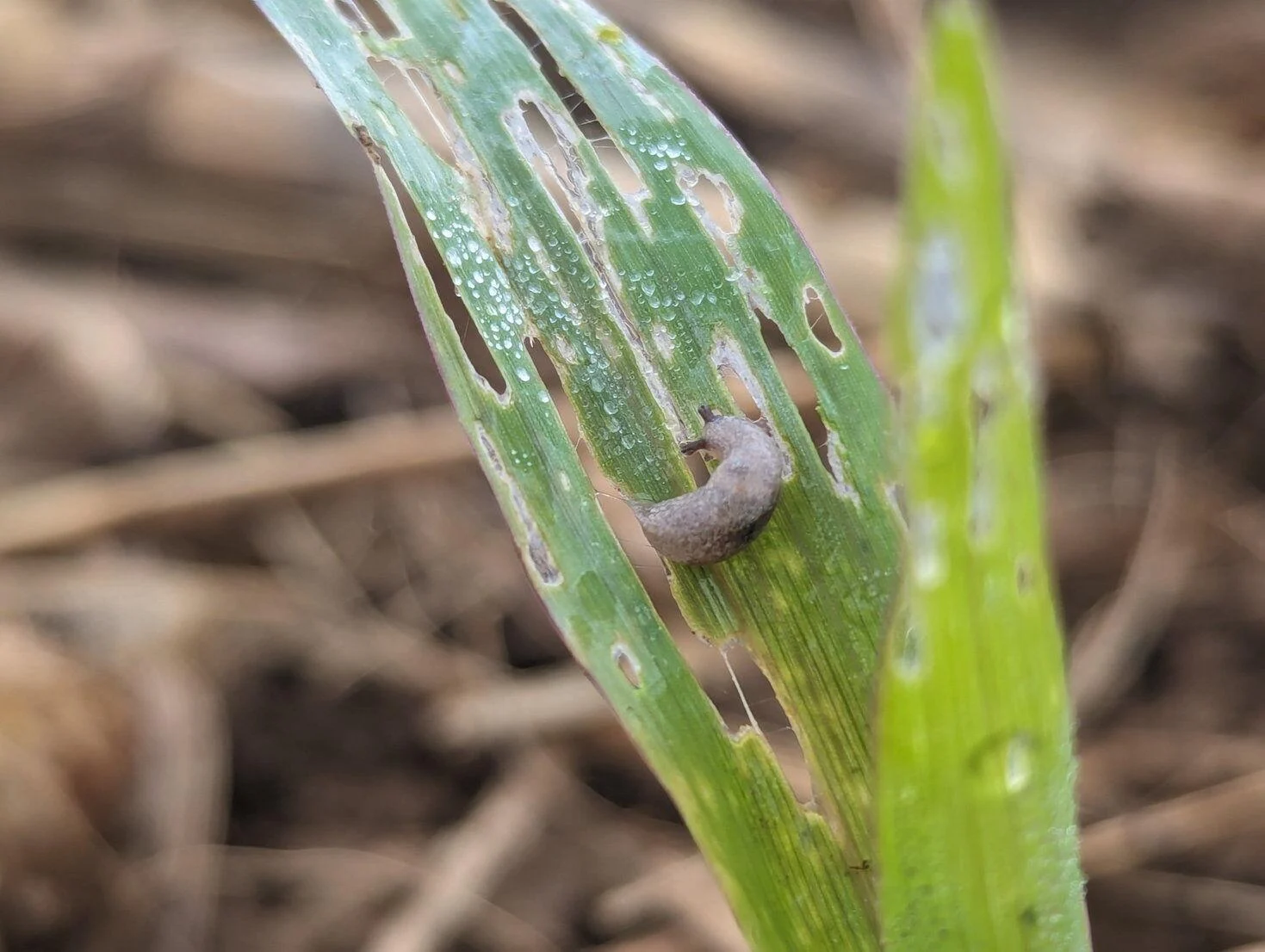
She scouted a field where two or three slugs were feeding on every corn plant.
“They’re always in corn, but never this bad,” she said.
A big reason for the slug surge is that weather conditions were perfect — a mild winter followed by a cool, wet spring.
Many adult slugs were able to survive into the spring, producing a second set of eggs after those laid in the fall.
Both sets of eggs hatched this spring.
“Every year is a potential slug year. It’s just a question of whether we get the abiotic conditions, or the weather conditions, that can make them happen,” said John Tooker, a Penn State entomologist who has been getting calls about slugs for the past month.
Eric Rosenbaum, a senior agronomist at Rosetree Consulting in Shillington, said his team has seen slug damage mostly in heavy-residue fields on southern slopes.
He thinks farmers may have helped the slugs by planting too wet.
Sidewall compaction and poorly closed seed trenches lead to less healthy and more exposed seedlings than those planted under ideal conditions.
The best conditions this year were 30-inch rows with a thin cover crop.
At this width, the planter was able to place the seed at the proper depth and spacing, manage the furrow well, and get through the residue, Rosenbaum said.
Still, he said, those are just the takeaways from 2024.
“It doesn’t necessarily mean that those same things are going to hold true in 2026 or 2025 or whatever,” Rosenbaum said.
Tooker thinks farmers could be inadvertently catering to slugs in another way.
In the past decade, many farmers have started planting soybeans before corn.
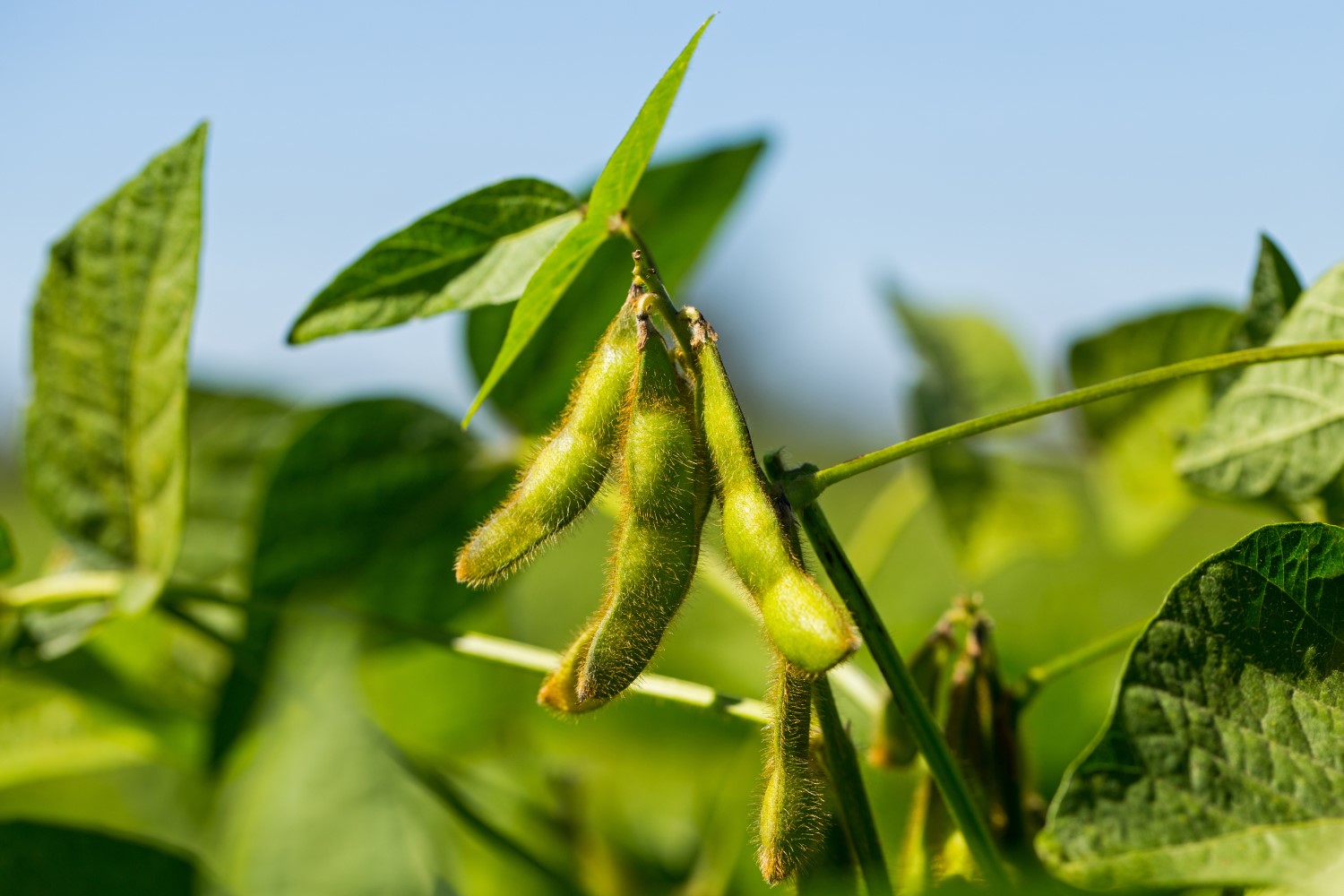
Soybeans are more vulnerable to slugs because their growing point is above ground. If a slug eats the growing point, the plant will die.
Compared to later beans, early-planted soybeans are in cooler soil, meaning they grow slower and stay vulnerable to slugs longer.
“The best defense against slugs is fast-growing plants that are more or less outgrowing the slugs,” Tooker said.
Slug damage tends to tail off as July approaches because the plants get big and the weather gets hot and dry, driving the slugs to shelter out of the sun.
Control Is Tricky
Options for controlling slugs are limited.
For one thing, slugs are mollusks, and there are far fewer molluscicides on the market than insecticides.
Tillage will take care of slugs — they are a no-till problem — but breaking out the chisel plow might be an overreaction.
“I strongly believe that the benefits of no-till shouldn’t be disrupted just because you got a bad slug year,” Tooker said.
Tillage may also conflict with a farm’s conservation plan or the terms of its contract for Resource Enhancement and Protection tax credits, Rosenbaum said.
In a no-till setting, baits are the main way to kill slugs — though not everyone is flying them on with a drone like Hershey did.
Baits also have drawbacks.
They can be expensive, and because most are water soluble, they don’t have much staying power in the rainy weather that favors slugs.
Also, baits must be more attractive than the plant.
“Slugs love soybeans, and they’re probably going to eat soybeans before they eat the bait,” Tooker said.
Reed said baits are best deployed in the parts of fields with the worst damage.
Alternatively, she said, some farmers have sprayed their fields with a nitrogen solution — essentially putting salt on slugs at a large scale.
This practice is generally done late at night when slugs are most active, so someone on the farm will be sacrificing sleep.
Another option is planting green. The grain is planted into a still-living cover crop, which provides an alternative food source for the slugs.
But planting green is more challenging than the standard planting after burndown, Tooker said.
One of the best long-term solutions could be using seed that hasn’t been treated with insecticide.
Keeping insecticide out of the soil will help maintain populations of ground beetles — among the few predators that aren’t fazed by slug mucus.
This strategy assumes pressure from insect seed pests is tolerable and that farmers can find untreated seed — not always easy.
If farmers had slug problems this year, Tooker recommends they test some strategies, like cover crops or untreated seed, on some of their acreage next year.
“In my experience, you can’t be responsive when it comes to slugs,” he said. “You have to be proactive.”
It’s a Slug’s World
Slugs were not just a Pennsylvania problem this spring.
Ohio State University Extension reported higher than normal slug pressure.
In the first week of June, the most slugs were found in central and eastern Ohio.
In Baltimore County, Maryland, a lot of replanting is happening in response to slug damage, said Erika Crowl, a University of Maryland Extension agent.
Soybeans planted between May 7 and 20 got hit hard in northern Delaware.
David Owens, a University of Delaware Extension entomologist, said he believes several hundred acres were replanted in part because of slug damage.
Southern Delaware dried out enough that slugs were less of a concern there, though the Middletown area has consistent problems with slugs, Owens said.
In Pennsylvania, the most damaging species is the gray garden slug, which originated in northern Europe and was transported to the U.S. long ago, Tooker said.
The dark-colored marsh slug can also cause damage but is rarely the driving force.
Farmers near the Ohio border may also encounter dusky slugs, which are sometimes called “orange devils” thanks to their coloration.
Because they’re relatively big, dusky slugs tend to do more damage as individuals, but they are less abundant than gray garden slugs, Tooker said.
All three species can be managed the same way. But when scouting fields, farmers should look for smaller slugs than they might be expecting.
Most of the slugs Reed found were smaller than the size of a pinky nail — a far cry from the jalapeno-sized leopard slugs that may lurk near gardens or basements.
While replanting and bait add to the cost of a soybean crop, it’s too soon to know how Slugfest 2024 will affect farmers’ bottom line.
Soybeans can sustain 30% defoliation in the vegetative state and not have any yield loss.
Farmers whose crops got out of the ground will probably fare better than those who had stand loss, Reed said.
Source - https://www.lancasterfarming.com