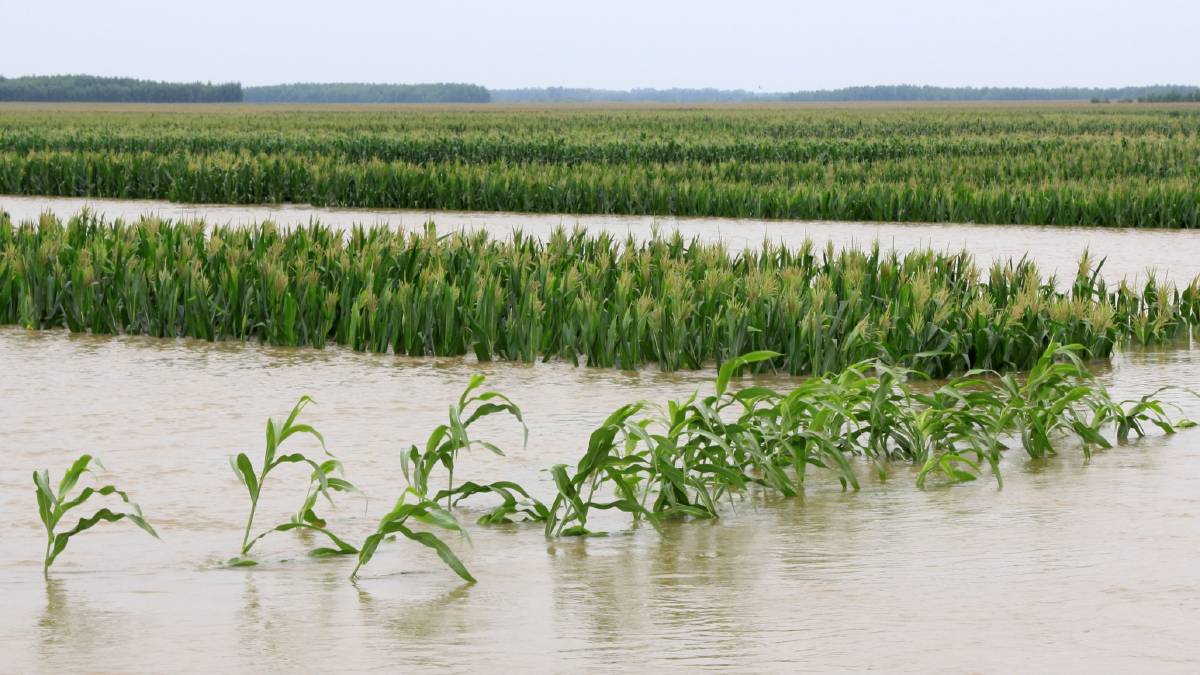
Vermont farmers counted on bouncing back this year from the 2023 summer floods that cost them nearly $45 million in damages. Mother Nature had other plans.
In Richmond, the remnants of Hurricane Beryl dumped nearly six inches of rain on some parts of town earlier this month. Water overtopped the banks of the Winooski River and inundated 25 acres of Jericho Settlers Farm, nearly a third of the property. Owner Christa Alexander said she and her husband lost nearly $350,000 to last summer's floods, and this year's financial hit could be comparable.
"Those crops were in their prime and were literally one to two weeks away from harvest, so then to just have it all go down, it's a heartbreak," Alexander said of the beets, carrots and other vegetables they lost.
While it will be some time before the losses are tallied from Beryl's torrential rains in northern and central Vermont on July 10 and 11, farmers are again in search of financial assistance. The repeat situation is prompting some to rethink where — and how — they plant crops as they prepare for a wetter future.
Just two months ago, Rob Rock, co-owner of Pitchfork Farm in Burlington's low-lying Intervale, was featured in a Seven Days cover story about farmers' struggle to adapt to increasingly unpredictable weather, including floods. In that interview, Rock sounded optimistic, even though Pitchfork sustained flood losses last year.
"We're smarter and nimbler," Rock said, describing how he and his partner, Eric Seitz, had shifted to growing quicker-maturing vegetables so they can replant and still expect a crop after disaster strikes.
"As farmers, you expect to eat your shirt every 10 years, but I'd say two years makes a trend." Matt Linehan
But this year, Pitchfork lost all 26 acres of its plantings to the July flood and has had to lay off workers. Rock said he is now unsure about the future of farming in Vermont.
"I don't know at what point this becomes just an insurmountable challenge," he said.
Matt Linehan, who grows 52 acres of potatoes at his Sparrow Arc Farm in Guildhall, also sounded downhearted last week. "As farmers, you expect to eat your shirt every 10 years, but I'd say two years makes a trend," he said.
In the past, Linehan planted up to a quarter of his potatoes in areas at risk of flooding from the Connecticut River, but in the future, he will sow only 5 to 10 percent of his crop in those areas.
"It would be foolish of me going forward to keep going like we've been going," Linehan said. "But until now, who would have thought that this would have happened again?"
"Some of our best farmland in the state is in floodplains." Christa Alexander
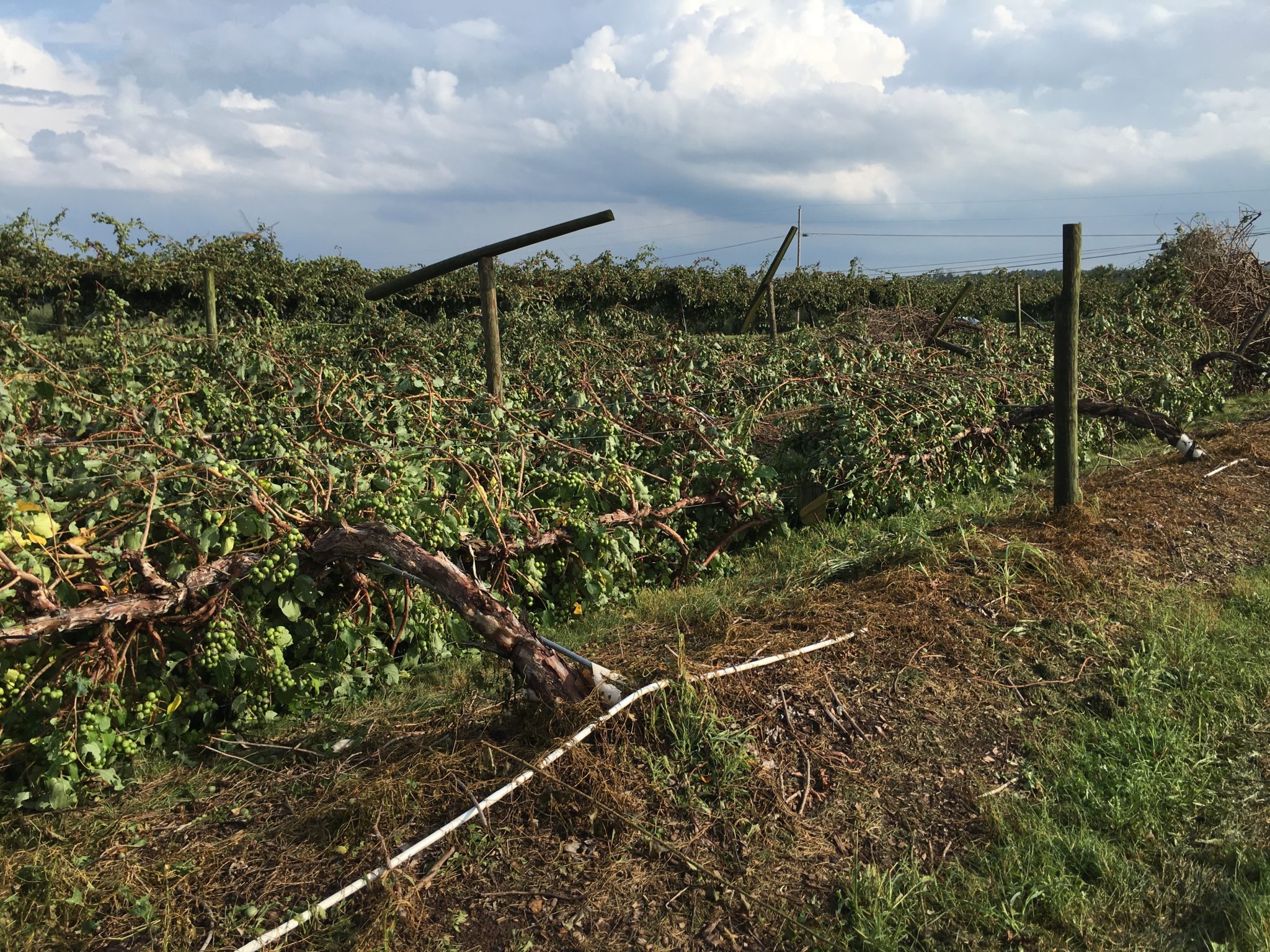
Powerful flash floods washed out roads and bridges, causing much of this year's damage. But for farms, inundation flooding — when swollen rivers overflow — can cause more damage even when the water spreads without much force. That's because farms often plant in floodplain fields where the soil is fertile, water for irrigation is plentiful and development is rarer.
"Some of our best farmland in the state is in floodplains," Alexander, the Richmond farmer, noted.
That relationship can quickly sour. If floodwater touches edible crops, they must be discarded because of potential contamination from sewage, heavy metals or pathogens. Farmers must also wait designated periods of time before they replant, depending on which crops they grow.
Unlike farms that harvest a variety of crops at different times, Sparrow Arc Farm harvests potatoes just once a year, in October. So if July floods wash out a field, those acres can't produce a crop until the following year.
Linehan said 10 feet of water settled on portions of the farm for up to 72 hours this month, drowning all the potatoes in those fields. Last year, the farm lost around 20 percent of its crop. This year he estimates he has lost more than one-third of his crop because floodwaters infiltrated an area he had not thought was vulnerable to flooding.
"I've got five kids in the house. I mean, it just sucks," Linehan said.
Intervale Community Farm, which sits in the Winooski River floodplain not far from Pitchfork Farm, lost 80 to 90 percent of its produce last year and about 50 percent this year, according to farm manager Andy Jones. The farm has responded to more frequent floods by using more greenhouses and moving crops that are most easily damaged by flooding, such as onions, to higher ground.
Aside from its land on the river in Richmond, Jericho Settlers Farm has two acres of greenhouses — on much higher ground — in its namesake town.
"We [have] land in two places and maintain that so that we could have geographic protection," Alexander said. "Because we farm year-round, we have crops growing all different times of the year. So if there's a natural disaster in a given time of the year, and we lose a bunch of stuff, we haven't lost a whole year's worth of production."
Alexander said other farms could reduce their vulnerability to flood losses by planting crops such as sweet corn, because the edible part avoids contamination by sitting above floodwaters.
There's no exact tally yet of this year's losses, according to Anson Tebbetts, secretary of the state's Agency of Agriculture, Food and Markets. So far, some 239 businesses, including farms, have reported flood damage to Vermont 211, which is collecting data that will be used to request federal disaster assistance. On Sunday, the agency asked farmers to fill out a flood loss and damage survey. And last week Gov. Phil Scott sought aid from the U.S. Department of Agriculture.
"Vermont's growing season is limited and widespread crop losses in the mid-point of two successive seasons is tragic," Scott wrote to USDA Secretary Tom Vilsack. "Many crops cannot be replanted, and losses will not be recovered or effectively mitigated prior to our required early harvest. We expect the need for assistance to be acute."
Most people think of floods as destroying crops of market vegetables, but Tebbetts noted that the destruction extends to the grass, hay and corn that feed Vermont's dairy cows and other livestock. Last year, Tebbetts said, farmers lost so much corn and hay that they had to buy feed, which hurts their bottom line.
In February, the Vermont Agriculture Recovery Task Force recommended ways the government can help farmers in future floods, including by creating additional emergency response capacity and increasing grants and services that help farmers.
But farmers say they need help now. Linehan has started a GoFundMe campaign and advocates for the renewal of the Business Emergency Gap Assistance Program, which made grants to flood-affected businesses last year. It helped his farm recoup 30 percent of its $100,000 losses.
"Every cent that we generate on [farms] is, generally speaking, spent locally, and we're the backbones of these rural economies, for better or for worse," Linehan said.
The gap assistance program distributed a total of $3.6 million to 130 farmers for last year's losses. They also received support from nonprofits and federal programs, Tebbetts said. He was unsure whether the government would renew the gap assistance program.
"I think we're still in the response and cleanup stage, but that's something that we'll all take a serious look at in the coming days," Tebbetts said.
The economic hit from back-to-back floods has also affected farmers' mental health. Since last year's flooding, there's been an increase in calls to Farm First, a free service that provides support and mental health resources. It offers a 24-7 hotline, access to counselors and a peer network where farmers can connect with other farmers dealing with similar challenges.
"It's sort of a chronic stress thing," Farm First resource coordinator Eva Griffin said. "You think of a disaster as a one-time event, and this hasn't really been a one-time event. It's been sort of continuous emotional wear and tear."
Despite the challenges and stress, some Vermont farmers say they are determined to persevere. Justin Rich operates Burnt Rock Farm, a 25-acre vegetable farm in Huntington. He said flooding this year could cost him from $120,000 to $300,000 — but he has no plans to throw in the towel on his profession of 20 years.
At Bone Mountain Farm in West Bolton, Tucker Andrews and his business partner, Thomas Case, lost almost all of their five acres of vegetables, as well as "many, many tons of topsoil."
"There's channels cut between vegetable beds that are, in some places, four feet deep and massive deposits of stone in places that ... are no longer tillable," Andrews said. "There's debris all over the field."
But he added that he was heartened by the community response to the disaster. As of last Friday, a GoFundMe campaign had raised more than $45,000 for the farm, and last Saturday about 50 volunteers showed up to help Andrews dig out.
"You want to take care of people, and you want to be independent, and you want to be just there for your community," Andrews said, "and it has been really hard for me, personally, to say I need help."
Source - https://www.sevendaysvt.com