Heavy rains in late spring created flooding from Nebraska to Ohio. Finding a cornfield where at least part of it was replanted was easy. Corn was growing in some fields when ponding occurred. What determines whether corn survives after ponding? And if it survives, will there be lasting effects?
“Temperatures while the crop is flooded and number of hours of ponding are the two biggest factors,” Alex Lindsey told farmers and fellow agronomists at the Corn Improvement Conference held in West Lafayette, Ind., in February. Flooding causes far less crop damage if temperatures are cool vs. warm, and if flooding lasts for fewer days, Lindsey explained.
Wait a minute — is Lindsey clairvoyant? Why was he talking about flooding three months before it happened? As it turns out, the Ohio State University professor in horticulture and crop science studied impacts of big storms during a changing climate, and reviewed results in a just-published paper.
Flooding and survival in crops
Lindsey noted that when crops are germinating, flooding causes less stand loss when temperatures are 60 degrees F vs. 80 degrees. At 60 degrees, germination may stay unchanged or drop 10%, even if flooding lasts up to 96 hours. However, at 80 degrees, germination can fall to 60% after 48 hours and only 10% to 30% after 96 hours.
What about flooding now or later? Information summarized recently by Jenny Rees, an Extension educator in Nebraska, updated from a 2015 publication, indicates corn up to V6 may survive four days at temps in the high 70s or lower. At higher temperatures, seedlings may only survive one day.
Saturated soils can impact corn yields through V6 stage by reducing plant and ear height, leaf area, dry matter accumulation, and root length, Rees notes. They can also kill plants, shorten silking interval, and reduce nitrogen, phosphorus, potassium and zinc concentrations in leaves. Another result can be lower grain weight per ear.
Here's the bottom line. Lindsey’s work indicates 20% to 30% yield loss for flooding of four days or less for young corn. Losses rise to 30% to 100% if flooding persists longer than five days. Flooding later, during silking or grain fill, may mean zero to 20% loss for up to eight days of flooding, and 20% to 30% if flooding lasts 10 days.
Managing flooded corn
How much nitrogen was lost during flooding and ponding? Based on work in 2022, Lindsey found corn waterlogged at V4 to V5 for three to four days reduced yield 25% to 45% when 100 to 120 pounds of nitrogen were applied preplant and no additional nitrogen was applied. Losses were compared to nonflooded plots.
Lindsey added 60 to 120 pounds of N seven days after flooding in plots where N was applied preplant. Corn was still in the midvegetative phase. Yield losses were only 3% to 15% compared to nonflooded controls.
The bottom line is that if nitrogen runs short due to loss, applying nitrogen in a rescue treatment can pay dividends.
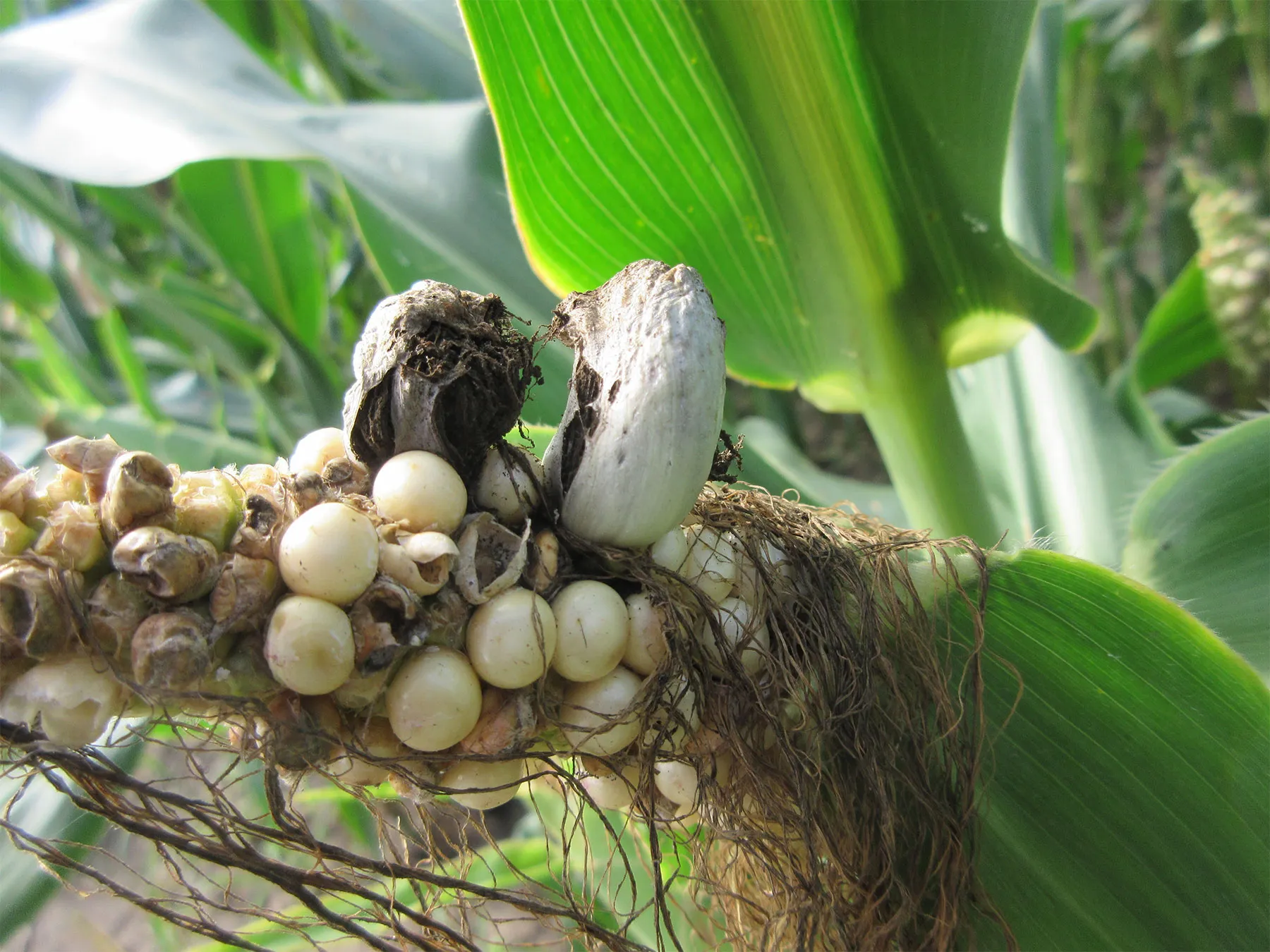
Certain fungi surviving in crop residue can show up more after flooding, especially crazy top and smut. However, experts note these diseases seldom cause economic loss.
Source - https://www.farmprogress.com