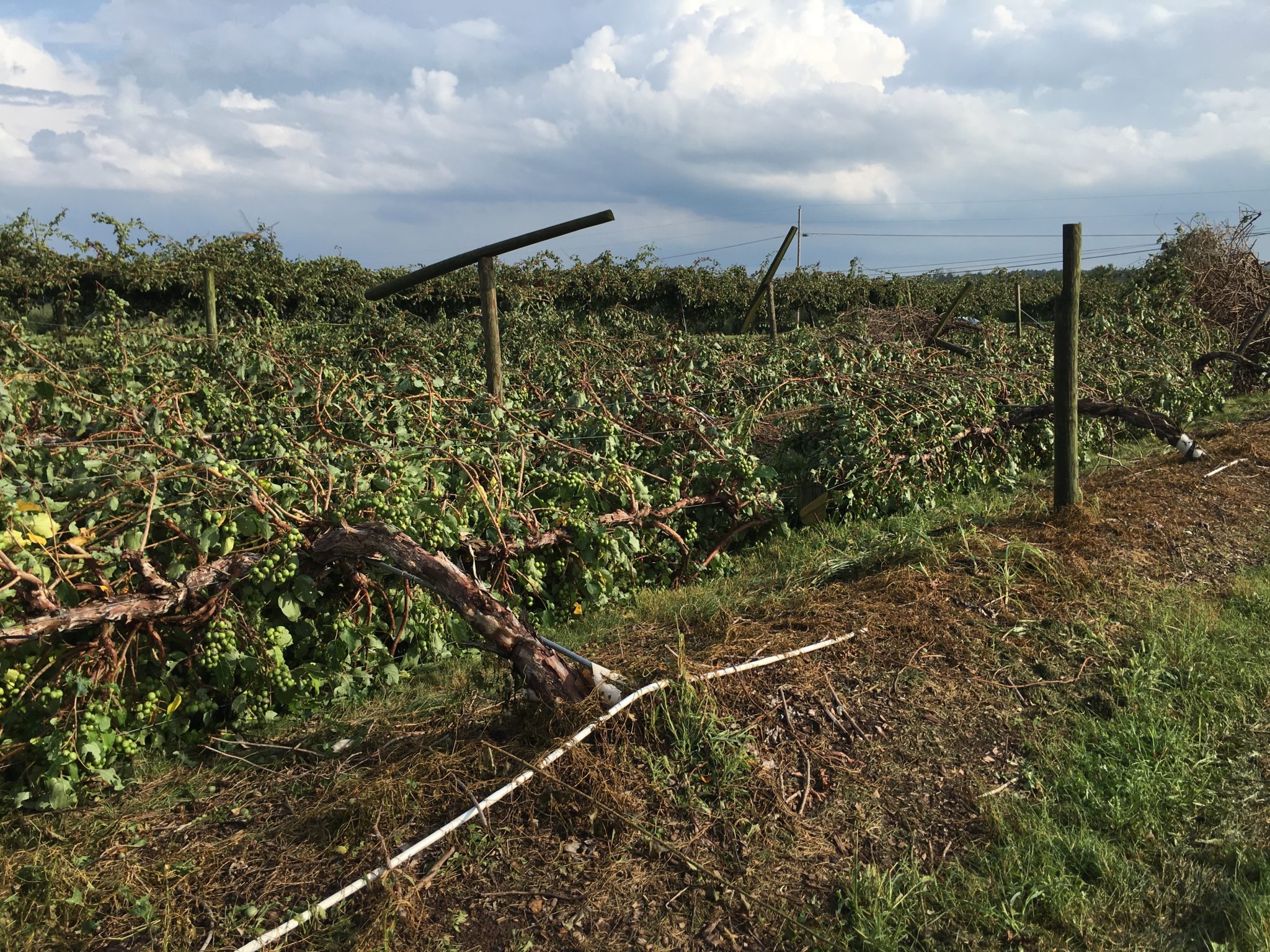
Saline intrusion in the Mekong Delta region could cause US$2.82 billion in agricultural losses over a 10-year period, according to a recent survey.
Scientists from the Institute of Water Resources have conducted a study to estimate the damages caused by saline intrusion in the Mekong Delta region.
Their findings reveal that, under the current scenario, the total current damage during the last decade amounts to approximately VNĐ70.168 trillion encompassing losses in agricultural activities such as fruit trees, flowers, rice and aquaculture.
Furthermore, the scientists projected potential damages caused by saline intrusion for the years 2030, 2040, and 2050, estimating losses of VNĐ72.385, 73.250, and 76.485 trillion respectively ($2.91 billion, $2.95 billion, $3.08 billion).
Responding to this information, Deputy Minister of Agriculture and Rural Development Nguyễn Hoàng Hiệp said that although he had only recently been made aware of the survey results, any damages to agricultural production would likely not be significant, including those affecting crops, livestock, and aquaculture.
Deputy Minister Hiệp noted that the damages during the dry season in 2024 were minimal, with only around 800ha of rice affected, resulting in a 50 per cent reduction in yield out of a total of 1.5 million hectares planted. He also stated that preventive measures taken by the local population had prevented any damage to crops and fruit trees. Salinity has even had a positive impact on aquaculture, particularly shrimp and fish farming.
While acknowledging the published data, he said he would need to verify its accuracy.
According to the latest assessment by the Irrigation Department of the Ministry of Agriculture and Rural Development, there has been an increasing trend in saline intrusion since March 22, continuing until at least March 28, 2024. Salinity levels of 4g/l have been recorded from 45 to 55km at the river mouths of the Mekong Delta, from 80 to 85km on the Vàm Cỏ River, and from 46 to 52km on the Cái Lớn River.
Based on these observations, the Irrigation Department assesses that the risk of drought and salinity intrusion in the dry season of 2023-2024 is higher than the average of many years and the dry season of 2022-2023, though not as severe as in 2015-2016 and 2019-2020.
In response to this situation, since late January 2024, the Ministry of Agriculture and Rural Development issued Directive No 661/CT-BNN-TL, aimed at strengthening the implementation of measures to prevent and control drought, water shortages, and saline intrusion to support agricultural production and livelihoods during the dry season of 2023-2024.
Recently, the Prime Minister issued Official Dispatch No 19/CĐ-TTg, focusing efforts on responding to the peak period of saline intrusion in the Mekong Delta. The Irrigation Department is currently working with scientific research units under the Ministry of Agriculture and Rural Development to enhance monitoring of upstream information from the Mekong River, update water source developments, and assess the water situation and saline intrusion in 2024. This aims to provide timely information to support efforts in preventing, controlling, and mitigating damages caused by drought and salinity.
Source - https://vietnamnews.vn