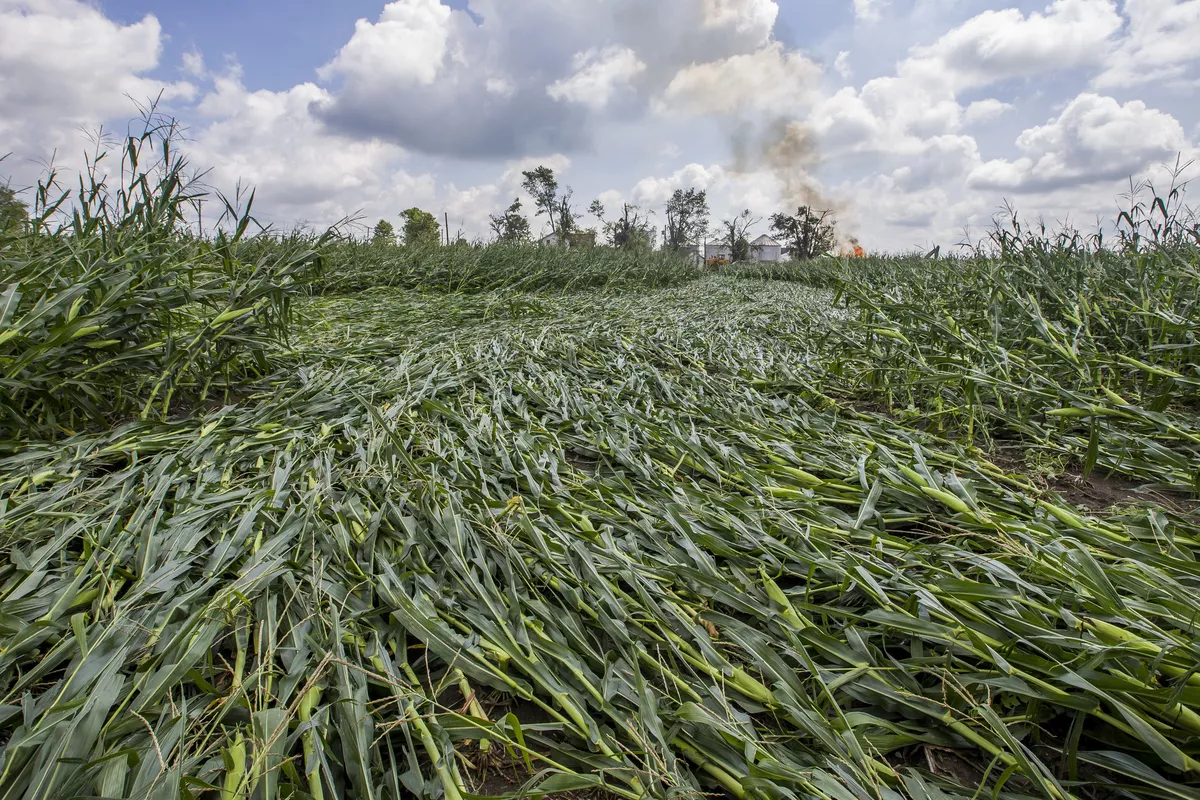
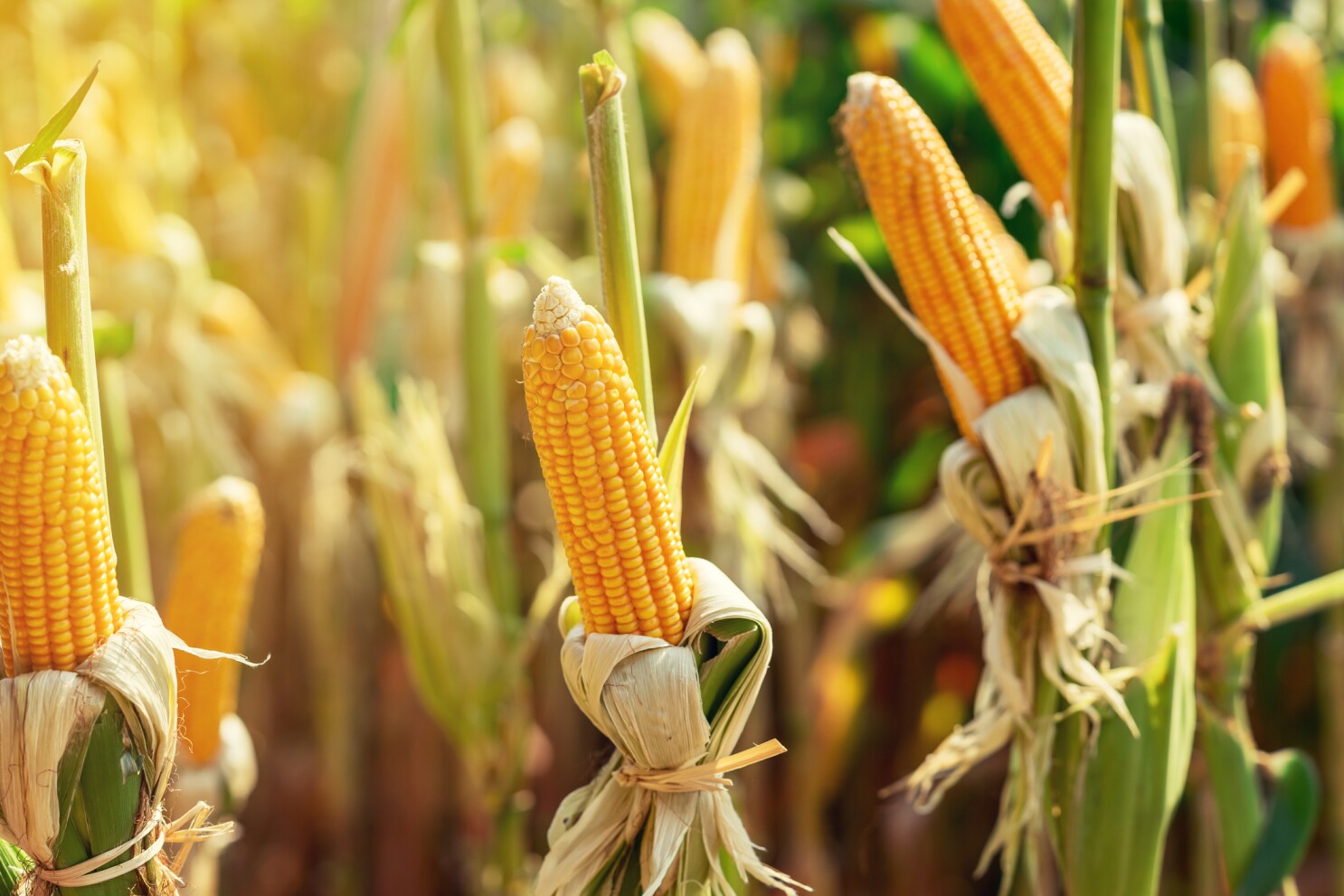
Extreme heat is already harming crop yields, but a new report quantifies just how much that warming is cutting into farmers’ financial security. For every 1 degree Celsius of warming, yields of major crops like corn, soybeans and wheat fall by 16% to 20%, gross farm income falls by 7% and net farm income plummets 66%.
Those findings, reported in a policy brief released Jan. 17, are based on an analysis of 39 years of data from nearly 7,000 Kansas farms. The brief is a collaboration between the Cornell Atkinson Center for Sustainability, the Environmental Defense Fund (EDF) and Kansas State University.
The senior Cornell author is Ariel Ortiz-Bobea, associate professor in the Charles H. Dyson School of Applied Economics and Management and a Cornell Atkinson faculty fellow. First author is Osama Sajid, a former postdoctoral associate in Ortiz-Bobea’s lab, now a socio-economic specialist at Hatfield Consultants.
“For decades, the U.S. agricultural sector has seen 1.5% productivity growth every year, year over year – few countries have seen that kind of sustained growth,” Ortiz-Bobea said. “Globally, we’ve found that climate change has already slowed productivity growth. Global agricultural productivity is 20% lower today than what it could have been without anthropogenic climate change.”
Risk management practices and programs play a crucial role in reducing the impacts of extreme heat on net farm income, the report finds. Crop insurance, government payments, adjustments in the amount of crops farmers save or sell, and access to irrigation all helped buffer the effects of extreme heat on farm financial outcomes.
Crop insurance was the most significant buffer, helping farmers recover 51% of net losses.
“Farmers have different ways to cope with extremes. Prices can respond to shocks, farmers can change inventory, but by and large the bulk of the income-smoothing is related to government programs, and that’s very striking,” Ortiz-Bobea said.
The findings have implications for farms nationwide. Kansas was chosen as an example because of its high production of staple crops such as wheat, corn and soybeans; because the state includes drier regions with growing conditions more like Western states and wetter regions more like the Midwest; and because of the availability of high-quality yearly data, Ortiz-Bobea said.
Extreme heat is defined in the report as temperatures higher than 32 degrees Celsius (89.6 degrees Fahrenheit); studies show that crop yields start declining at that temperature. From 1981 to 1990, Kansas experienced 54 extreme heat days; from 2011 to 2020, there were 57.
Climate models project a 58% increase in hot days (days above 82 degrees F) by 2030 and a 96% increase by 2050 in Kansas, relative to temperatures between 1981 and 2020. More hot days mean a longer growing season, and the report’s authors studied whether that longer growing season might compensate for losses caused by extreme heat.
Based on historical data, they found that “increasing temperatures appear to have had a greater negative impact on growing conditions because of extreme temperatures than a positive impact through extending growing season length,” the report states.
To bolster farms’ resilience to climate change, the study recommends that:
- Agricultural lending institutions support their farmer-borrowers in making investments that adapt to climate change risks on the farm and manage risks to lenders’ loan portfolios;
- The U.S. Department of Agriculture, land-grant universities and the private sector increase research, outreach and education on climate-resilience solutions to support farmers’ adaptation to climate change; and
- The Federal Crop Insurance Program supports farmers in implementing on-farm climate resilience measures while continuing to buffer financial risk.
“Implementing practices that build resilience to climate change may present short-term risks for farmers that will need to be addressed by lenders, insurers and federal programs,” said Vincent Gauthier, manager of climate-smart agriculture at EDF. “Developing financial and risk management solutions that proactively support farmers in the transition to climate-resilient production systems is critical to reducing climate risks to farmers while maintaining robust agricultural production.”
The research was supported by Cornell Atkinson’s Innovation for Impact Fund, which supports knowledge-to-impact research by Cornell faculty in partnership with external organizations like EDF.
Source - https://www.morningagclips.com