NEWS
861
of 1225
News
01.06.2016

USA - Record rainfall kills crops across Dodge County

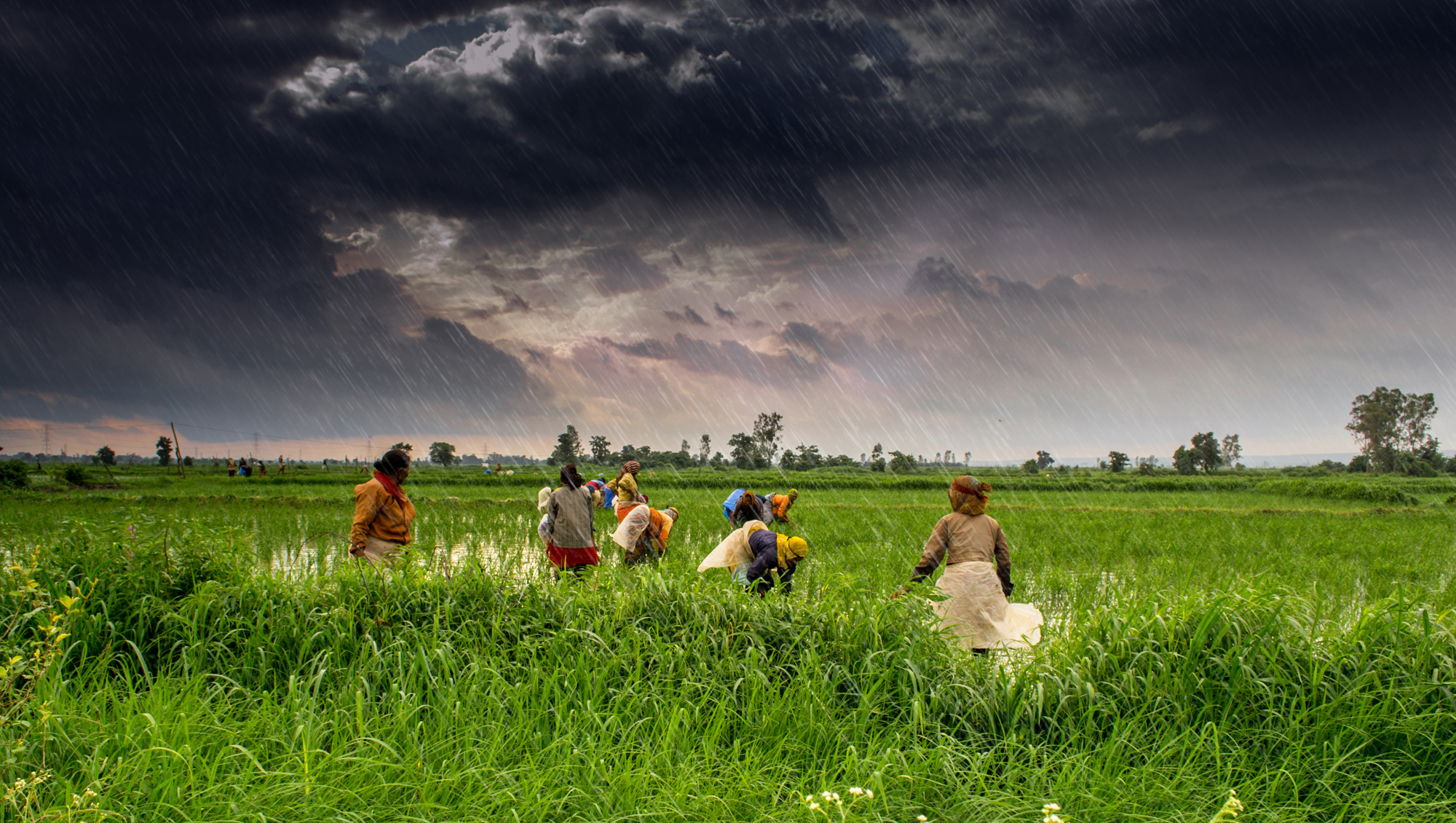
Mosquitoes aren't the only problem caused by spring's rain. Wet conditions are putting some of the area's corn and soybean crops at risk. Crop loss in Dodge County varies. Some fields are intact others are striped and marked with brown, cracked soil where water soaked through. Dodge County lost nearly 3 percent of its corn and soybean crops since April, which was the third wettest month on record in Fremont. "All of these fields are flat and poorly drain,” said Nathan Mueller, a farm consultant for the University of Nebraska Lincoln. “There's a lot more issues with loss” Mueller helps farmers determine whether they should replant or file an insurance claim. “It could or could not have an effect on the price of cereal at the grocery store because of corn (for example),” Mueller said. “So it's kind of wait and see. Locally, it's going to have some impact on producers.” Outside Fremont, most of Randy Ruppert's 220 acres or corn was unaffected by April and May showers. "No-till farming has really made a difference,” Ruppert said. “If we would have had to plow all these fields, you'd probably be looking at way more than two to three percent not planted. The new technologies have really helped us to battle situations like this." Ruppert says for others the rain hasn't been so nice. "I know a lot of people along the Elkhorn Valley, the Platt Valley, who have either had to replant completely or plant in wet spots. Farmers are weary of the coming months despite blue skies in the forecast. "Farmers are always two weeks away from a drought,” Ruppert said. “We never know, so we try and stay planned ahead." \ Source - http://www.kmtv.com

01.06.2016

USA - Crop insurance biggest push to agri sector

Agriculture and Farmers Welfare Minister Radha Mohan Singh today said the Centre’s Pradhan Mantri Fasal Bima Yojana (PMFBY) was the biggest-ever government push to compensate farmers against damage to crops on account of calamities. Responding to a specific question during a media briefing on achievements of the Narendra Modi government as regards the agriculture sector, he said the government had no proposal to impose income tax on this sector. Stressing on the scheme, he said all major states, except Punjab, had implemented it. “Perhaps the farmers in the state are not at loss as the state government provided adequate power supply and irrigation facilities to prevent damage due to natural calamities,” he said. Under the scheme, farmers pay a small premium for crop insurance. This scheme is better than the Crop Insurance Scheme that it replaced. A farmer now gets full financial security; in case he is unable to sow/transplant due to bad weather, he would be entitled to claim; for foodgrain, pulses and oilseed, there will be ‘one season, one rate’ for him. The norms for providing relief in case of damage to crops due to calamities have also been relaxed. The government is said to be working on a four-pronged strategy to improve farmers’ lot: compensation and relief to those hit by natural calamities; reducing input costs; ensuring better marketing; and help in increasing production through technology and research. “Prime Minister Narender Modi has chalked out a target to double farmers’ incomes by 2022,” he said. Twenty-one markets of eight states have been linked under the e-mandi project. Proposals of 365 mandis in 12 states have already been sanctioned. The target is to establish a unified e-trading platform in 585 mandis across the country by 2018. The other initiated listed by him include the Pradhan Mantri Krishi Sainchayee Yojna (PMKSY), soil health cards, neem coated urea, agroforestry, national agriculture market, initiation of mobile app for farmers and blue revolution. On the possibility of imposition of income tax on farm produce, he said: “Neither the Prime Minister Office nor the Agriculture Ministry has any proposal in that regard.” Source - http://www.tribuneindia.com/

01.06.2016

Cyprus - Hail brings crop destruction to higher regions

The hailstorms on Friday and Saturday that swept through communities in the Troodos mountains brought with it extensive damage to cultivated land and orchards. President Nicos Anastasiades witnessed the full brunt of the storms and the resulting power cut whilst attending a meeting at the Troodos Development Company on Saturday. He informed the community leaders that he had instructed the Agricultural Minister, to send ministry officials to the affected areas on Monday to catalogue the damage. The aim is to compensate the farmers as soon as possible. Prodromos and Kaminares community leaders, Andreas Avgoustis and Andreas Moustakas referred to a total catastrophe, citing complete destruction of crops such as vineyards, orchards, and cultivated land  in communities including  Amiandos, Prodromos, Kaminares, Dymes, Per Pedi, Fini, Koilani, Marathasa area and Kampo. General Secretary of the Pancyprian farmers union, Pampos Constantinides, called on the government to “face up to its responsibilities and start compensation payments as soon as possible”. Constantinides also called on the Agricultural Ministry to review its decision with regards to the introduction of hail nets in the mountain regions for crop protection and to increase the subsidies included in the Programme for Agricultural Development 2014-2016. “The introduction of these nets, will not only safeguard the livelihood of farmers in the mountain regions, but it will also save the state the expense of compensation”, concluded Constantinides. Source - http://in-cyprus.com

31.05.2016

Canada - Get your soybeans in soon or face higher frost risk in fall

Time is running out for Manitoba farmers to seed soybeans. “You still have some time to get them in, but I like to see soybeans in the ground in May and that gives you enough time for the plants to mature and reduce the risk (of damage from) a fall frost,” Dennis Lange, the Manitoba Department of Agricuture’s pulse crop specialist, said during the CropTalk EastMan webinar May 19. “With soybeans, the warmer the soil the better it is. They come up quicker. With soil temperatures at 10 C, soybeans take 15 to 17 days to come up if those temperatures are steady. If the soil temperature is at 15 C, they come up a lot quicker… seven to 10 days.” For full crop insurance coverage, the seeding deadline in Soybean Area 1 — a small area in the southern heart of the Red River Valley — is June 6. However, for most of Manitoba it’s May 30 (see map below). Farmers in Soybean Area 1 can seed soybeans between June 7 and 11, but crop insurance coverage is reduced 20 per cent. The reduced coverage deadlines in Soybean Area 2 is May 31 to June 4. In the rest of the province there is no extended soybean-seeding deadline. Read more: Soybean group highlights growing importance of crop Most Manitoba soybean growers dodged a bullet May 13 and 14, when much of southern Manitoba experienced a hard frost, because so few soybeans were out of the ground. “We can see temperatures as low as -2 C and they can tolerate it for short periods of time,” Lange said. “That frost we had was much colder… (-7 C in some places), but fortunately most of the beans were under the soil surface and the ones that were poking up were just barely out of the ground so there really wasn’t much damage.” As of May 19, the Manitoba Agricultural Services Corporation (MASC) had received just one soybean reseeding claim as a result of that frost, said David Van Deynze, MASC’s manager of claim services. MASC received 80 reseeding claims from farmers with frozen canola. However, as of last week MASC wasn’t sure how many of the claims would result in reseeding. MASC waits a few days before assessing the damage and in some cases damaged crops will recover. As with soybeans, there wasn’t a lot of canola out of the ground to freeze almost two weeks ago, Canola Council of Canada agronomist Angela Brackenreed said during the webinar. Look for damage to the hypocotyl when assessing frost damage in soybeans.photo: Dennis Lange, Manitoba Department of Agriculture Wait and see If it freezes again this spring, both Brackenreed and Lange had the same message: wait three to four days to assess the damage. The growing points on canola and soybeans are above ground and therefore more susceptible to freezing temperatures, but both can lose their leaves and appear dead, and then resume growing. Soybeans can start growing again from the terminal bud or from two axillary buds. Determining how many plants survived by doing plant counts is key. Both soybeans and canola will branch out to compensate for lost plants. Depending on the time of year, soil moisture and the number of surviving plants, it can be better to stick with the damaged crop instead of reseeding. Seven to 10 plants per square foot is the ideal population for canola, but just two plants per square foot can produce a decent crop, Brackenreed said. The recommended seeding rate for solid-seeded soybeans is 200,000 per acre — 180,000 when seeding in rows 30 inches apart, Lange said. “Based on seed survivability and germination you want to end up somewhere between 140,000 to 170,000 plants per acre,” he said, since that’s where the best yield potential is. But even as few as 80,000 plants an acre can produce a decent yield, Lange said. “I wouldn’t be working anything up at 80,000 plants per acre. I would make sure that field stays clean through the growing season — so keeping on top of your weeds.” Lange recommends using a hula hoop 28.25 inches in diameter for easy calculations when doing plant counts. Multiply the number of plants inside the hoop to get a per-acre count. Fifteen plants in the hoop means there are 150,000 plants per acre. Soybeans take time Unlike with smaller-seeded crops, deeper-planted soybeans will generally emerge so long as the soil isn’t compacted and there’s moisture for germination, but it will take longer, Lange said. “Only go as deep as you need to go (to reach moisture),” he said, adding the ideal seeding depth is three-quarters to 1.25 inch. “So if you have moisture at an inch and a half don’t go to two inches just because you want to make sure you are in deeper moisture,” Lange said. “You want to just get to some moisture.” If seeding deep, consider upping the seeding rate to offset potential higher seedling mortality, he added. There’s also a risk some soybeans will just get enough moisture to start germination, but not enough to produce a seedling — a condition referred to as “dry seed.” But don’t panic if you find some dry seeds because they turn up in most fields, he said. Usually farmers prefer to roll their soybeans, creating a smoother surface for easier harvesting in the fall, right after seeding, Lange said. However, because of dry soil some are waiting until they’re out of the ground. Lange recommends waiting until the soybeans are in the trifoliate stage. “You don’t want to do it at the hook stage,” he said. Rolling should only be done in the afternoon when it’s 23 to 26 C when the plants are their most pliable. “Check for damage,” he said. “Make sure you don’t do a 160-acre test strip. “Make sure that you are not snapping any hypocotyls. If you are, those plants are goners. You won’t have any regrowth from that.” Source - http://www.manitobacooperator.ca

31.05.2016

Costa Rica - Volcano eruption threatens agriculture

Agriculture in Costa Rica is under threat from the active Turrialba Volcano, which erupted in May this year. The volcano could potentially bury fields under a blanket of ash and turn rivers in to muddy torrents of volcanic mud. Recent eruptions by the volcano, located 36 km east of the capital of San Jose, could affect local crops and dairy production, especially in the more elevated regions of Turrialba, Oreamuno, Tierra Blanca, Alvarado and Coronado. The Ministry of Agriculture and Livestock is on high alert. According to the latest figures, the ash presents a hazard for at least 261 hectares of crops. The crops that sustain the most damage are mainly vegetables, though flowers destined for export are also being affected, said agricultural engineer Juan Manuel Cotera. The latest report from the National Emergency Commission, issued on Friday 27 May, showed measurements detected a drop in the amount of ash emitted early in the day, after levels had remained steady since Turrialba's last major eruption on Tuesday night. Source - http://www.freshplaza.com

31.05.2016

Morocco - Green technology for farmers

A project launched in 2015 by the Food and Agriculture Organization, the EBRD and the International Energy Agency, to promote the use of green technologies in farming, will now involve Moroccan farmers. The project was primarily destined for southern Mediterranean and Eastern Europe countries. A validation workshop of the initial results of the initiative was held on Tuesday 24 May at the Hassan II Agronomy and Veterinary Institute in Rabat. According to press reports, twelve technologies applicable to the sectors of farming and food processing were selected after the completion of several studies. The first results show that these technologies have the potential to reduce emissions of greenhouse gas by 8 megatons of CO2 per year. Participants in the Tuesday workshop, including experts from the FAO Investment Centre, stressed the need to promote the marketing of these green technologies in Morocco. The project aims ultimately to speed up the adoption of these green technologies in the agriculture and food processing sectors. It is based mainly on the agriculture of conservation, the management of farm machines, renewable energy systems and cold-storage rooms. Future results will enable the project initiators to have an idea of the economic fallout at the national scale. Source - northafricapost.com

31.05.2016

India - Nizamabad selected for insurance scheme on pilot basis

Nizamabad district has been selected on experimental basis for implementation of Unified Package Insurance Scheme (UPIS) as part of Prime Minister Fasal Bheema Yojana (PMFBY) which will come into force from the ensuing kharif. The farmers enrolling under PMFBY are initially mandated in Nizamabad to opt at least two out of six sections of UPIS – personal accidents, life insurance, student safety insurance, dwelling/household insurance, agricultural pumpset insurance and tractor insurance, a government order today said. The government also notified the crops and districts to implement the villages and mandals as insurance unit schemes under the PMFBY. Soyabean in Adilabad, rice in Khammam, Karimnagar, Nalgonda, Warangal and Nizamabad and maize in Medak, Mahbubnagar and Ranga Reddy will be the predominant crops to be covered with villages as units of insurance. Other crops like jowar, red gram, green gram, black gram, chillies, turmeric and groundnut will be covered with mandal as unit. However, soyabean, rice and maize will also be covered in mandal as unit where they are not listed as predominant crops. For instance, rice is not a predominant crop in Adilabad, Medak, Mahbubnagar and Ranga Reddy. Similarly, soyabean is not a predominant crop in all districts except Adilabad and maize not in districts other than Medak, Mahbubnagar and Ranga Reddy. Besides, the government notified cotton, red chillies, oil palm and sweet lime in various districts for weather based crop insurance scheme (WBCIS) as part of PMFBY. The PMFBY aimed to support sustainable production in agriculture with financial assistance, stabilising income of farmers, encouraging them to adopt innovative and modern agricultural practices and ensuring credit flow. The WBCIS was meant to address the financial loss suffered by farmers on account of adverse weather conditions. Source - http://www.thehindu.com

31.05.2016

Canada - Farmers worried about crops as drought continues

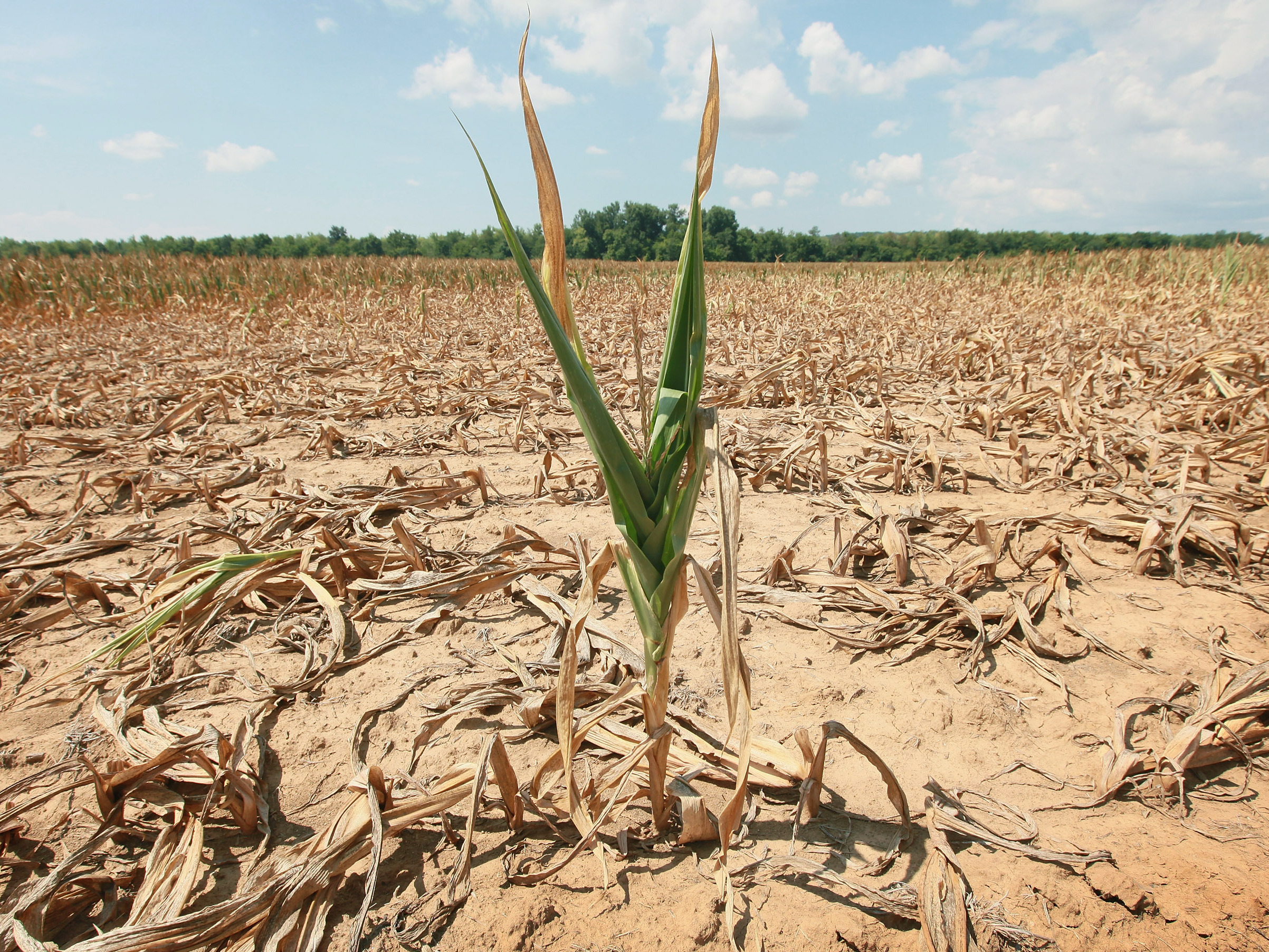
A lot of farmers are looking up at the skies these days… Wondering when it might rain. A minor drought could see some area farmers cashing in on crop insurance. Many of their fields are burning up … Putting crops and livelihoods at risk. The old saying, you have to make hay while the sun shines has taken on a whole new meaning for area farmers like Kevin MacLean, who are begging Mother Nature for a little rain. Kevin MacLean/Farmer: “If you look at this area of the crop where it’s fairly lush right now, if you look down you can see the yellowing of the leaves so this crop is suffering from a drought stress right now.” The last month has been incredible weather for growing crops but now they need water….rain that’s just not coming. The Cataraqui Region Conservation Authority is advising of minor drought conditions stretching from Napanee to Brockville and north to Newboro. Sean Watt/water Resources Engineer: “We’re less than average for rainfall over the course of April and May, our stream-flows are quite a bit lower then they normally would be at this time or year, we’re actually seeing about summertime levels.” Which isn’t good for crops. In Eastern Ontario farmers don’t usually irrigate their fields, traditionally drought weather conditions aren’t common. Kevin MacLean/Farmer: “This plant it’s nice and green, it’s good and healthy but that’s today. If we have a week, another week of weather like this it’s going to start starving for some water.” The third generation farmer is already trucking water to his dairy barn — something he doesn’t normally have to do until the end of July. And his hay situation isn’t much better. Morganne Campbell: “This is the first cut of the season. Just to put it into perspective, the MacLean’s need at least three cuts a year in all their hay fields to sustain the entire farm for a year.” They were hesitant to harvest the field today but were left with not much choice. Kevin MacLean/Farmer: “If we don’t cut it the insects will come in because the weevil like hot dry weather, they’ll come in and destroy a crop quite quickly and we’re seeing signs of that right now so we have to go in and cut it but then the sun’s going to burn up the second growth.” But despite that grim outlook, MacLean is remaining optimistic. Kevin MacLean/Farmer: “Mother Nature always compensates and the good lord always sends us rain at some point in time.” Source - http://www.ckwstv.com

31.05.2016

Australia - Crop insurance renewal & 3 tips to get the best value

It’s that time of year, seeding is all but finished and we look towards the heavens for some rainfall. All going well the crop will progress without any hiccups. However, issues can arise such as hail and fire. Over the next two months you are likely to be inundated with salesmen trying to get you signed up to crop insurance. In this report we will look at the two main cover types and give a few hints on getting the best deal. In Australia around 85% of growers typically take out some form of crop insurance, the majority will be cover for hail and fire, which will be the focus of this article. There have been a number of multi-peril crop insurance products offered. However, these are still in their infancy. The two main policy types are a pre-harvest and post-harvest declaration. The pre-harvest declaration was the traditional policy type, and has been available for more than 40 years. The post-harvest declaration is a relatively new policy type having been developed during the last 10 years. Those who take out crop insurance should be familiar with the pre-harvest policy. When taking out a pre-harvest policy, the grower will provide the insurer with their cropping plan including crop type, yield, hectare and crop value. Using these values, the insurer will give an insurance quote. In a typical pre-harvest policy there will be the opportunity to provide revised details closer to harvest. The updated details will then be used to provide an updated premium (up or down). The post-harvest policy works slightly differently when it comes to declaring your crop. In this method, declared yield is declared after the crop is harvested.  This has two effects, when you report reduced harvest figures you will then pay a lower premium. However, if your yields are higher than your initial declaration you will then end up paying a higher premium. In effect with the post-harvest policy the premium will be based on what you grow. This method will stop you from being over or under insured. The post-harvest policies will attract a higher premium over its pre-harvest counterpart, which will vary between insurers. 3 tips to get the best quote Your policy from 2015/16 will provide temporary cover for the 2016/17 crop, don’t feel rushed to renew the policy. Create a simple spreadsheet (figure 1) which can be used to compare the rates with different insurance providers. This means all you need to do is input the rate offered by the insurer to create comparisons, without completing application forms for each insurer. Mix and match your insurance. It is possible to use multiple insurers to cover each commodity e.g. insurer XYZ may have a low wheat rate but a high canola rate. Source - http://www.mecardo.com.au

30.05.2016

India - Compensate farmers for crop loss

The Congress on Saturday asked the BJP government to rush to the aid of farmers in Sirsa, Fatehabad and other parts of the district where desi cotton has been damaged due to severe heat waves prevailing in the State. “Quick assessment should be made of the losses incurred by them and they should be expeditiously and adequately compensated,” Kiran Choudhry, Leader of Haryana Congress Legislature Party said. “The farmers have suffered the maximum under the insensitive BJP Government in Haryana. Last year, they lost their crops to untimely rains and hailstorms, suffered the pangs of second consecutive drought extending right into the winter, had whitefly attack ruin their crops, and now, the complete wipe-out of their recently sown cotton crop,” she said in a statement here. Ms Choudhry demanded that the BJP Government should stop beating drums and reach out to the harassed farmers with help, both in cash and kind, to enable them to sow alternative crops and make good their losses. “First it was whitefly and now it is the severe heat wave that has ruined them,” she said. “Added responsibility rests at the doors of the government since the farmers had sown desi cotton on the advice of the Agriculture Department and Sirsa-based Central Institute of Cotton Research (CICR),” she added. Source - http://www.thehindu.com

30.05.2016

India - Rain, stormy winds hit Khammam

The unseasonal rain accompanied by stormy winds left a trail of destruction in the town and elsewhere in the district on Sunday evening. Sources said that a 50-year -old watchman of a shopping complex died on the spot when an asbestos sheet fell on him on the premises of the bus station in Thallada under the impact of high velocity winds late in the evening. Asbestos roofs of several roadside shops and tiles of some houses in Khammam, Thallada and other towns were blown off due to the devastation caused by unexpected spell of heavy rain accompanied by gusty winds in the evening. Several localities in Khammam and its surrounding areas went without power for more than two hours after stormy winds snapped power lines at various places under Khammam municipal corporation limits. A garage of an automobile firm on the Wyra road reportedly suffered heavy damage after a part of the asbestos roof of the unit fell on the vehicles parked inside the garage, sources said. Vehicular traffic on the Khammam-Kodad main road was disrupted for sometime after the branches of uprooted trees fell on the roadside blocking the movement of the vehicles late in the evening. Gales flatten orchards Nalgonda Staff Reporter adds: Saturday’s night heavy winds shattered the dreams of banana farmer Bodhanam Bheemarjuna Reddy, who was ready to harvest 2,000 banana plants. According to Horticulture Officer P. Ananta Reddy, only five to six farmers are cultivating the crop in the district. Mr. Reddy further said Mr. Bheemarjuna Reddy had successfully harvested one crop after taking up cultivation in 2015, and he was all set to harvest the crop in 15 days. Mr. Ananta Reddy said the farmer was a model for many in banana cultivation. “We suggested many farmers to visit his farm to draw inspiration for taking up profitable alternative cultivation, he said. However, the gales caused extensive damage to his banana orchard as over 2,000 plants out of 4,000 plants fell down within a couple of hours. Speaking to The Hindu, Mr. Bheemarjun Reddy, a native of Cherla Gouraram village of Kangal mandal, said that he got his investment back after harvesting the crop six months ago. “I was expecting huge profit this time but the heavy winds have shattered my dreams,” he said. He urged the State Government to pay compensation to him after enumeration of crop loss. Apart from Mr. Reddy’s crop, lemon, sweet lemon orchards and other horticulture crops were also damaged due to the gales. Source - http://www.thehindu.com

30.05.2016

Nepal - Govt allocates Rs35.86 billion for farm sector

The government, in the budget for FY 2016-17, has come up with a number of ambitious programmes to boost the agriculture sector. Even as the government struggles to implement programmes announced in the previous budget, the government has allocated Rs35.86 billion for agriculture development and livestock promotion—up 57 percent compared to last year’s allocation. The government plans to implement the “Prime Minister Agriculture Modernisation Project” to boost production and productivity. For the purpose, the government has allocated Rs5.78 billion. The project aims at making the country self-reliant in wheat and vegetables by the next fiscal year. It also envisages making the country self-reliant in paddy and potato in the next two years; corn and fish in three years; banana, papaya and lichi in four years; and kiwi, apple, orange, sweet orange and mango in 10 years. “For the purpose, specialised agriculture production areas will be identified based on land fertility,” states the budget. Under the scheme, land will be divided into four categories—pocket, block, zone and super zone. The pocket areas will get subsidies on fertilisers and irrigation canal construction, besides other technical support and ensuring easy availability of seeds and saplings. Farmers in blocks, zones and super zones will receive additional benefits including 85 percent subsidy on construction of agro production collection centres, warehouse, haat bazaar, processing and training centres. Those involved commercial farming in the blocks will get 50 percent grant on purchasing equipment. The government has also announced providing the services through 15 mobile laboratories in the specialised agriculture production areas. Expert Hari Dahal hailed the government’s plan. “However, the effectiveness of the programmes will de- pend on implementation.” The government will also divide farmers into four categories—agriculture labour, marginalised farmer, semi-commercial and commercial farmers. The budget has also announced forming a farmer’s commission, besides carrying out a study to set up a social security fund. Dahal said the commission, if represented by professionals, will help resolve problems being faced by the farmers. “Also, the commission should be free from any political intervention,” he said. The budget has continued the government’s scheme of providing 75 percent on the premium of crops and livestock insurance. It has also raised the subsidy on interest on agriculture loans to 5 percent and removed the ceiling of Rs10 million on the agriculture credit to become eligible for the subsidy. The government will provide the loans to the farmers on the basis of the crops they have planted. It will fix support prices for paddy, wheat, corn and sugarcane before harvest. Expanding the “Chaite Dhan Promotion Programme” to 35 districts, running aromatic paddy production in 20 districts, extending mid-hill corn production to 41 districts and developing fruits forest along the postal and mid-hill highways are other programmes the government has envisioned. The budget has allocated Rs8.46 billion for boosting the production of egg, meat and milk. Under the scheme, the government aims at making the country self-relient in egg by the next fiscal year. It has also planned to make the country self-reliant in meat and milk in two and three years. Dahal stressed on the need for increasing the budget for research and development. “Developing policies based on research, delegating power to local authorities to implement the programmes, increasing the efficiency of project implementation, and incorporating new farmers in the assigned programmes should be the government’s priorities,” he said. Source - http://kathmandupost.ekantipur.com

30.05.2016

Nepal - Govt aims to boost productivity to make self-reliant in agriculture

As the supply side constraints are considered the major cause for increasing import of agricultural products, the government has announced various programmes to boost agricultural productivity of the country in fiscal budget 2016-17. Along with production capacity enhancement programme, the fiscal budget has laid emphasis on value chain development of agriculture products, food and nutrition security, agriculture extension service and agriculture research and technology. Presenting the fiscal budget in the Parliament today, Finance Minister Bishnu Prasad Paudel announced Prime Minister Agriculture Modernisation project, which is aimed at making the country self-reliant in agricultural products. Though two-third of the country’s workforce is engaged in the agriculture sector, the sector’s contribution in the economy has been gradually coming down. The government has announced huge grant and subsidy to make the country self-reliant in agriculture products by boosting productivity. The government has announced 85 per cent cash grant to purchase agriculture inputs for farms in special pocket areas that run specialised programmes and similar amount for collection centres of agriculture products, community seed banks, post-harvest centres and training centres. Similarly, the budget has announced 50 per cent cash grant for establishment of processing centres, warehouses, agriculture marts and cold storage facilities. The government has announced that 2,100 pocket areas, blocks and zones would be developed across the country, including 600 along the Postal Highway, 200 along the Mid-hill Highway and their feeder road sections, to enhance agriculture production. Such areas will be spread over at least 10 hectares of land. The government has also announced 50 per cent cash grant for tissue culture laboratory of crops like bananas, potatoes, among others and also for fish farming. Farmers will be able to take agriculture loans from banks at interest rate not exceeding five per cent from next fiscal, according to Finance Minister Paudel. “This budget has lowered the interest rate by one percentage point from the earlier provision.” Cheaper credit and insurance is further expected to boost agriculture production. “The government will extend 75 per cent premium subsidy to the farmers for agriculture, livestock and fowl insurance.” On the other hand, the government has said that it will promote production-based insurance scheme to minimise the risk borne by farmers. The government has also announced that only one per cent customs tariff will be levied on the import of agriculture inputs and would fix support price of paddy, wheat, maize and sugarcane before the plantation season. The land owners who leave their arable land barren would be penalised 25 per cent of the potential production of the land. The government has aimed to make the country self-reliant on wheat and vegetables within a year and gradually make the country self-reliant on rice and potatoes; maize and fish; bananas, papayas and litchis every other year starting from fiscal 2016-17. The plan is to make the country self-reliant on kiwis, apples, oranges, sweet oranges and mangoes within the next 10 years. The government has expected additional contribution from the agriculture sector worth Rs 30 billion in the gross domestic product in the next fiscal, 2016-17. Source - https://thehimalayantimes.com

30.05.2016

India - Government weighing proposals of four PSU insurers for Pradhan Mantri Fasal Bima Yojana

The Centre is actively considering proposals of four public sector general insurance companies to be part of the Pradhan Mantri Fasal Bima Yojana (PMFBY) launched this year. Currently, the Agriculture Ministry has empanelled 11 private sector companies and state-owned Agriculture Insurance Company (AIC) to implement the new scheme. "The four state-owned Oriental Insurance Company, New India Assurance Company, National Insurance Company and United India Insurance Company have sent the proposals to participate in the scheme. We are actively examining them," a senior Agriculture Ministry official told PTI. A meeting with the four public insurers was held last week on this issue, the official said. Both public and private insurers are being encouraged to create healthy competition for better implementation of the scheme. All claim liability is on insurer and the Centre will give upfront premium subsidy, the official added. Besides PMFBY, these insurers will also sell Weather-based Crop Insurance Scheme (WBCIS). As of now, 11 states -- Andhra Pradesh, Telangana, Madhya Pradesh , Uttar Pradesh, Odisha, Chhattisgarh, Gujarat, Himachal Pradesh, Jharkhand , Uttarakhand and West Bengal -- and one Union Territory Andaman and Nicobar Islands have notified the PMFBY, as per the ministry's data. For instance, in Gujarat, Bajaj Alliance and HDFC-ERGO have won the bids to sell the PMFBY in the state for 2016 kharif season. Similarly, states which have notified the scheme have selected insurers through the tendering process. The Centre has released about Rs 3,000 crore to expedite settlement of claims for the kharif 2016 season. It may be noted that PMFBY replaces the existing two schemes National Agricultural Insurance Scheme and Modified NAIS, which have had some inherent drawbacks. Under the PMFBY, farmers' premium has been kept lower between 1.5-2 per cent for foodgrains and oilseed crops and up to 5 per cent for horticultural and cotton crops. There will not be a cap on the premium and 25 per cent of the likely claim will be settled directly in farmers' accounts. The new scheme aims to increase the insurance coverage to 50 per cent of the total crop area of 194.40 million hectares, from the existing level of about 25--27 per cent. Source - http://economictimes.indiatimes.com

30.05.2016

Philippines - PCIC pays P20.76M in claims to NegOcc farmers

THE Philippine Crop Insurance Corp. (PCIC) has paid indemnity claims totaling P20.76 million to 3,532 enrolled-farmers in Negros Occidental, covering an area of 3,879 hectares, from January 1 to May this year. The farmers are enrolled in PCIC’s crop insurance programs through the Negros First Universal Crop Insurance Program (NFUCIP) and Registry System for Basic Sector in Agriculture (RSBSA). NFUCIP is being implemented in partnership with the Provincial Government while RSBSA, through the Department of Budget and Management. PCIC records showed that of the said amount, P4.51 million was given to 557 rice farmers with an area of 558.51 hectares due to damage and production losses caused by the prolonged dry weather associated with El Niño. For the whole Western Visayas, covering Negros Occidental and other provinces in Panay and Guimaras Islands, the agency has already paid P61.34 million, reports showed. The amount covers 7,842 farmers with a total area of 7,325.32 hectares affected by the prolonged dry weather, it added. Jose Ma. Torres, insurance underwriter and officer-in-charge of PCIC-Negros Occidental, told Sun.Star Bacolod that with the intensity of damage and losses brought by the calamity, figures are still rising. Torres said they expect to pay almost P103 million to 15,990 farmers with an area of 15,539.52 hectares by June. “This is the biggest indemnity claims to be paid by PCIC throughout Western Visayas,” he said, adding that damages and losses incurred by farmers include those caused by disease and pest infestation among crops. In 2015, PCIC released a total of P28 million in indemnity claims to farmers in Negros Occidental. Thus, the province has already surpassed for the first five months the insurance claims released last year. For the entire Western Visayas, the agency has released P110 million in claims last year, only P7 million higher compared to the first half figures this year. Source - http://www.sunstar.com.ph

27.05.2016

Africa - Ag investments can unlock prosperity

Kanayo Nwanze, the president of the International Fund for Agricultural Development (IFAD), believes that investments in agriculture can unlock prosperity in Africa and cut down the food import bill by about $35 billion. Nwanze made the assertion at the Grow Africa Investment Forum and the World Economic Forum (WEF) on Africa, held in Kigali, Rwanda, recently. “Investments in agriculture can generate great riches for the continent and lift millions out of poverty and hunger,'' he added that countries that had heavily invested in agriculture are today reaping huge revenue generation and foreign exchange, and unemployment has drastically reduced. According to Nwanze, “Investments alone will not transform the continent, rather governments in Africa need to ensure that strong commitments to policies and incentives that encourage higher food production by smallholder farmers are put in place.'' Source - freshplaza.com/

861
of 1225