NEWS
862
of 1225
News
27.05.2016

USA - Whitefly troubling Florida's growers

The Q-biotype whitefly (aka, Mediterranean whitefly, Bemisia tabaci) was first identified on an ornamental plant in a greenhouse more than a decade ago. Now, according to UF/IFAS researchers, this particular species of whitefly is on the loose in the sunshine state, marking the first time it has been found outside a greenhouse or nursery in the U.S. UF/IFAS scientists are working with USDA-ARS and the Florida Department of Agriculture and Consumer Services to manage the light-colored, flying insect slightly less than 1 millimeter in length. “Unfortunately, we have a developing whitefly issue in Florida,” said Lance Osborne, a faculty member at the UF/IFAS Mid-Florida Research and Education Center in Apopka. “The situation may be improved with diligent attention to identifying and reporting any outbreaks.” The Q-biotype whitefly is a threat to numerous Florida crops such as tomatoes, squash, beans, watermelons, and many other vegetables and ornamentals.

27.05.2016

China to invest $700m in ag projects in Peru

According to Paulo Pantigoso, General Manager of Ernst & Young Peru, a Chinese firm is considering investing US$700 million in agricultural development projects in the Arequipa region of Peru. “The initiative is intended to cover 40,000 hectares of land and would be located in the Arequipa region,” Pantigoso stated. He went on to add that agro-business is seen as an excellent alternative for the development of bilateral trade ties. In 2000, Peru exported agro-industrial products worth US$300 million, but in 2015 shipments exceeded US$6 billion. In order to attract further investments from China, Pantigoso continued, it is strongly advisable to take part in thematic fairs to find the best suppliers for the market. “Peru’s Private Investment Promotion Agency (ProInversion) is doing a praiseworthy job in this sense,” he said. On the other hand, Peru-China Chamber of Commerce (Capechi) President Jose Tam noted that over 300 Peruvian firms actively export to China. “The number has increased over the time.” Most of these companies are in agriculture-related sectors. “Red Globe stands out in this sense. Health-related issues prevent agricultural products from being shipped to China.” Source - http://www.freshplaza.com

27.05.2016

Indonesia develops sustainable ag scheme

A new scheme, which aims to improve the income of 1 million Indonesian farmers by 2020, has been drafted by the Indonesian Economist Association (ISEI) and the Indonesia Chamber of Commerce and Industry (Kadin). PISAgro, which stands for Partnership for Indonesia's Sustainable Agriculture, aims to reach more than 445,000 farmers in 2016 who manage more than 350,000 hectares of land. In 2015, only 83,000 farmers with areas of 67,000 ha participated. ISEI chairman Muliaman Hadad said farmers were currently experiencing stagnant productivity from inadequate access to finance, as well as good quality seeds and fertilizers. PISAgro was designed to formulate an action plan and synergize institutions and stakeholders to solve the issues. The pilot project of this program had been successfully applied since 2011 in maize, palm oil, coffee, cocoa, rice, soybeans, potatoes, and rubber. Under the scheme, farmers’ productivity and income increased on average by 25 percent. Source - thejakartapost.com

27.05.2016

India - Hailstorm hits Yenangbrangsa

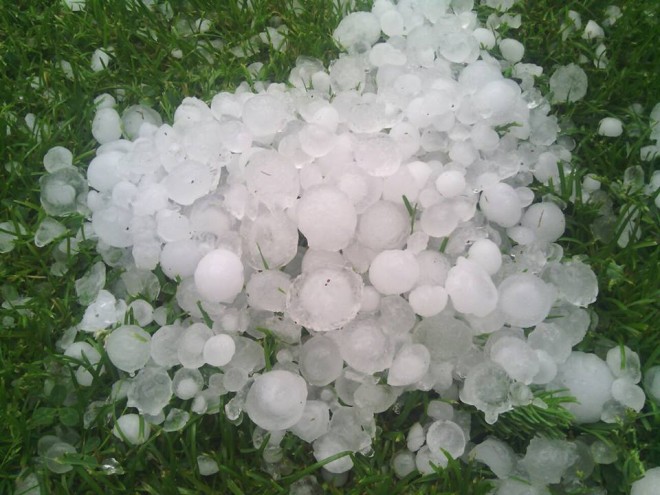
More than 40 acres of maize and potato fields were damaged after a hailstorm hit Yenangbrangsa chiwog in Samkhar gewog on May 23. The fields belonged to 56 households from the three villages of Yenangbrangsa, Bikhargonpa and Tamalung. While Bikahrgonpa’s main crop is potato, the other two villages depend on maize. Gewog agriculture extension supervisor, Mahindra Rai said the severity of damage to the maize crop is around 60 percent while around 30 percent of potato crops were damaged. Given that it is the harvest time for potatoes, the extent of the damage was minimised as farmers can still harvest the crop. “Around 4,000 to 5,000 cardamom seedlings that were recently planted on a large scale at Yenangbrangsa were also washed away by the resulting flood,” he said. “We are in the process of assessing the production loss. Once complete, the final report will be submitted to the department.” Yenangbrangsa Tshogpa, Karsang, said the hailstorm that lasted for more than an hour, started after 4pm in the evening. The hailstones measured about two inches in diametre. “There was a sudden shower of hailstones followed by heavy rainfall. Soon, it started flooding and washed away all our crops,” he said. “Had it not been for the farm road, it would have posed a threat to about five households that are vulnerable to floods,” he added. “We are worried and hoping the government will compensate us for our loss.” Besides the crops, farm roads were also affected with drains being damaged and portions of the roads washed away. “We managed to clear a block at the Bikhargonpa farm road but small vehicles won’t able to ply over it,” the tshogpa said. “Parts of the Yenangbrangsa farm road has been washed away in about four places and vehicles cannot pass through.” Meanwhile, villagers are devastated. For a remote chiwog, which is slowly developing, the losses are huge. Tashi Wangdi, 43, from Yenangbrangsa lost more than 50 percent of his maize crop to the hailstorm and heavy rains. “We won’t be able to earn much from what is left. I doubt if the harvest would even be enough for us,” he said. “Otherwise, I would sell about 1,000kg of maize every year. The worst part is we don’t have enough time to grow back the maize”. Jurmi Wangdi, 29, from Bikhargonpa said his entire three langdos of potatoes were badly affected by the flood. He said the disaster hit at a time when potato plants were starting to flower. “Maize or paddy cultivation is not feasible in our village. We entirely depend on potatoes for cash income,” he said. “We are worried that the potato yield will significantly drop this year or the potatoes won’t grow much in size.” Trashigang Dzongrab, Pema Dorji said no reports of hailstorm were reported from other parts of the dzongkhag yet. Source - http://www.kuenselonline.com

27.05.2016

India suffers $100 bln losses due to drought

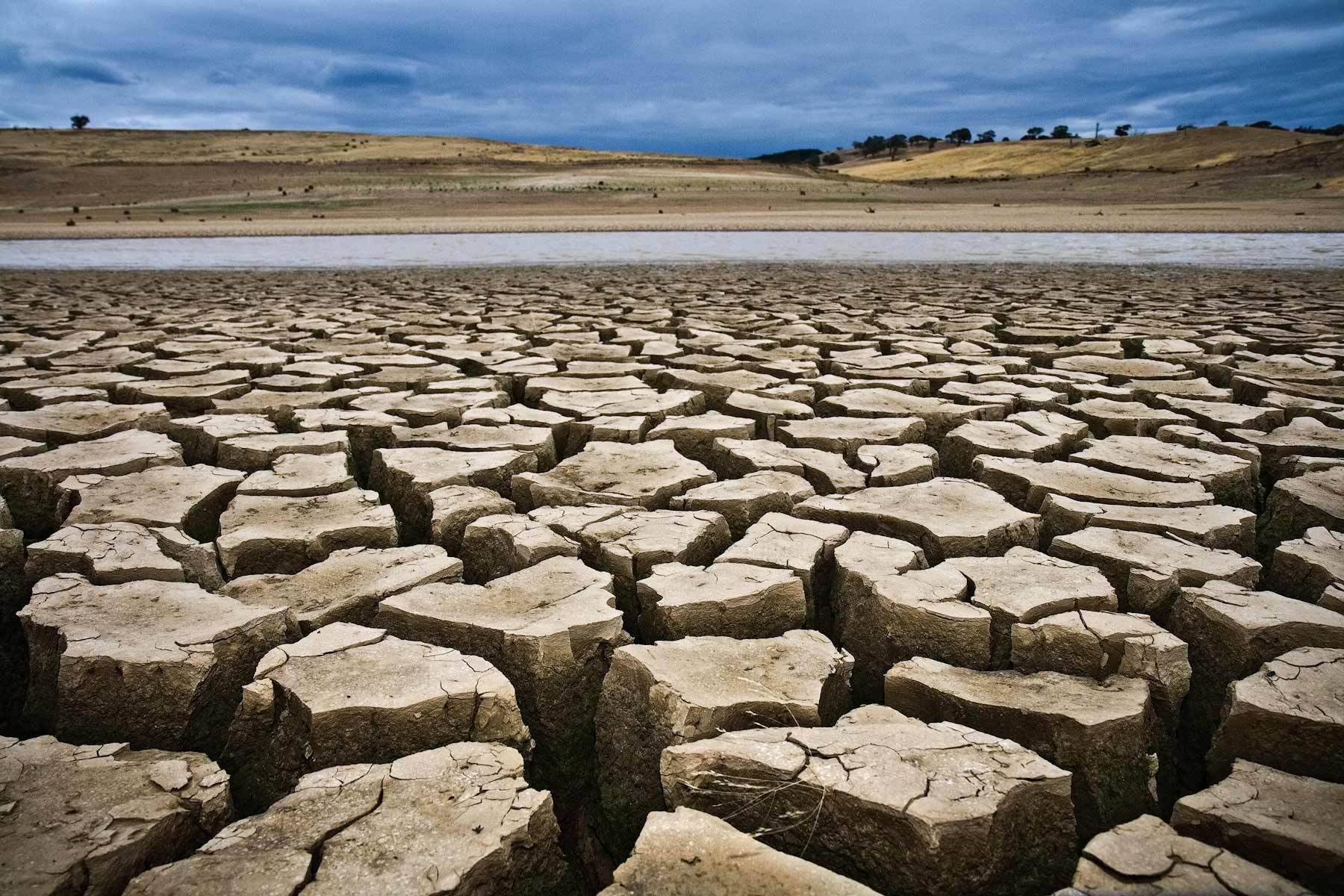
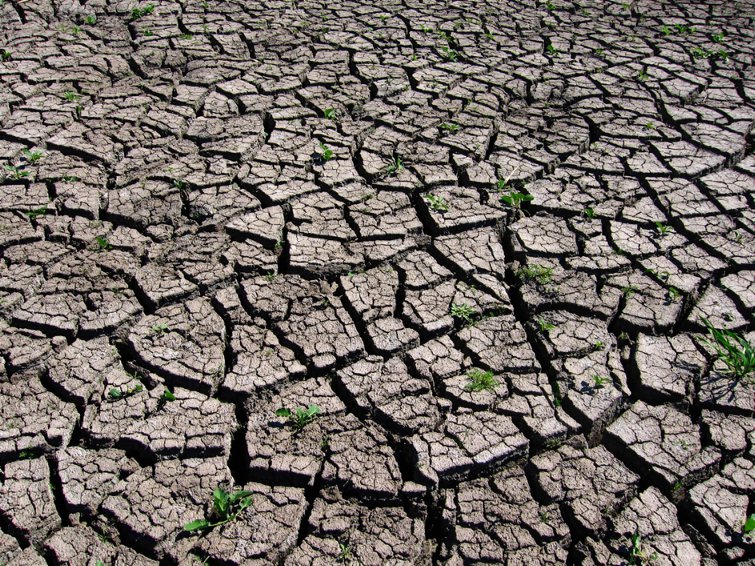
In India, El Nino hasn't meant strong winds and torrential rainfall. Quite the opposite in fact - the country is currently experiencing a severe drought which has caused deaths, water shortages and crop failures. And the country will also suffer financially. It's expected that India's losses will add up to around 100 billion US dollars. And while the coming La Niña might bring India some much-needed rain, it will take more than one good monsoon season to wash away the savage effects of the El Nino. 10 states across India are suffering from massive droughts, impacting 330 million people out of its 1 billion population… A study done by the Associated Chambers of Commerce shows that two consecutive years of droughts have led to a massive water shortage. The situation is so grim, and a large part of the money earmarked for the country’s development will now have to go towards aid and subsidies. This places much pressure on the government and the economy. "Around 35 reservoirs… big reservoirs store 80 per cent of the water in this country. And if you look at their conditions, it’s highly worrying for everybody," said D.S. Rawat, Secretary General of Assoc. Chambers of Commerce. The drought has also created inflationary pressures…. making food management a challenge in the coming months. India is looking at the upcoming monsoons as a silver lining, but economists say the country should also be looking at the drought as a warning sign of things to come. Climate change and global warming are starting to impact the Asian region. Two-thirds of India’s agricultural land is dependent on monsoons. And with its ground reservoirs drying up, it looks like India will have to look at other ways to irrigate its farmlands. Parched lands, farmer suicides, and migration from drought-hit regions to urban areas have become the order of the day for most Indians… And no doubt, this will take a toll on India’s dream of becoming a trillion dollars economy with no poor people by 2032…. "On one hand, they have lost their crops, resulting in the price of agriculture products going up. At the same time, because people have a lesser purchasing power, circulation in the market will influence the demand as far as industry products are concerned," said G.P Srivastava, economist. Even though the country has a national crop insurance scheme, many Indian farmers don’t even have the money to pay the premiums for it. But with El Niño weakening and La Niña coming in, the monsoons are expected to be good in India… The 2015-16 El Niño was the main reason for a 14 per cent rain deficit in India. And the arrival of La Niña for India means above-normal monsoon rainfall this year. But it is highly unlikely that the rains will help, as most farmers are in debt and lack the capital to even buy seeds. Experts say the 100 billion dollar loss to the economy is just the tip of the iceberg. The subsidies, which the government will have to hand out to its poor, will have a massive impact on its current account deficit. And that remains a big issue for a country that is aiming to become an economic powerhouse. Source - http://english.cctv.com

26.05.2016

USA - Drones Pique the Interest of Entrepreneurs

Over the last few years, drones have gone from being a contentious military tool for airstrikes to a far more mundane magnet for aerial hobbyists. But as drones move into the mainstream, entrepreneurs are finding ways to harness the technology as the core of their business ideas. Ryan Jenson showed its business potential in a demonstration for his new venture, HoneyComb. His idea was to use drones to scout fields for irrigation and pest problems. If not caught early, such problems can cost farmers thousands of dollars an acre. Nevertheless, farmers were left scratching their heads. Mr. Jenson said they asked him: “Why do we need those? And if we do, how can we afford them?” He and his two co-founders at HoneyComb built a rough prototype. On a sunny day in August 2013, they gathered 50 growers at Gold Dust Farms, a 9,000-acre farm in southern Oregon that specializes in potatoes. Usually farmers scout for problems on foot, covering approximately 10 acres an hour. The AgDrone from HoneyComb can cover 700 acres an hour, producing high-resolution 2-D and 3-D maps that can be used to assess most aspects of crop health. As the drone soared in the sky above, the growers watched a screen nearby that showed a view from the drone’s video camera of the fields below. Once the drone returned, they saw photographs it had taken on its trip. “A big light bulb lit up,” said Mr. Jenson, 30, who had an interest in aerospace and engineering at a young age. He took college classes at age 14 and began working for NASA at 18. “When they realized, ‘You’re telling me I can see every square inch of my farm whenever I want?’ They were sold.” One recent convert to HoneyComb’s AgDrone found an irrigation leak, saving him nearly $100,000 in crop loss. Another grower was able to detect the onset of blight in his potatoes early enough to apply the needed fungicide in time to save the crop. The company, based in Wilsonville, Ore., now has 16 employees and has raised $2 million in financing. [caption id="" align="alignnone" width="755"] HoneyComb customers can zoom in and see every square inch of their fields, identifying bare spots, irrigation lines and areas of low crop vigor. CreditHoneyComb[/caption] HoneyComb is part of a new wave of commercial drone start-ups. Often described as “drone services,” these companies are one-stop shops, providing both the drones to collect the data and the software to analyze it afterward. “From catastrophe response to news-gathering to construction-site monitoring, commercial drones represent one of the fastest-growing sectors in technology,” said Lisa Ellman, a partner and Washington-based co-chairwoman of the unmanned aircraft systems practice at the law firm Hogan Lovells. While the opportunity looms large, starting a new business centered on drones (or unmanned aircraft systems, as they are officially known) has its challenges, not least of which are laws that seem to be a moving target. Many of these start-ups are small, and venture financing has been hard to secure. “The regulations have made it very difficult for many small businesses to pull themselves up from the bootstraps,” says Jeffrey J. Antonelli, a Chicago lawyer whose legal practice focuses on drones. But the rules are slowly falling into place for commercial use of drone technology. Since the Federal Aviation Administration started issuing what it calls “exemptions” in September 2014, over 5,200 permits have been issued to commercial drone operators. Most have gone to larger companies. Companies in photography, film and real estate have received the largest share of these permits. The biggest hurdle, most small businesses say, is that once they have the drone permit, they still need someone with a manned vehicle license — like an airplane or helicopter pilot — to fly it. Some commercial drone fliers have not bothered to get a license. “Like Prohibition, the bar was set so high that many people have walked underneath it,” Mr. Antonelli said. But new F.A.A. rules for commercial drones weighing 55 pounds or less, to be announced as early as June, could address that hurdle. One significant potential change would be to drop the requirement for a manned vehicle license. Instead, drone pilot certification would resemble getting a driver’s license at the department of motor vehicles, a process that could be completed in weeks rather than months. With a streamlined process in place, the agency predicts sales of commercial drones will reach 600,000 in 2016 and climb to 2.7 million by 2020. For now, however, the F.A.A. is cracking down on those flying without permits or who otherwise flout the rules. Last October, the agency proposed a fine of $1.9 million for SkyPan International, a Chicago-based aerial photography company, which the agency said made unauthorized flights in New York and Chicago airspace. (Without authorization, commercial drone operators cannot fly within five miles of an airport or above 400 feet.) In a response on its website, SkyPan said it had followed the agency’s rules. Photo [caption id="" align="alignnone" width="675"] John Faus, chief operating officer of HoneyComb, prepares to launch an AgDrone in Canby, Ore. CreditAmanda Lucier for The New York Times[/caption] A string of incidents involving drones have not helped efforts at commercialization. For example, in September 2015, a runaway drone crashed into seats at the United States Open tennis championship in Queens. A month later, a drone crash-landed near the White House. Such events increase public concerns about how to enforce the rules for anyone operating a drone. Some new businesses, like Identified Technologies, based in Pittsburgh, have hired experts to address legal and regulatory issues. Identified Technologies uses drones to create 3-D maps of construction sites that allow clients to monitor progress, allocate crews more efficiently and detect problems early. The company has raised $4 million in financing. Identified Technologies recently brought on two employees who used to work with commercial airlines, with the aim of helping clients get the F.A.A. exemption, find pilots, get drone insurance and complete paperwork. “People don’t realize how much has to be done before and after a flight to remain compliant,” said the company’s founder, Dick Zhang. “We take care of everything so clients don’t have to.” Some companies are working on supporting drone operators in meeting regulatory and insurance requirements. Skyward, based in Oregon, provides software with airspace maps to show where and when it is safe to fly. The company, founded by Jonathan Evans, a former pilot of Blackhawk and medical helicopters, also helps drone companies track who is flying a specific drone, in what location and at what time, creating custom reports with the information that regulators and insurers require. Small businesses are expected to get a lift from larger corporations like Amazon that have drone programs already underway. In late 2015, Amazon released a video to promote Prime Air, the service it is developing to deliver small packages in 30 minutes or less. The company posts white papers on its website proposing how to integrate drones safely into airspace. As the final barriers to entry come down, many anticipate a flood of new businesses. “When cellphones were first invented, we didn’t envision all the ways we would use them,” said Ms. Ellman of Hogan Lovells. “Drones are very similar.” She and Gretchen West, a senior adviser to Hogan Lovells, recently founded the Commercial Drone Alliance, a nonprofit that aims to educate policy makers and the public about commercial drones. Hobbyists and consumers who fly drones may also lead to a wave of start-ups. In December 2015, the F.A.A. required recreational drone owners to register their drones. In the first 30 days after registration opened, nearly 300,000 owners registered. Some of these people may decide to try their hand at making money with their drones. Most important, hobbyists could help public perception of the industry’s potential, said Mr. Jenson of HoneyComb. “People don’t yet automatically think of drones as commercial tools,” he said. “But we’re getting closer.” Source - http://www.nytimes.com

26.05.2016

India - Combining traditional wisdom with scientific methods can tackle drought

India is going through severe water shortage in several states. The scarcity is mainly due to the dry season, but it has been exacerbated by our inability to manage water resources, and ignorance. Of course, added to that is our lack of understanding, or respect, for our environment. The water shortage is being perceived as drought. Dry condition is a natural phenomenon, which is bound to happen three to four times out of ten seasons. Drought is a man-made condition. Despite these being two distinct concepts, it is often wrongly used synonymously. The present water scarcity is due to less than average rains for two consecutive years. However, the adversity has increased several folds due to human factors like water mismanagement, policy failures, improper water distribution and inadequate management of public water sources. To make the situation more complex, the water scarcity is now being presented as a natural disaster. According to official statistics of the Central Government, about 330 million people have been affected by drought in 10 states in India. The nature of water shortage in each area is location specific. For instance, in Maharashtra, lack of irrigation facilities and wrong crop selection is one of the main reasons. Sugarcane is grown in Maharashtra despite lack of irrigation, and where, all the other crops are monsoon fed. The central government has come up with several "solutions" including the Pradhan Mantri Fasal Bima Yojna (PMFBY) which is a crop damage insurance scheme where farmers pay a premium of 1.5 percent of the value of a crop. A relief package of Rs.3,049 crore has been sanctioned by the Central Government to Maharashtra for drought relief aid, while the Maharashtra government has itself granted about 10,000 crore to farmers. Water trains to Latur have been pressed into action. The main drawback of the solutions is that they are dole-oriented. Instead of getting to the root of the problem or foreseeing the causes and working on them, a symptom-based remedy is being offered to the people. These kind of solutions only provide temporary relief and take us a step backwards economically. There has also been lack of political will on this issue. For instance, the India Meteorological Department's prediction of a second consecutive drought was ignored for a private company's prediction of a normal monsoon. It has also been alleged that the lack of national attention is because it is not affecting urban consumers. In India's 6,000-year-long rich history, we have not only learnt to adjust to diverse environmental conditions but have also developed traditional knowledge. The management of our water resources through water harvesting and the use of local wisdom can any day beat concepts like National Water Grid, whose by-products happens to be a string of environmental problems, the most notable of them being a drop in water table, fragmentation of habitats and biodiversity loss. The problem arising out of water resource mismanagement can be tackled through efficient utilisation of water through new, advanced and efficient methods, including sprinkler and drip irrigation. Additionally, cropping patterns should be changed. For instance, in major parts of Punjab and Haryana, crops like paddy, wheat and sugarcane are dominant and use more water compared to other competitive crops like maize, rapeseed-mustard seed and vegetables. But it is extremely difficult to bring change because farmers get better returns from high water-intensive crops than low intensive ones. It has been suggested that Punjab's groundwater depletion problem could be easily resolved, if its export of virtual ground water in the form of rice could be reduced or stopped through the policy tool of making energy prices market-determined. This is likely to work in areas largely dependent on groundwater for irrigation purpose. Further, rain-water harvesting and groundwater recharging is necessary. In many areas, the groundwater table is falling due to over-exploitation. Capturing, collecting and storing available rainwater and/or surface run offs during wet season can prove to be a significant tool to turn around the situation. In traditional practices, collected rainwater was used resourcefully but these were forgotten (or neglected) with the development of modern facilities like canals and groundwater extraction. Some other traditional methods in India include diversion channels called Kuhls in Himalayan region to make use of hill streams and springs; underground tanks called Kunds in desert areas and tunnels dug through hillocks where there is seepage of water, used in South India. Apart from these, several new scientific methods such as check dams, roof-water harvesting, recharge pits, recharge wells, vertical recharge shafts and lateral trenches with bore wells help. Water problems are unknown in places where water harvesting has been a part of culture of the people -- Ralegaon Siddhi, Sukhomajri and many areas of Rajasthan. In urban areas, allowing more open areas and protecting the green belt can do what a lot of technology cannot. Also, weather prediction can help farmers know beforehand the situation they have to cope with. Nature is man's friend and not his adversary. Application of traditional wisdom and modern technology can aptly address the man-made disaster of droughts. Source - http://www.daijiworld.com

26.05.2016

Mexico - Samalayuca loses millions to hail

The producers from Samalayuca who suffered huge losses to the hail on May 18, which destroyed entire crops of zucchini and onion, are still waiting for help from the authorities. "Only the Sagarpa came to see the disaster, but there has been no response from the authorities," said Javier Rios, one of producers affected by the hail. Rios, who was about to perform recovery tasks to salvage hoses for irrigation and a few vegetables, stated he had completely lost ten hectares of zucchini and seven hectares of onions. The production costs per hectare of onions is 10,000 pesos, while the investment required for zucchini is about 45,000 pesos per hectare; and we lost all of it overnight, he said. Rios asked government representatives to help producers get back on their feet after they were affected by the huge hail that hit the crops on May 18. He said they couldn't recover those, that all they could do was replant the fields. He also said they were not prepared because the hailstorm struck within minutes. More than 45 farmers were affected by the devastation caused by the natural phenomenon. Source - http://www.freshplaza.com

26.05.2016

USA - Damage from cold snap varies for wineries

A cold weekend in May has put vintners in a major setback while preparing for the upcoming wine season. The weekend of May 14-15, temperatures dipped to below freezing for most of southeastern Minnesota and southern Wisconsin. This ruined large portions of grapes for many local wineries. "The cold turned the water in the shoots cells to ice, killing the tissue," said Amaya Atucha, a University of Wisconsin-Madison assistant horticulture professor. John Falconer, who owns the 12-acre Falconer's Vineyards in Red Wing, said he lost nearly his entire crop after the mercury dropped below 30 degrees for four hours. "It looks so terrible," Falconer said. "(The cold) took everything. Mother Nature slapped us this year." Falconer said he estimates they lost about 75 percent of their entire crop for this upcoming season. "The buds were just too exposed," said Falconer. "It was more cold than the buds could handle." Steve Johnson, head of the Wisconsin Grape Growers Association, said generally, each lost acre of grapes amounts to a loss of about $7,000 to $8,000 and 3,000 bottles of wine. Justin Osborne, the winemaker at Four Daughters Vineyard & Winery in Spring Valley, said "every winery is different." Four Daughters Vineyard & Winery only lost about 10 percent of their total crop, according to Osborne. "There's a few spots here and there, but overall, we will be just fine," Osborne said. Osborne talked about the importance of one degree versus two degrees, and how it can make a huge difference for grapes. For example, 32 degrees with slight wind could be sustainable for crops. However, 31 degrees with no wind could damage crops. Fortunately, Four Daughters had wind that chilly weekend, which helped saved their crops from permanently frosting. Wineries already have started their 2016 season with or without their abundance of grapes. Those that were damaged from the freeze out will have to source their grapes from other growers to generate 2017 inventory. The freeze shouldn't lead to any immediate, large-scale wine shortages for consumers. The freeze-out was extremely localized, UW-Madison's Atucha noted. What's more, Wisconsin and Minnesota produce just a small fraction of U.S. wine; Wisconsin has only about 110 wineries and Minnesota has only about 50. By comparison, California, by far the nation's top wine-producing state, has about 4,000 wineries. Source - http://www.postbulletin.com

26.05.2016

India - Insurance sees FDI flow of Rs 13,000 crore after amended law

Amid a lot of political drama, the Modi government had cleared the Insurance Law Amendment Bill, lifting foreign direct investment ceiling in insurance to 49% in March 2015, kick-starting economic reforms. With this, foreign direct investment of up to Rs 13,000 crore has come in to the insurance sector. Around a dozen foreign promoters have increased their stake in the Indian insurance joint venture after the amendment to the Insurance Laws. This was seen as a major reform for the government and a key one to stimulate insurance growth. The only dampener was the caveat on ownership and control that had to be with Indian residents. Earlier, the Insurance Act did not provide for control and ownership of an Indian insurance company to be with resident individuals. So, it was possible for offshore strategic partners in the insurance sector to have substantial control rights, including reserved matters or veto rights on operational and financial policy decisions of the joint venture. Apart from the hike in FDI, the amendment to the Bill gave more power to the Insurance Regulatory and Development Authority to take decisions on issues like expenses or listing which were hard coded in the Insurance Act 1938. Higher FDI has enabled companies to look at initial public offering of shares and two large companies like ICICI Prudential and HDFC Life have started working towards it. In the last two years, the Modi government have launched a number of insurance schemes for, which are of enormous help and a nominal premium. India has the second highest population and the highest number of insurance policies of 360 million in the world, still penetration level is low at 4% of the GDP. In the first year of assuming office, the government launched personal accident, term life and pension scheme for the masses. In his second year, he addressed the plight of farmers who rely on rains for irrigation. The government launched Pradhan Mantri Fasal Bima Yojana to extend crop insurance. This policy is based on yield-based payouts. The government has fixed the maximum premium to be paid by farmers at 2% and 1.5% for kharif and rabi crops. Source - http://economictimes.indiatimes.com

26.05.2016

Italy - Hailstorm Apulia - is it game over for cherry campaign?

20th May 2016 will be remembered for the huge hailstorm that hit Apulia, as if growers didn't have to deal with climate change already. The hailstorm hit the northern Bari area, while in Turi, well-known for the Ferrovia variety, there were heavy rains mixed with hail stones. The rest of the region (south of Bari, Taranto and Foggia) was hit by heavy rain. The first Facebook comments right after the event read "A disaster for cherries!", "We are worried for all crops", "May shouldn't be like this, what happened to the seasons?". "Ferrovia cherries were hit too! Game over!". (Photo: Facebook) A grower said that "losses for the Ferrovia cultivar in Conversano reach 60-80%, while 30% of the Giorgia variety has been damaged. In Casamassima and Acquaviva, the few cherries that survived the first wave of bad weather have been completely destroyed." "The produce was early but, with what happened, the Ferrovia variety will be late. Quotations in Casamassima-Castellaneta are €7-7.50/kg for the best batches and €4-4.50/kg for Giorgia cherries." The effects of the water, cold temperatures and humidity on table grapes will be visible only in a few days. "At the moment, the fruit is looking healthy. We are ready to deal with any problems and avoid the mistakes of 2014 (when downy mildew developed)." Cherries from Apulia represent 40% of the total domestic production. Other crops and structures were also damaged. Cia Puglia asked the region's governor Michele Emiliano and councillor for agriculture Leonardo di Gioia to create a technical panel, while PD MPs Dario Ginefra and Colomba Mongiello requested recognition of a natural disaster. (Photo: Facebook) The greatest damage was recorded in the Bari and BAT provinces. Orchards in Turi, Castellana Grotte, Putignano, Conversano, Corato, Ruvo di Puglia, Molfetta, Bisceglie have been the worst hit. Damages have been estimated at between 70 (in the Corato, Molfetta, Ruvo area) and 100% (in the remaining area). The rain and hail also damaged other crops in Rutigliano, Casamassima, Andria, San Ferdinando di Puglia and rinitapoli. Ninety million Euro vanished right at the start of the campaign. This is the estimate made by Coldiretti Puglia after the two waves of bad weather damaged over 23,000 tons of cherries. One of the worst seasons growers remember, first for the Bigarreau and Georgia varieties and now for Ferrovia. "Our producers are trying to save what they can, trying to dry what's left of the cherries to prevent mould," explain Coldiretti Puglia president Gianni Cantele. "The Ciliegia Day of the Campagna Amica market was the occasion to finally make consumers taste the Ferrovia cherries that survived despite what happened." Repercussions are heavy also because a lot of work hours are no longer necessary, as harvesting will not be carried out. Source - http://www.freshplaza.com

25.05.2016

Uganda - Will the insurance subsidy revive agriculture?

Despite being labelled the backbone of Uganda’s economy, the agriculture sector has been susceptible to many challenges and risks related to both artificial and natural disasters. The risks, which vary from unstable produce prices to droughts, floods, pests and diseases, have not only hampered the growth of the agriculture sector, but also discouraged many people from venturing into it as a business, writes Faridah Kulabako Ronald Mugisa lost 300 of the 500 chicken he reared for meat in a week. He wiped out his meagre resources treating the remaining birds, which failed to grow and fetch the market value for the normal chicken. It is now three years and he has not been able to resume because his capital was wiped out. Besides, Mugisa, who lives in Kyanja, is scared of venturing there again. “I have nowhere to borrow money from to start again,” he says wistfully. Like Mugisa, a number of farmers in the country have had to deal with disasters that have destroyed their crops, animals or poultry leaving them high and dry. Their situation complicated by expensive credit and lack of insurance cover. The numerous challenges facing the agriculture sector, which used to be the mainstay back in the 1960s through to the 1990s, have reduced its contribution to the country’s Gross Domestic Product (GDP) from 54% in 1989 to 24% in 2015. At 55%, the services sector now contributes over half of Uganda’s GDP and industry whose contribution is estimated at 21%, is also quickly catching up. Although experts say it is necessary to manage agricultural risks with appropriate mitigation measures, farmers are always left to seek their own solutions, even at the height of events which many times leave them in huge losses. Uganda’s agriculture is heavily dependent on rainfall, meaning that rainfall variations account for huge variability in crop yields. This, together with fluctuation of agricultural commodity prices, affects farmers’ incomes. The enormous dependency of crop production on weather highlights the pressing need for an effective mechanism to cope with weather-related production risks faced by the farmers. Such risks and financial losses have discouraged many people from venturing into agriculture as a business. The risks and losses could easily be mitigated through insurance. Ugandan farmers have for decades been denied chance to insure their crops and animals due to the absence of affordable agriculture insurance policies. Ugandan insurance firms were in the past reluctant to offer agriculture insurance products due to the risky nature of agriculture and smallholder farming practices. A few years ago, however, some insurance companies introduced agricultural insurance policies such as Kungula Agrinsurance, a product offered by a group of six insurance companies. These are Lion Assurance, APA, UAP, FICO, NIKO and National Insurance Corporation (NIC). Currently, there are two types of agricultural insurance covers. Livestock/ animal and crop insurance and weather-index based insurance. The packages cover crop and pasture losses due to drought and excessive rainfall, among others. Even with the introduction of agricultural insurance, the uptake remains low as most farmers see it as a luxury rather than a necessity due to the high cost. According to industry players, premiums for agriculture insurance in Uganda range between 2% and 15% of the sum insured, depending on the acreage of the produce. This is expensive for most farmers, who are mainly smallholders. Also, being a new product on the market, inadequate underwriting and assessing of agriculture loss skills, fewer veterinary doctors and limited access to credit have also contributed to the low uptake of agricultural insurance. Government plans In a move to offer a fallback to farmers, however, the Government, through the finance ministry, has proposed a sh5b agricultural insurance subsidy that will see farmers enjoy guaranteed incomes, irrespective of the weather vagaries and price fluctuations. The subsidy proposed in the 2016/17 financial year budget is a public-private partnership arrangement between the Government and insurance companies and is expected to enable farmers access agriculture insurance and increase productivity. The Insurance Regulatory Authority (IRA) Chief Executive Officer, Ibrahim Kaddunabbi Lubega, said the subsidy is expected to increase investment in the agricultural sector, boost productivity and enable increased access to credit. Kaddunabbi noted that another sh5b has been set aside in the 2017/18 financial year and that more funds are expected in 2018/19 fiscal year. IRA assistant director of research, Protazio Sande, said farmers with less than five acres of land or those whose annual income is less than sh20m, will get a premium subsidy of 50%, while those with over five acres of land or whose annual income is over sh20m get a 30% subsidy. Poultry farmers with 500 to 2,000 birds will get a 50% subsidy, while a 30% subsidy will be given to those with more than 2,000 birds. Those rearing less than 30 head of cattle will get 50% premium subsidy while those with over 30 will get 30%. Those engaged in piggery will get a 50% subsidy if they own less than 50 pigs, while those with more than 50 will get 30%. A 30% premium subsidy will be given to large-scale fish farmers. A source in the finance ministry, who asked not to be named because he is not authorised to speak about the project, says to benefit from the subsidy, interested farmers will be required to apply through insurance companies or banks. Their projects will then be assessed by a team of agricultural and insurance professionals to choose those that qualify. “Banks have shunned lending to farmers because they consider agriculture too risky to lend to without insurance. The subsidy is, thus, a guarantee from the Government that seeks to increase access to agricultural insurance and credit,” the source explained. In Uganda, less than 10% of total commercial bank credit goes to the agriculture sector. Although the detailed mechanics of the project, including the number of farmers to benefit from the pilot project is not clear, it is said the proposed premium subsidy will cover risks such as excessive rain, fire, flooding, drought, epidemics, crop pests and diseases. The source further noted that the finance ministry and other stakeholders are developing modalities of access as well as checks and balances to guard against potential fraud eating away the scheme. “We will engage brokers to assess the actual risk a farmer should insure against because cases may occur where an insurer intentionally misadvises the farmer, so that they do not pay the claim. “The insurer may tell a farmer to insure against floods knowing that the possible risk the farmer could face is drought, so he refuses to pay saying the farmer insured against something else and the loss is different,” the source noted. However, the source said the ministry is proposing multiple-peril insurance — a kind of insurance that bundles together multiple coverage of risks – so that farmers are compensated for any risks suffered. Insurance companies, through their umbrella body, the Uganda Insurers Association, have for a while been lobbying the Government for an agricultural insurance subsidy to enable more farmers access it to insure their crops and livestock and guard against the many risks facing the sector. Insurers welcomed the proposed sh5b subsidy, saying it will boost the uptake of agricultural insurance in Uganda. EXPERTS' VIEWS: IT REQUIRES HUGE INVESTMENT Rewa S. Misra, the MasterCard Foundation senior programme manager for fi nancial inclusion, noted that governments need to partner with insurance companies if agriculture insurance is to succeed in Africa. She added that agricultural insurance requires huge investments to build quality data on weather patterns, which cannot be undertaken by private companies singlehandedly. “Millions of farmers are accessing agricultural insurance in South Asia, India and China, because their governments have seen a policy case for their intervention,” she said on the sidelines of the MasterCard Foundation Financial Inclusion symposium in Cape Town. “Without government interventions, African countries cannot achieve much as far as agricultural insurance is concerned,” she added. Munyaradzi Daka, a consultant with Kungula Agrinsurance, said subsidies will help boost the uptake of agriculture insurance and save farmers from huge losses suffered in case of disaster and price fluctuations. The National Union of Coffee Agribusinesses and Farm Enterprises (NUCAFE) executive director, Joseph Nkandu, said the intervention, however small, is a good starting point for supporting farmers and reviving the agricultural sector. He, however, noted that the Government should put in place proper procedures of accessing the subsidy. According to the chairperson of the governing board of Uganda Agribusiness Alliance, Victoria Sekitoleko, the subsidy is encouraging and indicates that the Government and the finance ministry have finally woken up to support the backbone of Uganda’s economy. “If there is anyone who is patriotic in this country, it is the farmer. They cultivate even when yields were not good the previous season,” she noted. However, she argued that for the subsidy to effectively support agricultural production and productivity, farmers should also access affordable credit to be able to run farming as a profitable business. “No farmer can deliver and break even when the cost of borrowing is over 10%. Insurance will only work if farmers are using affordable credit,” she said. Some experts, however, say the sh5b subsidy is little money for a sector that employs about 80% of the population. Government subsidies are the most effective way to boost the uptake of agricultural insurance and boost agricultural productivity as seen in countries such as Brazil, India, China, Senegal and Malawi. The Indian government, for instance, gives a 50% subsidy while in Brazil, the percentage of the premium subsidy for rural insurance is 60%. Source - http://www.newvision.co.ug

25.05.2016

USA - Severe weather wipes out Kansas farmer’s wheat crop

Harvest is just weeks away for Kansas farmers. While many of them are reaping the benefits of this year’s wet weather, not all of them have been so lucky. “I take a lot of pride in it. That’s one thing that I have enjoyed about farming is just the thoughts of being able to feed the world,” said Josh Patterson. However, Patterson may not be able to feed too many families this year. “Well, my hail adjuster came in and said this came in at 74 percent damaged,” he said. That means nearly three-fourths of the 5th generation farmer’s wheat crop is a loss. The news comes on the heels of several major rain storms that helped transform Patterson’s once drought-stricken crop into a flourishing field. Then, the hail hit. “Right here, you can see there is a little bit of seed, but it is shriveled already,” Patterson said. On Tuesday, Patterson and his insurance agent spent the afternoon walking through his fields in an effort to determine how the hail damage will affect his bottom line. “That’s worth about $25 an acre,” he said. It’s a far cry from the $250 an acre he was anticipating. “One word to describe this? Pitiful,” Patterson said. KSN reached out to several crop insurance agencies on Tuesday. Officials said they have received fewer claims this year compared to last year. Source - http://ksn.com

25.05.2016

Sri Lanka - No crop cultivation insurance payments for 549 farmers

Nearly 549 farmers in Hambantota district whose cultivations were destroyed due to floods during the last Maha season and who had got their crop cultivations insured with the Crop Cultivation Insurance Board, have not been paid their insurance compensation yet, farmers said. They said the relevant officials who visited their paddy fields that were destroyed, have forwarded documents to the relevant authorities, but payments of compensation still remain unpaid due to reasons unknown. The relevant authority at the Hambantota Crop Cultivation Insurance Board was not present to inquire into this situation. Source - http://www.dailynews.lk

25.05.2016

Spain - 90% of early cherries in La Salzadella lost due to rainfall

While several municipalities of the shire of Alto Palancia, especially Castellnovo, are still assessing the damage caused by the hailstorm recorded last Wednesday in La Salzadella, it has already become clear that the weather has caused massive losses to their cherished and renowned cherry crops. According to initial technical assessments, 90% of the early varieties have been affected. "There are farms where nothing could be saved," said Luis Alberich, one of the producers concerned. "It has been a disaster. The production had already been reduced because of the cold last year and the rains have finished it all off," affecting the cherries at the peak of the ripening process. Another producer, Rafael Puig, noted that the few cherries that remain on the trees and which have not cracked "are moist and rotting, so we have to remove them from the trees to stop them from affecting those that have been saved." This has led to the campaign being delayed and to the cooperative still being non-operational. Puig predicts that, by the end of the campaign, and as long as it doesn't rain again, the result of losses will be devastating. "In normal conditions, in my farms we get between 15,000 and 25,000 kilos of cherries, and this year the volume will fall below 10,000 kilos," he says. They hope it will not rain again, because in 15 days the mid-early varieties will be ready for the harvest. The shortage of cherries in this municipality is also taking a toll on the market, with prices reaching eight Euro per kilo. Source - http://www.freshplaza.com

25.05.2016

Canada - KAP head says crop insurance changes unnecessary

A call for farmers to pay a greater share of crop insurance costs isn’t sitting well with the head of the province’s general farm organization. Dan Mazier, president of the Keystone Agricultural Producers (KAP), says he doesn’t like the idea farmers pay more for crop insurance and he doesn’t believe it would reduce crop insurance claims. “By increasing the farmer’s share (of premium costs) and implying that it would incentivize them to do a better job, I don’t like those comments at all,” Mazier said May 13. He was reacting to remarks made by former Manitoba Agricultural Services Corporation (MASC) chair Frieda Krpan, who resigned May 2. MASC administers the Manitoba government’s farm lending program and AgriInsurance, cost shared by farmers and governments. Currently Manitoba farmers pay about 40 per cent of crop insurance costs and the federal and Manitoba governments 36 and 24 per cent, respectively. “I think they (farmers) should pay at minimum half of the premium,” Krpan said May 5 in an interview. “I think there is a case to be made the farmers can easily pay a little bit more because if they have to pay more they also become more careful about how they plant and what they plant. Their practices will change.” Mazier said farmers do a good job now and are not taking advantage of crop insurance as Krpan seems to imply. Before any changes, the impact should be thoroughly investigated, he added. Krpan also said farmers who don’t follow proper practices, including crop rotation, should pay higher premiums. But Mazier said crop insurance already has a system to discourage bad practices. “The individual productivity index (IPI) under crop insurance is the check against everybody else in the region,” he said. “It goes up and down according to the number of claims that you had. Your insurance would be more expensive and you get less coverage as the IPI goes down. That’s built into the system if you are doing poor farming practices.” Most farmers rotate crops because it’s a proven way to boost yields and reduce pests, Mazier said. But there are times when factors such as bad weather that delays seeding leaves a farmer fewer options. “I think the farmer needs to be left with the best tools possible to make sure that his business moves on from that disaster,” he said. “If you handcuff him so he can’t react to the reality of Mother Nature that’s not a very good path to be going down.” Mazier wants more information on the whole-farm revenue insurance program before passing judgment. Krpan believes it has merit and might be able to replace AgriStability — a program many farmers say isn’t a good enough risk management tool. But Mazier wonders if revenue insurance could spark countervailing duties on Canadian exports. Mazier is also skeptical about Krpan’s suggestion MASC should be rolled into the Department of Agriculture instead of remaining a Crown corporation. Krpan contends MASC is ultimately responsible to the minister of agriculture and the government anyway. “We brag about the great crop insurance system that we have and the high participation in Manitoba,” Mazier said. “I don’t know if I would want to mess with that too much without a lot of deep thought and discussions about why we are doing it. That would be an astronomical move to put it into the department. Then it becomes a whim of the department. We need to have it independent.” What Mazier would like crop insurance to do is prepare for climate change and look at what new crops Manitoba farmers should be considering. “That to me is where crop insurance needs to go rather than monkeying with the funding mechanism,” he said. Source - http://www.manitobacooperator.ca

862
of 1225