NEWS
863
of 1225
News
25.05.2016

India - MoEF moves proposal to insure farmers against crop damage caused by elephants

To insure farmers against crop and property damage caused by elephant raids and other animals, the Union environment and forest ministry has moved a formal proposal to cover these damages under the Pradhan Mantri Fasal Bima Yojana. In March, environment ministry officials had met with officials from the union agriculture ministry to discuss the issue and earlier this month a formal note was moved. The note to the agriculture ministry says that "to provide adequate and timely relief to farmers and rural poor against crop depredation caused by elephants and other wild animals, the Project Elephant and Wildlife Divisions of this ministry may be included in the crop insurance scheme. The agriculture ministry has agreed to the idea in-principle and has committed to bring out necessary modifications in the existing operation guidelines of the crop insurance scheme. Based on the official note that environment ministry has sent, insurance companies will be called in to decide norms of insurance coverage to farmers against wildlife depredation, the official note said. The environment ministry's note has conveyed to the agriculture ministry that there is a rise in human-wildlife conflict due to large changes in land-use patterns, destruction and fragmentation of forests. In case of elephants, on an average, more than 72% of its migratory route falls outside protected areas, causing intense man-animal conflict including loss of crops and fatalities. It is estimated that every year more than 400 persons and 100 elephants are killed due to human elephant conflicts. The note added, "The extent of crop damage in monetary term varies from few lakhs to Rs. 200-400 crores." As per official data, in 2014-15, central and state governments paid nearly Rs.35 crore as total compensation for the crop damage. Apart from elephants, wild animals such as deers, Nilgai, Blackbuck, wild pigs, monkeys and birds caused damage to standing crops. Environment ministry officials said that convergence of the scheme at the state level will be easy, as the infrastructure of the scheme already exists in all the states and union territories. As per the Prime Minister's crop insurance scheme, a farmer has to pay 2% premium for all Kharif crops , 1.5% for all Rabi crops of the sum insured or actuarial rate, whichever is less. "The Pradhan Mantri Fasal Bima Yojana is set to be rolled during the upcoming Kharif season and we are almost done with the bidding process for insurance companies," said Shobhana Pattanayak, secretary, union agriculture ministry. Source - http://www.dnaindia.com/

24.05.2016

Bosnia and Herzegovina - Frosts damage 60-90% of topfruit

Late April frosts in the Republic of Srpska (part of Bosnia and Herzegovina), has caused damage to about 1,100 hectares of fruit plantations, and early vegetables. The greatest damage was seen in the northwest of the Republic of Srpska, in the municipalities of Gradiska, Kozarska Dubica, Novi Grad, Kostajnica and the towns Prijedor and Banja Luka. "The first estimates shows damages of up to 60% -90%. This is especially true for fruits such as plums, apples and pears. The frost lasted between seven to ten hours, with recorded temperatures of -1 to - 5 degrees below freezing. More exact details of the extent of the damage will be known by the end of the month.” said Stevo Mirjanić, Minister of Agriculture, Forestry and Water Management for the Republic of Srpska. Interestingly, the worst damages were reported in the areas with higher elevation. Minister Mirjanić has said that the Ministry will try to provide money to help fruit growers who have suffered damage from frost, because producers have already invested more than 5 million Euro in the orchards. "The growers have experienced many problems with production in recent years.  Last year was too dry and the year before saw too much rain, leaving growers concerned about the future. This branch of agriculture is very important for the Republic of Srpska and Bosnia and Herzegovina." said president of the Fruit Association Republic of Srpska Dragoja Dojčinović. "The Russian ban for the EU has brought us many new opportunities. The Republic of Srpska exported 14.5 million Euro worth of apples to Russia in 2014/15." Annual production in Republic of Srpska; apple 120,000 tonnes, plums 150,000 tonnes and pears 30,000 tonnes. Frosts caused the most damage in the Northwest of the Federation of Bosnia and Herzegovina. The municipality of Gracanica, known for the production of plums, was hit hardest. Raspberry production was also affected by the frost and snow. ”We expected the yield of 10,000 tonnes of raspberries this year, but will have to wait for the warmer weather before we know the final damage.” said Nermin Šutković, director of Agricultural Cooperative "AT" from Donji Vakuf. Source - http://www.freshplaza.com

24.05.2016

Thailand govt mulls compulsory insurance on rice crops

Government mulls compulsory insurance on rice crops. The government is considering a plan which will make it compulsory for rice farmers to insure their rice crops with insurance companies which, in the long run, will ease the government’s burden in helping farmers. An informed source in the Non-Life Insurance Association said that the compulsory insurance scheme would first to be applied with farmers who are debtors of the Bank of Agriculture and Agricultural Cooperatives which would cover about 25 million rai of rice farmland. The insurance premium is estimated at 130 baht per rai. Currently, seven insurance companies are providing farm insurance coverage for seven risks namely flood or heavy rains, drought, storm or typhoon, cold weather or frost, hailstorm and fire. Insurance premium ranges from 115 baht to 450 baht/rai. Farmers will be compensated 1,111 baht/rai if the crops are ravaged by either of the seven risks; 555 baht/rai for damages caused by pests. However, the source pointed out that insurance companies would charge an average premium of 120 baht/rai if at least 25 million rai of farmland are insured which are deemed economically feasible. Meanwhile, Mr Suthipol Thaveechaikarn, secretary-general of Insurance Business supervision and promotion committee, said that of the 120 baht/rai insurance premium to be charged on farmers, the farmers will actually pay 20 baht/rai while the rest to be charged to BAAC on the condition that only 15 rai per household are insured. Source - http://www.blackseagrain.net

24.05.2016

Philippines - Crop damage in Region 12 due to El Niño reaches PHP1.5-B

Around PHP1.5 billion worth of agricultural crops have been devastated due to onslaught of the long dry spell spawned by the El Niño phenomenon in parts of Region 12. Amalia Jayag-Datukan, Department of Agriculture (DA) Region 12 director, said Tuesday such figure covers the actual production and opportunity losses sustained by the region’s farming or agriculture sector as a result of the prolonged intense dry weather. Citing their monitoring, she said the area’s farming sector already posted around PHP208.98 million in production losses, with corn absorbing the most damage with PHP115.102 million, palay with PHP69.704 million and high-value crops with PHP19.669 million. The area’s livestock sector reported losses of around PHP4.517 million, she said. In terms of opportunity losses, Datukan said they recorded a total of PHP1.309 billion for corn and palay crops alone. Such loss is mainly due to the area’s failure to produce around 36,483 metric tons (MT) of corn and 25,595 MT of palay due to the dry spell. “These are projected harvests for corn and palay that were not realized because of the El Niño,” she said. As of the third week of May, Datukan said the dry spell already affected a total of 88,126 hectares of farm lands in the region. It covers 14,400 hectares of palay, 28,207 hectares of corn and 45,519 hectares of high-value crop production areas. North Cotabato reported a damage area of 43,426 hectares, Sarangani with 22,085 hectares, Sultan Kudarat with 15,979 hectares and South Cotabato with 6,636 hectares. All four provinces were earlier placed under the state of calamity due to the impact of the El Niño. DA-12 recorded a total of 9,027 palay farmers and 23,781 corn farmers in the region that were directly affected by the calamity. Sarangani posted the most number of affected farmers with 12,463, followed by North Cotabato with 11,250, Sultan Kudarat with 4,945 and South Cotabato with 4,421. Source -  mb.com.ph

24.05.2016

India - Govt keeps PSU insurers out of its agri insurance schemes and other top insurance news

The government is implementing its ambitious farm insurance schemes, Pradhan Mantri Fasal Bima Yojana and the Unified Package Insurance Scheme, without involving the four public sector general insurers, which control almost 50 per cent of the market share. (IE) Health insurance for alternative treatments like Ayurveda, Yoga, Unani, Siddha and Homoeopathy (Ayush) is set to expand with the Centre taking steps to get insurers to develop packages for traditional treatments. (HBL) Future Generali has launched a new product called Health Total in which a policyholder has the option to pay premium in monthly, quarterly and half-yearly installments. (profit.ndtv.com) BJP Mazdoor Morcha State president K.V. Subba Rao said the Central government has introduced an insurancescheme for the benefit of 52 crore workers in the unorganized sector and exhorted the workers to utilise it. (The Hindu) The World Bank on Saturday said it was launching a $500 million, fast-disbursing insurance fund to combat deadly pandemics in poor countries, creating the world's first insurance market for pandemic risk. (medicaldaily.com) A proposed rate hike for automobiles insured by Allstate will go in effect May 22, the Insurance and Safety Commissioner's office says. (11alive.com) The Thai government is considering a plan which will make it compulsory for rice farmers to insure their rice crops with insurance companies which, in the long run, will ease the government’s burden in helping farmers. (news.thaivisa.com) ASIC has suspended an AFSL after it found the licensee did not have current professional indemnity insurance to cover breaches by its representatives, some of which provide financial advice on superannuation. Source - http://www.indiainfoline.com

24.05.2016

Nigeria - 80% of Kaduna tomatoes ravaged by disease, says El-Rufai

The Governor of Kaduna State, Mallam Nasir el-Rufai on Monday said 80 per cent of the tomato produced in the state had been ravaged by pests and diseases. Specifically, the governor declared a state of emergency in tomato production in the state, saying all hands must be on deck to combat various pests and diseases ravaging tomato. A species of moth attacks the leaves of tomato to cause a disease condition called ‘Tuta Absoluta’. The larva produced by the moth feed voraciously upon tomato plants, causing a yield loss of 100 per cent. El-Rufai said tomato had been destroyed in three local government areas of the state with a loss of N1bn monthly. The governor spoke through his Commissioner for Agriculture, Dr. Manzo Maigari. He said some officials of the state ministry of agriculture had been sent to Kenya in order to learn how to combat the menace, adding that over 200 farmers had lost tomato produce to pests and diseases. He said, “I want to say that Governor Nasir el-Rufai has declared a state of emergency in tomato production in the state. This is as a result of the invasion of the crop by a pest botanically known as ‘Tuta Absoluta’. “In the past one month, 12 LGAs of the state that produce tomato have lost 80 per cent of its harvest. In three LGAs, about 200 farmers have lost N1bn worth of their tomato. So you can imagine the magnitude of the loss. “It is so severe that even Dangote, who has established a tomato processing plant in Kano, had to shut down production. “The problem with the disease, which is caused by a moth, is that no amount of spraying will kill the larva of the moth. You spray it, after about three hours, it comes back to life. So, we have sent some of our officials to travel to Kenya and meet our partners. Kenya has a good advantage over us on this issue. “We understand that they use a plant extract to take care of this problem. But we do not have that knowledge yet. We expect them to return very soon with short and medium-term solutions.” El-Rufai also said that the state would vaccinate seven million livestock in the state to secure both man and animal from infections. He noted that about 63 per cent of all diseases that infect man were transmitted by animals, adding that that was the reason why his administration was doing all it could to vaccinate cats, dogs, horses and poultry in order to protect man. He said: “About 63 per cent of all diseases that infect man are transmitted by animals. So vaccinating cats, dogs, horses and even poultry, is to protect man. “Not long ago, a professor at the Ahmadu Bello University, Zaria, was bitten by a dog and he died of rabies infection. We have received several cases of dog bites because in the past 20 years there has been no vaccination in the state.” Source - http://www.punchng.com

23.05.2016

India - Govt keeps PSU insurers out of its agri schemes

The government is implementing its ambitious farm insurance schemes, Pradhan Mantri Fasal Bima Yojana (PMFBY) and the Unified Package Insurance Scheme, without involving the four public sector general insurers, which control almost 50 per cent of the market share. “We had strongly pleaded with both the agriculture ministry and Ministry of Finance to be part of the scheme but it seems we have not been allowed. May be they may allow us in the second phase,’’ said the chairman of a public sector general insurance company. The agriculture ministry has empanelled only 11 private sector companies and state-owned Agriculture Insurance Company (AIC) to implement the new schemes. “Four PSU insurers have a wide reach and they are capable of taking these schemes to all the corners of the country. But by keeping them away, the schemes may not achieve the desired results,” said an insurance source adding that there has been heavy lobby by the private sector insurers to exclude the Public sector insurers. The General Insurers’ (Public Sector) Association of India (GIPSA) — the body of National Insurance Company, New India Assurance Company, Oriental Insurance Company and United India Insurance Company — has been arguing that the four PSU insurers should be considered as they have 9,000 offices and 3 lakh agents across the country. But this plea has fallen on deaf ears. On the other hand, private players have been lobbying for the exclusion of PSU insurers, officials said. PSU non-life insurers have been at the forefront of government sponsored socially relevant insurance schemes all along. “It is therefore surprising that they seem to have been excluded form PMFBY. These PSUs have a wide network and presence which is a crucial factor in successful implementation of the ambitious PMFBY. Their reported exclusion raises a question mark on the success of the scheme. It is also not clear as to the criteria adopted in reportedly excluding them. Lack of transparency and openness gives room for suspicion and allegation of foul play in selection criteria,” said K K Srinivasan, former member, IRDAI. As per the scheme, the farmers’ share of premium under PMFBY will be based on one season, one rate. While the farmers will have to pay only 1.5 per cent of premium for rabi crop, they will be asked to pay 2 per cent of premium for kharif crop. The remaining premium will be paid as subsidy by the Centre and states together. The scheme will be rolled out from the coming kharif season beginning June and the Centre and the states together will involve an annual outgo of Rs 8,800 crore in terms of subsidy which will be equally shared. The premium was 3.5-8 per cent under the two existing schemes so far. The existing National Agricultural Insurance Scheme (NAIS) and Modified National Agricultural Insurance Scheme (MNAIS) are being replaced by the PMFBY. Besides, a Pilot Unified Package Insurance Scheme aimed at covering all the insurance needs of the farmers including crop insurance, tractor insurance etc would be piloted in 45 districts across the country from next kharif season. Furthermore, the existing Weather Based Crop Insurance Scheme and Coconut Palm Insurance Scheme would continue to operate but the premium to be paid under WBCIS has been brought on par with PMFBY. Only one-fifth of farmers had insured their crops. “…81 per cent were found to be unaware of the practice of crop insurance. Of the uninsured, 46 per cent were found to be aware but not interested while 24 per cent said that the facility was not available to them. Only 11 per cent felt that they could not afford to pay the insurance premium,” said an Assocham-Skymet Weather joint study released last year. The study says that there are about 32 million farmers who have been enrolled in various crop insurance schemes across India. However, issues in design, particularly related to delays in claims settlement, have led to farmers not being covered, despite significant government subsidy. In 2014-15, AIC settled Rs 5,167.58 crore in claims and underwrote Rs 2,750 crore in premium. Source - indianexpress.com

23.05.2016

India - Farmers to get information of PM’s crop insurance scheme

A review meeting was organised by Bhopal divisional commissioner SB Singh during which he reviewed the work of ‘Rabi season’ crop of year 2015-16. He instructed to start the preparation for Kharif crop of year 2016-17. During the meeting, Singh also said that those farmers who do the plant the crops of flowers and vegetables, their names should be registered in the revenue records. Joint director Asati told that for the collection of onion, warehouses with a capacity of twenty five and one hundred metric tons are constructed while the national horticulture board has constructed a poly-house of one hectare where capsicum farming is done. Same poly-house is being constructed at Piparia also. Discussions on many other topics were also done during the meeting. Source - freepressjournal.in

23.05.2016

USA - 400 acres of watermelons hail damaged

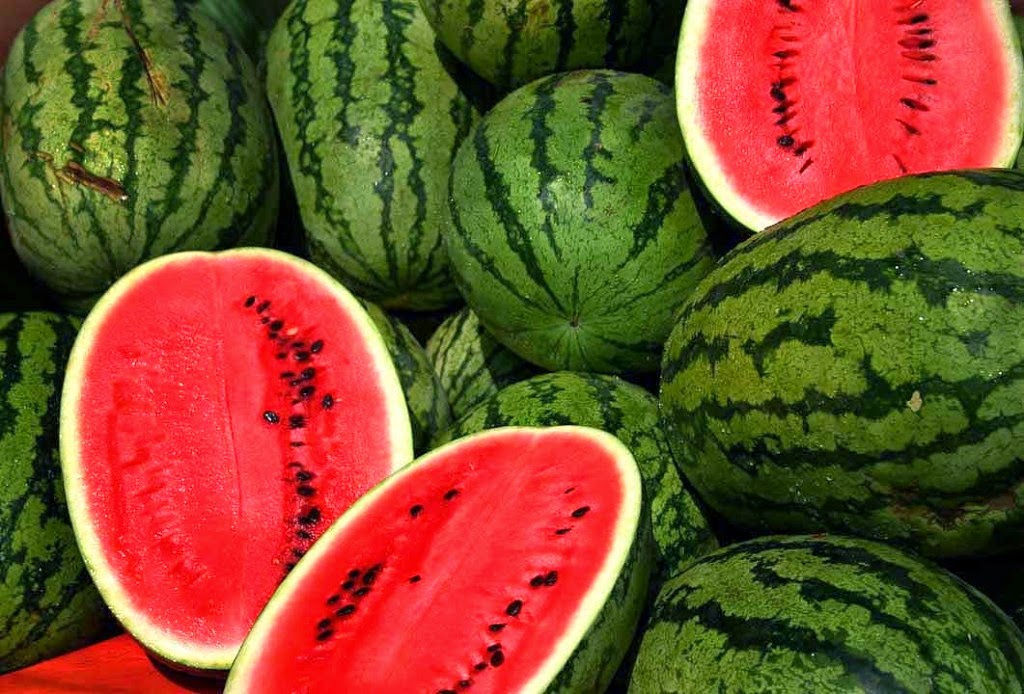
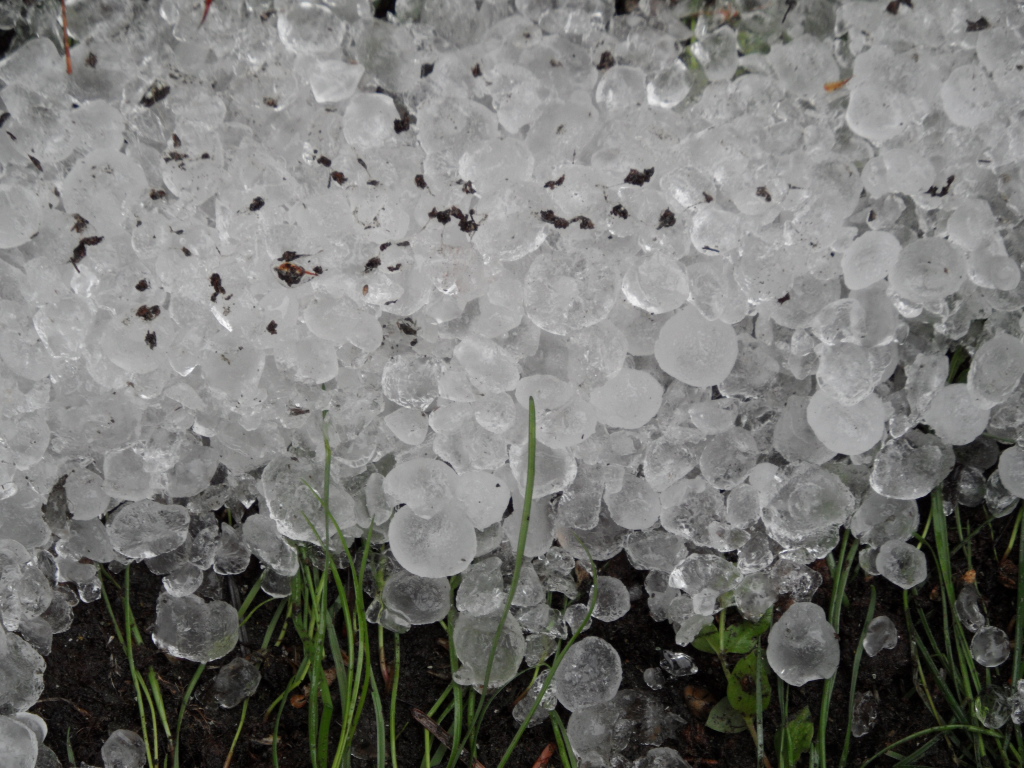
University of Georgia Cooperative Extension vegetable horticulturist, Tim Coolong, estimates that at least 400 acres of watermelons in south Georgia were damaged as a result of a hailstorm that hit on Tuesday 3rd May. "The damage was hit or miss, with some growers being severely impacted, while others a few miles away saw just some high winds," said Coolong. "To have some fields completely wiped out at this stage in the growing season could be devastating." For some growers, having undeveloped fruit was beneficial because heavy fruit sets would have been damaged. When the fruit is damaged, often it will continue to grow. However, the fruit will ultimately be unmarketable, so it will have to be removed from the plant to prevent draining resources. In a more moderate case, the hail will only put holes into the watermelon plant leaves. Because the damaged leaves are more vulnerable to pathogens, the grower will then have to take special care of the plant to ensure it does not acquire any diseases throughout the rest of the growing season. Watermelon's peak season is during the latter part of June or the first couple of days in July, right before July 4. This peak window comes when watermelons are highly sought after and are very marketable. "It is hard to say how many of our Georgia growers plan on providing watermelons for the late market, but we can expect roughly 1,000 to 1,500 acres to be produced," said Coolong. Source - freshplaza.com

23.05.2016

USA - Crop insurance helps consumers

In recent years, crop insurance has emerged as a main safety net for U.S. crop producers. Crop insurance programs have existed since the Dust Bowl of the 1930s. Coverage remained limited until the Federal Crop Insurance Reform Act of 1994 required crop insurance coverage for some other disaster assistance programs. Federal crop insurance premiums are subsidized and have increased in recent years. For example, government costs for premium subsidies and operating costs have increased from $2.8 billion in 2003 to $7.8 billion in 2014. A recent study has shown that the removal of crop insurance would hurt U.S. food consumers. Based on 2013 data, eliminating crop insurance subsidies would result in lower participation rates and reduced food production that would underpin higher food prices. It was estimated that U.S. food consumers would lose $2.5 billion in welfare value if crop insurance subsidies would decline, with additional welfare losses to foreign consumers. In addition, U.S. farmers and agricultural producers would lose roughly $8 billion in welfare gains through the loss of subsidies. To be sure, U.S. taxpayers would benefit from the elimination of crop insurance premium subsidies, yet the net general welfare gains would be $932 million. Falling farm incomes have led to broader economic strains in rural economic activity. Based on Bureau of Economic Analysis data since 1970, nonmetropolitan county farm earnings have a strong correlation with earnings in food and kindred product manufacturing and agricultural service industry. For example, U.S. tractor and combine sales surged with farm income after 2006, peaking in 2013. Since then, the sharp decline in farm incomes translated into plummeting tractor and combine sales. In fact, tractor and combine sales in 2016 are on pace to fall below sales posted prior to the farm income boom. Bankers reporting to Federal Reserve agricultural credit surveys indicate that farm capital spending is expected to decline further in 2016. In addition to plummeting farm capital spending, farm household spending has collapsed with farm incomes. According to bankers in the Tenth Federal Reserve District, farm households have cut household spending along with capital spending. Reduced household spending will place pressure on retail businesses on rural Main Streets, rural incomes and support for charitable organizations in rural communities. In total, sharp downturns in agricultural profitability often spill over into lower investment, capital spending and household spending in rural communities. Lower farm incomes and reduced spillovers into rural consumer spending and ag-related activity could further strain rural poverty rates. Since the 1960s, nonmetropolitan poverty rates have been substantially higher than poverty rates in metropolitan areas. . . . U.S. farmers are facing substantial declines in farm profits, driven by lower commodity prices. With crop insurance as the primary safety net for U.S. agriculture, the learning and implementation of various risk management techniques are the key to helping farmers manage margins in these difficult times. In addition to benefiting farmers, crop insurance payments provide economic welfare benefits to food consumers. Jason Henderson is associate dean and director of Extension in the College of Agriculture at Purdue University. These comments are from his testimony last month to the House Agriculture Subcommittee on Nutrition. Source - iowafarmertoday.com

23.05.2016

India - Gujarat mango growers to get crop insurance by next year

Dedicated Initiative for Sustainable and Holistic Agriculture (DISHA), which markets mangoes on the lines of cooperatives, is all set to offer farmers crop insurance, in a first of its kind initiative in Gujarat. Set up for market support and value-chain development of mango growers, Gujarat-based special purpose vehicle (SPV) DISHA is in talks with the state government to provide insurance for mango crops. “The survey required before insurance can be provided is being carried out in a 200-acre area, through the use of drones and other technology. A report on the same will be presented to the government in July and we will probably be able to bring in the measure by the next year. The survey will allow the government to understand the risks associated with farming mangoes, right from the flowering stage,” said Nitin Macwan, executive director, DISHA. Set up by non-governmental organisations from Gujarat, DISHA, which was inaugurated last year, aims to bring together 20 farmer producer organisations (FPOs) and 20,000 farmers in a span of two years. Raju Deepti, chairperson, DISHA, said, “We want to support the small and medium-sized farmers, who are tricked by the middlemen and end up losing out a lot of money. In the last year alone, we were able to increase a farmer’s profit from R13 to R18 on sale of their products.” DISHA provides non-pesticide training to the farmers in order to produce mangoes which are free from carbide. The fruits are also tested for a maximum residue limit before being approved for sale. The SPV is also teaching farmers about post-harvesting technologies, in order to minimise wastage and losses incurred with the seasonal fruit. While the mango season has just kicked off in the state, DISHA has already sold 25 tonne of the fruit through its distribution channels in Ahmedabad and Gandhinagar. A multi-stakeholder company, DISHA is procuring mangoes from farmers in Amreli, Una, Dharampur, Kaparada, Vasda, Chikhli, Panikhadak among others and selling it all over the state. Stakeholders including Avirat Agro Producer Company aid with the procurement while marketing support is being provided by Valessence Agri Development Services and JN Industries, among others. “In Gandhinagar, 200 metric tonne of mangoes will be sold by Madhur Dairy at their parlours. Other distributors will sell the mangoes in Anand, Nadiad, Kheda and Vadodara and other places,” said Deepti. NM Barot, Manager, Marketing, Madhur Dairy, said, “Last year, we sold 22 tonnes of mangoes for DISHA. This year also, we expect sales to be high. Already nine tonnes have been sold at Madhur Dairy parlours across Gandhinagar, and the season has only just begun.” Along with selling the fruit, DISHA is also making in-roads with its value-addition products. “Last year, we sold aam papad, while this year we have plans of selling the pulp of the fruit. However, we need Food Safety and Standards Authority of India (FSSAI) licensing for that”. Deepti added. DISHA is currently holding discussions with National e-Markets Limited (NeML) for a possible tie-up under the unified market platform called National Agriculture Market (NAM) which seeks to digitalise trade carried on at agricultural produce marketing committees (APMCs). Source - http://www.financialexpress.com

23.05.2016

Philippines - DA starts weather index-based insurance scheme

The Department of Agriculture has started developing a detailed method of geographic insurance to identify specific roles and responsibilities of government agencies to implement the project. The development of Geographic Insurance Units (GIU) aims to identify bases in farm groupings according to land limitation and climate hazards caused by drought and excessive rainfall, said Silvino Tejada, DA-Bureau of Soils and Water Management (BSWM) director. Each farm can be valued or assessed of its potentials and limitations through mapping schemes provided by the BSWM through the GIU. It will also serve as convergence point to harmonize all efforts in climate change adaptation based on the groups of similar farms and farmers. At present, the DA-Philippine Crop Insurance Corp. is in charge of identifying the farmers to be covered by state-funded insurance. The orientation workshop on the development of GIU for weather index-based crop insurance (WIBCI) application aims to help farmers and fisher folks by providing farms and farmer vulnerable to natural calamities and disasters with an insurance package. Under the program, farmers will be given site specific and appropriate intervention in terms of training and extension services and production inputs such as drought and flood tolerant seeds to enhance crop production. Activities related to project implementation will focus on site-specific soil characterization in relation to drainage, texture, and slope. Environmental factors such as elevation, occurrence of pests and diseases will also be considered. Risks related to salt, drought, and flood would be identified. At least P3.9 million will be allotted to the six-month project implementation in Peñablanca and Tuguegarao, pilot sites of the program. The tie-up project between BSWM and PCIC that will embark on its first cropping season is expected to benefit at least 180 farmer beneficiaries. “Climate change somehow gave us the opportunity to innovate and come up with science based measures to adapt to climate change over the long term,” Tejada emphasized. PCIC Insurance Specialist Glaicel Alvarez noted there were 150 farmer beneficiaries of the Weather Index-Based Crop insurance for the past three cropping seasons in May 2011 to December 2015. Reports show that rice farmers in Region II have approved claims amounting to P202,500 and corn farmers have P378,773.50. PCIC provides agriculture producers, particularly subsistence farmers, with insurance against loss of crops and non-crop assets on account of natural calamities such as typhoons, floods, droughts, earthquakes and volcanic eruptions, plant pests and diseases, and other perils. Source - http://www.manilatimes.net/

20.05.2016

USA - Flood-hit farmers ready for aid; veto overridden, planning begins for distribution

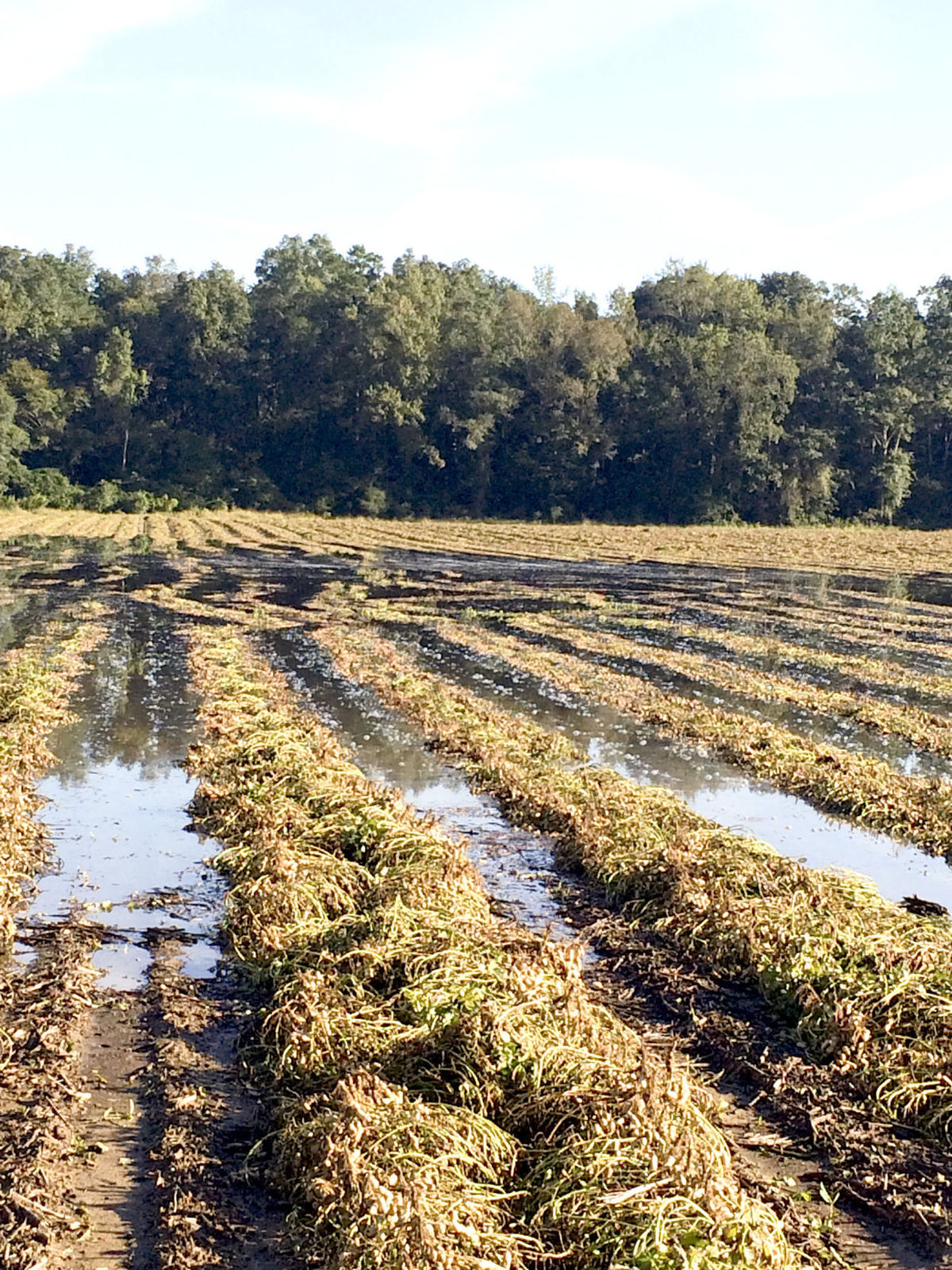
Dean Hutto welcomes the help state lawmakers approved for farmers hurt by last year’s flooding. The Providence farmer lost all of his cotton and about 80 percent of his peanuts. About 20 percent of his soybean crop stayed in the field because of the water. “I can definitely use it,” Hutto said. “I am going to get some benefit out of it and overall I see a lot of farmers in South Carolina are too.” Gov. Nikki Haley vetoed a bill setting aside $40 million to help farmers recover from losses sustained during the floods. Lawmakers overrode her veto this week. The bill will allow farmers to apply for grants of up to $100,000 each, covering no more than 20 percent of their total loss. The grants will only cover production costs such as seed and fertilizer, not debt or new equipment. Hutto said approval is “better late than never.” “As much as anything, the fact that people are eligible to apply for it now is going to be a morale boost for the agriculture industry,” Hutto said. “It is another opportunity to get over last year.” But Hutto cautioned that there are many misconceptions about the aid. “There are going to be some people who think they qualify and they are not going to qualify,” Hutto said. “I may not qualify.” “This is far from a hand-out,” he continued. “It is pretty strenuous criteria. A lot of people will qualify, but in order to prove their loss they will not get the money they think they will. This is a very conservative helping hand. This is not ‘sign your name on the dotted line and you get $100,000.’” To be eligible for a grant, a farmer needs to have suffered a loss of at least 40 percent from the floods, be in a county that was declared a disaster and sign an affidavit certifying that each loss presented is accurate, according to the bill. The T&D Region counties were all part of the disaster area, with some areas receiving nearly 20 inches of rain. Statewide, the total crop loss as a result of the floods was nearly $400 million. It is estimated that about 33 percent of the crop loss was covered by insurance. The S.C. Department of Agriculture, with the assistance of the S.C. Department of Revenue, will be responsible for overseeing a farm aid advisory board which will make recommendations and specify eligibility and grant amounts to farmers. The advisory board will include S.C. Agriculture Commissioner Hugh Weathers or his designee, who will serve as chairman; the director of the Department of Revenue, or his designee; Clemson University’s vice president for public service and agriculture, or his designee; and the vice president for land grant services of South Carolina State Public Service Activities, or his designee. Other members will include one member from S.C. Farm Bureau, one member from the farm credit association, one member from the crop insurance industry and one agricultural commodities producer. The board will hold its initial meeting within 20 days of being formed to recommend an application process. Weathers hopes the first meeting of the Farm Aid Advisory board will be held by the end of May. He said the board will work in collaboration with farm service agencies to ensure distribution efforts are fair and equitable. “That is a big challenge,” Weathers said. One of the goals is to make the process easy to understand. “We want to make sure we don’t skip anything important and to follow all the steps in the process,” he said. “It is important to get this done as soon as we can.” Weathers has expressed hopes that the money will be available by the end of summer. He’s encouraging farmers to build relationships with their suppliers in hopes credit will be extended until the money is available. When the process is approved, the Department of Agriculture will provide the chairmen of the S.C. House Ways and Means Committee and the Senate Finance Committee with a written copy of its application process. Farmers will then be able to apply for grants within 45 days after the adoption of the application process, according to the bill. To determine loss, the advisory board will measure the farmer’s total loss of all affected agricultural commodities for 2015 against the person’s expected production of all agricultural commodities affected by the 2015 flood. The farmer’s production yield history will be used to gauge the loss for insured crops. In determining the loss for uninsured crops, the board will use the most recent year’s county price and county yield as determined by the National Agriculture Statistics Service and the United States Department of Agriculture, the bill states. As part of the application process, farmers will have to provide proof of farm ownership as well as some farm records. The bill notes that if farmers provide inaccurate information or use funds inappropriately, they will need to refund the entire grant amount. The advisory board will dissolve 45 days after the awarding of the final grant, or by June 30, 2017, whichever comes first. If there are funds remaining, they will go back into the state’s general fund, according to the bill. Source - thetandd.com/

20.05.2016

USA - Hail damages properties, vehicles in Las Cruces

Residents are picking up the pieces a day after nickel-sized hail and nearly an inch of rain pummeled the City of the Crosses. An office building off Lohman Avenue had significant roof damage. Numerous farms in the Fairacres area west of Las Cruces also had crop damage. Jay Hill, co-owner or Hill Farms, told ABC-7 an onion farm just north of him got hit really hard. Hill said the crops were just about ready to harvest after nine months. He estimates clean up, along with what was lost, can add up to hundreds of thousands of dollars. "Most of these crops are growing for 8-9 months and, at least in New Mexico, we don't have insurance to cover any of those kind of crops," Hill said. "It's sickening. Not only is it extremely hard to cover financially, just even the emotional toll. Farmers, we take a lot of pride in what we produce and to have it completely wiped out before we get to harvest it it's pretty detrimental to a farm." There were also dinged up cars and shredded trees a day later at New Mexico State University. The Las Cruces Police Department says they responded to a handful of fender-benders. There were no significant accidents according to the sheriff's office and fire department. Source - kvia.com/

20.05.2016

S. Africa - Climate change response plan for ag sector

On Tuesday 17 May, the Western Cape government launched a climate change response strategy, known as Smart Agri, which sets out a roadmap to combat the impact of extreme weather events on the province’s agriculture sector. Research and climate change modelling shows annual temperatures are rising and droughts, floods and heat waves will become more regular in the province. These trends highlighted the need for a co-ordinated response from government and the private sector to mitigate the impact of climate change. The final assessment, and the mitigating steps it proposes, is the result of two years of extensive collaboration and engagement between the Western Cape Government (specifically the Departments of Agriculture and Environmental Affairs and Development Planning), the University of Cape Town’s African Climate and Development Initiative and a wide range of stakeholders in the private sector. The findings show unequivocally that, if not addressed, climate change will have negative impacts on the region. Minister Winde said: “In the recent past we’ve had severe floods, droughts and heat waves. Between 2003 and 2008, these events cost our economy over R3 billion. This assessment has told us that these events are likely to increase in frequency, underscoring the need for urgent action to protect our sector from the threats of climate change. If we do not act, potential jobs and revenue are on the line. Scenario planning shows us that if we continue without a coordinated response, the knock on effect will also mean increased food prices. It is our duty to act now to ensure we have a sustainable agriculture sector in the future.'' The final report offers tailored climate change response plans for each of the Western Cape’s key agricultural regions. Source - freshplaza.com/

20.05.2016

Ethiopia - Plant Clinics Key to Reduce Loss of Crop Production

Workshop highlighted the need to scale up community-based plant clinics to delivering practical advice and solutions to farmers to deal with crop diseases and pests thereby boosting productivity. A two-day national stakeholders forum on Centre for Agriculture and Biosciences International(GABI)- Ethiopia Plantwise Initiative was opened yesterday on the premises of the Ethiopian Agricultural Centre for Research. Agriculture and Natural Resources Ministry Plant Health Regulatory Directorate Entomologist and CABI Plantwise National Coordinator Konjit Feleke told journalists on the occasion that though no study and analysis have been conducted, there is much loss of production due to pests and crop disease. It is in this light that the CABI Ethiopia Plantwise Initiative was launched in 2013 following agreement reached with CABI. CABI has been among the leading centers in helping countries to promote agricultural production through prevention of crop diseases and pests. As part of the Initiative, a pilot project was first launched in Oromia State where 8 community-based clinics have been established and later expanded to Amhara and Tigray States According to Konjit, plant clinics provide advise and recommendations to farmers for crop diseases prevention and crop management and prescribe the necessary pesticides and treatments. Currently, 45 community-based plant clinics are supporting the farming communities in the States by delivering them an advice and treatments for crop diseases and pests. The States are increasing the numbers of plant clinics on their own resources realizing that such clinics would improve productivity and prevent loss of production, she added. Farmers bring samples of diseased plants for identification and advice. Feedback is provided on spot for more recognizable problems. But for any things that is difficult to diagnose. The clinics help to achieve crop quality and yield, loss of production due to disease and pests, Konjit said. With the current challenges posed by the rising pests and diseases problems , there is a need to find innovative way to give solution to agrarian communities. The plant clinics are well equipped with experts trained by the Initiative and are run by local extension staff known as plant doctor who set up the clinics in rural market place to give services to farmers. The workshop is reviewing the performance of pilot projects and put way forward for 2016 plans. Source - http://allafrica.com/

863
of 1225