NEWS
900
of 1224
News
28.12.2015

Ethiopia - Micro Insurance in Mitigating Uncertainty

In a bid to fight poverty and enhance productivity, small-scale farmers facing financial constraint and trapped in subsistence way of living should be integrated to the market. To realize this, the role of micro finance and insurance should be recognized. One of the bottlenecks in changing the life of the poor to better is lack of access to finance and credit. Currently both public and private banks and insurance companies are flourishing. But, due to the rule of the game, their loan and insurance facilities are not accessible to the destitute because they have neither the property that can be utilized as a collateral nor the payment for premium. Hence, in order to fill the gap, regarding access to finance both in towns and rural parts of the country, saving and credit associations are established. They are serving their members in this regard. The associations are established by the members and all activities are governed by the proclamation. Members are benefiting from credit services according to the amount they save. But unlike getting credit in towns for different ventures, purchasing agricultural inputs for the enhancement of productivity in small-scale farming needs more money, which is beyond their credit getting capacity. Hence, the involvement of micro insurance business in small farming is essential to boost farmers' moral and inspire them to do their work vigorously and to invest more in their farm. Of course small-scale farming is subsistence, vulnerable to drought and extreme weather conditions. It as well is subject to herbs and pests. When such disasters hits, the crop will be devastated. Unlike other sectors such as manufacturing the small-scale farming sector is beyond the control of farmers apart from being very risky. Therefore, no one seems forthcoming in providing both finance and insurance service to the farmers. However, looking the long-term benefit and delivering corporate social responsibility some private companies with the cooperation of the government and numerous stake holders have been venturing to provide micro insurance services. And such sacred objective must be appreciated and other financial institutions should follow their footsteps. Providing micro insurance to small-scale farmers needs the cooperation of all stakeholders and need pains taking decision. As it is known in the country agriculture is practised in different agro-ecological zones. Some parts get all year rainfall, others sufficient, while others in arid areas are frequently prone to chronic drought. The availability of groundwater, soil type and the prevalence of pests and diseases very much vary. Hence all this should be studied and sorted out in order to determine the feasibility of the provision of micro insurance services. But such complicated task should not left for insurance givers only. It requires the involvement of the government, donors and research institutions. More and more financial and and technical assistance is essential. Currently with the cooperation of stakeholders, micro insurance and the task of financing small-scale farms have been going on in several states. Pilot projects have been implemented in Tigray and Amhara states and from the year 2007 EC to 2009 EC more than 9250 small-scale farmers could be provided weather insurance for the damage caused by drought. On the other hand, through the cooperation of UNDP in Gambella State for 313 and in Tigray State for 790 small-scale farmers weather insurance service worth 2.1 million birr is provided for the crop damage they recently suffered due to El Nino. Similar to the small-scale crop production, the livestock sector need micro insurance and finance service. And up to now saving and credit association particularly in the lowland part of the country are not established. Hence the only way to financially reach them out is through micro insurance scheme and here the support of stakeholders is vital. Pastorals unlike sedentary farmers move from place to place in search of grazing land and water. In the drought-prone areas facing water shortage is a common phenomena. When rain fails, pasture for grazing will be in short supply. The less integration of pastorals to the market further worsens the situation and due to lack of mitigation capacity in the part of pastorals, cattle meet their death in the wilderness. Of course currently to integrate pastorals to the market and to sell their cattle in time of desperation, the government has established livestock market facility, institutions, to the community so as to ward off loss the pastoral incur. The government is doing its level best with its limited capacity. And enhancing such mechanism should be increased. Though it is the largest in Africa, the nation livestock population, due to backward and primitive production system, its contribution to the economy is insignificant. Hence, to tap the resource efficiently modernizing the sector can be taken as an option. And in this regard providing credit and financial service to the pastoral community can sustain their livelihood in the time of adversity. How ever, the provision of insurance is not as such simple. Unlike the sedentary farm, it should be supported by the information obtained form the satellite. The satellite information indicates the place were sufficient water and grass is available and after analysing and interpreting the information by the professionals the insurance agreement is signed with the pastorals and in some parts of the country pastorals could purchase premium according to their financial capacity and when extreme weather condition occurs, they could save themselves and improve their livelihood. Currently such practice is continued in the eastern part of the country with the support of donors. In sum, the provision of micro insurance service both for small-scale sedentary farmers and pastorals is still in its infancy level thus, it should be enhanced. Because in our context both way of life is vulnerable to risk caused by nature and when it developed, it can transform the sectors and long lasting solution can be reached. Source - http://allafrica.com
28.12.2015

India - Unseasonal Rain Damages Kharif Crop in Kendarpara

The unseasonal rain has washed away the hopes of farmers in the coastal district of Kendrapara who were expecting a bumper kharif crop. Heavy rain lashed the district last week damaging paddy and seasonal vegetables crops. The unseasonal rain also damaged vegetable crop  on several acr es of land besides pulses in many parts of the district. Crop damage has been reported in several villages of Aul, Mahakalapada, Rajnagar, Marsaghai and Garadapur blocks. Secretary, District Krushak Sabha, Gayadhar Dhal demanded a survey to assess the crop damage  and compensation for affected farmers. A farmer of Bharatpur village Manoj Sahoo said, “I had harvested paddy in two acres of land last week but due to unavailability of workers, I could not harvest paddy in rest two acres which got damaged in the rain.” The unseasonal rain also severely damaged green gram, black gram and vegetable crops on large tracts of land. Each year, farmers of these areas face crop loss either due to flood, deficit or unseasonal rain. But, the district administration pays only lip services to the problems of farmers, alleged Prafulla Nayak, a farmer of Pattamundai. Meanwhile, betel growers of the district and its nearby areas are facing hard times due to the indifferent attitude of the district administration and non-implementation of various schemes meant for them. Brajakishore Das, a betel grower of Kanika, said betel leaves in many farms have been ruined by the rain. Lakhs of betel vines are scattered on the ground due to wind, he added. Deputy Director of Agriculture, Kendrapara, Prafulla Chandra Mishra said farmers who lost their crops due to unseasonal rain will get assistance from Agricultural Department. Source - http://www.newindianexpress.com

28.12.2015

India - Standing mustard crop damaged in Jhajjar villages

Farmers of Munimpur and Kukdola villages have accused the Reliance Company of destroying their mustard and wheat crops spread over 50 acres.Though the crops were cultivated over the land bought by the Reliance for setting up special economic zone (SEZ) nine years ago, farmers said since the SEZ was de-notified, no one could stop them to do farming works over there.“Reliance officials along with significant number of private security guards came to the village during the past week and ruined the standing crop of mustard and wheat crop sowed last month,” said Satpal Pahalwan of Kukdola village.He said several farmers of the village had to face huge loss due to damage of their crops. Mustard crop was ripe and farmers were planning to harvest but the company officials shattered their plans by destroying the crops.Aashish Gulia of Munimpur village said acute resentment prevailed among farmers who lost their crops of mustard and wheat spread over 30 acres in the village.He said the company was to release them royalty of Rs 33,000 per acre per annum in lieu of buying their agricultural land but not a single penny had been released in this regard.“The company has failed to give the farmers royalty and develop the SEZ. Farmers use land to earn their livelihood but the company has caused them heavy losses,” said Parveen, another farmer.Meanwhile, Bhartiya Krishak Samaj Sangthan (BKSS) activists led by state chief Mahabir Gulia today visited the villages and took stock of the situation. He urged Reliance company to provide farmers their compensation of Rs 35,000 per acre for their crop loss.Jhajjar DC Anita Yadav could not be contacted, despite repeated attempts. Source - http://www.tribuneindia.com

25.12.2015

Kenya - Onion disease discovered, farmers to apply treatment quickly

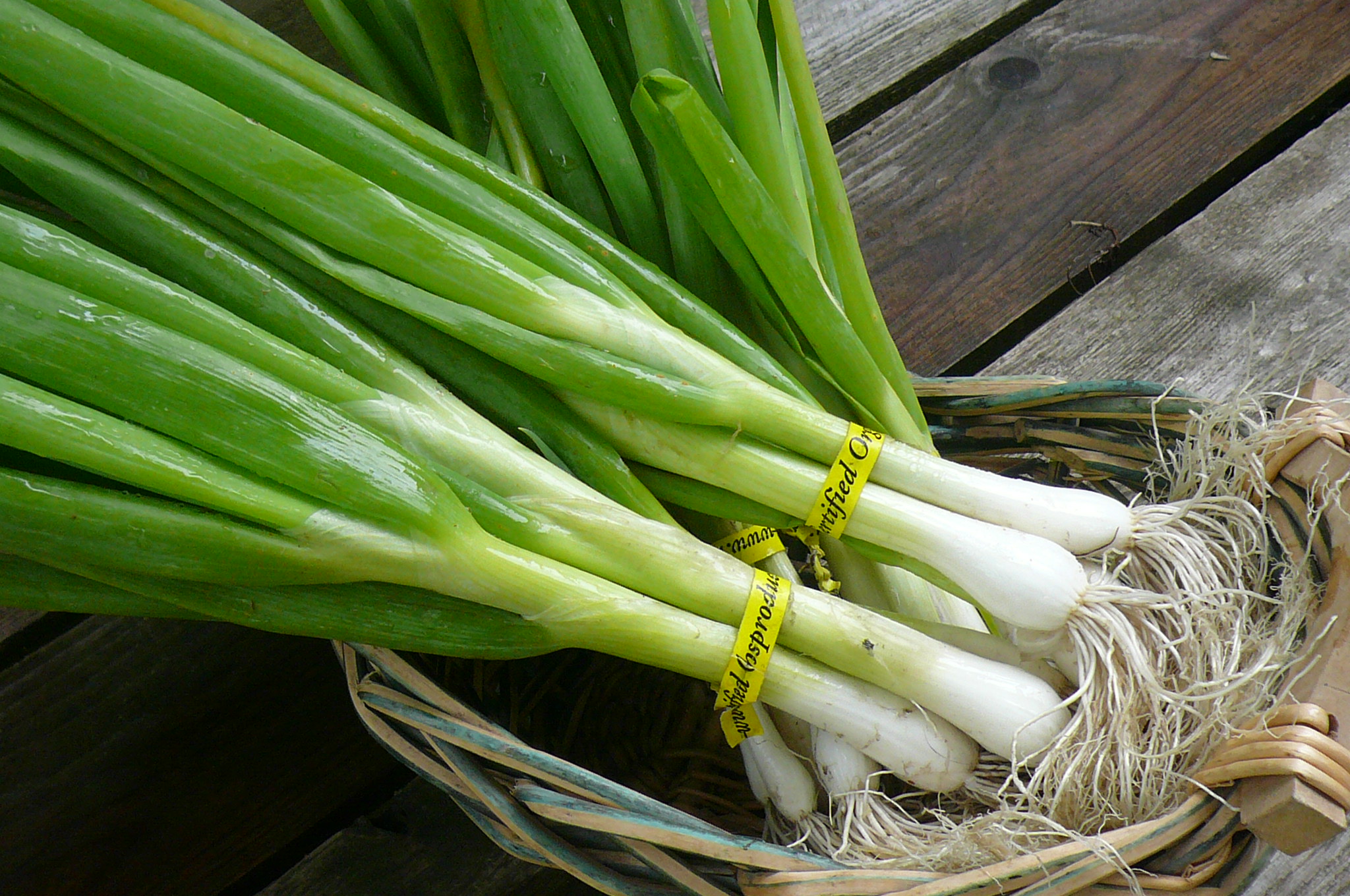
Onion farmers in Kiambu have been advised to seek agriculturists’ attention over the outbreak of Stemphylium Leaf Blight onion disease. Speaking at Wandui farm on Wednesday, Jonathan Mugo, an agriculturist officer in Gatundu North Sub County noted that the disease is caused by heavy rains and needed serious attention before destroying the crop. “The rains are to blame for the disease here at Wandui Farm. The disease is usually caused by heavy rains mixed with morning dew which regulates flow of nutrients to the leaflet of the onion crop,” he said. Mugo warned that the crops can wither a month after discovery of the disease if not examined immediately. He advised farmers to consider applying benzothiadiazole (Bion®) and di-potassium phosphate salt (K2HPO4) to their onion plantations for quick treatment. The agriculturist highlighted that the onion crops affected by the disease and which have received treatment can only be used for consumption after two weeks to allow the deepening of the treatment applied. “Consumers cannot use the onion which have been treated before the end of two weeks. This can cause intestinal problem,” he revealed. Mugo noted that the whole sub county onion farmers might have been affected and urged them to apply treatment as early as they discover the disease to avert loss of their yields. Source - http://www.hivisasa.com

25.12.2015

Australia - Hail storm destroys Queensland strawberry crops

Wednesday 23 December, hail in Queensland had treacherous effects on strawberries, lettuce and broccoli crops. One grower has allegedly lost his whole strawberry crop but growers continue to assess the damage of the severe weather today.   Strawberry growers have been the worst affected by huge amounts of hail between 4-10 mm, with the horticulture industry body Growcom saying a major strawberry farm at Stanthorpe had taken the brunt of the hail storm. Reports indicated that a major strawberry producer, Strawberry Fields, had lost the entire crop.   "It may be some time before growers are fully able to assess the damage to their properties. Trees are down everywhere, making assessments difficult," Chief executive officer Pat Hannan said.   Queensland Strawberries industry development officer Jennifer Rowling said Stanthorpe and the Granite Belt was an emerging summer strawberry production area.   Ms Rowling said the loss to the individual grower was devastating, but overall, she said the loss of one crop would not impact strawberry prices.   She said Queensland Strawberries was now trying the contact the strawberry runner farms to check the supply of winter strawberry plants had not been damaged. Stanthorpe strawberry grower Graham Stevens, from the large Strawberry Fields strawberry farm operation, said the monetary lost would be "fairly considerable".   "We're in full production and we'll have nothing for a time period," he said.   Source - http://www.freshplaza.com

25.12.2015

USA - USDA removes farm program payments to managers not farming

The U.S. Department of Agriculture finalized Dec. 15 a rule to ensure that farm safety-net payments are issued only to active managers of farms that operate as joint ventures or general partnerships, consistent with the direction and authority provide by Congress in the 2014 Farm Bill. The action, which exempts family farm operations, closes a loophole where individuals who were not actively part of farm management still received payments. “The federal farm safety-net programs are designed to protect against unanticipated changes in the marketplace for those who actively share in the risk of that farming operation,” said Agriculture Secretary Tom Vilsack. “To ensure that help goes to those who genuinely need it, such as America’s farm families, the Farm Bill authorized USDA to close a loophole and limit payments from those not involved on a daily basis in nonfamily farm management.” Since 1987, the broad definition of “actively engaged” resulted in some general partnerships and joint ventures adding managers to the farming operation, qualifying for more payments, that did not substantially contribute to management. The rule applies to operations seeking more than one farm manager, and requires measurable, documented hours and key management activities each year. Some operations of certain sizes and complexity may be allowed up to three qualifying managers under limited conditions. The changes apply to payments for 2016 and subsequent crop years for agriculture risk coverage and price loss coverage programs, loan deficiency payments, and marketing loan gains realized via the marketing assistance loan program. As required by Congress, the new rule does not apply to family farms or change regulations related to contributions of land, capital, equipment or labor. The changes go into effect for the 2016 crop year for most farms. Farms that have already planted fall crops for 2016 have until the 2017 crop year to comply. For more details, producers are encouraged to consult their local Farm Service Agency office. This announcement was made possible by the 2014 Farm Bill, which builds on historic economic gains in rural America over the past six years, while achieving meaningful reform and billions of dollars in savings for the taxpayer. Since enactment, USDA has made significant progress to implement each provision of this critical legislation, including providing disaster relief to farmers and ranchers; strengthening risk management tools; expanding access to rural credit; funding critical research; establishing innovative public-private conservation partnerships; developing new markets for rural-made products; and investing in infrastructure, housing and community facilities to help improve quality of life in rural America. Source - http://bolivarmonews.com

25.12.2015

USA - Mississippi State researchers identify threat to soybean crops

Mississippi State University (MSU) researchers have identified a fungi-based disease that has been plaguing soybean crops in the state in recent years. Soybean Taproot Decline produces yellowed leaves on soybean crops like other diseases, but is a year-round menace. “This disease has eluded all of us, and I think the reason for that is it has been misdiagnosed as a number of similar diseases we have seen before in soybean, such as sudden death syndrome,” Tom Allen, MSU Extension Service's plant pathologist and Mississippi Agricultural and Forestry Experiment Station (MAFES) researcher, said. “It’s not on a single fungicide label, and it has never been reported as an issue in soybeans. I’ve been looking at this ever since I got here in 2007.” The best time to spot Soybean Taproot Decline is during the vegetative stage of growth, when the plants are first emerging, according to Allen and MAFES researcher Maria Tomaso-Peterson. “If you grab a soybean plant and pull it out of the ground, and you leave the vast majority of the taproot there, or you have a portion of the taproot and you break it, and it snaps and sounds dry, you have taproot decline,” Allen said. “The organism that causes this essentially produces a dry rot and rots the taproot away. The base of the stem will look black, indicating fungal growth.” Preliminary data on tested fields shows that there is, on average, about 18 percent harvest yield loss because of the fungus. “As we looked at several fields across the state and conducted trials of our own, it became evident that this disease has the potential to be a significant yield reducer if allowed to go undetected,” Allen said. “There are severe cases that we’re observing in some instances, but it is not yet a major issue in general. Not every field where taproot decline occurs is going to have an 18 percent yield reduction. I would say most fields that have this particular disease would have minimal amounts of yield reduction as a result.” MSU faculty will continue testing Soybean Taproot Decline in fields, greenhouses and laboratories. Source - http://cropprotectionnews.com

25.12.2015

USA - Farmers need help to survive floods

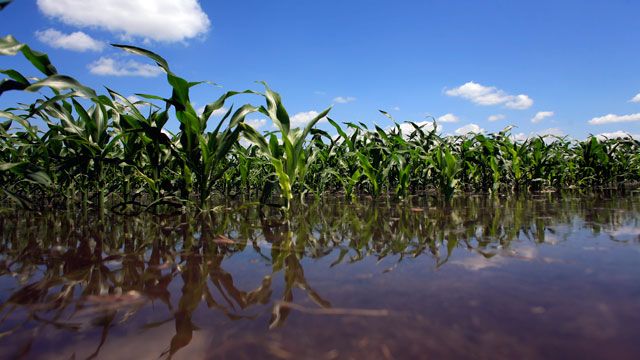
The state House's budget leader says he wants to reassure South Carolina farmers devastated by October's flooding disaster that the Legislature will help them out. Lawmakers must help farmers survive direct crop losses estimated at $376 million, said Ways and Means Chairman Brian White. But he is not yet proposing a specific amount for the state to pay. Federal aid is still possible, he said. "They need to know there's somebody behind them," White, R-Anderson, told The Associated Press after announcing his push for a Palmetto Farm Aid bill. "We're going to do something to help out the No. 1 industry in South Carolina. It's the backbone of our state." Earlier this month, hundreds of farmers packed the Statehouse to beg Gov. Nikki Haley to ask for federal money to offset losses. But the Republican governor has steadfastly refused, saying farmers shouldn't get special treatment over other businesses beyond what's already available, such as subsidized flood insurance. Haley has instead asked the U.S. Department of Agriculture to expedite insurance payments to farmers. Underinsured farmers shouldn't be bailed out, her office has said. But GOP Agriculture Commissioner Hugh Weathers says those payments — even for farmers with top-notch insurance — won't come close to covering their losses, which didn't stop with the initial flooding. While the Oct. 2-5 storm that dumped 2 feet of rain on parts of the state did the bulk of the damage, the continued rainfall worsened the problem, as crops rotted in the fields, Weathers said. The estimated losses include $330 million worth of fall crops destroyed or damaged in the field at harvest time and $46 million in winter crops that can't be planted in the muck. They follow summer crops lost to drought, he said. Farmers' annual operating loans are coming due Dec. 31, and the banks will start sending out unpaid notices in January, said State Farm Bureau President Harry Ott. White said he worries family farms won't be able to plant crops next year and will be forced out of business. "They've got to get crops in the fields," he said. "We don't want to lose young farmers." White said he's stunned by Haley's position. "We give away hundreds of millions in incentives every year to other corporations. Now we have farms here at home that have been here for generations, and the governor's saying, 'Too bad. You made a bad business decision,'" he said. "It was a tragedy. That's not a bad business decision. That's an act of God." The federal budget Congress passed last week includes $300 million in federal disaster aid for South Carolina and other states. How much will come to South Carolina is unclear. Haley must first submit her plan for the money. Haley previously asked the state's congressional delegation for $140 million to help poor homeowners, many of whom had no flood insurance. Asked for a response to White's proposal, a Haley spokeswoman did not directly address it or farmers. "In the wake of historic flooding, the governor and Team South Carolina immediately went to work with federal, state and local officials to take care of everyone who was impacted," Chaney Adams said. "But we know there are still people struggling, who have homes and businesses to rebuild, and taking care of those long-term, unmet needs is exactly why the governor launched the One SC fund and requested federal funds to rebuild to safe and livable homes." Earlier this week, the One SC relief fund announced awarding $500,000 to 13 charities in its initial round of grants to rebuild or remove mold from about 350 homes. Source - http://www.lancasterfarming.com

25.12.2015

USA - Farm Bill To Face Changes

Earlier in the year there was an attempt to change part of the Farm Bill. It was a move opposed by Iowa Senator Chuck Grassley. But now it's been reopened and Grassley says he'll try to take advantage of it.   For years he's tried to fight to tighten farm payment limits, capping them at $250,000 per farm, which he says would save nearly $400 million.   That ended up in both House and Senate versions of the farm bill but was taken out in committee.   But with the just enacted spending bill, commodity certificates were brought back without payment limits.   Grassley says this is a new chance to curb that, "The principle that a farm bill should be opened up in the middle of the five years that it's supposed to be operational. And the way we argued successfully so we didn't take $3 billion out of crop insurance has been violated now and it gives me an opportunity to go back and try and accomplish some of the things I want to accomplish."   Grassley blames southern producers and lawmakers for getting certificates back up, "They were done away with in 2008 because they weren't needed with a whole new two programs to support agriculture. So it's just a strong organization. Southern agriculture trying to get more for its people and Midwestern agriculture doesn't benefit from it." Source - http://whotv.com

25.12.2015

India - Up to 50% of crop damaged in 19 districts of Rajasthan

Members of a central government-appointed team, which is presently in Rajasthan to assess the crop loss due to bad rains, have said that crop loss in 19 districts of the state has been pegged at 50 per cent, while in one it is around 33 per cent. "Our team members visited remote villages in various districts affected by `the natural calamity'.They found the situation to be grim. We will ask the Centre to sanction required funds for the rehabilitation of affected farmers," said Vasudha Mishra, MD at Na tional Co-operative Development Corporation, who is leading the high-level Central team. Mishra said those with damaged homes will be given relief by way of `construction work' under MNREGA. Employment for 150 days under the scheme would help the needy people earn livelihood, she said. The team held discussions with state home minister Gulabchand Kataria, agriculture minister Prabhulal Saini and some senior officials. A video conference with the collectors of flood-hit districts was also conducted and instructions were given out by the team on the measures to provide relief to the affected families. "Some 14,500 villages were hit by flooding during the kharif season. The state government has demanded a relief package of Rs 10,500 crore from the central government," said Kataria on Thursday after the meeting with the members of the central team at the Collectorate. "Crop loss has been reported in some 32 lakh hectare area in the state affecting 36 lakh farmers. A detailed pro posal seeking relief, medicines, drinking water and rehabilitation of the victims has been prepared," said Rohit Kumar, commissioner of Disaster Management and Relief Department. During the meeting, the Central team said that irrigation coverage needs to be augmented so that farmers do not remain at the mercy of the rain. Members of the central team - Mukesh Kumar, Bheem Prakash, Sumit Priyadarshi, Vijay Thakre, K K Das - got feedback from the farmers, who asked for a separate parameter for loss assessment in horticulture crops like jeera, isabgol, saunf and ajwain. Source - http://timesofindia.indiatimes.com

24.12.2015

Ghanaian student honored for innovative approach to cut agriculture losses

Adolph Okine, a first-year Ph.D. student studying actuarial science at the Wisconsin School of Business, took an innovative statistical approach to predicting the negative effects of climate change on agriculture, and it paid off. He and his co-authors recently won the Best Paper Award from the Journal of Insurance Issues (JII) and The Center for the Study of Insurance Regulation (CSIR) at St. John’s University’s School of Risk Management, Insurance, and Actuarial Science in New York, New York. The paper, “Drought Triggered Index Insurance Using Cluster Analysis of Rainfall Affected by Climate Change,” introduces a formula for developing an index-based insurance product that could help mitigate risk for farmers in developing countries that are impacted by weather patterns, such as Okine’s home country of Ghana. “Farmers in developing countries need a safety net, as government and foreign aid is not reliable or sustainable,” says Okine. “Agricultural insurance products seem to be one way to provide stability. I'm proud to have worked on a project that has the potential to help countries like Ghana that depend on agriculture attain economic independence.” Agricultural farming represents 44 percent of Ghana’s GDP, and recent decreases in rainfall have taken a toll on farming, as they have in other developing countries. Farmers can use agricultural insurance to offset crop losses, but the transaction costs of traditional insurance are too high. Index-based insurance, on the other hand, offers protection at a lower price point because they pay out only if rainfall levels hit a certain trigger, cutting the costs associated with investigating losses listed in traditional claims. “Many people are excited about the potential for index-based insurance policies to help mitigate the risk farmers face in developing countries,” says Okine’s advisor, Justin Sydnor, associate professor of actuarial science, risk management and insurance. “The appeal of these policies is that they offer people protection in the form of insurance payouts based on measures of the amount and timing of rainfall in the area. That type of plan is much cheaper to deliver compared to standard insurance policies in the U.S. that require claims adjusters to come out and verify individual losses.” Index insurance plans only work if the index that is used to determine whether or not a payout is made is actually a good indicator of whether the farmer's crops failed or not. Therefore, it's important to get the "trigger point" for these policies right, so that they are paying out at the correct times. “Our team needed to come up with pricing for the index insurance product,” says Okine. “We were trying to see if rainfall could be used as an index for crop yield. I realized that the trigger that triggers the insurance business was important in pricing, and I wanted to come up with the optimal trigger.” Prior studies have tended to focus on fairly arbitrary thresholds of rainfall, such as rainfall below ten percent of normal. Okine took a more data-driven approach and used a clustering model to determine an optimal trigger in rainfall for drought identification. His team then applied cluster analysis to separate groups with similar rainfall characteristics, including crop yield, to construct a drought trigger. This approach uncovered a unique threshold for rainfall that is strongly correlated with crop yields in each of the districts they analyzed in Ghana. Okine’s team also noted that because drought is a recurring scenario, farmers should be encouraged to explore other methods of farming, such as drought resistant seed, in order to decrease their exposure to crop loss. “Adolph and his co-authors’ method of using data to decide where the trigger points for index policies should be is an important and practical step toward improving the quality of these plans for people in Ghana and throughout the developing world,” says Sydnor. “He is using cutting-edge statistical techniques to answer important questions in insurance and has the passion to apply his skills and knowledge to help his home country of Ghana.” Okine and his co-authors presented the paper in a research symposium in conjunction with the CSIR’s annual conference on insurance regulation in New York City on October 15, and the paper will be published in the March 2016 issue of the JII. Source - http://pulse.com.gh

24.12.2015

Mexico - Damages in 4,500 hectares of plantain in Tecoman

Carlos Ramirez, president of the Association of Plantain Producers of Tecoman, stated that the rain on December 11 has caused the Black Sigatoka fungus to expand to 4,500 hectares of plantain in this municipality. In an interview with Angel Guardian, Ramirez said that farmers had no money to address the problem, so it's essential producers receive support from the three levels of government. He said that Hurricane Patricia had left a critical situation in the plantain sector. "We know nothing of politics, the only thing we're interested in right now is that the support flows and that they should not be discretionary, they must be in plain sight so that there is transparency. What we want is to find a way so that the sector is not abandoned because of the electoral ban," said Carlos Martinez. Source - http://www.freshplaza.com

24.12.2015

India - Agriculture Ministry launches two mobile apps for farmers

In a bid to let farmers harvest the best of mobile technology, the Agriculture Ministry on Wednesday launched two mobile apps for farmers here. Launching the apps, Union Agriculture and Farmers Welfare Minister Radha Mohan Singh said the government would launch a new crop insurance scheme next month, which would aim speedy disposal of claims with very less premiums. Mr. Singh said the mobile apps — ‘Crop Insurance’ would help the farmers not only to find out complete details about insurance cover available in their area but also to calculate the insurance premium for notified crops, coverage amount and loan amount in case of a loaned farmer. The other app — ‘AgriMarket’ could be used by the farmers to get the prices of crops in the market (mandi) within 50 km radius of the device and other mandis in the country, he said. Mr. Singh said the Ministry was organising “Kisan Jai Vigyan Week” to celebrate birth anniversary of Atal Bihari Vajpayee and Ch. Charan Singh, starting ensuing December 25. Launching of these mobile apps is the part of the week-long celebrations.  Source - http://www.thehindu.com

24.12.2015

New Zealand - Tasman storm damage hits apple growers hard

Severe storms in the Tasman region of New Zealand last week have hit fruit growers in the region hard, with early reports indicating some apple blocks have been almost entirely wiped out. Apple grower Simon Easton says the damage looked worse than in 2014, when hail and storms hit the region in November. “It’s pretty severe. There’s more damage than last year because it’s later in the season, so the fruit’s bigger and the damage is worse,” he says. “Growers are still assessing blocks and deciding whether export or processing is the best option at this stage.” Mr Easton – who is also chairman of the Motueka Fruit Growers Association – says some blocks had up to 85-90% fruit damage, but then some growers had only a small percentage of their crop affected by the storms. “The majority of the apple region and Nelson has been affected. I don’t know too many that haven’t been hit to some degree this year,” he says. With growers already paid for this season, Mr Easton says the full financial impact of the damage won’t be known until the middle of next year, but expects it to be worse than the damage done by the storms in 2014. While it’s still too early to estimate volumes in the wake of the latest storm damage, Mr Easton says some areas weren’t as badly affected as others. “All our farms have been touched by the storms this year…we’ll probably lose around 30% of our crop,” he says. “But we have one farm that didn’t really get hit this year, which was totally hit last year, so it’s just a total about-face in that regard.” He says growers have also come together to support each other as tough calls are made about different blocks. “We just talk amongst ourselves and reassure each other that we’re not alone. All of us have been affected so we help each other out, you gotta keep your chin up.” While the damage will have an impact on volumes this season, Mr Easton says he doesn’t think it will affect the health of the apple trees or future yields for growers in the region. Source - http://www.freshplaza.com

24.12.2015

India to launch new crop damage insurance scheme

India will launch a new farm crop insurance scheme early next year and use drones and other technologies to assess crop damage, the agriculture minister said on Wednesday, in what could be Prime Minister Narendra Modi's first major move to address rural hardship. The impact of unseasonal rains and two straight years of drought on agriculture that sustains over two thirds of India's 1.25 billion people has dented Modi's popularity in the countryside, contributing to a humiliating loss for the premier in elections last month in the largely rural state of Bihar. Several debt-laden farmers have committed suicide this year, and on Wednesday Agriculture and Farmers Welfare Minister Radha Mohan Singh said that delays in clearing payouts for crop losses was the "biggest reason for destroying farm families". "I completely believe that in the beginning of the new year we'll gift (a new insurance scheme) to farmers," he told reporters after launching two mobile applications to check farm produce prices and crop insurance details. "The new insurance policy will ensure compensation is paid as early as possible. In the current system payments keep getting delayed, destroying so many families." Reuters reported last week Modi would adjust budget priorities in 2016 to focus on social initiatives like the insurance scheme, while capping infrastructure spending he prioritized since taking office 19 months ago. The government will lower the share of insurance premiums farmers pay from the current rate of up to 40 percent, which is one of the main reasons that only about a 10th of India's estimated 263 million farmers opt for crop insurance. Federal and state governments could share the remaining premium costs, Singh said, adding that drones and other technologies will be used to minimize human interference in processing claims to expedite payments. Satellites or drones are extensively used to assess crops for insurance policies in developed countries such as the United States, but India still depends on more primitive methods, with personnel from land record offices traveling around villages to inspect damage. Also, the level of insurance payouts in India tend to be determined by the extent of damage incurred by prosperous farmers who use higher quality seeds, fertilizers and equipment, which means that poor farmers more exposed to the vagaries of weather benefit little. The main crop insurance providers in the country are Agriculture Insurance Company of India, ICICI-Lombard, IFFCO-TOKIO, HDFC-ERGO, Cholamandalam-MS, Tata-AIG, Future Generali India, Reliance, Bajaj Allianz, SBI and Universal Sompo General Insurance. Source - http://news.yahoo.com

24.12.2015

USA - Head of SC House budget panel pushes for farm aid

The state House’s budget leader says he wants to reassure South Caro­lina farmers devastated by October’s flooding disaster that the Legislature will help them out. Lawmakers must help farmers survive direct crop losses estimated at $376 million, said Ways and Means Chairman Brian White. He is not yet proposing a specific amount for the state to pay. Federal aid is still possible, he said. “They need to know there’s somebody behind them,” White, R-Anderson, told The Associated Press after announcing his push for a Palmetto Farm Aid bill. “We’re going to do something to help out the No. 1 industry in South Carolina.” Earlier this month, hundreds of farmers packed the State­house to beg Gov. Nikki Haley to ask for federal money to offset losses. But the Republican has refused, saying farmers shouldn’t be treated differently than other businesses beyond what’s already available, such as subsidized flood insurance. Haley has instead asked the U.S. Department of Ag­ri­cul­ture to expedite insurance payments to farmers. Un­der­insured farmers shouldn’t be bailed out, her office has said. However, GOP Agricul­ture Com­missioner Hugh Wea­thers says those payments – even for farmers with top-notch insurance – won’t come close to covering their losses, which didn’t stop with the initial flooding. Though the Oct. 2-5 storm that dumped 2 feet of rain on parts of the state did the bulk of the damage, the continued rainfall worsened the problem, as crops rotted in the fields, Weathers said. The estimated losses include $330 million worth of fall crops destroyed or damaged in the field at harvest time and $46 million in winter crops that can’t be planted in the muck. They follow summer crops lost to drought, Weathers said. Farmers’ annual operating loans are coming due Dec. 31, said State Farm Bureau President Harry Ott. White said he’s stunned by Haley’s position. He worries that family farms won’t be able to plant crops next year and will be forced out of business. “We give away hundreds of millions in incentives every year to other corporations. Now we have farms here at home that have been here for generations, and the governor’s saying, ‘Too bad. You made a bad business decision,’” he said. “It was a tragedy. That’s not a bad business decision. That’s an act of God.” White’s push for state aid is far from certain. Any help for farmers will be considered “along with the many other needs of our people,” Senate President Pro Tem Hugh Leatherman, R-Florence, said Wednesday, adding that he’s eager to hear details. The federal budget Con­gress passed last week includes $300 million in federal disaster aid for South Ca­ro­lina and other states. Haley must first submit her request. Haley previously asked the state’s congressional delegation for $140 million to help poor homeowners, many of whom had no flood insurance. Asked for a response to White’s proposal, a Haley spokeswoman did not directly address it or farmers. “In the wake of historic flooding, the governor and Team South Carolina immediately went to work with federal, state and local officials to take care of everyone who was impacted,” Chaney Adams said. “But we know there are still people struggling, who have homes and businesses to rebuild.” Adams said that’s why Haley launched the One SC relief fund and requested federal money to make homes “safe and livable.” Earlier this week, One SC announced awarding $500,000 to 13 charities in its initial round of grants to help rebuild or remove mold from about 350 homes. Source - http://chronicle.augusta.com

900
of 1224