NEWS
899
of 1224
News
31.12.2015

USA - New type of crop insurance not a hit in North Dakota, yet

Officials think education could increase interest in a new type of crop insurance that also might give farmers who diversify a boost. Whole farm crop insurance became available in North Dakota this past growing season. No policies were sold, but officials in the state Department of Agriculture think more producers might find it useful as they learn more about it.  “I think this is a wonderful tool,” said Agriculture Commissioner Doug Goehring, adding that producers may not have had time to look at the program as they have been scrutinizing the new Farm Bill and trying to understand Agriculture Risk Coverage and Price Loss Coverage, along with changes in multi-peril coverage. “Everybody had their plate full to learn all that,” he told The Bismarck Tribune (http://bit.ly/1YT2r33 ). Now, whole farm crop insurance will be offered nationwide for the 2016 growing season and officials, including those at the Agriculture Department, are hosting training sessions for insurance agents. This insurance is different in that it offers revenue protection for the whole farm to producers who are raising at least three commodities, which can include livestock. The U.S. Department of Agriculture Risk Management Agency said the purpose of the insurance is to encourage diversification. Premiums are discounted the more diversified a producer is. There are 50 commodities produced in North Dakota, 40 of which are plant based, which makes the state a prime candidate for the insurance coverage. In many cases, when it comes to specialty crops or organic crops, there is little to no insurance protection, Goehring said. Those with livestock and specialty crops, like dry beans, peas and lentils, can loop those commodities in with coverage for standard crops, such as corn and soybeans. The whole farm insurance works by insuring revenue rather than yield. “Before, we were always insuring units or bushels,” Goehring said, though whole farm can be used in conjunction with multi-peril coverage at a discounted premium. Wade Haselen, an agent with Cottingham Insurance in Washburn, said it is more about risk. “In my area, I think we’re too diverse in the crops we grow,” he said. “It will never be popular in my area. No one wants to take that risk.” Though RMA says whole farm insurance is for diversified producers, Haselen said there gets to be a problem when considering late and early season crops. If a farmer’s early season crops do better than their late season ones, they are paid nothing on their late season loss. Most insure crop by crop, instead. With prices down, many of his clients are choosing to stay with what they have been doing, according to Haselen. As markets continue to slip, affecting the bottom line, or if expenses go up unexpectedly, whole farm coverage kicks in. Goehring said some things, such as depreciation, also may not work against farmers with this product because it is based on five-year average revenue reported on the Schedule F tax form. Source - washingtontimes.com
30.12.2015

USA - There’s a Place That’s Nearly Perfect for Growing Food

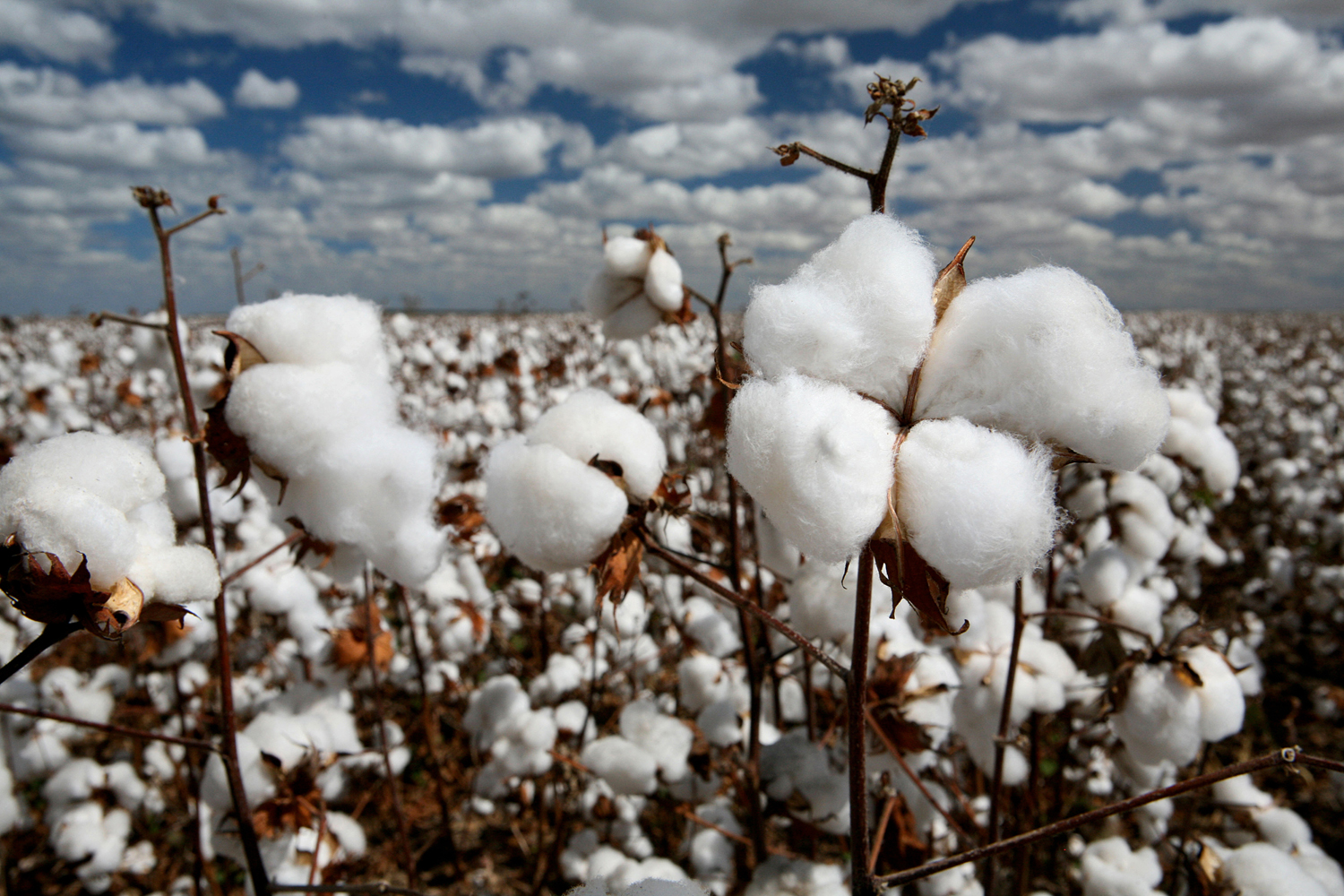
California is by far the dominant US produce-growing state—source of percent of US-grown carrots, 95 percent of broccoli, 86 percent of cauliflower, 74 percent of raspberries, 91 percent of strawberries, etc. But all three of its main veggie growing regions—the Imperial Valley, the Central Valley, and the Salinas Valley—face serious short- and long-term water challenges. As I argued in a New York Times debate, it’s time to “de-Californify” the nation’s supply of fruits and vegetable supply, to make it more diversified, resilient, and ready for a changing climate. Here are maps of US fruit and vegetable production: USDA USDANow check out this map depicting average annual precipitation. The data are old—1961 to 1990—and weather patterns have changed since then as the climate has warmed over the decades. But the overall trends depicted still hold sway: The West tends to be arid, the East tends to get plenty of rain and snow, and the Midwest lands, well, somewhere in the middle. So the map remains a good proxy for understanding where water tends to fall and where it doesn’t, though the precipitation levels depicted for California look downright Londonesque compared to the state’s current parched condition. Oregon Climate ServiceNot only is California gripped in its worst drought in at least 1,200 years, but climate models and the fossil record suggest that its 21st-century precipitation levels could be significantly lower than the 20th-century norm, when California emerged as a fruit-and-vegetable behemoth. So here’s an idea that could take pressure off California. In my Times piece, I looked to the Corn Belt states of the Midwest as a prime candidate for a veggie revival: Just about a quarter million acres (a veritable rounding error in that region’s base of farmland) from corn and soy to veggies could have a huge impact on regional supply, a 2010 Iowa State University study found. Now my gaze is heading south and east, to acres now occupied by cotton—a crop burdened by a brutal past in the South (slavery, sharecropping) and a troubled present (a plague of herbicide-tolerant weeds): Let’s leave aside all of the cotton growing on the arid side of the map. (The drought is already squeezing out production of the fluffy fiber in California; as for the Texas panhandle, cotton production there relies heavily on water from the fast-depleting Ogallala Aquifer—not a great long-term strategy.) What I’m eyeing are those cotton acres on the water-rich right side of the map—the Mississippi Delta states Arkansas, Mississippi, Missouri, Tennessee, and Louisiana, along with the Carolinas, Alabama, and Georgia to the east. According to the USDA, mid-Southern and Southeastern states planted more than 4 million acres of cotton in 2014. This is what’s left of the old—and let’s face it, infamous—Cotton Belt that stocked the globe’s textile factories during the 19th-century boom that delivered the Industrial Revolution (a story told in Sven Beckert’s fantastic 2014 book Empire of Cotton). Decades of low prices have already put a squeeze on Southern cotton acres, and the fiber has recently slumped anew in global trading. Why not transition at least some acres into crops with a robust domestic market? I bounced my idea of a Cotton Belt fruit-and-vegetable renaissance off a few experts to see if it was nuts. Ferd Hoefner, policy director of the National Sustainable Agriculture Coalition, called it “noncrazy.” He pointed out that, as in most other parts of the United States, small-scale farms that sell directly to consumers are “already gearing up down there,” and added that the region “seems ripe for entrepreneurial companies to come in, buy land, grow farmers, introduce a whole new vegetable supply chain on a bigger scale, especially with California’s woes.” I’m not talking about a fantasy in which everyone eats from within 20 miles (although such locavore networks, which have thrived nationwide over the last two decades, certainly add diversification and resilience to the overall food system). I’m simply pushing a more regionalized, widely distributed scheme for filling our salad and fruit bowls, one less dependent on California and its overtaxed water resources. Scott Marlow, executive director of North Carolina-based RAFI USA, a farmer advocacy organization, also said the idea make sense—with caveats. One is credit. Marlow says that most farmers who still plant cotton are large enough that they rely on loans to start the growing season—and bankers understand and are used to cotton, but may find vegetables too exotic and risky. For such farmers, “if the banker won’t lend for it, [they] are not doing it,” he said. Reforms in the latest farm bill made it easier for “specialty crop” (i.e., fruit and vegetable) farmers to get good crop insurance, and that, in turn, made it easier to get loans, he said. But those changes take time to sink in. He added that the South’s high levels of precipitation can actually be a liability compared to California’s aridity, because “rain spreads diseases through splash erosion, ruins product, screws up harvest, reduces product quality.” California farmers, who meet their watering needs through controlled irrigation, don’t have those problems. But rain troubles can be addressed through low-tech means like high tunnels, which are already being adapted by Southern produce farmers to extend the growing season, but also to protect sensitive crops from rain, Marlow said. Black plastic mulch, another widely adapted practice, also helps keep crops healthy in rainy periods, he added. The South’s farmers have demonstrated the ability to innovate, he said, but “there have to be markets, there has to be risk management, and there has to be access to credit.” Converting swaths of Dixie country to vegetables won’t be a fast or easy process. But if California’s water troubles drag on, as it appears they will, broccoli may yet emerge as the heir apparent to doddering King Cotton. Source - https://newrepublic.com

30.12.2015

India - At meet to aid farmers, officials get Rs 21000 coupons

While the farmers are yet to receive a single penny for crop damage due to bad monsoon this year, the public representatives and officials in Rajasthan State Cooperative Bank Limited (the top institution of the district central cooperative banks) pocketed cash coupons worth Rs 21,000 each as gift for attending a meeting to discuss crop insurance and compensation to the farmers. Those who collected coupons include Congress leader and bank chairman Leela Maderna, MD K.K. Gupta, professional directors P.P. Singh, Narayan Singh and Brijesh Agarwal, the special secretary to cooperative minister and two district collectors. Overall, 19 cash coupons were distributed to those who attended the meeting and the remaining 10 were distributed among officials of the bank, finance department and cooperative department. It has been an old practice in the bank to distribute gifts to the members who come for the meeting. Generally, blankets or briefcases are distributed but this time cash coupons were purchased from Axis Bank. Another deviation from this practice was to gift coupons to even those not present in the meeting, which included the cooperative minister’s special secretary. Ironically, the same cooperative banks have been acting tough with the farmers regarding loans. The banks have set strict targets for their employees to collect loans from the farmers despite the fact that the farmers have still not received compensation for their damaged kharif crop, which also forced them to take loan from private money lenders for rabi crop. Rajasthan is one of the worst-affected states in the country because of bad monsoon this year, with 15,000 villages drought-affected. Source - http://www.asianage.com

30.12.2015

USA - CROP INSURANCE INDEMNITIES AT $4.4 BILLION FOR 2015 CROPS

Crop insurance indemnities total $4.4 billion for 2015 crops as of Dec. 28, up from $3.45 billion at the end of November, according to Risk Management Agency (RMA) data. The level of net acres insured for 2015 crops appears to have set a new record, reaching 297.151 million, ahead of the prior high-water mark of 296.079 million acres in 2013. The loss ratio for the program currently stands at .45, up slightly from a month ago when it was .37. Indemnities will continue to rise so that loss ratio will also climb. But the lowest loss ratios going back to 2003 are .54 for 2007, .56 for 2010 and .58 for 2009. Rice is the only program crop with a loss ratio greater than 1.0 for 2015 crops (indemnities paid out exceed the premiums paid in) with a mark of 2.48. Flue-cured tobacco carries a level of 1.14. The total payouts at $4.4 billion are down more than 50% from the 2014 crop total of $9.115 billion. Wheat remains the top payout on a by-crop basis, with indemnities of $1.155 billion compared to corn at $1.118 billion. The next closest crop is soybeans at $832 million. The downturn in payouts under the program reflects fewer crop issues facing producers and lower prices for most crops compared to 2014 levels. The indemnity levels are likely to continue rising as we move into calendar 2016. At this stage a year ago for 2014 crops, indemnities stood at $5.212 billion and eventually rose to $9.115 billion. The potential is there for 2015 crops to be one of the lowest payout levels in recent years and give the program one of its lowest loss ratios in years. Source - http://kticradio.com

30.12.2015

Bangladesh - Weather index-based agri-insurance launched

Bangladesh has launched weather index-based agriculture insurance, first of its kind in the country. Green Delta Insurance Company Limited in collaboration with International Finance Corporation (IFC) has signed an agreement with Sylvan Agriculture Limited, a sister concern of PRAN-RFL Group on agriculture weather index insurance for “Casava Crop” at Madhupur upazilla, Tangail. The event took place at the head office of Green Delta Insurance. Under this project, the farmers of “Casava Crop” will be insured for damages during the cold days and excessive rainfall. On behalf of PRAN-RFL Group Ms. Uzma Chowdhury, Director, Finance and from Green Delta Insurance Ms. Farzana Chowdhury ACII (UK), Managing Director & CEO signed the MoU for the pilot project. Advisor and Founding Managing Director of Green Delta Insurance Mr. Nasir A. Choudhury was present on the occasion. Other higher officials from Green Delta, IFC and PRAN as well as Green Delta Agriculture Team were present in the signing ceremony. Managing Director & CEO of Green Delta Insurance Ms. Farzana Chowdhury said, “Green Delta always addresses national issues and this pilot project regarding weather index-based crop insurance will be another milestone for the industry”. Advisor of Green Delta Insurance Nasir A. Choudhury expressed his delight at this agreement and appreciated PRAN’s national and international business growth over the years. Director, Finance of PRAN-RFL group Ms. Uzma Chowdhury said, “PRAN’s initiative on Cassava Crop will help ease the pressure on other crops in Bangladesh and having Green Delta as our insurance partner will be a significant part of this project’s  future success”. Source - http://www.thefinancialexpress-bd.com

30.12.2015

Cargill to Sell Crop-Insurance Unit to Silveus

Cargill Inc. struck a deal to sell its crop-insurance business to Silveus Insurance Group, the agricultural conglomerate’s latest step to realign its portfolio and exit some financial functions. With the deal, Cargill’s agricultural retail division will focus more directly on buying grain from farmers and selling them other risk-management services, a Cargill spokesman said on Tuesday. Terms of the deal weren’t disclosed. Cargill’s exit from the crop-insurance business, which it entered in 2007, comes as the suburban-Minneapolis company revamps its vast portfolio of businesses. Over the past year, Cargill sold its U.S. pork operations, spun off a hedge-fund unit and acquired a Norwegian fish-feed producer, while slimming its executive leadership team in a bid to make the 150-year-old company nimbler. Cargill Chief Executive David MacLennan is steering the shift amid sharp swings in Cargill’s financial performance, as a third consecutive year of declining crop prices weighs on the U.S. farm economy. Cargill in October reported a 20% jump in fiscal first-quarter profit, after disclosing in August its first quarterly loss in 14 years. Buying Cargill’s crop-insurance business, which sells policies but doesn’t underwrite them, will expand Silveus’s position as one of the top U.S. crop-insurance agencies, according to a statement from the two companies. Cargill sold crop-insurance products that compensated farmers for crop yields lost due to bad weather and natural disasters, as well as unexpected declines in the price of grain. The business of insuring farmers’ crops against financial or physical losses has grown tougher as corn, soybeans and wheat prices have slumped over the past three years, mainly due to a string of bumper crops and benevolent weather, according to Keith Coble, a professor of agricultural economics at Mississippi State University. “Reimbursement for these companies is on a percentage of the [insurance] premium, and the premium is tied to the value of the crop,” Mr. Coble said. Futures prices for corn, the most widely grown U.S. crop, have declined nearly 50% over the past three years, while soybean and wheat futures both are down about 40%. Other players, including tractor maker Deere & Co. and biotech seed giant Monsanto Co., have sold crop-insurance units over the past year as declining crop prices have pinched farmers’ wallets and pressured profits for the companies that sell farm supplies. Wells Fargo & Co. this month agreed to sell its Rural Community Insurance Services, one of the largest U.S. crop-insurance providers, to Zurich Insurance Group AG for between $675 million and $1.05 billion. Source - http://www.wsj.com/

30.12.2015

India - New Crop Insurance Program To Protect Farmers From Cost Of Damage

THE NEW STRATEGY WILL BE LAUNCHED EARLY IN 2016 AND WILL USE TECHNOLOGY TO ASSESS DAMAGE TO FIELDS. In what might turn out to be the first major step taken by Indian Prime Minister Narendra Modi in addressing rural struggles, a crop insurance program is set to launch in early 2016 in order to help to protect farmers against the costs of damage to their fields and, therefore, their revenues. THE PROGRAM WILL USE TECHNOLOGY SUCH AS DRONES IN ORDER TO CONDUCT MORE ACCURATE DAMAGE ASSESSMENTS. Over the last few growing seasons, farmers have been the victims of unseasonal rains that were followed by two consecutive years of drought. This has caused tremendous hardships among the growers that provide the agriculture to feed more than two out of every three people in India – a country with a population of about 1.25 billion people. This problem has grown to such a degree that it has caused a considerable political shift in certain rural yet highly important states in the country, such as Bihar. A new crop insurance program has now been designed to help to ease the strain of these unpredictable weather events. THE CROP INSURANCE PROGRAM IN INDIA CAME AS A RESPONSE TO SOME EXTREMELY HEARTBREAKING EVENTS IN THE COUNTRY. Many farmers committed suicide in 2015 as a result of having been faced with overwhelming debts. The problems that have occurred as a result of the issues in security payouts for crop damage were the “biggest reason for destroying farm families,” said Radha Mohan Singh, the Minister of Agriculture and Farmers Welfare. He explained that “I completely believe that in the beginning of the new year we’ll gift (a new insurance scheme) to farmers,” and has launched two mobile apps for farmers to use to check crop damage insurancedetails and to verify farm produce prices. He feels that by implementing this new program, it will help to make sure growers receive their payments in a timely way. This has not been the case under the current system, in which payments experience massive delays, “destroying so many families.” Modi will be using 2016 to create a shift in the budget priorities in order to place a greater spotlight on social incentives such as the crop insurance program. At the same time, he will slow down the spending on infrastructure, which has been among his main priorities since he took office. Source - http://www.liveinsurancenews.com

29.12.2015

USA - Farm organizations look for one more farm bill change

Farm organizations worked like crazy this fall to avoid making any legislative changes or funding cuts in the 2014 farm bill—including a proposed $3 billion cut in crop insurance. At the same time, there has been support building for at least one additional change—albeit one that can supposedly be made by the secretary of agriculture—to give cotton growers more farm bill support. Cotton growers say they’re getting hammered for reasons beyond their control—primarily China’s manipulation of the global cotton market. China first drove up global prices to nearly double the average level by stockpiling cotton, then abruptly switched its strategy in 2014 and is now dumping some of that fiber on the market. China is the world’s largest consumer, importer and stockholder of cotton and the second largest producer, after India. For U.S. farmers, the average net return on cotton has plunged from $254 per acre in 2013 to $74 per acre, according to the University of Missouri’s Food and Agriculture Policy Research Institute. House Agriculture Chairman Mike Conaway, who comes from Texas, the biggest cotton-growing state, has asked Secretary of Agriculture Tom Vilsack directly to consider the proposal. “Cotton prices are in the tank, and the STAX (Stacked Income Protection Plan) program is not working as well as we thought it might, and so the cotton guys need some help,” Conaway says, referring to the revenue insurance plan that was created for cotton in lieu of making the fiber eligible for Price Loss Coverage and Agriculture Risk Coverage. The National Cotton Council gained a lot of momentum on Capitol Hill recently for its ongoing effort to persuade USDA to include cottonseed as an oilseed for farm program payments, with 100 lawmakers signing a bipartisan letter of support, including Rep. Rick Crawford, R-AR, who chairs the Subcommittee on General Farm Commodities and Risk Management, and the Subcommittee’s ranking minority member, Rep. Tim Walz, D-MN. Even Rep. Collin Peterson, the House Committee on Agriculture’s ranking member, who represents a Minnesota district, acknowledged that his southern brethren made a good point in their request to Vilsack to make cottonseed eligible for payments. After the letter was released, the American Soybean Association also weighed in with a show of southerly love, saying it supported the National Cotton Council’s effort to encourage the department to use its discretionary authority to establish a cottonseed program under Title I of the Agricultural Act of 2014. But here’s the caveat: “ASA’s support is conditional on the determination that the estimated cost of the program can be offset, if necessary, without negatively impacting funding for other farm bill programs or reducing funding for crop insurance, and that it will not violate U.S. commitments under the WTO.” As Agri-Pulse reported on Dec. 9, the change could cost as much as $1 billion annually, according to the Agriculture Department’s internal estimates. During a board meeting, a majority of the American Farm Bureau Federation’s board of directors also signaled their support for this change in USDA policy. But whether or not these efforts provide enough political firepower for USDA officials to change their mind is still a bit uncertain. Sources familiar with USDA’s review say it has raised a series of concerns, including the potential cost, which might have to be offset by cuts in other spending. Under the 2014 farm bill, USDA supposedly has the discretion to cover additional oilseeds under a program called Profit Loss Coverage at a price trigger, or “reference price,” of $20.15 per hundredweight. Cottonseed has been recently selling for well under $15. Another big concern is whether the agency truly has the legal authority to make the change in designation. Thus far, USDA officials have mostly been mum on the matter. Responding to a request for comment from Agri-Pulse, USDA staff sent the following statement: “We recognize that these are tough times for cotton producers, and are thankful that there is a safety net in place that provides the Stacked Income Protection Program and Supplemental Coverage Option, which Congress created in the 2014 farm bill. USDA is currently analyzing the complex legal, programmatic and policy issues associated with declaring cotton an oilseed, which would make the crop eligible for additional safety net programs like ARC (Agriculture Risk Coverage) or PLC.” Source - http://www.hpj.com

29.12.2015

India - New monitoring system maps Bundelkhand drought

The Central Indian region of Bundelkhand is currently experiencing severe drought. Once an ancient kingdom, but now straddling the states of Uttar Pradesh and Madhya Pradesh, around the city of Jhansi, the area remains relatively underdeveloped compared to other parts of India. Consequently many local people still rely on agriculture for their livelihoods. Faced with drought conditions, and with limited capacity for water storage, thousands of smallholder farmers will now face considerable hardship, or even destitution. The current water scarcity, the most severe this century, has parched an area the size of Israel. Reviewing satellite imagery from earlier in the year, an IWMI research team has established that the likelihood of drought was emerging as early as June, when abnormally low rainfall patterns became evident. Space based technologies, often referred to as remote sensing, should be more widely used in drought prediction, say the IWMI experts, as they can identify potential problems well before the extent of ground conditions are evident. “Looking at the aerial images you get a sense of the enormity of what is going on,” said Amarnath Giriraj who leads IWMI’s drought mapping project. “You can clearly see that paddy fields are bone dry and that much farmland has been left fallow due to lack of water. But we hope that in future we can use remote sensing to pick up drought trends before there are serious water shortages, so that relief efforts can be more timely.” Satellite monitoring The satellite images were generated as part of IWMI’s ongoing South Asia Drought Monitoring System (SADMS) project, developed in partnership with the World Meteorological Organization, the Global Water Partnership and with support from the CGIAR Research Program on Climate Change and Food Security. Converted into easy to read maps, the images have been sent to Bundelkhand.in, a website that brings together social activists, community groups and local policy makers in the region. This is the first time that the SADMS has been used. “The maps have been invaluable,” said Ashish Sagar, a leading social activist in Bundelkhand region. “We have been sharing them with farmers and the local authorities so that we can better plan a response.” IWMI has adopted an innovative approach to developing the system using remote sensing data from multiple sources. The Integrated Drought Severity Index uses the condition of vegetation, rainfall, temperature and soil moisture to determine severe drought areas. This gives a far more accurate indication of impending drought than conventional methods. This can assist drought mitigation planning and response and help improve the overall capacity of communities to be more resilient and cope with these events. Droughts becoming more frequent  Globally, 2015 has witnessed an El Niño event. This is leading to abnormal weather conditions across much of Asia of which this drought is but one example. Some areas of Bundelkhand, for instance, received no monsoon rain at all this year. El Niño is a regular climatic event that occurs when a band of warm ocean water develops in the middle of the Pacific Ocean. This leads to high air pressure in the western Pacific and low air pressure in the eastern Pacific. As a result, drier conditions in parts of Asia can be expected. Coupled with this, global climate change is also affecting long term weather patterns. This will make extreme events like droughts more frequent, and the IWMI team believe that this pattern is already emerging in Bundelkhand. “Our study highlights the need to consider further investments in water management and infrastructure in the Bundelkhand region,” says Giriraj. “This could mean more centralized storage, such as dams and reservoirs, but also local initiatives like village ponds and farm wells. Improvements in institutional arrangements could also contribute. We also need to improve groundwater recharge in the region and make sure that aquifers are used sustainably.” Source - http://www.iwmi.cgiar.org

29.12.2015

Canada - Ontario apple farmers hope weird winter weather won't damage 2016 crop

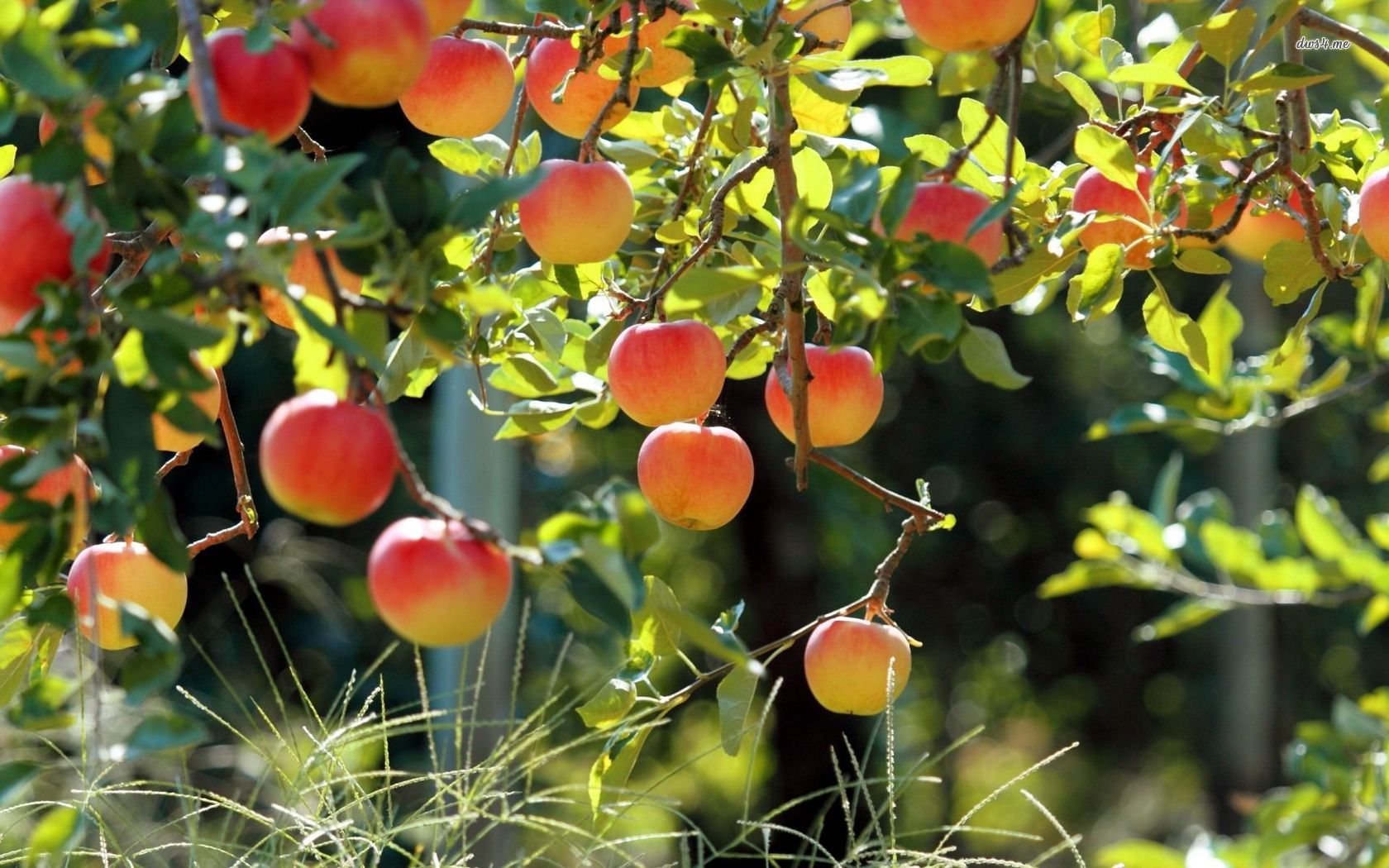
Ontario Apple farmers are crossing their fingers this year's weird winter weather won't damage the province's $60-million apple crop. A super El Nino has climatologists forecasting a delayed winter with rising and falling temperatures, which could affect many fruit tree and nut bearing tree crops. A sudden freeze on May 23, 2015 wiped out half of Ontario's apple crop this year, affecting farmers across the province including Eastern Ontario. The same kind of incident in the spring of 2012 led to the demise more than 80 per cent of that year's crop. If extreme temperatures over short periods of time reoccur this winter, that could mean disaster for crops. Apple trees need consistent cool winters Apple trees need long periods of cold temperatures to go into full dormancy during winter. They also needs at least a 48-hour transition to safely change from above freezing to extreme freezing temperatures, according to the chair of Ontario Apple Growers, Charles Stevens. "If the temperature drops too drastically too fast, that water doesn't have time to drop down to the roots, and then you get freezing of the buds, or the tissue," Stevens said. "It's just kind of a wait and see," said apple farmer Chris Hall. "There's not a lot you can do about it, but it's certainly on our minds." Hall grows mostly McIntosh and Honeycrisp apples on his orchard Hall's Apple Market near Brockville, Ont. 2015 a bad year for apple farmers Hall was hoping for a better year in 2016 after losing half his 2015 crop to the May frost. But he became concerned about the potential for another hard year after hearing about cherry tree blossoms appearing in Washington D.C. before Christmas. "The concern for me would be if we don't get that full dormancy until late January, early February, a sudden cold snap could cause some issues." He and some of his neighbouring orchard owners are also concerned about a winter featuring many ups and downs in temperatures. "Trees are pretty hardy, and they can take a cold snap, but you don't want them to wake up and go to sleep and wake up and go to sleep. That's hard on the tree." El Nino not historically a problem Stevens, who has been apple farming over 40 years with Wilmot Orchards near Newcastle, Ont. said winters fuelled by El Nino have not historically been a problem for farmers. But he does recall a Christmas Eve in 1981 where temperatures rose to 10 C only to drop to -25 C the next day, causing buds to freeze, killing trees and wiping out a large portion of the crop for the following season. "I don't believe, with El Nino, we'll see those extreme cold temperatures this year," Stevens said. Many apple farmers across the province applied for crop insurance — funded by farmers, as well as the provincial and federal governments — to stay afloat through 2015. The cost of claims for 2015 had not yet been determined in time for the Ontario Apple Growers annual report, but that same report stated the total amount claimed in 2012 — when frost took out more than 80 per cent of the crop — reached more than $25 million. Source - http://www.cbc.ca

29.12.2015

USA - Cotton growers thank Rice for farm disaster aid

The Southern Cotton Growers commend U.S. Rep. Tom Rice and other members of the S.C. Congressional Delegation who supported agriculture disaster relief language contained in the FY16 Omnibus Appropriations Bill. Our organization represents every cotton producer in the six states that comprise the Southeast Region (Alabama, Florida, Georgia, North Carolina, South Carolina and Virginia). I am a cotton, peanut and corn producer from St. Matthews, and I also currently serve as President of Southern Cotton Growers. My own personal experience this year is very representative of what many others have endured throughout the state. The vast majority of land I farm is dry land. The first significant rain I received was on July 5. By that time, I had lost my entire corn crop to drought and the cotton and peanuts I had planted weeks earlier had yet to sprout. Biblical type rains that ravaged the entire state ultimately decimated what little bit of a crop I had intended to harvest. Farming is a risky business. There have been times when I have lost one crop during a growing season, but this is the first time in my many years of farming that I lost practically everything. Crop insurance will never cover losses of this magnitude. The disaster assistance contained in the Omnibus Bill will no doubt provide much-needed assistance to countless farm families throughout South Carolina. We greatly appreciate Congressman Rice’s leadership in coming to the aid of our state’s largest industry when in crisis. Source - http://www.myrtlebeachonline.com

29.12.2015

Argentina - Roca fruit production devastated by hail

The hail highly affected a large part of the Upper Valley. A few days before the harvest started, most of the apple, pear, and peach production was lost in some farms. This time, the most affected was an area in Roca. The storm damaged part of the crop of small landholders in the Middle Valley. The phenomenon only lasted 18 minutes. It also caused fallen trees and power outages. The unexpected storm, which took place on Tuesday night, mercilessly hit a large portion of producers of this city. The hail fell along an extensive area from the sector of JJ Gomez to the river covering a good part of the local ejido. It was accompanied by a lot of wind and rain that left many stone fruit growers on the brink of the abyss. The damage, a farmer estimated, will affect the current production as well as the next one. "Is unbelievable. The hail left nothing standing: it uprooted trees, made the fruit fall, damaged plants," said Jose Garcia, president of the Chamber of Roca. The storm came with force after 10 pm on Tuesday. "I lost everything. I lost a whole year's effort in 18 minutes," said producer Carlos Jedrejcic, who lost all the production he had in four fields. The damage, a farmer estimated, will affect the current production as well as the next one. The outlook is bleak in the coastal rural area. Producers are angry and devastated. The plants are damaged, branches are broken, the fruits that remain on the plants are scarred and many were left lying on the ground. The apple and pears were hit by huge hail, and the peaches were broken by the ice. Provincial authorities toured the areas to contact the affected producers and to start evaluating the damage. "We know that a high percentage of the farms throughout the city had damages. Some of them had damages of up to 100% and the ones that were affected the least had damages of 60 to 70%," the local Chamber stated. "It's terrible. We are about to start the harvest. Producers had already spent their resources. Now we have to see how to continue, what to do with the workers. Unfortunately, because of the crisis, this year less than 50% of the producers that had insurance with the province were able to get said insurance, so the only thing left to do is to wait, make the affidavits, and begin rethinking everything," said Garcia. Source - http://www.freshplaza.com

29.12.2015

India - RBI wants agri interest subsidy to be used for crop insurance

A Reserve Bank of India (RBI) panel has recommended doing away with interest subvention schemes and ploughing back subsidy amount into a universal crop insurance scheme for small and marginal farmers. Interest subvention is a politically sensitive issue but it has played havoc with the repayment patterns of the agriculture loans. The committee headed by RBI executive director Deepak Mohanty has put out a discussion paper to improve the last-mile credit delivery and financial inclusion for farmers. The committee has recommended that a mandatory universal crop insurance scheme covering all crops to be introduced starting with small and marginal farmers at affordable rates. The insurance should be mandatory for all agricultural loans with the farmer paying a nominal premium and the balance coming from government subsidy. A graded crop insurance could be made available to medium and large cultivators with higher monetary ceiling and lower government subsidy. If crop insurance is to be successful, it has to be made available and affordable to all farmers with a substantial government subsidy, which could also be commercially viable for insurance companies. Some calculations suggests that the overall premium will fall to less than 3% from the current rates of 8-11% if the area covered increases to say 100 million hectares. The committee also mooted the introduction of the 'Gold KCC' (Kisan Credit Card) with higher flexibility, the committee recommended should be introduced for borrowers with prompt repayment records. The government-sponsored personal insurance may be dovetailed with the KCC scheme. The committee has recommended that KCC should continue to have a built-in consumption credit component, recognising that while agricultural income could be lumpy, expenditure is an on-going process that results in negative cash flow for several months. Considering the still significant exclusion of women, the committee recommended that banks should make special efforts to step up account opening for women. Given the government's emphasis on the welfare of the girl child, it suggested that the government can consider a welfare scheme—Sukanya Shiksha —that can be jointly funded by the central and state governments. Source - http://www.dnaindia.com

28.12.2015

Sri Lanka - Drones set to give global farming a makeover

The traditional image of a farmer standing in a field, squinting anxiously at the sky for signs of rain, may be about to get a 21st-century makeover as researchers explore the use of drones on farms from Sri Lanka to Uganda. The ability of unmanned aerial vehicles (UAVs or drones) to hover low over fields of maize, sweet potato and rice with sensoring devices promises benefits for individual farmers and their communities. For governments and development agencies, drones can provide more accurate, up-to-date information on what is being grown where. For individual farmers, this kind of information could be the difference between a failed crop and a bumper harvest. In September, the International Water Management Institute (IWMI) carried out trials in Sri Lanka using an eBee drone equipped with a near-infrared sensor; the trials showed how this can give farmers early warning of problems anywhere in their fields. “Using near-infrared, you can identify stress in a plant 10 days before it becomes visible to the eye,” says Salman Siddiqui, head of IWMI’s GIS remote sensing and data unit. “When a plant goes into stress, it’s either due to a water or fertiliser shortage, or because it’s being attacked by a pest. Photosynthetic activity decreases and that affects the chlorophyll. That’s what the near-infrared sensor can detect, but our human eye can’t see it until it’s more advanced.” That 10-day warning could prevent large-scale crop losses. Siddiqui says: “If a crop is being attacked by insects, the whole area can be affected, not just one farmer. With UAVs, if you can figure this out before it spreads, you can save the whole area.” In Uganda and Tanzania, the International Potato Center (CIP) has been carrying out drone trials in partnership with the national bureaux of statistics in both countries. Accurate data is crucial for effective agricultural policymaking, and a report (pdf) by the World Bank this year highlighted how patchy that data is for much of sub-Saharan Africa. According to Dieudonné Harahagazwe, a senior CIP scientist based in Nairobi, this data gap is behind agencies’ eagerness to participate in researching the potential of drones. “Donors and governments look at statistics, and in some places smallholder plots are so small we don’t have precise statistics on their crops,” he says. “With sweet potato, for example, policymakers might say it’s not an important crop because there are just small, scattered plots. Or the statistics can’t tell the difference between potato and sweet potato. This is important, because farmers lose out if the statistics are not accurate.” This was confirmed by CIP’s initial trials using drones to map fields in Uganda. According to its research in the Kumi district of eastern Uganda, official statistics underestimated the planting of sweet potato by a staggering 50%. Such a disparity between what’s on the books and what’s in the fields can make a crop less visible to policymakers, which means smallholders might not gain access to relevant extension services such as training, seeds or micro-insurance. This unreliability of data extends beyond crops into livestock, too, and can cause problems in the event of a disease outbreak. The UN’s Food and Agriculture Organisation is researching how drones might be used in these situations, as part of training vets on how to deal with foot and mouth disease (FMD). “FMD tends to be a problem in the dairy sector, which is important in smallholder settings in countries such as Kenya and Nepal, and there are a whole variety of diseases that affect cattle and other small ruminants,” says Keith Sumption, executive secretary at the FAO’s European commission for the control of FMD. He says: “There’s often extremely limited data available on the number of animals within a few kilometres, and one of the first questions in disease control operations is how many animals there are within 3km that need to be checked. With a drone in the sky for half an hour, you can probably say exactly where groups of animals are.” The FAO trial in Kenya – using a Huginn X1 drone – found that the drone was airborne and surveying livestock distribution before the vets had even donned their bio-security suits. Sumption hopes the technology might also be used to identify specific animals that are sick. “Other uses might be for wildlife-related conflicts relating to encroachment, and damage by wildlife to crops,” he adds. Drones are becoming cheaper, but are smallholder farmers in sub-Saharan Africa likely to be launching them over their fields? Probably not yet. CIP is looking into how people might assemble drones themselves more cheaply with materials that are available locally. The University of Nairobi is collaborating with engineers who are working on the design and construction of their own vehicles with a long-term view to developing an industry in Africa as a more sustainable alternative to importing devices. In some places, regulatory approval for drones is also still an issue, and the challenge is not just to fly them but to process the data gathered. In smallholder settings, NGOs and the public sector might start using drones, particularly for plant health, and farmers’ associations could too. “In developing countries, it’s still the case that farmers get together and share tractors, so this could be another area where they pool resources,” says the IWMI’s Siddiqui. But for the majority of the world’s smallholder farmers, the benefits are likely to remain indirect: with drones informing agricultural policymaking to increase its efficiency, Harahagazwe says. “If you lack information on specific crops, those crops suffer in terms of technical support, so it’s about how we can influence policymakers about how budgets are allocated to agricultural sectors,” he says. “The drone itself is like a toy. But it can tell us a lot about crop health, and varieties of crops grown. It can give us true information from small farmers, and with that we can support and advise them accordingly.” Source - http://www.theguardian.com/

28.12.2015

USA - New crop insurance boosts farm diversification

Officials think education could increase interest in a new type of crop insurance that also may give farmers who diversify a boost. Whole farm crop insurance became available in North Dakota this past growing season. No policies were sold, but those in the state Department of Agriculture think more producers might find it useful as they learn more about it. “I think this is a wonderful tool,” said Agriculture Commissioner Doug Goehring, adding that producers may not have had time to look at the program as they have been scrutinizing the new Farm Bill and trying to understand Agriculture Risk Coverage and Price Loss Coverage, along with changes in multi-peril coverage. "Everybody had their plate full to learn all that," he said. Now, whole farm crop insurance will be offered nationwide for the 2016 growing season and officials, including those at the agriculture department, are hosting training sessions for insurance agents. This insurance is different in that it offers revenue protection for the whole farm to producers who are raising at least three commodities, including livestock. U.S. Department of Agriculture Risk Management Agency said the purpose of the insurance is to encourage diversification. Premiums are discounted the more diversified a producer is. There are 50 commodities produced in North Dakota, 40 of which are plant based, which makes the state a prime candidate for the insurance coverage. In many cases, when it comes to specialty crops or organic crops, there is little to no insurance protection, Goehring said. Those with livestock and specialty crops, like dry beans, peas and lentils, can loop those commodities in with coverage for standard crops, such as corn and soybeans. The whole farm insurance works by insuring revenue rather than yield. “Before, we were always insuring units or bushels,” Goehring said, though whole farm can be used in conjunction with multi-peril coverage at a discounted premium. Wade Haselen, an agent with Cottingham Insurance in Washburn, said it is more about risk. "In my area, I think we're too diverse in the crops we grow," he said. "It will never be popular in my area. No one wants to take that risk." Though RMA says whole farm insurance is for diversified producers, Haselen said there gets to be a problem when considering late and early season crops. If a farmer's early season crops do better than their late season ones, they are paid nothing on their late season loss. Most insure crop by crop, instead. With prices down, many of his clients are choosing to stay with what they have been doing, according to Haselen. As markets continue to slip, affecting the bottom line, or if expenses go up unexpectedly, whole farm coverage kicks in. Goehring said some things, such as depreciation, also may not work against farmers with this product because it is based on five-year average revenue reported on the Schedule F tax form. Farm size doesn't matter, and a producer using whole farm may have smaller operations, such as 40 acres of specialty crops. There's also a market readiness feature, covering the cost for those who process their crops to be sold at farmers markets, according to Goehring. "It isn’t going to be for every farmer, but it will work for quite a few if they choose to use it," he said. North Dakota's neighbors to the west have been buying into the program. Montana had 58 policies in 2015, Washington had 571, Idaho had 132 and Oregon had 98. The policy was particularly popular with apple growers and other orchards, and education was driven by insurance companies who saw the benefit it could offer their clients. Source - http://www.grandforksherald.com

28.12.2015

USA - Persistent rain drowns fall crops in Anderson area

Gray skies have cost Upstate farmers a lot of green in recent weeks. As Anderson County received another soaking Thursday, its 47th rain event in the last 90 days, most fall crop growers had already given up on a harvest. Those who were able to get fall crops out of the ground can't sell them. At Denver Downs, Tom Garrison's fall corn crop, which he uses to provide winter feed for cattle and sell to other cattle farmers, fell victim to a weather pattern that has brought 26.6 inches of rain — and too little sunshine — to his fields in the last 12 weeks. Another fall crop, soybean, was also a near-complete loss. "Crops are laying in the field, and we can't get them out," Garrison said. "Our crops were not destroyed like those in the Midlands and Lowcountry, but they've deteriorated." At least four consecutive sun-baked days are required for the soybeans or field corn to be dry enough for harvest. When those didn't arrive in October or November, Garrison simply gave up and planted his winter crop — wheat — in the same fields. "If the crops are wet at this time of year, the days are shorter and the temperatures aren't high enough to dry them," Garrison said. He had expected to harvest 100 acres of corn but harvested only 15. Instead of his typical 3,000 bushels of soybean, Garrison was able to glean only 300. Rhett Dobbins of Townville, one of the area's largest soybean farmers, finished his harvest Monday — a full month later than normal — but knows it might have been in vain. "We did finally get it all harvested, but the quality is so poor that we might not be able to sell it," Dobbins said Thursday. "The fields were so wet we couldn't harvest when we wanted to. And now it's too late to plant winter wheat. Actually, it's too late for that after Dec. 1." Typically, soybean and corn are taken to area grinding facilities, where soybean is separated. Its oil is used for cooking/human consumption; the grain — such as the field corn — is used for poultry and cattle feed. The largest crushing plant for Upstate growers is the Cargill facility in Gainesville, Georgia, which has closed its operation to local farmers because the soybeans moisture levels were too high — leaving Dobbins and many others with major losses. To Clemson University Extension agent Andy Rollins, the scenario is familiar. "The plants were already hurt by the drought in the summer," Rollins said, "and then the rain came along just before and during harvest time. Most farmers haven't been able to get the crops out of the ground. Some farmers just bush-hogged the whole field." The losses are additionally frustrating, Rollins said, because Upstate crops were in unusually high demand after the October floods in the Midlands and Lowcountry. "With so much of the downstate flooded, the Upstate crops could have been the most in the state," Rollins said. Farmers who managed to get crops from the field found mildew to be a common problem with them, he said. "It's not just the rain. We just had too many cloudy days," Rollins said. "We haven't had enough sun to get the ground dry." The problem hurts Southeastern growers, Garrison said, because few are equipped to handle wet October fields. "Very few farmers in this area have the equipment that allows you to cut wet crops and dry them later," he said. Insurance will cover about 50 percent of Garrison's financial loss. It won't reduce any of the emotional sting. "I enjoy farming, but it's frustrating when you put the time and effort into something and not get anything out of it," Garrison said. "A farmer doesn't get any money until he provides a product." The paydays are also less encouraging in recent years. Three years ago, Garrison was getting about $15 a bushel for soybeans and $8 per bushel of corn. Today, soybean is down to $8 a bushel. Corn is about $3.60. "This why older farmers get tired of fighting the battle and quit," Garrison said. "For some, this might be the last straw." In the Cheddar community in Anderson County, 83-year-old vegetable grower Willis Bannister was able to get broccoli, cabbage and collards out of the ground before the persistent rain pattern developed. He's concerned that the steady doses of rain will hurt the spring crop. "If it slows up at about February, the ground should have enough time to drain. But if it's still this wet a few weeks from now, it will be a problem," Bannister said. "There's some light plowing I'd like to do now, but it's just too wet. The ground is not draining at all." Anderson, which was well below its normal rainfall total in the first half of 2015, has now received more than 59 inches — 12 inches above normal. The months of October and November, which typically receive a combined 7.8 inches of rain, received 17.5 inches this year. The excessive rainfall and flood events have caused nearly $376 million in crop loss to South Carolina's farmers, state Agriculture Commissioner Hugh Weathers said earlier this week. Besides the soybean crop, most of the state's fall cotton and peanut crops suffered near-complete destruction, Weathers said. Source - http://www.independentmail.com

899
of 1224