The African Union and Gates Foundation aim to mobilize $3 billion to transform Africa's pastoral livestock into a major commercial and export engine.
African policymakers, international development partners, and private equity investors have unveiled an aggressive economic strategy to channel $3 billion into the continent’s pastoral livestock sector over the next five years. The monumental financial commitment aims to transition Africa’s vast animal resources from traditional, subsistence-based livelihoods into a heavily commercialized engine of cross-border trade, industrialization, and food security.
Launched at the inaugural African Pastoral Markets Forum in Addis Ababa, Ethiopia, the initiative represents a fundamental paradigm shift. Spearheaded by the African Union Inter-African Bureau for Animal Resources (AU-IBAR) and backed by the Bill & Melinda Gates Foundation, the strategy explicitly rejects the historical framing of pastoralism as a purely humanitarian vulnerability. Instead, it positions the sector—which supports over 268 million Africans—as a vital strategic asset deeply integrated into the African Continental Free Trade Area (AfCFTA).
A Paradigm Shift in Agricultural Economics
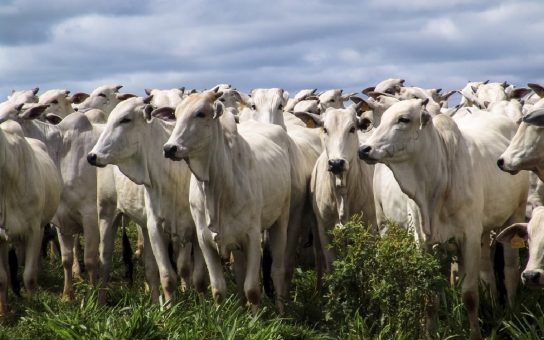
Addressing delegates in Addis Ababa, AU-IBAR Director Dr. Huyam Salih delivered a searing critique of current economic planning, asserting that Africa possesses unparalleled livestock wealth yet captures a statistically insignificant fraction of its global value. The continent currently holds approximately 20 percent of the world’s cattle, 27 percent of its sheep, 32 percent of its goats, and over 15 percent of global camel populations.
Despite these staggering aggregate numbers, pastoral production systems remain critically disconnected from formal banking capital, modern veterinary supply chains, and structured international export markets. "For far too long, the narrative around pastoralism has centred on drought, conflict, and marginal lands," Salih told the assembly. "We are here to make a deliberate continental shift—from treating pastoral livestock mainly as a vulnerability issue to recognising it as a strategic economic system capable of supporting food security, trade, jobs, and regional integration."
Unlocking Global Capital for Pastoralists
The core objective of the newly established African Pastoral Markets Development (APMD) Platform is to systematically de-risk the livestock value chain to attract institutional investment. The targeted $3 billion (equivalent to KES 390 billion or NGN 4.5 trillion) will be deployed across several critical infrastructural bottlenecks.
Investments will prioritize the construction of standardized regional abattoirs, the implementation of blockchain-enabled traceability systems required for European and Asian export compliance, and the development of climate-resilient feed and fodder production facilities. By modernizing these nodes, the AU aims to elevate the sector’s contribution, which already accounts for between 30 and 80 percent of agricultural Gross Domestic Product (GDP) in several sub-Saharan nations.
The Gates Foundation and Market Integration
The Bill & Melinda Gates Foundation serves as a primary financial catalyst for the APMD Platform. Their involvement focuses heavily on policy reform and the generation of empirical investment data. Historically, commercial banks have viewed mobile pastoral communities as unbankable due to the lack of static collateral and high mortality rates associated with climate shocks.
To counter this, the initiative will fund the development of early warning data dashboards and comprehensive livestock insurance products. By providing financiers with accurate epidemiological modeling and predictive climate data, the perceived risk of investing in nomadic herds is significantly reduced, unlocking commercial credit for rural youth and female entrepreneurs who dominate the grassroots processing and distribution networks.
East African Precedents and Continental Impact
The commercialisation drive proposed in Addis Ababa resonates profoundly in East Africa, a region where pastoralism is a foundational economic pillar. In Kenya, the arid and semi-arid lands (ASALs) supply approximately 90 percent of the red meat consumed nationally. The revitalization of the state-owned Kenya Meat Commission (KMC) under military administration serves as a potent micro-example of how structured off-take markets can instantly inject millions of shillings into pastoral communities.
If the AU-IBAR initiative successfully scales this model continent-wide, the macroeconomic implications are vast. A highly integrated, $3 billion livestock market would dramatically reduce the continent's reliance on imported poultry and beef, stabilize volatile domestic food inflation, and establish Africa as a dominant supplier of halal meat to the Middle Eastern peninsula.
Strategic Investment Targets
- Infrastructure: Development of sanitary and phytosanitary (SPS) compliant abattoirs and cold-chain logistics networks.
- Traceability: Implementation of digital identification systems to meet stringent international export market standards.
- Climate Resilience: Capital allocation for drought-resistant fodder cultivation and veterinary disease surveillance.
- Financial Inclusion: Creation of specialized credit facilities and insurance products tailored for mobile pastoral populations.
As the forum in Ethiopia concluded, the mandate was unequivocally clear: the era of viewing African livestock management as a charitable endeavor is over. The targeted $3 billion injection represents a highly calculated, profit-driven mechanism to industrialize the continent’s oldest and most resilient economic sector.
Source - https://streamlinefeed.co.ke