NEWS
856
of 1225
News
20.06.2016

USA - Agribotix Brings Portable, Affordable Drone-and-Analytics Solution Built on DJI PHANTOM to Agriculture

Emerging leader in agricultural intelligence, Agribotix™, announced the immediate availability of a complete agricultural drone solution that enables anyone to evaluate the health of an entire field. The package bundles Agribotix's purpose-built FarmLens™ agricultural data and analytics service with DJI's lauded PHANTOM drone platform. The Agribotix Agrion™ system is a game-changer. Available now, the system includes a portable drone equipped with a near infrared (NIR) camera designed to capture superb field-level imagery, which is uploaded to the included Agribotix FarmLens platform for processing. Results are produced automatically in the cloud, eliminating the need for hard-to-use software packages. The drone is so easy to use that even beginners can fly with confidence within a few minutes. Combined with the intuitive, best-in-class FarmLens, which was designed from the ground up for agricultural applications, the solution marks a new era for agricultural intelligence. With a price tag starting at just $2,960, Agribotix has created a powerful, real-time decision support tool accessible to any farming operation, big or small. "We're excited to introduce this complete solution to the agricultural market," said Lou Faust, Agribotix CEO. "For the first time, this puts a user-friendly, farm-optimized drone-and-data package at every agronomist's and farmer's disposal. DJI has written the book on drones, and Agribotix, an authorized dealer of DJI products, is the only data and analytics company devoted 100% to agriculture. The power of this combination is that it shatters the twin hurdles of price and complexity associated with drone-enabled intelligence. Quite simply, the Agrion solutions put tremendous analytic power in the farmer's hands without requiring special training or deep pockets. He or she can drive out to the field, fly autonomously, get back detailed results about every inch of the field, and decide what action to take in near real-time. That means bigger, more profitable harvests, lower fertilizer and pesticide costs, and less environmental impact. It's efficient, it's accurate, and at this incredible price, it more than pays for itself within a few uses." With the Agribotix Agrion system, users create a flight plan, autonomously takeoff, fly and land, and upload images to the cloud. Results are processed automatically and returned in formats commonly used in agricultural equipment and management systems to make identifying issues in the field and taking appropriate action easy and intuitive. Specialized reporting enables users to respond to issues throughout the season in time to improve outcomes. Applications include: full field health assessment, yield estimating, presence of pests or disease, assessment and response to weather events, and irrigation irregularities. Source - http://www.digitaljournal.com

20.06.2016

India - HC directs state govt to detail crop insurance scheme

Observing that the state government needs to “move beyond the conventional methods of compensating farmers affected by drought,” the Bombay High Court directed the Maharashtra and the Union governments to list their crop insurance schemes. The court asked the governments “whether the condition of compulsory insurance can be imposed while granting crop loans to farmers.” A division bench comprising Justice Shantanu Kemkar and Justice MS Karnik directed the Maharashtra government to submit details of the arrangements it had made to help droughtaffected farmers in the state. The court was hearing a suo motu petition on the increasing farmer suicides in Marathwada. During the hearing earlier this week, the bench had pulled up the state government for its failure to consider suggestions and implement remedial measures suggested by interveners and the lawyer appointed by the court to assist it in the case. Advocate Ashutosh Kumbhakoni said that while the government had taken steps to provide drinking water in areas like Vidarbha and Marathwada, it had done little to move beyond “short term measures to address the plight of farmers, particularly in the peak summer months from March to June.” Gover nment pleader Abhinandan Vagyani said the state government had procured water tankers for the affected areas and had decided to extend financial assistance to farmers “out of the funds generated from the Jalyukta Shivar Yojna.” He said that less than 30 percent of the farmers in Maharashtra are currently covered under the centre’s crop insurance scheme. The interveners in the case, who are agriculture experts and members of various farmers’ associations, informed the bench that there was an urgent need for the state to “increase budgetary allocations for irrigation.” The high court has scheduled the PIL for further hearing on July 13. Source - http://www.hindustantimes.com

17.06.2016

India - Rs. 3,100 crore released for crop loss compensation

The government has released Rs. 3,100 crore as compensation for crop loss and to settle crop insurance claims for 2015-16, and the amount will be transferred to farmers’ accounts by next week. “Over 6.25 lakh farmers will benefit with this move of the government,” said Minister of State for Agriculture Krishna Byre Gowda on Thursday. Addressing presspersons, Mr. Krishna Byre Gowda said the government was implementing the Karnataka Raitha Suraksha Pradhan Mantri Fasal Bima Yojana (KPMFBY) from the present financial year by modifying a few norms in the crop insurance programme and has earmarked Rs. 675 crore for the purpose in the budget. While the earlier scheme was benefitting only 10 to 12 per cent of the farming community in the State, with implementation of the KPMFBY the percentage of beneficiaries will double. “The target is to help a minimum of 15 lakh farmers and to have multiple crop insurance policies by the farmers,” the Minister said. Source - http://www.thehindu.com

17.06.2016

Malta - Drought aid for fruit, veg farmers

Around 5,000 farmers in Malta will be given €900,000 in compensation for the winter drought which increased irrigation and pesticide costs and risked summer fruit production. Speaking at a press conference, parliamentary secretary for agriculture Roderick Galdes explained that the past winter had been characterized by an unusual drought, with this year being termed one of the worst in terms or rainfall and high temperatures. “The government has allotted an emergency fund for the damages suffered by farmers who grow fruits and vegetables,” Galdes said, adding that the government would also be applying for EU funds to make up for the funds allotted to the sector. Galdes said that farmers would not have to apply for the funds, but that they would receive them just as they do their other yearly entitlements. Farmer, Benny Camilleri, whose field the press conference was held in, explained that the drought had ultimately meant that farmers had to rely on irrigation, ramping up costs for all the operations. Camilleri said that although it was difficult to quantify the extra spending caused by the drought, it was also important to note that the effects of the dry winter would continue to be felt for a number of years. “Fruit trees like peaches, and other fruits like strawberries would normally undergo a period of ‘rest’ during the winter months, to allow them to be revived and produce better fruits in the warmer months,” Camilleri said, adding that it would also take the crops some time to recover fully. Source - http://www.freshplaza.com/

17.06.2016

Germany - Heavy rains cause severe damage in agriculture

Together, hail the heavy rains caused severe damage. The hilling of potatoes was washed away; young fruit, vegetables and winter barley were damaged. Storms with heavy rain, hail and gale-force winds have caused agriculture millions of Euros in losses. So far 87,000 hectares of damage has been reported. This represents approximately 24,000 individual fields, which were apprised by experts or will be assessed in the next few days. The estimated damage currently amounts to at least 30 million Euro. The damage affected all crops, especially cereal, rape, beans, corn and beets, strawberries, top fruit, stone fruit, and other soft fruit and vegetables such as cabbage, lettuce, spinach, as well as grapes and hops. [caption id="" align="alignnone" width="460"] Photo: Damage due to heavy rains  Source: Farmers and Winegrowers Association South Rhineland-Palatinate[/caption] 70 to 80% of the German farmers have hail insurance but the amount of farmers with insurance against storms is lower. So many farmers have to pay the water damages themselves. The media reported on the complaints of the victims and the call for more assistance was clear. In the last 10 years many agricultural crops, with some exceptions, can be insured against heavy rains as a part of a multi-hazard insurance. Until three years ago this additional protection was subject to a higher tax, nowadays this additional tax is no longer imposed. Source - http://www.freshplaza.com

17.06.2016

India - KAPC to rejig crop insurance scheme

The Karnataka Agriculture Price Commission (KAPC) is exploring the possibility of expanding the scope of crop insurance scheme as well as strengthening it to get more farmers under coverage to ensure adequate protection against crop loss. This is being done as only 13 per cent of the 78 lakh farming families in the State have opted for the scheme despite efforts by authorities to bring more farmers under insurance coverage. According to KAPC chairman T.N. Prakash Kammaradi, farmers are showing a lukewarm response towards the existing crop insurance scheme as they are not completely confident about it. Of course, the statistics too support such concerns: only 32 per cent of those under the scheme have benefitted, says a study by the commission. At present, farmers who have enrolled themselves are those who have taken loans as the banks insist on insurance. But, a majority of them do not have access to loans and only a small portion of such farmers have enrolled in the scheme, Dr. Kammaradi said. Another area of concern is that nearly 30 per cent of farmers are cultivating lands that are on tenancy and the present scheme does not cover tenant farmers. Following this, the commission has decided to get the scheme reworked to suit the State’s specific needs. “Though the crop insurance scheme has been brought out by the Centre, the State can alter it as agriculture is a State subject. Also, it is the State that implements the crop insurance scheme,” Dr. Kammaradi said. The commission has asked the Agricultural Development and Rural Transformation Centre of the ISEC and Centre for Multi-Disciplinary Research to come out with a study on strengthening the scheme. The institutes have been given six months to submit their report to the commission. The KAPC wants to ensure that at least 50 per cent of farmers are covered. Also, it is looking at a group insurance scheme, and a package that combines crop insurance with regular life insurance. Source - http://www.thehindu.com

17.06.2016

USA - Flooding causes headache for farmers in Harvey County

Wednesday night, about six inches of rain fell in Harvey County. It was a downpour that sent farmers in from their fields and may have damaged some crops. Near Halstead Wednesday, heavy rains and strong winds knocked over trees and flooded streets and fields. It was a downpour unlike anything farmer Rod Miller says he's seen in more than 20 years. "Not this much rain in that short amount of time. I don't think anybody remembers getting that kind of water," Miller says. Miller was out in the field working when the rain started falling Wednesday evening. He was forced to leave his tractor sitting in the field. "Most guys keep running their combine until the rain starts falling," Miller says. "And it just hit hard and fast. We've never seen this kind of water around here." Miller was planning to harvest his wheat when the rain started Wednesday. Now, he'll have to wait until the fields dry out to tell if the wheat is destroyed. "There's going to be a lot of areas in the fields that are washed out and will have to be replanted," he says. Two miles down Highway 50 from Miller's property Thursday afternoon, farmer Rod Berger looked over the land his family has depended on for generations. "I thought it was over, and then it cam from the northwest and really hit us," he says of Wednesday's storms. Hail and strong winds tore the roof off of Berger's tin shed and blew over a 40-foot oak tree that used to sit in his front yard. "It was a beautiful oak, we hated to lose it," Berger says. "Insurance won't cover that." Berger's farm is small compared to others in the area and the main thing he's worried about is his corn. Source - http://www.kwch.com

17.06.2016

USA - The Surprising Relationship Between Yield, Crop Insurance, and Revenue Per Acre

Here’s a quick quiz: Do lower yields translate into lower revenues per acre? The answer might surprise you. According to an article in farmdoc daily, lower yields results in lower revenue per acre only for sorghum and cotton. “For the other four crops—corn, rice, soybeans, and wheat—a decline in U.S. yield can result in higher revenue for U.S. producers of the crop as a group,” writes agricultural economist Carl Zulauf.  “Such an outcome occurred in the 2012 drought for corn and soybeans. In other words, for these four crops at the U.S. market level, a physical loss does not necessarily translate into a financial loss relative to the decision to plant the crop.” Part of the reason is crop insurance, which offers farmers revenue protection. For example, “for the four years with the largest decline in corn yield, the average decline in revenue per planted acre is only 4% despite an average 22% decline in yield,” Zulauf writes. “For rice, soybeans, and wheat; the average percent change in revenue per planted acre is positive, implying the percent increase in crop insurance price more than offset the percent decline in U.S. yield.” Of course, overall numbers don’t necessarily match up with every farmer’s experience. “Even if a decline in U.S. yield increases average U.S. revenue per acre relative to the value expected at planting, a reduction in yield for an individual producer can reduce the producer's revenue per acre if the producer's individual yield reduction is large enough,” Zulauf acknowledges. Lastly, crop insurance payments are of course influenced by factors beyond one’s own farm; farmers will receive a larger payment when the market risk is higher, because insurance is intended to help growers manage the very real financial risk of price and yield drops for their operation. Source - http://www.agweb.com

16.06.2016

India - Tractor Insurance: Another lifeline for a farmer

With nearly six out of every ten rural households dependent on agriculture as their principal means of livelihood, the importance of agriculture in our economy cannot be over-emphasized. With about 15% share in the country’s gross domestic product, agriculture and allied sectors are among the largest contributors to economic development. In short, farmers play a pivotal role. As the level of mechanization in agri-sector grew, tractors, which in the 40s-50s were entirely imported for use, have become popular among our farmer brothers with domestic production of these vehicles growing in full swing. An important question to ask is, why buy a tractor? The answer lies in understanding the usage of a tractor. With labor costs rising at a stupendous pace for our farmers, inputs today form nearly one-third share of the total farm budget. By mechanizing large chunks of this pie, a farmer can ensure ease of operation and drive efficiency especially when it comes to small landholdings and inter-culture operations. A machine with a compact design and adjustable rear track width is ideal for operating in between two crop rows as well as in orchards for a variety of inter culture applications. For farmers who must execute multiple applications like rotavation, cultivation, sowing, threshing, spraying operations as well as haulage operations, a tractor is their best weapon. Good tractors cost upwards of a few lakhs. With the average farm household making roughly Rs 7,000 per month and over 65 per cent of households having less than one hectare of land, financing or loans is the only way for an average famer to buy a tractor. Therefore tractor financing is a crucial cog in the entire spectrum of tractor industry. Targeted schemes that allow for longer and fixed moratorium on payment of tractor loan interest, in sync with climate realities, and big interest sops can facilitate more tractor sales, thereby enlarging the tractor insurance addressable market. Unfortunately, farmers are extremely exposed to the whims of the nature. This can potentially cripple or cause financial distress. Accidental damage to the tractor or other farming vehicles too are common occurrences. Additionally, the damage of the tractor due to any accidental occurrence or rising instances of theft can harm the farmer in more than one way. Third Party liabilities too are common from the usage of the tractor. A standard tractor insurance essentially acts as a shield for own damage, Third Party liability and Personal Accident. Risks ranging from fire, explosion, riot, strike to earthquake, flood, cyclone, hailstorm, landslide to even accidents whilst in transit by road, rail and inland waterway, can destroy a tractor. Typically, the tractors used for agriculture are insured under Commercial Misc Class D category and the ones which are used for hauling goods are insured under Commercial GCV category. With the number of tractors produced and sold going incrementally down in the past three financial years, coinciding with two consecutive poor monsoons that hit farm incomes hard, tractor insurance is facing some challenging times. However, with the monsoon this year expected to be good, tractor sales will pick up and consequently new tractor insurance policies will see a fillip. Insurance companies are providing comprehensive tractor insurance policies that are designed to protect risks emanating from the tractor and to the tractor. Some policies are providing protection to all important farming companions such as tractors harvesters, reapers, threshers, chaff cutters, salvage corps vehicle, lawn movers etc., in addition to the personal accident cover to farmer and other family members who may use the vehicle. Plus, No Claim Bonus protection is an attractive benefit that lowers the cost of insurance every time there is a claim-free year. By paying an additional premium, farmers can opt for additional cover for loss of / or damage to electrical accessories and non-electrical accessories and legal liability for farmer's employees if any. Despite tractor insurance offering so many benefits to our kisan-bhai, studies have shown how low levels of awareness on the importance of tractor insurance are posing a major roadblock. This also partly explains why an asset like tractors in India has seen insurance penetration of only 30% in comparison to global benchmark of 85%. Uttar Pradesh, Madhya Pradesh, Rajasthan, Punjab, Andhra Pradesh (and also Telangana), Haryana, Gujarat, Karnataka, Maharashtra and Tamil Nadu form a bulk of tractor sales. Agricultural accident surveys have time and again showed how in particular years almost one-third of accidents were due to farm machines. Government is doing its bit to boost tractor insurance coverage. Initiatives like Pradhan Mantri Fasal Bima Yojana (PMFBY) will help farmers save on premium cost. Also, it is understood that a Unified Package Insurance Scheme aimed at covering all the insurance needs of the farmers including crop insurance, tractor insurance etc. would be piloted in 45 districts across the country soon. If the results are satisfactory, this initiative can be widened to more areas, thus benefitting a greater populace. With farmers and farm produce being the backbone of our economy, any risk to farmers is in effect a national risk! While insurance companies are working with all stakeholders i.e. farmers, tractor manufacturers and government to design products which address the comprehensive need of insuring mobility vehicles and allied assets such as pump-sets etc., more work needs to be done on this front. The industry’s performance would be influenced significantly by the interplay between various related elements—customers, the individual insurer’s capabilities, other industry participants. Uninsured tractors are the biggest risk for farmers, besides moods of weather. It is with this objective, the distribution and servicing of such policies should be conducted through higher number of Customer Service Centres (CSC) in rural hinterlands. The administrative locations, controlled by the government, can be used at a bigger scale to create awareness and also create a meeting point for buyers-sellers of this must-have insurance. Source - http://auto.economictimes.indiatimes.com

16.06.2016

India - Areca, ginger added to insurance scheme

Areca and ginger have been included under the crop insurance scheme enabling a large number of growers to get benefits in case of crop failure. Shivamogga additional DC K Channabasappa has urged at a meeting of officials of agricultural and horticultural departments to propagate the message in all taluks to enable growers to avail the benefits before June30. He said the central government has allowed crops like paddy, jowar, maize and ragi under the crop insurance scheme hithe rto and with the addition of two more crops farmers will get their compensation quickly through nationalized banks. The scheme is now attached to "Raita Suraksha Pradahn Mantri Vimayojan". The ADC has urged all banks to cooperate in adopting the scheme and advise farmers about the importance. Source - http://timesofindia.indiatimes.com

16.06.2016

UK - Farmers urged to consider drone insurance risks

Farmers who are approached by members of the public who want to fly a drone over their farm should ask to see proof of insurance first, according to a leading firm of insurers. Farmers & Mercantile said from an insurance point of view there were aspects to the use of drones that were still a grey area, but landowners should seek to protect themselves if approached. “Our advice is that if someone wants to come and use a drone on your land, ask to see a copy of their insurance certificate,” said a spokesman. “There are lots of insurers which specialise in drone insurance [so operators should be able to produce it].” The spokesman said it was was possible damage to property by a third-party drone might be covered as a standard peril under damage by aircraft or aerial devices,but the firm had not seen any cases, so it was still untested. However, it was important that any farmers operating their own drone contacted their insurer to check if they were covered from a public liability point of view and for any damage to third-party property. Steven Corfield, head of FBC Manby Bowdler’s Agricultural and Rural Services team, said he had heard of several unreported cases involving drones operated by hobby users, but it was an area of the law that was still largely unproven. “Drones can cause damage to people, livestock and buildings, even if they are licensed and operated properly,” he said. “The use of airborne drones has developed at a staggering pace and the legal system is trying to catch up with the regulation necessary to control them.” Mr Corfield said under Civil Aviation Authority rules any unmanned aircraft fitted with a camera must always be flown at least 50m away from a person, vehicle, building or structure and it must not be flown within 150m of a congested area or large group of people, such as a sporting event or concert. This meant if someone was flying a drone over a farmer’s yard it would be classified as trespass. He had been asked by a farmer whether they were within their rights to shoot down a drone if it was over their farm without permission. This was not advisable, however, as the owner of the drone could then claim criminal damage, he said. A better option was to try to identify if the person flying the drone had a car parked nearby and then take the registration number and report it to the police. Source - http://www.fwi.co.uk

16.06.2016

USA - Storm soaks farm fields in Mankato area

Numerous farmers in south-central Minnesota were coping with standing water on fields after Tuesday night's storm dumped as much as 5 inches in some places. Kent Thiesse, farm management analyst and vice president of MinnStar Bank in Lake Crystal, said many farms around Lake Crystal and Garden City were particularly hard hit, reporting as much as 5 to 6 inches of rain. "A lot of what happens here is going to depend on how long that water stays in the fields," he said. While corn can withstand standing water for 48 to 72 hours in moderate temperatures, soybeans will be harder hit. Those crops are smaller, given more recent planting, and more easily submerged. "If farmers are able to get back in fields within a week to 10 days, they could have a chance to plant earlier varieties of soybeans," Thiesse said. "Some areas take a long time to dry out before you can go back in to do any replanting." Brad Carlson, a crops system educator with the University of Minnesota Extension's Mankato office, said soybeans can be planted as late as July 4, but those varieties have smaller yields. Some farmers choose not to replant for that reason. Even if corn is not underwater, water up to the base of the plant could cause it to die or stunt its yield. "Any of these areas that are flooded, in all likelihood they’re probably not going to drain away in time to save the crops in those defined areas," he said. "For the most part, wherever that water stays standing for two days plus, you can probably expect the crops to die." Sarah Hewitt, who farms with her husband Mark in Le Sueur, Nicollet and Rice counties, said rainfall varied widely on their fields, with some in Nicollet County receiving an inch or two and some toward Kilkenny receiving 3 inches. A rain gauge north of Waseca received 2.89 inches of rain in the 24 hours that ended Wednesday morning, according to the Community Collaborative Rain, Hail and Snow Network. "It's supposed to be warm the next two days so we're hoping the water will go down pretty quickly," she said. Right now, it's a waiting game as to whether they will replant or use crop insurance, she said. One problem is that the ground was saturated from weekend rains. Combined with wind damage on some fields, root depth could be affected, meaning problems for crop recovery, Hewitt said. "We have a little bit of time but not much," she said of replanting. The rain comes on the heels of what has been a "fairly ideal" season so far in the Mankato area, Carlson said, noting farms to the southwest of Worthington have already been coping with a wet season. The most recent U.S. Department of Agriculture state crop progress report released Monday said 96 percent of the soybean crop has emerged and the soybean condition rated 77 percent good to excellent, up from 74 percent the prior week. The corn condition was rated 78 percent good to excellent, up 1 percentage point from the prior week. "For the most part, I don’t anticipate this having a major impact," Carlson said. Source - http://www.mankatofreepress.com

16.06.2016

India - Economist demands crop cover for all farmers in Maharashtra

Economist H M Desarda on Wednesday sought universal crop insurance for around 14 million farmers in Maharashtra, premium of which should be borne by the state and central governments. Welcoming the "Pradhan Mantri Fasal Bima Yojana" introduced by the Centre, Desarda said, "Under this scheme, farmers can avail crop insurance by shelling out minimal amount for the premium. It is just 2% for Kharif crop and one-and-a-half per cent for Rabi crop. For long duration commercial and horticultural crops, it is 5%." He, however, said the scheme may look attractive and low-cost on paper, but considering the penury and deep distress among farmers, many of them may not be able to afford the premium. "In order to overcome this hurdle, universal crop insurance should be provided to the farmers where the cost of the premium should be borne by the state and central government," Desarda suggested. He said the state government should understand the logic behind the suggestion. "If provided, it will serve as livelihood income support to farmers and landless agricultural labourers," he added. Desarda hoped that the government would consider his demand and implement the insurance scheme for all the farmers in the state - the strength currently stands at 14 million. "This will prove a significant step to redeem the farmers from indebtedness and distress, which is the need of the hour," the economist said. Desarda has conducted a survey of 22 districts in Maharashtra to assess the impact and implications of the chronic conditions in rural Maharashtra. He has also lambasted the conceptual flaws in the programme and policies of the state government to tackle the agrarian crisis. He said though the state government has spent crores of rupees to provide drinking water, fodder and work to bring about a positive change in the lives of those staying in scarcity-hit areas, the benefits are yet to reach the needy. Source - http://timesofindia.indiatimes.com

16.06.2016

India - Crop loss in 1635.67 ha caused by storm in Mon villages

Agri. Inspector, DAO office, Mon, Daniel Konyak today informed that 11 villages in Mon district have been affected by the May 1 hailstorm/cyclone causing damage to 1657 houses and crop loss in 1635.67 hectares. He informed this while presenting first hand report on devastation of agriculture crops caused by the May 1 hailstorm and cyclone in the district during the monthly meeting of District Planning & Development Board (DPDB) held at DC’s conference hall here. Daniel informed that besides agriculture crops, other crops like cardamom and other plantations were also badly affected by the disaster. The department also distributed maize seeds to the affected farmers as an alternative measure, he said. In this regard, the Deputy Commissioner, Mon urged the Agriculture Department to take up the matter with the higher authority for intervention and assistance from the Central Government. He also urged the department to submit the report to the Nagaland State Disaster Management Authority for relief to the victims. He appealed to the other departments to have mechanism and fund allocation in order to utilize and assist the victims during such emergency. Meanwhile, reviewing the last meeting minutes, DC reiterated to the Executive Engineers of PWD (R&B), Power and PHED for good connectivity of roads, regular electricity and water supplies in the district before ENSF conference at Mon Headquarters. Up-gradation of Mount Calvary School at Wanching village and permission for opening of Hill View School (Pre-primary Section) at Tizit village were recommended for approval from the department concerned. SDO Civil Mon, Ilika Zhimomi apprised the members that the Nagaland Singing Ambassador will be presenting a concert in aid of landslide victims of Mon Headquarters organized by the mission ‘I Love My Mon Town’ (ILMMT) on June 17 at Council Hall, Mon. She urged the members to purchase tickets for the concert to assist the landslide victims and also to disseminate the information to others. The Chief Medical Officer (CMO), Mon Dr. UK Konyak also apprised the members to keep vigil on outbreak of epidemic and diseases in their community, village and town. He requested the members to report such outbreak of epidemic to the CMO’s office for immediate measures and timely intervention. Source - http://morungexpress.com

15.06.2016

Australia - Farmers welcome increased drought support but say more money is needed for biosecurity

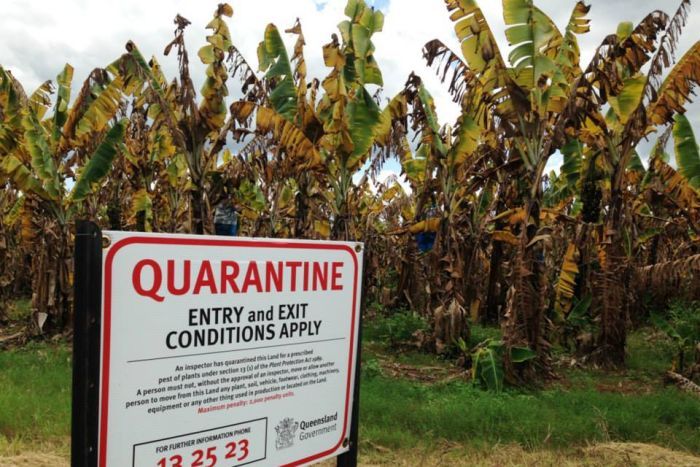
Rural lobby group AgForce says the short-term positives of the 2016-17 Queensland budget could be overshadowed by poor policy decisions. Treasurer Curtis Pitt has handed down the Palaszczuk Government's second budget, with total spending to exceed $52 billion next financial year. Media player: "Space" to play, "M" to mute, "left" and "right" to seek. Of that, $453.9 million, or less than 1 per cent, has been allocated to the Department of Agriculture and Fisheries. That includes what the Treasurer described as an "unprecedented" $78 million support package for drought-hit rural Queensland. "The Palaszczuk Government is focused on dealing with the legacy issues in Queensland agriculture associated with rural debt, on stimulating renewal and investing for the future," Mr Pitt said. But AgForce chief executive Charles Burke was sceptical, particularly as the organisation continued its substantial campaign against the Government's move to introduce tougher tree clearing laws. "There's an acknowledgement of rural and regional Queensland needing some recognition and some financial incentives," Mr Burke said. "Are they enough to overcome some of the other policy aspects the Government is looking to implement that have a big impact on agriculture? We'll have to wait and see." Agricultural production for 2015-16 was valued at more than $17 billion, or just over 5 per cent of the gross state product. Stamp duty scrapped for family farm transfers As part of the $78 million package, the Government will abolish the stamp duty on inter-generational farm transfers, something AgForce had long called for. "The reality is that most other states in Australia already have that exemption, and that was why we have for many years been saying that Queensland needed to get in line with the rest of the states," Mr Burke said. Grants of up to $2,500 will be available for farmers to seek financial advice, access succession planning services or take out multi-peril crop insurance. Other budget measures include: $24 million in continued funding for the Drought Relief Assistance Scheme $3.7 million over three years in additional financial support for rural school students in drought-affected regions $3.7 million extra for better wild dog control $3.5 million for the Queensland Climate Risk and Drought Resilience program, to be delivered in partnership with the University of Southern Queensland. New dedicated office to deal with rural issues The Government has decided to act in line with a number of proposals flagged by Mount Isa MP Rob Katter in his chairman's report from the Rural Debt and Drought Taskforce. A new Office of Rural Affairs will be established, which Agriculture Minister Leanne Donaldson claimed would lead to better coordination on cross-departmental issues. "I see this as something that is a real step forward," Ms Donaldson said. "By ensuring that this office falls within my department, I can be sure that the issues that fall across regional Queensland ... are not lost between different ministerial portfolios." It has the cautious support of Queensland Farmers Federation chief executive Travis Tobin. "Any information to get an on-the-ground picture is a good thing," he said. "I understand over the next couple of months, the details are going to be worked through, and we would hope to be a part of those discussions." Opposition criticises 'more bureaucracy' But the Opposition's Deb Frecklington was critical of the Government's move, saying that even the members of the Rural Debt and Drought Taskforce were divided on the idea for a dedicated office. "It sounds like this is going to be another bureaucracy, set up in Brisbane, and I'm not sure why the ministers can't talk to each other," she said. The Government will also reform the Queensland Rural Adjustment Authority (QRAA), as suggested by Mr Katter. QRAA will be re-branded as the Queensland Rural and Industry Development Authority, tasked with a broader role to help deliver better, and more timely, data on rural debt. Additionally, the Palaszczuk Government will introduce new farm debt mediation legislation to require lenders to conduct formal mediation. "Having a legislated mediation process before bank enforcement action can deliver more positive outcomes for all parties," Ms Donaldson said. [caption id="" align="alignnone" width="700"] PHOTO: There is money in the Queensland budget specifically for the ongoing battle against the threat of Panama disease Tropical Race 4. (ABC Rural: Charlie McKillop)[/caption] More money for biosecurity, but not enough Staffing numbers within Biosecurity Queensland will increase slightly as the Government moves to implement the recommendations of a wide-ranging review that called for an immediate funding injection. The 2016-17 state budget has committed a $10.8 million boost to the state's biosecurity agency. The funds will be spent over the next four years to better prevent and manage pest and disease incursions, critical to protecting the state's billion-dollar agricultural trade. "Is that going to be enough to give us the surety that it will be able to deliver on all those biosecurity issues?" Mr Burke said. "We think that is a little light-on." The Government will also provide another $5.2 million to the ongoing battle against the devastating banana disease, Panama Tropical Race 4 (TR4), taking the total cost next financial year to $7.3 million. Ms Donaldson said there would be no let-up in surveillance, testing and grower education to prevent the disease spreading beyond the property in the Tully Valley where it was found in March 2015. "In addition, we are working with industry on research to find ways of managing Panama TR4 in the years ahead," she said. "That research concentrates on measures that will allow growers to operate if the disease spreads." TR4 affects Cavendish bananas, which comprise more than 90 per cent of a crop that is worth $600 million to the Queensland economy. Source - http://www.abc.net.au

15.06.2016

USA - Purdue Climatologists Say La Niña Could Create Drought Conditions

Could Indiana be in for a drought this summer? Climatologists at the Indiana State Climate Office at Purdue University believe it’s a possibility. Some counties in far northern Indiana and the northeast part of the state are already abnormally dry. What the spring and summer weather does from here will depend on the strength of a developing La Niña weather pattern. The office says stronger La Niña conditions in summer typically result in hotter or drier Midwest summers. “This, combined with the need by plants to replace water lost through evaporation, is setting a classic scenario for a regional drought,” said Dev Niyogi, a state climatologist. Associate state climatologist Ken Scheeringa said that if La Nina develops quickly with at least moderate intensity, it could lead to drought conditions in Indiana by August. “In recent years, there has been a trend to fall droughts in Indiana,” he said. “For example last year, moderate drought occurred from late September into late December.” In the shorter term, the second half of June is expected to be drier than normal. There are equal chances that July and August will be wetter, drier or near normal in precipitation across the Midwest and a slightly higher chance of drier-than-normal conditions over Indiana. Indiana’s last devastating drought took place in 2012. Crop insurance payouts for that year’s lost fields reached a record $1 billion. It’s too early say if Indiana farmers or folks with vegetable gardens will have anything to worry about this growing season. “We will monitor the situation,” Niyogi said. “Droughts don’t always mean lowered yields. The timing, intensity, duration and area covered matter.” According to the U.S. Department of Agriculture’s Indiana Crop Report, as of June 12 about 98 percent of the state’s corn crop has been planted, nearly on par with the state’s five-year average. Ninety-one percent of soybeans have been planted so far, just ahead of the five-year average. Source - http://eaglecountryonline.com

856
of 1225