NEWS
875
of 1225
News
08.04.2016

India - States float tenders for PM Narendra Modi’s mega scheme

In a bid to roll out Pradhan Mantri Fasal Bima Yojana (PMFBY), several states, including Uttarakhand, West Bengal and Jharkhand, have floated tenders for empaneling insurance companies who would be implementing the Centre’s mega crop insurance scheme from the next kharif season. Agriculture ministry sources told FE that Andhra Pradesh, Bihar, Odisha and Haryana too are expected to float tenders shortly for empanelment of 10 private companies including ICICI-Lombard General Insurance, HDFC-ERGO General Insurance, IFFCO-Tokio General Insurance and SBI General Insurance, identified by the Centre for implementation of the mega scheme. After the empanelment, the insurance company would offer crop insurance to those crops for which past yield data is available. The agriculture ministry official said that during the next few weeks, more states would commence work for rolling out PMFBY and Weather Based Crop Insurance Scheme (WBCIS) whose premium have been brought at par with PMFBY. PMFBY stipulates a uniform premium of 2% to be paid by farmers for kharif crops, and 1.5% for rabi crops. The premium for annual commercial and horticultural crops will be capped at 5%. Officials said there is no upper limit on the government’s subsidy for this scheme. “The provision of capping the premium rate, which existed in earlier schemes, and resulted in low claims being paid to farmers, has been done away with,” an official said. The official said farmers will get claims against the full sum insured, without any reduction. Besides, because of delay in crop cutting exercise which was time consuming, the new crop insurance scheme would use of technology like smart phones for capturing and uploading data on crop cutting for fastening the claim payment exercise. Besides, remote sensing satellite would be used to reduce the number of crop cutting experiments. For dealing with delay in settlement of compensation, the new crop insurance policy proposes immediate payment of 25% of the sum insured amount to farmers for crop damage. “The expansion of the crop insurance scheme would depend on the number of farmers voluntarily opting for it. Lower premium rates might encourage more farmers to take up crop insurance,” Ajay Vir Jakhar, chairman, Bharat Krishak Samaj, said. From April 1, the government has discontinued the existing National Agricultural Insurance Scheme (NAIS) & Modified National Agricultural Insurance Scheme (MNAIS). Source - financialexpress.com

08.04.2016

South African Citrus Growers Spend $66 Million on Disease Curbs

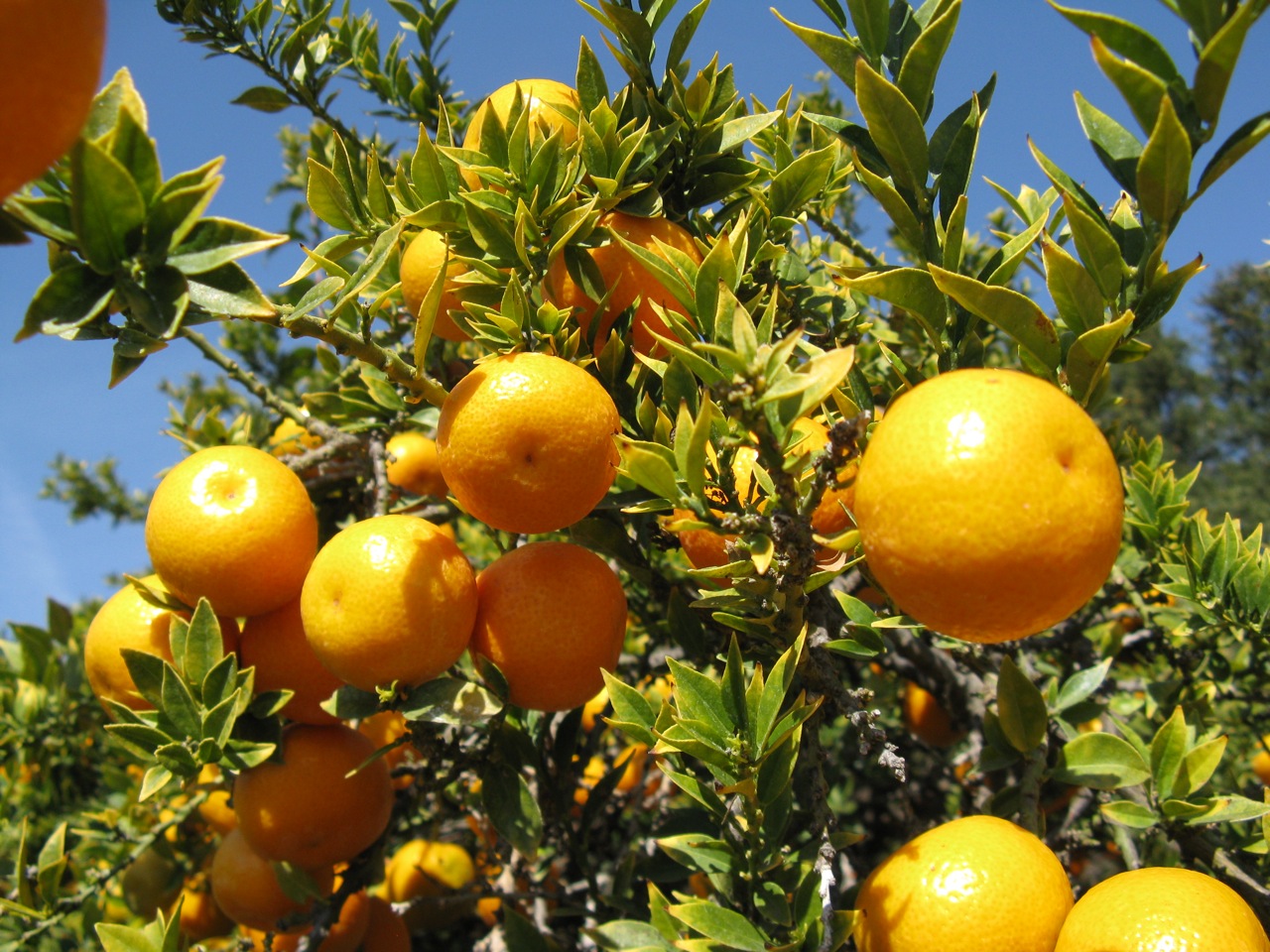
South Africa’s citrus industry is spending more than 1 billion rand ($66 million) annually to control black-spot disease in fruit from the country, according to the main industry lobby. Farmers have spent that amount in each of the past three years to pay for additional spraying, inspections, sanitation, sampling and testing, Deon Joubert, the South African Citrus Growers’ Association’s European Union envoy, said by mobile phone on Thursday. “It’s costing us a lot of money -- our total estimate is over 1 billion rand of additional control costs," Joubert said. “We can comply, but it is an unfair compliance.” South Africa is trying to control incidents of black spot, caused by the fungus guignardia citricarpa Kiely, which results in leaf spotting and fruit blemishes, with lemons particularly susceptible. The European Food Safety Authority has said the fungus can survive transport and storage, and could establish itself in EU citrus-fruit production areas. The region, which buys about 43 percent of South Africa’s citrus exports, refused entry to some of the nation’s produce in 2014 after there were 28 interceptions of fruit with the disease in that year. “We’ve had the success, we’ve had the obvious excellent results from the industry doing it, but its costing a lot of money,” Joubert said. “The industry has always said its not a sustainable thing, you can’t do this long-term.” South Africa has withdrawn exports of organic lemons to the EU for 2016 after four of the total 15 interceptions of the disease were found in the fruit last year, the growers’ association said Thursday. The Eastern Cape province is the nation’s biggest producer of lemons, accounting for 50 percent of total output, the group said. South Africa vies with Egypt to be the world’s largest exporter of oranges, according to the U.S. Department of Agriculture, and the local industry employs an estimated 100,000 people. Exports account for 80 percent of the industry’s 9.4 billion rand in annual revenue. The nation last year suffered its lowest rainfall since records began in 1904, cutting output of crops such as grains, wine grapes and peanuts.

07.04.2016

USA - Spate of storms and flooding results in $3.5bn loss to economy, according to Aon catastrophe report

Aon Benfield's catastrophe model development team, today launches the latest edition of its monthly Global Catastrophe Recap report, which evaluates the impact of the natural disaster events that occurred worldwide during March 2016. Aon Benfield is the global reinsurance intermediary and capital advisor of Aon plc (NYSE: AON). The report reveals that seven severe U.S. convective storm events impacted nearly every part of the country during the month, as more than 1,000 individual reports of tornadoes, damaging straight-line winds and hail were recorded by the Storm Prediction Center. The Insurance Council of Texas estimated insured losses for the state alone at above USD1.1 billion, following more than 125,000 home and auto claim filings over several weeks. Overall economic losses sustained to property, infrastructure and agriculture across the U.S. from the convective storm and flood damage were anticipated to approach USD3.5 billion, while insured losses incurred by public and private insurance entities were tentatively estimated at USD2.0 billion. Meanwhile, the most damaging severe thunderstorm and flood event in at least a decade impacted the United Arab Emirates(UAE) and Oman in March. UAE local insurers anticipated claims to reach AED500 million (USD140 million), with total economic losses forecast to be well into the hundreds of millions (USD). Adam Podlaha, Head of Impact Forecasting, said: "The March heavy rain and flood event in the Middle East is a reminder of the risks that these types of perils can bring to areas with an arid climate. Impact Forecasting has been successful in recent years in developing modeled solutions for non-traditional perils, including perils like flood in the Persian Gulf region. With increasing exposures in emerging parts of the world, it becomes even more important to expand catastrophe model capabilities into these new territories. Impact Forecasting remains at the forefront of this forward thinking." Natural hazard events to have occurred elsewhere during the month include: Thunderstorm and heavy rain events impacted central and eastern sections of China, leading The Ministry of Civil Affairs to report aggregated economic losses of CNY3.7 billion (USD570 million). Windstorm Jeanne, known locally as Katie caused hurricane-force winds and flooding in northern Europe, killing at least one person. Total economic and insured losses are expected to exceed USD100 million. Intensifying drought conditions in India caused major crop damage. The National Disaster Relief Fund (NDRF) recently allocated INR40 billion (USD600 million) for seven hard-hit states: Tamil Nadu, Rajasthan, Jharkhand, Assam, Andhra Pradesh, Himachal Pradesh, and Nagaland. A Canada winter storm system brought accumulating snow, ice and freezing rain to portions of Ontario and Quebec, causing widespread damage. Total economic losses were estimated to approach CAD130 million (USD100 million), while insurers anticipated losses well into the tens of millions (USD). Source - prnewswire.com

07.04.2016

Australia - Fourteen flies cost $15.7m to eradicate

It cost the government more than $1 million per insect to eradicate the Queensland fruit fly from Auckland last year. The Ministry of Primary Industries (MPI) has released the final costs of its eradication programme, which swung into action after the first of 14 flies was found in Grey Lynn last February. It spent $15.7m eradicating the flies, including setting up hundreds of surveillance traps and collecting fruit and vegetables from houses in the area where the fly was found. Auckland was declared free of the pest in December. A Queensland fruit fly found in Grey Lynn.A Queensland fruit fly found in Grey Lynn. Photo: MPI The ministry said the Queensland fruit fly was a particularly destructive species and could have threatened the $6 billion horticulture industry if it had become established in New Zealand. The flies were thought to have arrived in the country through illegally imported produce. Source - freshplaza.com

07.04.2016

China - Pomelo blossoming delayed by cold

“The blossoming of the pomelo trees has been delayed by the extreme frosts in January and February. The trees that grow at lower altitude on the plains will be able to recover soon. Trees on the mountains at higher altitudes might have been hit harder. The previous season was a late season, and when the frost hit, the trees were not dormant yet. Therefore, the impact might be bigger. We will be able to know more five or six weeks ahead from now. Generally I expect reduced production volumes for the coming season”, Liz Lu explains of Orient Green. “We grow pollution free, high-end pomelo fruit. Pomelo is our main product. We grow four varieties, which we divide into white, red and yellow, according the to the colour of the pulp. The fourth variety has a slightly different peel. In addition, we are investing in research into new varieties.” Orient Green grows pomelo citrus in Pinghe, which is a region at the heart of China’s pomelo production. Each year, Pinghe produces an estimated 1.2 million tons of pomelo, of which 40% to 50% originates from the mountains in the area. “Honey Pomelo prices in China will remain low for the coming time. There are a number of factors that have played into this. Firstly, big production expansion in recent years has driven output up. Total production has almost doubled over the years, which has led to oversupply. Secondly, some growers pick the fruit prematurely to beat the market. This results, however, in unripe, lower quality citrus. This citrus competes on price with ripe, better quality fruit. Finally, cold chain storage and cold chain logistic solutions are limited. This limits the preservability of the fruit, and shortens the time-frame in which the crop has to be sold.” “In 2008, we launched our Citrisun brand together with our European partners. Currently, we sell 70% of our crop in China and we export 30%. In China we mainly supply supermarkets and fruit chain stores. In the future we will focus more on the domestic market. The growth potential for this market is huge. We can use our export experience, including quality control and GLOBAL GAP certificates, to boost our sales in China." Source - freshplaza.com

07.04.2016

India - Workshop on Centre’s crop insurance scheme

A workshop to spread awareness about the Pradhan Mantri Fasal Bima Yojana, a crop insurance scheme, was organised at the Krishi Vigyan Kendra here on Tuesday. Resource persons spoke to farmers and explained the salient features of the scheme and about how it was different from the old insurance schemes. They said the scheme was mandatory for farmers who take farm loans, while for others it is an option. Bhagwant Khuba, MP, after inaugurating the workshop, urged farmers to avail the benefits of the scheme. He said the previous schemes managed to reach only about one-fifth of the country’s farmers, and added that Prime Minister Narendra Modi wants each farmer to be covered under this scheme. He said the benefits of the scheme include a uniform premium of 2 per cent for kharif crops, 1.5 per cent for rabi crops, and 5 per cent for horticulture, cash and annual crops. The rest of the premium will be paid by the Union government, even if it is beyond 90 per cent. Those who take Kisan Credit Cards are automatically covered as their contributions are deducted while releasing the loan. Other farmers will have to buy insurance by paying premium separately. He said this would provide farmers with much-needed security, with the rising prices of inputs such as seed and fertiliser, and the unstable prices of farm produce. He said the previous UPA government had restricted the amount of premium to be paid by the government, which resulted in lower compensations. With this cap removed, farmers stand to be fully compensated for their losses, he said. As the MP reeled off on the NDA government’s “pro-farmer measures”, Veerabhushan Nandagave, a Karnataka Rajya Raitha Sangha leader, objected and said the so-called benefits were not reaching the beneficiaries. Countering the MP’s claim that the MUDRA bank scheme had benefited over 10,000 persons in Bidar district alone, he said bankers were not even entertaining applications by many deserving youths. However, the MP responded by saying the scheme was one of the most successful schemes of the government, and called the criticism “not valid”. The University of Agriculture Sciences, Raichur, the Department of Agriculture and Reliance Foundation had jointly organised the workshop. Source - thehindu.com

07.04.2016

Canada - Early blooms put crops at mercy of frost

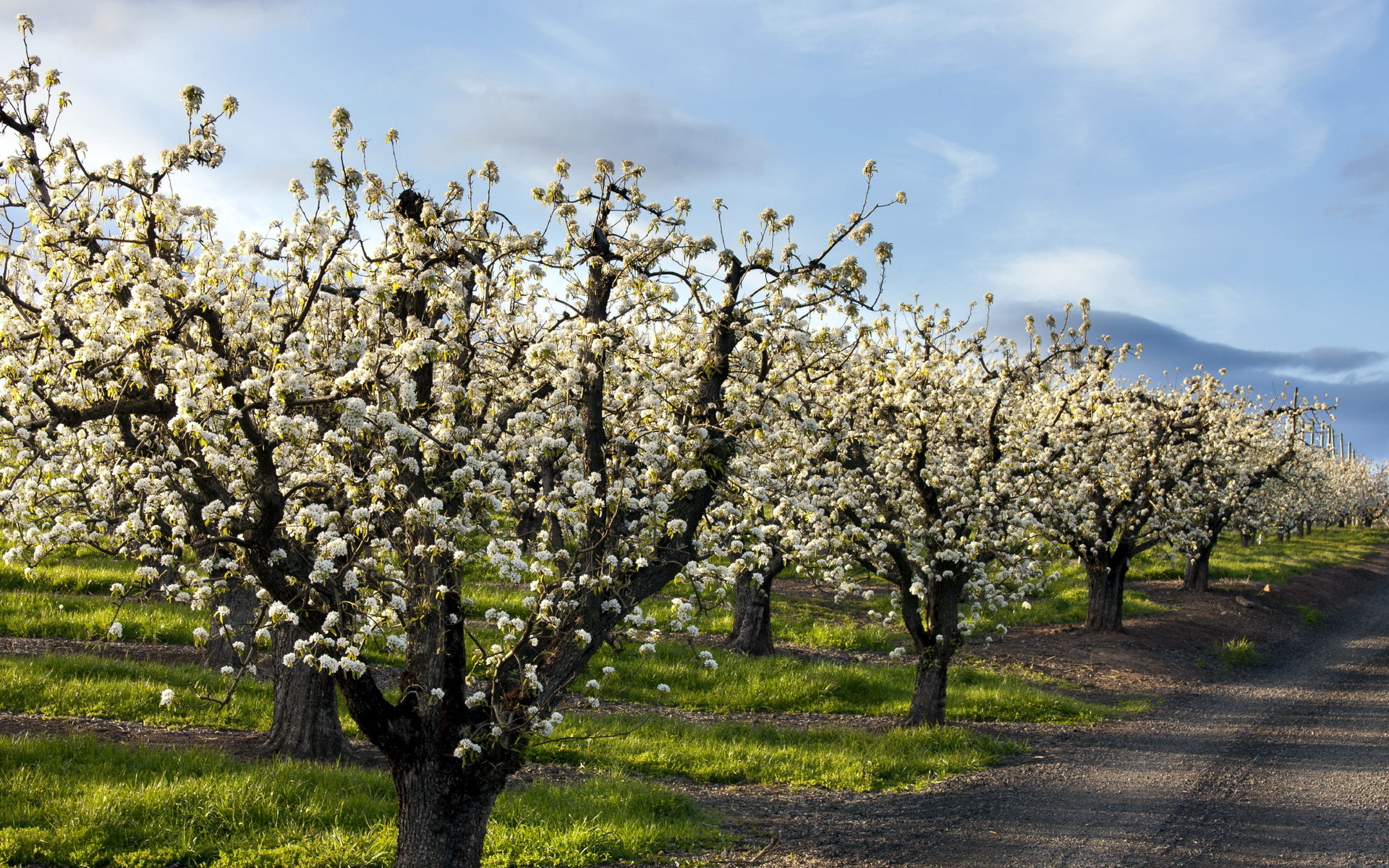
Depending on where you live in the Okanagan, you may have noticed fruit trees are blooming early this year. It’s a beautiful sight of spring, but the warm weather could cause problems for Okanagan orchardists especially if frosty weather returns. Just like last year another early spring means things are ahead of schedule on Okanagan orchards. “The apricots and the peaches are in blossom now, which is very early,” says Leah Campbell with Davison Orchards. “Apples are less than two weeks away, which is much earlier than usual.” However, an early start to the growing season means an increased risk for growers. Trees that have bloomed are more susceptible to damage from potential frosts. “Frost can either wipe out the full blooms so you will have a loss of crop or you can have damage to the apples,” explains David Dobernigg, owner of the BX Press Cidery and Orchard. “We usually hope that by May 1 we are out of the woods for frost. We are so far away from that that right now we are just sitting on the edge of our seat hoping that these blossoms make it through the next few weeks,” says Campbell. Fred Steele, president of the B.C. Fruit Growers’ Association, says a frost would mean a smaller crop. That could be helpful or harmful to farmers depending on when the frost happens and how severe it is. “If that frost comes at the right time and it is not too severe, it could help you do a thinning job. It comes at the wrong time and the temperatures are much lower than of course you lose a substantial portion of your crop,” says Steele. “In the middle of [Ontario’s] blossom in 2012 temperatures dropped sub-zero and they had snow. They lost about 85 per cent of their crop.” Orchardists have learned to live with uncertainty and are taking the situation in stride. “There is crop insurance so there is a safety net for us if it wipes out the crop,” says Dobernigg. “We’ve also started a small on-farm cidery so if [the crop] is scarred we have the ability to use some of that fruit for our own purposes.” Source - http://globalnews.ca

06.04.2016

USA - April cold threatens 'significant losses' of fruit crop

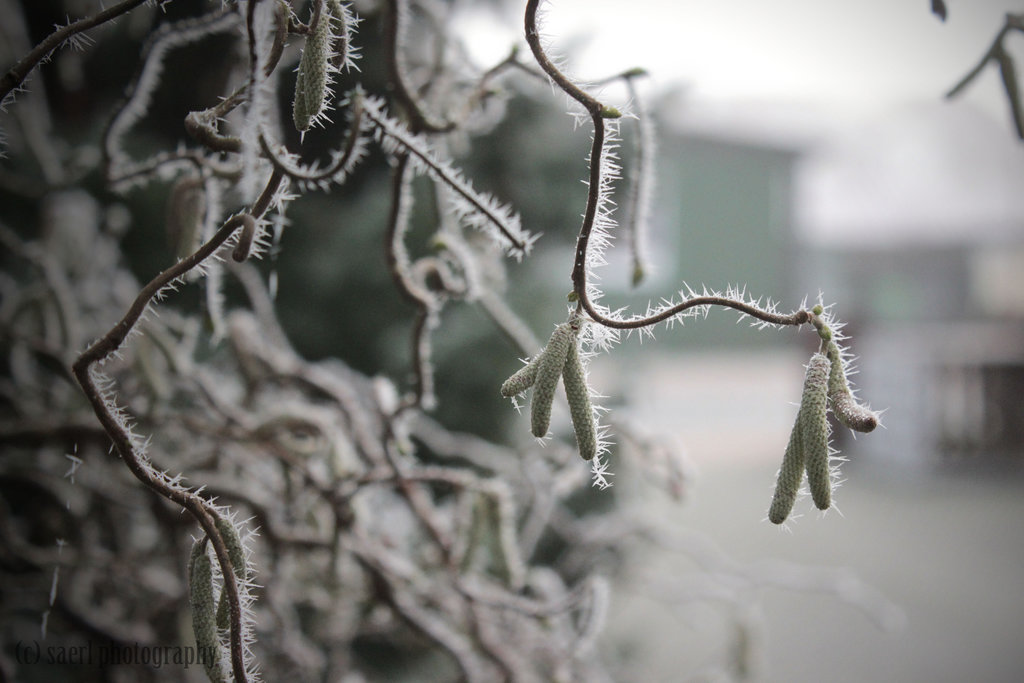
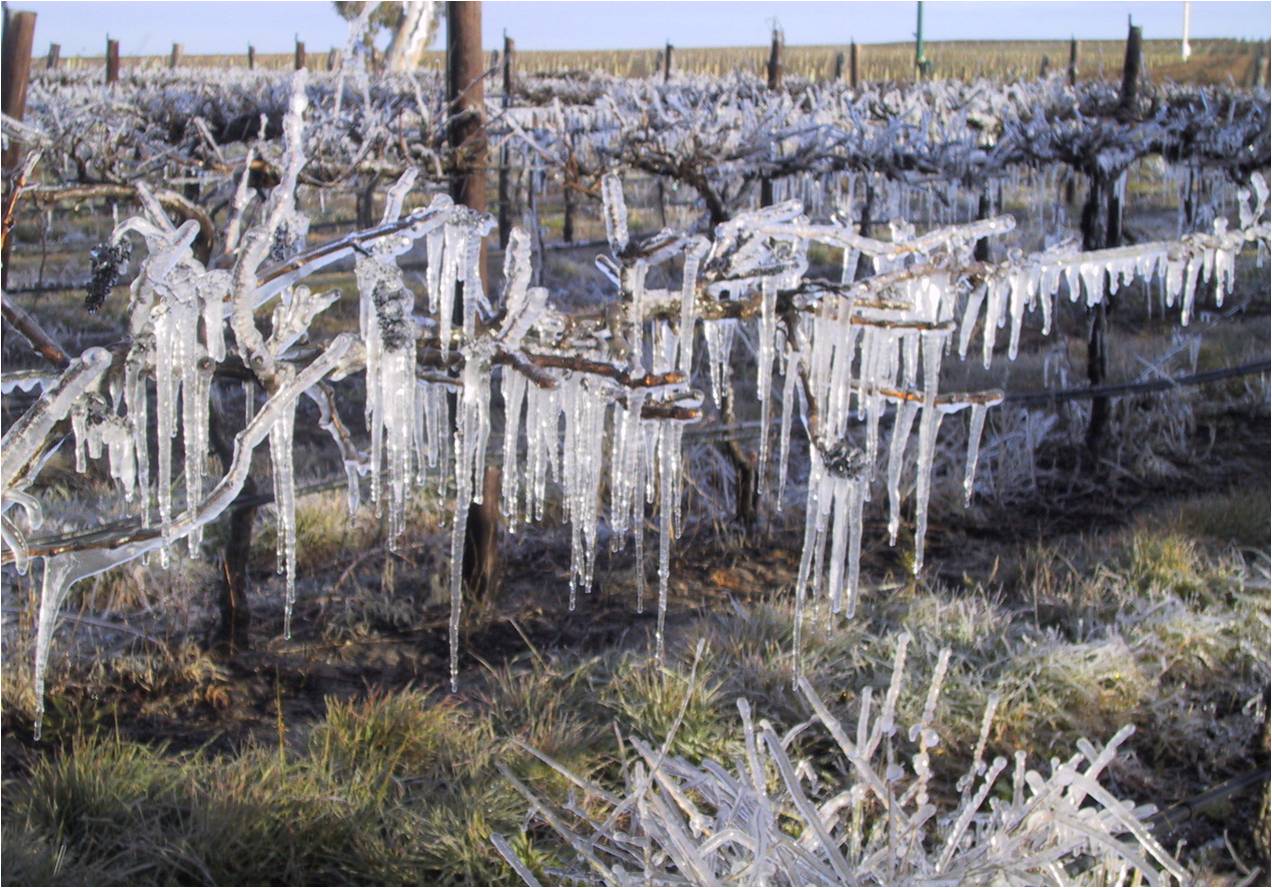
Ongoing waves of cold during early April are taking a toll on fruit tree blossoms in parts of the northeastern United States. Farmers are holding their breath as they wait out the cold to inspect the impact on trees and vines. The combination of a very mild winter, above-average temperatures during March and the most recent bout of below-freezing temperatures have caused damage to some fruit crops. [caption id="" align="alignnone" width="437"] In this photo taken in Syracuse, New York, on April 3, 2016, a female cardinal takes in the wintry scene with snow on blossoming trees. (Photo/Grayson Jones)[/caption] "The amount of damage varies from orchard to orchard and from tree to tree," according to Jason Coopey, co-owner of Way Fruit Farm in Stormstown, Pennsylvania. Coopey stated that thus far apricots and plums have sustained the most damage, but overall his orchards, which are on the tops of hills have fared better than some locations farther south and east and those located in valleys, where the cold air tends to settle. "We expect significant losses, 90-100 percent of peaches and plums, now at full bloom," according to Chris Harner, of Harner Farms in State College, Pennsylvania. "Apples are farther behind [in central Pennsylvania] but are entering sensitive stages where we can have damage or loss," Harner said. Fruit trees in the blossoming stage, as opposed to budding, are very susceptible to damage with temperatures in the middle to upper 20s. According to the Fruit Tree Production Guide, compiled by the Pennsylvania State University, a 90 percent kill of apples, cherries and peaches can occur with temperatures of about 25 F for 30 minutes. However, the damage at specific temperatures varies from variety to variety. Additional waves of cold air will follow through the second weekend of April. A warmup prior to the end of the week could do more harm than good. The brief warmup could push some trees on the verge to blossom and vines to bud break before cold returns. "The prior warmth is what contributed to blossoming of some trees three to four weeks ahead of average," Coopey said. There were some days in southern and eastern Pennsylvania, Virginia and New Jersey, where temperatures jumped into the 70s to near 80. As of late March, the weather has remained chilly enough in much of the New York state Finger Lakes region to prevent or limit bud break of most varieties of grapes, according to Cornell University. However, the cold blast in mid-February, which was surrounded by mild conditions much of the winter, caused significant damage to some non-native varieties of grapes in the Finger Lakes region. Low temperatures during the outbreak dipped to between minus 18 to minus 8 degrees Fahrenheit. [caption id="" align="alignnone" width="650"] Fresh snow and single-digit temperatures gripped the Lake Seneca, New York, area Tuesday morning, April 5, 2016. (Photo/Timothy Merwarth)[/caption] "As long as temperatures stay where they are projected, we should be okay," according to Timothy Merwarth, of Hermann J. Wiemer Vineyard located in Dundee, New York. Grape growers will utilize wind machines and bonfires where practical, as needed, during cold waves. There is concern for damage from the cold to vineyards, similar to fruit trees, farther south in the mid-Atlantic region since bud break was further along farther south. Another cold wave will invade the Midwest and Eastern states this weekend. "Moderate cold with a little wind is okay and better than a heavy frost with very low temperatures," Coppey said. The full scope of the damage may not be realized until the trees and vines are setting fruit later this spring. Source - accuweather.com

06.04.2016

Philippines - DA says crop losses from El Niño nears P10 billion

Crop losses amounted to P6.5 billion from January to April 2, Department of Agriculture (DA) Undersecretary Emerson U. Palad said in a press briefing following the fifth meeting of the Technical Working Group on the Roadmap to Address the Impact of El Niño in Pasig City yesterday. This adds to the P3.4 billion of such losses recorded from February to December last year, the official added, noting the actual tally has thus far turned out lower than projected because of the government’s interventions. The Northern Mindanao region incurred the biggest production loss of P2.462 billion from January to date, followed by Western Visayas (P1.9 billion) and Soccsksargen (P748 million). “In 1997/98 the total [damaged area] was 677,441 hectares; in 2010, it is at 555,102 hectares; and for the period -- we count February 2015 to April 2, 2016 -- we are at 373,491 hectares,” Mr. Palad said. “This is substantially much less than what we have experienced in the previous year.” In terms of intensity, local and international weather forecasters have compared the current El Niño cycle to the 1997/1998 episode, when agriculture production in the Philippines dropped by a fourth. “Government has been fairly successful in mitigating the impact of El Niño, particularly in ensuring sufficiency in supply of food and keeping prices stable,” Socioeconomic Planning Secretary Emmanuel F. Esguerra said in the same briefing. “While drought usually entails low production leading to high agricultural product prices, inflation data show that prices of food, particularly rice, have been low and stable in the past months,” the official noted. The official cited interventions made by the government, particularly the provision of irrigation services and distribution of seeds in non-vulnerable and mildly affected provinces, timely importation and price freeze in areas declared under a state of calamity. The National Food Authority (NFA), for instance, has approved the importation of 750,000 metric tons of rice in preparation for El Niño’s possible impact on agricultural production this year. NFA has a stand-by authority from the President to import another 500,000 metric tons of rice this year, NFA Administrator Renan B. Dalisay told reporters after the briefing. “What the NFA Council is doing now is monitoring the supply [and] consumption on a month-to-month basis because we are entering the lean months, that’s why we’ll see,” Mr. Dalisay said.Aside from stable food supply and prices, Mr. Esguerra noted that there were no reported breakout of diseases despite the lack of water and that Social Weather Station’s survey showed last year’s 13.4% average hunger rate dropped to its lowest since 2004. “However, despite these encouraging numbers, we recognize that there could be areas that are feeling the brunt of El Niño and for this, the role of LGUs is very crucial,” Mr. Esguerra said. “We are certainly bothered by the fact that there are people who still go hungry. There could be areas that are not yet being reached by government interventions.” As proposed by the interagency El Niño Task Force headed by the National Economic and Development Authority (NEDA), the national government has earmarked P19.2 billion for cash-for-work programs, distribution of food packs in rural areas and other interventions. “Actually, [the] P19.2 billion [we have set], that was really considering the worst case. As it turns out, it was not as bad as we originally thought it would be,” Rosemarie G. Edillon, NEDA deputy director-general, said during the briefing. At present, 23 provinces experience 60% less rainfall, 20 of which are in Mindanao. Seven provinces -- Isabela, Quirino, Bukidnon, Davao del Sur, Cotabato, Maguindanao and Basilan -- have declared a state of calamity, along with five cities, 24 municipalities, and two barangays. “We would like to assure the public that government is doing its best to address the needs of affected areas and families, considering that they are among the poorest and most vulnerable sectors,” Mr. Esguerra said. Source - bworldonline.com

06.04.2016

Fiji - Coop seeks $350k to help growers after cyclone

A horticultural agro business is seeking $350,000 to help its 260 farmers and export members back on their feet following Severe Tropical Cyclone Winston. Nature's Way Cooperative Fiji Ltd (NWC) CEO Michael Brown says most of their exporters are facing increased costs which can threaten their ability to export. "Due to the damage caused to farms, exporters have to include a larger number of suppliers in order to get the same volume of exports, this affects the labour and transport costs associated with buying produce as well as biosecurity-related registration costs," Mr Brown said. The agro business is involved in the export of papaya, eggplant and breadfruit. Some of the concerns Mr Brown raised included cost overheads. "Due to the reduced supply, exporters are sending smaller volumes of fruit however, their overheads remain the same and therefore the overall cost per unit has increased significantly. "It is envisioned that through this stimulus package scheme, exporters will be able to encourage farmers to rehabilitate and replant resulting in an increase in volume to a scale that is economically viable and sustainable," he said. Initially, a small enterprise handling just 30 tonnes of papaya each year, NWC treats and packs about 1200 tonnes of papaya, mango, breadfruit and eggplant annually. Source - freshplaza.com

06.04.2016

USA - Important Crop Insurance Deadline Nears in Idaho, Oregon and Washington

USDA’s Risk Management Agency (RMA) reminds Alaska, Idaho, Oregon, and Washington nursery growers the final date to apply for crop insurance coverage is May 1. Current policyholders who wish to make changes to their existing coverage also have until the May 1 sales closing date to do so. Growers applying for the first time may purchase coverage at any time. Crop insurance provides protection against a loss in production due to natural perils such as wind, hurricane, and freeze. More information on nursery crop insurance is available at RMA's Nursery Policy Web page. All applications, including those for new or amended coverage, are subject to a 30-day waiting period before coverage begins. Coverage begins 30 days after receipt of a signed application, a Plant Inventory Value Report for each insured practice, and two copies of the grower’s most recent wholesale catalog or price list. Source - theprairiestar.com

06.04.2016

Philippines - P16B SOUGHT FOR CROP INSURANCE

Farmer group Samahang Industriya sa Agrikultura (SINAG) said government should provide not only immediate aid to rural communities devastated by the ongoing El Nino phenomenon but also the much-needed production subsidies like crop insurance so that farmers can start replanting or sow alternative crops or livelihood. The group said there is no justification for a very slow and bureaucratic response to calamities such as drought especially that the government has a list of farmers in each locality and that funds have long been allotted and are available. “The Department of Agriculture (DA) is saying that there is a P900 million worth of support for farmers based in Mindanao that is hit by El Nino… The DA must now be put task to immediately and directly provide full farming subsidy to all the farm inputs and services needed by farmers so they can immediately start replanting or sow alternative crops,” said Rosendo So. SINAG  chair. So said among the help that should be provided by the government are seeds, fertilizers, pesticides and other inputs needed for production while service support can be done by waiving irrigation fees and relaxing the rules on  immediate insurance assistance from the Philippine Crop Insurance Corp. (PCIC). The group is also urging the government to increase PCIC’s budget to at least P16 billion for it to accomplish its mandate of providing immediate and timely insurance coverage to all agricultural producers against losses arising from natural calamities. It can be noted that last year, PCIC’s budget of P1.3 billion, enough to cover around 700,000 farmers while for this year, the state run firm’s budget is at  P1.6 billion. “In this period of extreme climate hazards and unusual weather events, subsistence farmers and artisanal fishers have to cope with an increasing and more frequent crop losses; government should and must provide guaranteed and automatic risk coverage to all crop farmers and other small producers,” So added. The DA said  it will intensify its efforts to address the negative effects of El Niño through its regular program funds and utilization of its quick response fund. In its latest count, the agriculture department said that damages caused by El Nino already reached P5.3 billion, equivalent to a volume of 358,808 metric tons of production loss which affected a total of 129,138 farmers and a total area of 237,215 hectares. Source - malaya.com.ph

06.04.2016

Mozambique - Food security threatened by floods and drought

The natural disasters which have struck Mozambique this year have compromised the target for agricultural growth in the country this year. According to state-controlled Radio Mozambique, the Confederation of Mozambican Business Associations (CTA), furthermore, the military tensions in the centre of the country, where gunmen of the rebel movement Renamo have been ambushing vehicles on the main roads, have provoked a further exodus from the countryside into the cities and this endangers the normal course of productive activities. In the government’s Economic and Social Plan for 2016, the growth target for the agricultural sector is set at 6.5 per cent, but now the estimate is that growth in this sector will be less than five per cent, according to CTA Chairman Rogerio Manuel while addressing a meeting of the Business Environment Monitoring Council at the weekend. The meeting brought together government and business representatives. Manuel, argued that the drought in southern and central Mozambique should push growth targets downwards. The drought has pushed almost 1.5 million people into food insecurity and the opposite problem faces the northern provinces, where heavy rains have led to localized flooding, affecting about 32,000 people. In the south of the country, 174,000 hectares of crops have been lost because of the drought, said Manuel, and 4,500 cattle have died due to lack of pasture and water. He warned that a further 43,500 head of cattle are at risk. These problems, he added, force the country’s business community to reflect deeply on what can be done to overcome the effects of such phenomena. Source - freshplaza.com

05.04.2016

USA - Extreme Weather Conditions effects cereal production

Droughts and heatwaves have reduced cereal harvests by an average of about 10 per cent globally over the past half century, and their impact has become stronger in recent decades especially in United States of America. Differences in agricultural scale and methods An analysis of national production of 16 different cereal crops in 177 countries, and a comparison with the effects of about 2,800 weather disasters between 1964 and 2007, has for the first time provided a detailed snapshot of how extreme weather has affected overall cereal production globally, scientists said. The study found that drought and heatwaves reduced cereal harvests by between 9 per cent and 10 per cent on average in the affected countries. However, the technically advanced arable farms of North America, Europe and Australia were even more strongly affected than the developing world, with average production cuts of about 20 per cent. Researcher reveal in their study that the countries that are more advanced from the technical agriculture point of view including North America, Europe and Australasia faced a much severe decline in production at an average of 19.9 per cent because of droughts, which is roughly double the global average. The study’s authors say their work throws a spotlight on the growing vulnerability of the world’s food supply to climate change. Their results could help guide agricultural policies as the atmosphere shifts to a more volatile state because of climate change, even as population growth puts more demands on the planet’s capacity to generate food. “The food system is already stressed in many ways,” said Navin Ramankutty, the senior author on the study and a professor of global food security and sustainability at the University of British Columbia. With climate change, “we are adding one more stressor,” he said. By focusing on extreme weather episodes, the study differs from previous efforts to discern the influence of climate change on food. Those have largely considered the influence of long-term but gradual changes in seasonal temperature and rainfall in different food-growing regions. Western farmers may need to start thinking differently as climate becomes less and less predictable, Ramankutty said. “That model works really well when the climate is stable, but it may not work so well when there is an extreme weather event.” In other countries, fields tend to be smaller and crops more diverse. That may give farms more resilience, Ramankutty suggested. “Maybe their yields are lower but they’re not as susceptible to weather shocks.” Scientists have long warned that more frequent and increasingly severe droughts are likely to be among the consequences of climate change. Researchers have already concluded that climate change is at least partly behind 2014 droughts in California, Africa and the Middle East. The militaries of the United States and the United Kingdom take the issue seriously enough to have written strategic documents about the need to respond to extreme weather events, including drought. Successful agriculture under climate change may require some trade-off between lower yields and greater resilience, Ramankutty said. The issue is unlikely to go away. “In reality, we know that when we have big production losses, it’s because of a major drought or a major heat wave,” Dr. Ramankutty said. To better understand the effect of such events, he and his colleagues at UBC and McGill University drew from a database listing about 2,800 weather disasters in 177 countries from 1964 to 2007 and combined them with national food-production figures. By using a statistical method designed to reveal episodic effects rather than a smoothly averaged trend, they were able to tease out the signature of severe weather written in the world’s constantly fluctuating food supply. The results showed clear impacts on food production from heat waves and droughts, less so for floods and periods of extreme cold. This makes sense, Dr. Ramankutty said, because flooding can have a more localized effect than drought, and cold snaps typically do not affect the peak of a growing season, the way heat and drought can. The results also suggest that extreme weather events are increasing, a possible harbinger of climate change, but Dr. Ramankutty and his colleagues are cautious about over-interpreting this result, which could also be due to improvements in the reporting of extreme weather events over the past 50 years. More significant is that the impact of severe weather on food production seems to be growing. The study found that more recent droughts came with a 7-per-cent greater impact on food production than droughts of decades past. Curiously, the effect was most pronounced in the developed world, which relies on advanced agricultural technologies and practices. Part of the effect is due to higher overall productivity in the West. In effect, they had farther to fall when disaster struck. But the researchers also suggest that farmers in the developing world were better protected from the effects of extreme weather by growing a more diverse selection of crops. “The developed world has much more mono-culture agriculture, and while they produce good yields when conditions are favourable, they are less resilient to climate shock,” said Ramankutty, a faculty member at the Liu Institute for Global Issues and the Institute for Resources, Environment and Sustainability. The findings are based on an analysis of 2,800 weather events recorded between 1964 and 2007 in the Emergency Events Database and national production data on 16 cereal crops from 177 countries from the United Nations’ Food and Agriculture Organization. “Across the breadbaskets of North America, the crops and methods of farming are very uniform across huge areas, so if a drought hits in a way that is damaging to those crops, they will all suffer,” said lead author Corey Lesk, a recent graduate of McGill’s Department of Geography. Farming in the developing world is more often a patchwork of different crops, grown with a variety of management practices. That way, when conditions are bad for one crop, they have others to fall back on. “They are not putting all their eggs in one basket,” said Ramankutty. In the West, access to crop insurance allows farmers to focus on maximizing profits, rather than diversifying for safety. However, when drought or extreme heat hit more than one part of the western world, the results can be catastrophic, leading to shortages and instability. Steve Shirtliffe, a professor of agronomy at the University of Saskatchewan, suggests the explanation is that farming in Europe and North America has become so well optimized for production that the effects of drought are more pronounced than they would be in countries that are dealing with other constraints on production, such as insect pests and soil fertility. “Water is normally a limiting factor” on plant growth, Dr. Shirtliffe said. “If you get a drought and the yield doesn’t go down, that essentially means you’re not managing the productivity of your cropping system very well.” But the results may suggest that the single-crop farming practices that prevail in North America would leave the food supply of countries in the developing world more vulnerable if they were adopted there. “This tells us that we should be wary of proposed solutions to hunger in poor countries that are based on the adoption of large-scale industrial farming systems,” Jennifer Clapp, a professor of global food security at the University of Waterloo in Ontario, said. Dr. Ramankutty added that the study hints at the sorts of situations the world food system will need to be equipped to handle as severe weather events become more frequent and more extreme, as some climate models predict. Source - albanydailystar.com

05.04.2016

India - Crop insurance scheme is mere eyewash

CPM leader and MLA, M Y Tarigami, today strongly urged the administration to assess the losses and come out with a comprehensive relief package for the farmers and fruit growers whose crops have been damaged by the heavy rains in Kulgam. In a statement issued on Monday, Tarigami reiterated his demand for revising the recently announced Crop Insurance Scheme, so that the farmers are not left at the mercy of the vagaries of natural calamities. He referred to the recent government announcement regarding the Crop Insurance Scheme and said that it is a mere eyewash and will not prove beneficial to the  farming community. “In this half baked scheme, there is no mention of the crops to be insured and the premium for the rabi and horticulture crops is very high,” he said. Tarigami hoped the new government will pay special attention to this burning issue.

05.04.2016

India - Fire destroys wheat crop on 12 acres

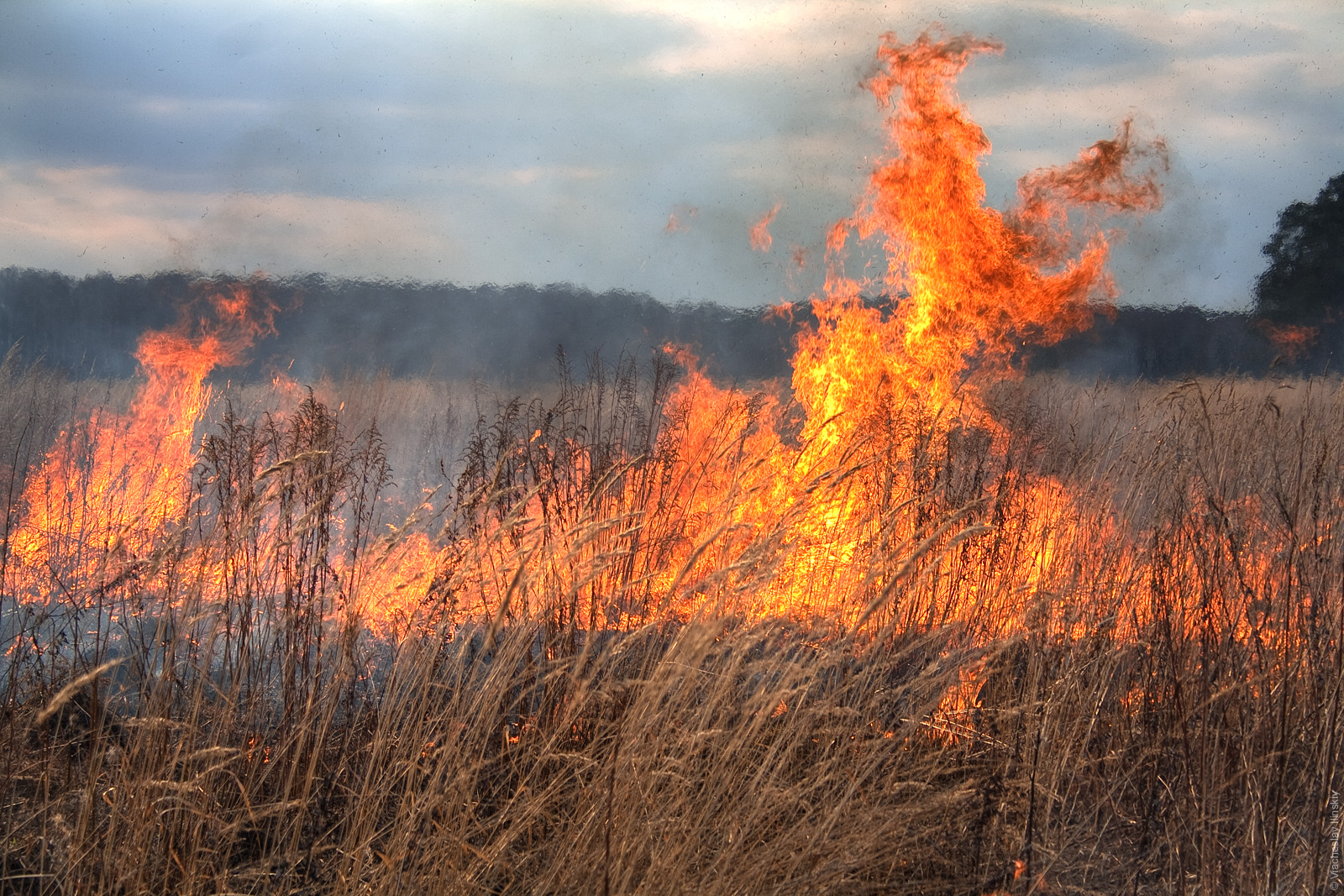
Wheat crop on around 12 acres near Tofanpur village caught fire at 4 pm today leaving a number of farmers affected and distressed over the damage to their crops. According to sources, the crop caught fire due to some short circuit in electricity wires. In no time, the fire spread across the adjoining fields of about 12 acres. Over 10 farmers of the nearby villages have been affected whose crop has been damaged in the fire. Farmers of Gholumajra, Bijanpur, Bhagwasi, Mianpur and Tofanpur villages gathered immediately and filled water bodies to avoid spreading of fire. After receiving a call from the affected farmers, a fire tender from Dera Bassi was also rushed to the spot. Though the fire tender helped in dousing the flames, the crop was completely destroyed before it could reach the spot. Jagir Singh, a farmer of Mianpur village, died due to heart attack after knowing about the incident of fire in his fields, the farmers alleged. The Lalru police and the patwari concerned also reached the spot and took stock of the loss to the crop, the sources said. The SDO of Punjab State Power Corporation Ltd, Lalru, Karam Chand, denied the allegations of farmers and said as per the report of the junior engineer, the power line was shut at the time of the incident due to some repair work. However, an inquiry was ordered by PSPCL officials, the sources said. Source - tribuneindia.com

875
of 1225