NEWS
911
of 1224
News
16.11.2015

India - 4 months on; farmers, traders yet to get insurance claims

Four months have been passed since farmers and traders have not received the claim of insurance for their yield which got destroyed at the warehouse of MP Ware Housing and Logistics Corporation in the month of July 2015. Traders and farmers met branch manager and demanded quick payment of their insurance claim, on Saturday. The grain stored at godown number 12 of MP Ware Housing and Logistics Corporation branch Ujjain got wet due to excessive rainfall held on July 18. Gram and soybean crop worth rupees lakhs got destroyed due to the heavy rainfall. Farmers and traders have not received the payment of insurance claim since four months. Though, insurance company had sold the damaged crop. Grain merchant Manoj Jaiswal told that 3000 gunny bags full of soybean worth Rs 1.20 crore were stored at the warehouse. 1200 gunny bags got destroyed due to rainfall. It caused loss of Rs 50 lakh. Traders met branch manager SK Solanki and demanded the insurance claim on Saturday. They told that Rs 2 lakh had been deposited at the account of Warehouse before storing the crop. The amount consisted of the insurance claim as well. According to the rules the company should pay within 8 days, but four months have been passed. Company had sold the wet grain. 1030 quintal of soybean and 85 quintal gram got destroyed. They cost Rs 46.81 lakh. The payment has to be made to 12 traders and farmers. Source - http://www.freepressjournal.in

16.11.2015

USA - Restore $3 Billion Crop Insurance Cuts in Omnibus

Senator John Hoeven t spoke at the North Dakota Farm Bureau’s annual meeting and highlighted recent efforts to stop the Environmental Protection Agency’s (EPA’s) Waters of the U.S. (WOTUS) regulation, which would expand the reach of federal regulation and create uncertainty for farmers, ranchers and other job creators. The senator also told the group that he is working to restore $3 billion in reductions to the Crop Insurance program made in the recent budget agreement. “The Farm Bureau is leading the way on behalf of our farmers and ranchers across the nation,” said Hoeven. “One issue they have really led on is stopping the Waters of the U.S. rule. We’re making real progress there. We’ve got it held up by litigation, but I’ve also been working to stop it legislatively. I’ve included legislation in the appropriations bill to defund the regulation and I really think that we’re going to get that done by the end of the year.” Hoeven is leading the effort to eliminate the Waters of the U.S. regulation through the appropriations process. The senator worked to include a provision in the Senate Interior Appropriations bill in June that prohibits the EPA from implementing the regulation. Earlier this month, the Senate passed a Resolution of Disapproval under the Congressional Review Act to repeal the EPA’s Waters of the U.S. rule. The measure, which Hoeven cosponsored, passed by a vote of 53 to 44. The Congressional Review Act authorizes Congress by majority vote to repeal actions by a federal agency after a rule is formally published and submitted to Congress. The House is expected to pass the resolution, however the President has threatened to veto it. Hoeven said that while he is working to overcome a presidential veto, he is also working to defund the regulation in the Interior and EPA Appropriations bill. In August, U.S. District Court Judge Ralph Erickson issued an injunction blocking the EPA from implementing the WOTUS rule in North Dakota and 12 additional states that had challenged the rule. A subsequent ruling by the 6th U.S. Circuit Court in October blocked the rule from being implemented nationwide while the courts determine its legality. Last year, Hoeven worked to defund the Interpretive Rule, which enabled farmers and ranchers to operate this year, as they have in the past, under the Clean Water Act’s general farm exemption from having to get a permit before practicing normal agricultural activities like plowing, seeding and minor drainage. Crop Insurance Hoeven also underscored his opposition to a provision in the new budget agreement that would reduce crop insurance by $3 billion, especially after the crop insurance program has already been reduced by $12 billion since 2008. As a member of the agriculture committee and conferee on the bicameral panel that worked hard to negotiate the final version of the farm bill, Hoeven said it is unfair to the nation’s farmers and ranchers to go back and require an additional $3 billion reduction after $23 billion in savings was found in the 2014 farm bill. “We are currently working on the Agriculture and Agriculture Appropriations Committees to ensure that funding for the Crop Insurance program is restored in the year-end omnibus Congress is preparing,” said Hoeven. Source - http://politicalnews.me

16.11.2015

USA - Farm Income Expected to Plummet, Current Mix of Farm Programs Limited Help

The USDA forecast of net farm income for the calendar year 2015 is enough to scare almost anyone. Two years ago, U.S. farmers earned a record $123.7 billion in net farm income. Last year that number was a not too shabby $91.0 billion, fourth highest in history. This year, that number takes a 53.9 percent tumble from the record set in 2013, and a 36 percent decline from last year, coming in at $58.3 billion. Back in February the USDA released its “Agricultural Projections to 2024” which had a projected 2015 net farm income of $84.2 billion, $30.3 billion higher than the current forecast. So what happened? Income, including insurance payments, from feed grains fell by $6.6 billion, oil crops by $3.6 billion, food grains by $2.4 billion and cotton by $2.1 billion. On the livestock side, dairy receipts fell by $14.3 billion followed by meat animals at 7.8 billion. Expenses only fell by $2.6 billion. Direct government payments were $11.3 billion, only slightly higher than the record income year of 2013. As a result, the value of agricultural production fell by $35.9 billion. Direct government (farm program) payments only increased by $1.6 billion from 2014 and were just $300 million higher than 2013 with its record net farm income. Unless the current harvest comes in well below current expectations, it is difficult to see how the level of revenue insurance protection will be above the full cost of production for all but the most economically efficient producers, or those who own all of their land. Similarly, given a trendline or slightly below trendline 2016 crop, Average Revenue Coverage (ARC) and Price Loss Coverage (PLC) payments will not prevent many farmers from experiencing negative cash flows. A modestly strong production next year would be disastrous for crop sector prices. When the current farm bill was being written, it was hard to convince most farmers, lobbyists, and members of Congress that this kind of scenario could occur. Too many were stubbornly convinced that agriculture was on a new plateau. The USDA Agricultural Baseline Projections to 2022, the baseline that people were looking at when the 2013 to become the 2014 Farm Bill was being written, saw net farm income remaining above $90 billion for as far as the eye could see. As a result, effective countercyclical programs that would protect farmers from extended periods of low prices were not considered. Instead, the major concern was to protect farmers from short term price declines, even when prices were well above the cost of production. The PLC only came into being because Southern farmers were concerned about the risk of low prices. The ARC was based on the idea that any fall in average revenue would be short-lived and payments could be gotten with year-to-year variation during years of revenue decline. What will happen with crop production and the resulting prices next year is anyone’s guess. What is clear to us is that the current program, including crop insurance that is separate from the program, provides little price and income protection when it is needed the most – during a series of low-price years. As difficult as it was to justify direct payments during the tenure of the previous farm bill, one thing that can be said is that direct payment support does not decline during the times when the need is the greatest. Source - http://magicvalley.com/

16.11.2015

India - Odisha government to encourage Farmers for non-paddy cultivation during Rabi season

The Odisha government on Friday decided to encourage farmers to go for non-paddy cultivation during the coming Rabi season to compensate for crop loss in Kharif season. A decision to this effect was taken at a high level meeting chaired by Chief Secretary GC Pati at the State Secretariat. After the meeting, Pati said that since water levels in reservoirs have dropped due to deficient rainfall, farmers will be encouraged to grow non-paddy crops. Inputs will be provided to farmers by the government and collectors will be informed after preparing plans about the types of crops in respective regions, he said. In low lying areas where only paddy can be cultivated, the farmers will be encouraged to grow paddy in System Rice Intensification (SRI) method which requires about 40 per cent less water, Pati said. Pati also asked the departments of Water Resources, Energy and Agriculture to coordinate on the use of reservoir water for purposes of agriculture and power generation. He said though the state has the capacity to provide irrigation to 3 lakh hectares for paddy cultivation through community lift irrigation system, the same volume of water could meet irrigation requirement of over 5 lakh hectares if non-paddy crop is cultivated. Source - http://www.orissadiary.com

16.11.2015

USA - Crop insurance for farmers

Alan Collins of Collins Knoll Farm in New Hartford bought crop insurance, subsidized by the federal government, for the first time this year. Collins and his partners – two brothers and his father – need a lot of corn and hay to feed the 850 cows they milk. “One way or another, you’re going to get enough money to purchase the feed for the cows for the year or to put up your own feed,” Collins said. The 2014 Farm Bill ended direct payments to farmers and instead established subsidies for farmers to buy crop insurance from private insurers. The change saved the government $23 billion. Some legislators are looking for more savings. A proposed federal budget contained $3 billion in cuts over 10 years to the crop insurance program, but the cuts were eliminated after farm state legislators voiced strong objections. But now, the Assisting Family Farmers through Insurance Reform Act, or the AFFIRM Act, would reinstate those cuts and add another $24 billion. To do that it would cut a popular but optional program that guarantees farmers the replacement costs for their crops, limit the rates of returns crop insurers can get and end subsidies for farms earning more than $250,000. But cutting subsidies could drive farmers out of the program, taking away their protection against major crop losses, and insurers might drop out if crop insurance becomes less profitable, argued Steve Ammerman, spokesman for the New York Farm Bureau. “Just as the government invests in things important to this nation, like infrastructure, crop insurance is an investment into our family farms, rural economy and our national food security,” he said. Rep. Richard Hanna, R-Barneveld, has backed smaller cuts to crop insurance in the past as a sponsor of a 2013 Farm Bill Amendment that would have reduced subsidies by 15 percent for farmers who earn more than $750,000. He supports a program review. “The federal government shouldn’t subsidize the wealthiest farmers on the backs of small family farms, which is why I support means testing for those who receive subsidies,” he said. “There are plenty of small family farms in Upstate New York who are struggling to get by and don’t receive support from this program.” The Collinses already have lost some corn this year after heavy rains in late June prevented planting on same acreage, Collins said. But without subsidies, they might not have bought insurance. “It would be a lot of out-of-pocket expense if it wasn’t subsidized,” he said. “At this point, we’re still in our first year; we’re not sure how were going to make out with it.” Source - http://www.uticaod.com/

13.11.2015

Mozambique - South Africa's banana industry threatened by Panama disease

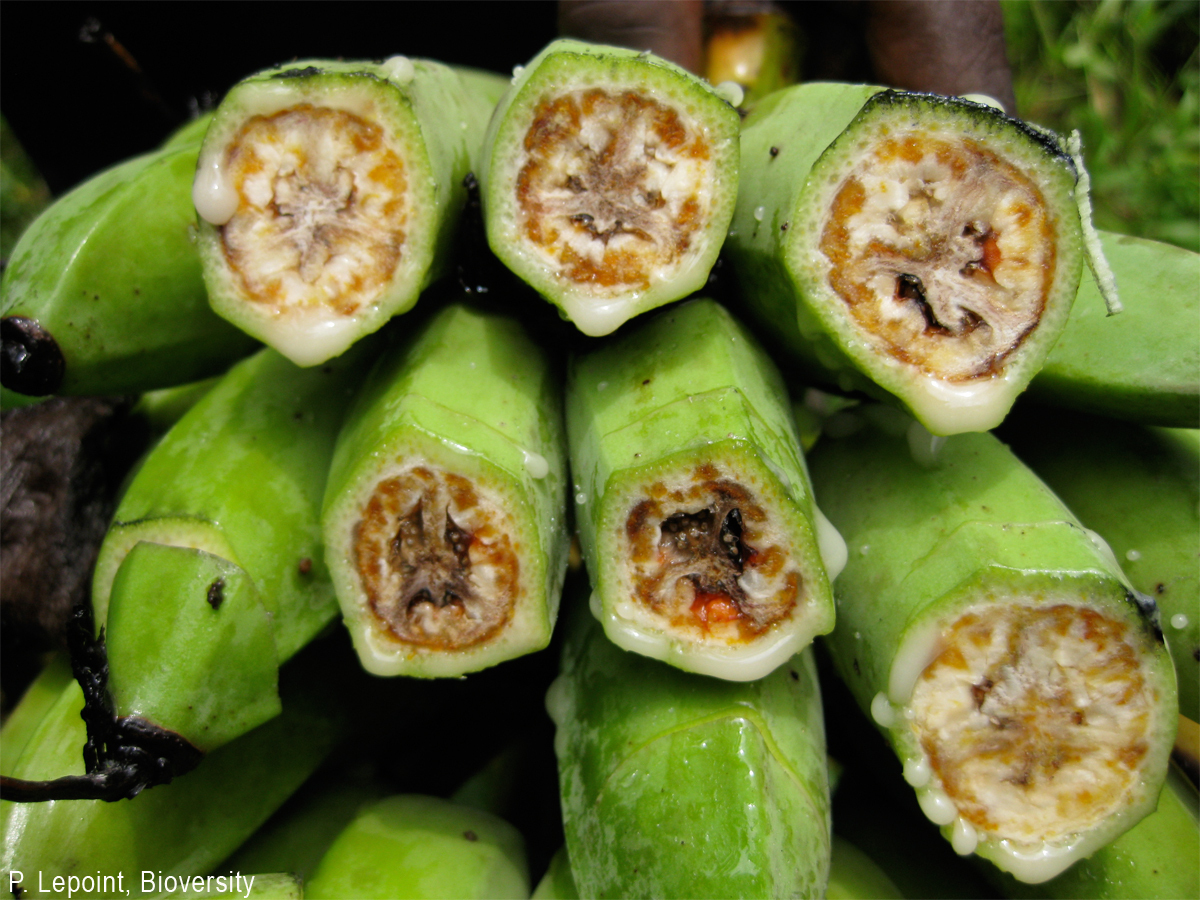
South Africa's R1.5 billion banana industry could now be threatened by Panama disease (fungal disease). Panama disease, which is caused by the Fusarium fungus, is a soil pathogen that infects the root system and goes on to colonise the entire plant. The outbreak of Panama disease was spreading rapidly across the Metocheria Farm, a 3,000 hectare farm in northern Mozambique, owned by Norwegian company Norfund, due to the flooding at the beginning of 2015. Panama disease has been present in plantations in north eastern Mozambique’s Nampula province for the past two years. The disease could spread to more banana plantations in the Nampula province and then further into Africa, where it could threaten food security. "The outbreak in northern Mozambique most certainly poses a risk to all its neighbouring countries. A major means of spread is water, as well as planting material and soil left on shoes and vehicles from the farm. South Africans had been visiting the affected farms in Mozambique in the past, and are still visiting the farm to do business. If proper biosecurity is not introduced, South African growers might be affected." said University of Stellenbosch plant pathologist Altus Viljoen. Banana Growers' Association (BGASA) chairperson, Kobua Lourens said that the chances of South Africa getting the disease were slim. "Yes, there is a chance of it spreading to SA, because if it got to Mozambique it can get anywhere. But to put it in perspective, the site is 2,500km from us. It could be brought to SA by someone (who) takes plant material or soil, but it would have to be intentional." Mr Lourens said. Source - http://www.freshplaza.com

13.11.2015

Argentina - Hail damage in 90% of the southern green belt

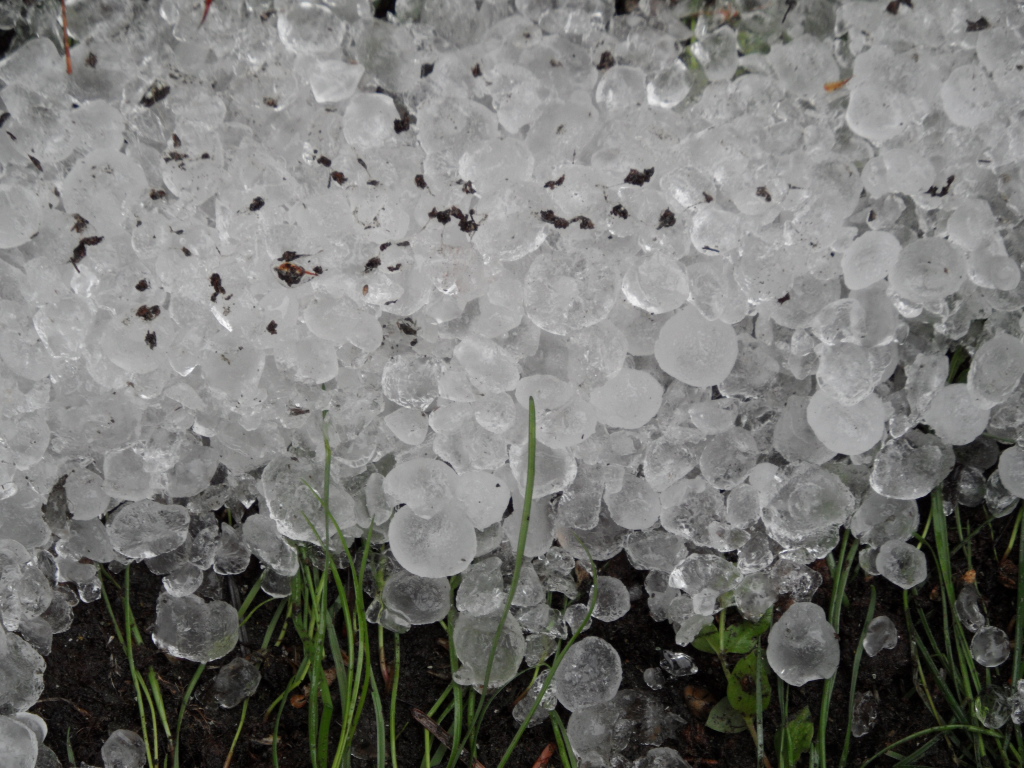
A strong hailstorm struck the southern city of Cordoba last Saturday and caused total damage in 90 percent of the green belt located between the roads to San Antonio and Route 9 South.   "The most affected area includes a vast region encompassing the fields on the way to San Antonio, San Carlos Road, the Road to 60 cuadras, Bouwer, and La Carbonada," stated the delegation of the Agrarian Federation Argentina (FAA).   One of the producers in the area that is associated with the entity, Miguel Campetella, told Agrovoz, "we are making an assessment with agronomists, but the damage in total is roughly 90 percent of the southern green belt. Everything that was sown on nearly 2,500 hectares was affected."   The hail affected potato crops and leafy vegetables crops, such as lettuce, spinach, broccoli and chicory, as well as lots planted with wheat. Guillermo Laguingue said that the hail had affected some 1,000 hectares of potato crops. The remaining 1,500 hectares affected were mainly of wheat and only some minor areas of vegetables.   "We might be able to recover some potato because it is underground, but not much. The damage has been terrible. It was raining stones. I can't remember anything of this magnitude in my history as a producer," lamented Campetella.   "The potato plants that had to date grown over 50 centimetres high were crushed, only a stub is sticking up from the ground. The losses are horrific, we really don't know how we'll overcome this," he added.   According to the FAA, hail accumulated was up to 15 centimetres. "Due to its weight, the accumulated hail even damaged numerous warehouses in the region. There are producers who have lost absolutely everything," said the organization.   Source - http://www.freshplaza.com

13.11.2015

Canada - A bountiful harvest - crop yields exceed expectations

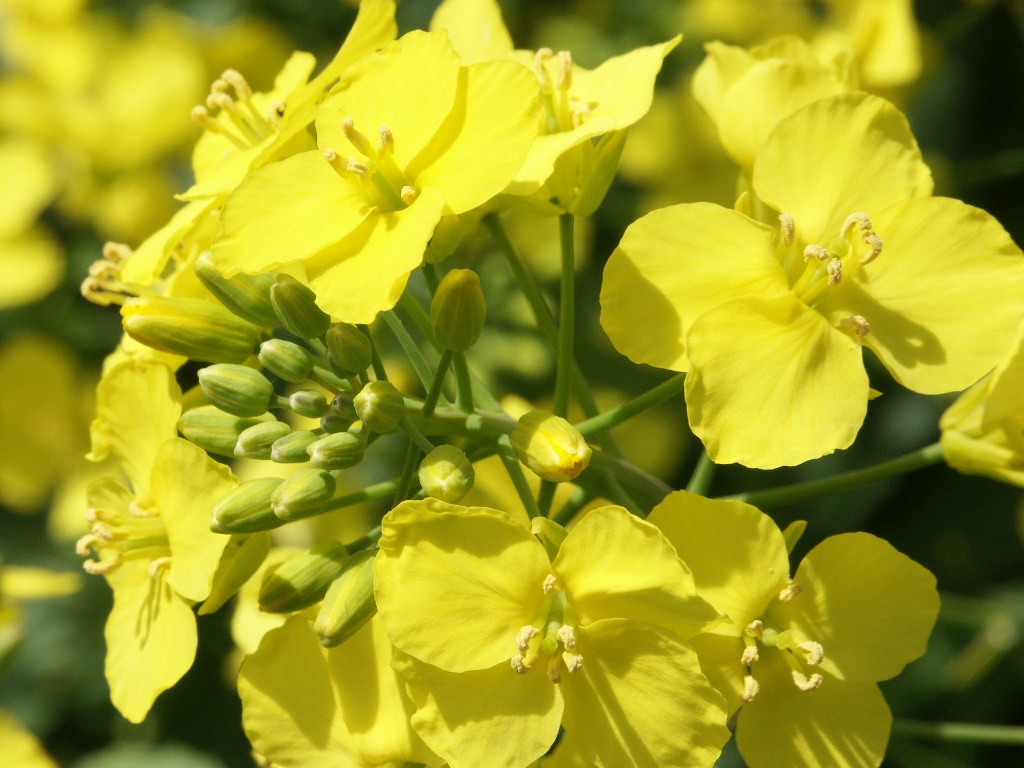
In spite of a dry start to the summer, crop yields for cereal and oil seeds farmers were above average this year. Ranchers and hay growers on the other hand, did suffer from the hot, dry weather. Yields were down by about 50 per cent on hay and hay land, so a lot of people had to buy hay. Prices were above average and pastures were poor, which may have had an effect on cattle farmers, said Municipal District of Bonnyville (MD) director of agriculture and waste services Matt Janz. “That moisture started middle of July and that really filled in the crops that were there,” Janz said. “What I’ve heard is the farmers were pleasantly surprised.” On Aug. 11, the MD declared a State of Agricultural Disaster, joining over 20 municipalities across the province, despite the Agricultural Service Board recommending against it. “The disaster isn’t right across the MD,” Reeve Ed Rondeau said in a press release. The first 100 days of the growing season, starting on April 1, saw 75-100 mm of moisture, only half of the usual average. The Province of Alberta declared a state of agricultural disaster in late August. Despite the challenges to hay lands, Alberta Beef Producers Vice Chair Bob Lowe said 2015 has been one of the best years for beef farmers, with prices hitting all-time highs. While the weather didn’t have as large an effect as originally feared, a new danger lurks for canola farmers. Clubroot, a devastating soil-borne disease, was detected in the MD late August. The disease is resilient and hard to prevent - a single speck of contaminated dirt can pass the disease from field to field. In addition to cash crops such as canola, clubroot effects cabbage, broccoli, cauliflower and mustard. The MD is in the midst of developing a clubroot policy to prevent the spread of the disease. The policy will come into effect next year. “The MD is going to adopt the best practices that are put forward from Alberta Agriculture,” Janz said. If there is a positive field, we’re going to be putting in that farmers do a one in four year rotation .” This means that positive fields will receive a pest notice, and will not be able to grow canola on the land until the fourth year. Once they reach the fourth year, if they want to resume farming canola they will be required to use a clubroot-resistant strain. “Council was kind of hesitant on doing that, but we feel that it’s going to help our farmers in the long run by slowing the spread,” Janz said. The MD will be taking a zero-tolerance approach,. “If they don’t adhere ... then we have the right to go in and destroy the crop.” Janz said. “It’s pretty severe.” Council will vote on the policy on Nov. 25. Source - http://www.coldlakesun.com

13.11.2015

Ecuador - Swiss Re works to help protect fishermen

How do you protect an industry responsible for USD 100 million exports a year? That was the question Ecuador faced as it sought to protect its artisanal fishing industry. Swiss Re experts helped the government find an answer. Artisanal fishing involves using smaller fishing vessels and traditional techniques. There are around 54,000 artisanal fishermen in Ecuador, operating in a sector that is a major source of employment and food production. With artisanal fishing being an important part of Ecuadorian life, Swiss Re believes that protecting its fishermen - and the vessels they use – is the essence of "smarter together." Protecting fishermen and families In July 2015, Swiss Re's Erika Schoch and Alejandro García went to Ecuador, which lies on the Pacific Coast of South America, to help develop fishing vessel insurance to protect the country's fishermen and their families. Schoch, Regional Manager Marine Latin America, and García, Senior Marine Underwriter, worked with state-owned insurer Seguros Sucre and Ecuador's Ministry of Agriculture, Livestock, Aquaculture and Fishing to find a solution. The result was a multi-faceted solution that includes as part of the insurance portion indemnification for physical assets - such as boats – and personal accident insurance for the captain and crew. "We visited the ports of call and spoke with some of the local artisanal fishermen, and it was so inspiring to see how we were contributing to a program that will financially protect this beloved trade and the families who depend so much on its sustainability," commented García. Analysing the benefits The program is a win-win for all involved: the fishermen will receive subsidies of 60% of the costs per vessel as well as part of the fuel costs; and the government will gain a broader overview of the industry by issuing fishing permits only with proof of coverage. This means that the program will allow the government to have a registry of every professional fisherman in Ecuador. Funds from the larger government program will also be used to renovate ports of call, with the plan to turn them into industry managed commercial centres. "We're really proud to have been able to contribute to the stability and resilience of Ecuadorian families as well as the country's infrastructure. The social impact of this program will have an effect for years to come," Marine Head Peter Sydenham said. Source - http://www.swissre.com

13.11.2015

Africa - Drought kills hundreds of chickens in Limpopo

As South Africa continues to battle the worst drought in more than two decades, small farmers in Limpopo are reporting that hundreds of chickens have already fallen victim to the rising heat in a turn that could financially ruin farmers and leave households hungry. “Over the past two months, I have lost more than 400 chickens because of the scorching heat,” said Johanna Mulaudzi, a chicken farmer living near Thohoyandou in northern Limpopo. “This heat is really affecting us as chicken farmers,” he added. “If one does not have proper infrastructures to deal with this kind of heat, all their chickens will eventually die.” South Africa continues to be in the grips of the worst drought to hit the country since 1992 and 2.7 million households have already been affected, according to a recent statement by Water and Sanitation Minister Nomvula Mokonyane. By 1 November, the Department of Water Affairs have declared the drought a disaster in KwaZulu-Natal and the Free State. Less than a week later, Limpopo Premier Stanley Mathabatha announced that the provincial executive council had declared the drought a disaster in that province as well. “A thorough assessment of the drought situation has found that all district and local municipalities in Limpopo are facing the worst drought conditions recorded in years,” said Mathabatha in a statement. “The declaration will assist the Government to unlock the necessary resources to assist the affected communities.” The Limpopo Department of Agriculture and Rural Development has set aside R3 million to assist affected farmers like Mulaudzi with feed. The department also recently hosted a seminar near Thohoyandou to advise farmers on how to farm in the heat without losing profits. According to one of the department’s senior advisors Hollic Netshirungulu, the event was prompted by numerous complaints from chicken farmers in the area that reported suffering significant loses due to the drought. Chicken and livestock farmers are not the only ones hard hit. Millicent Ramasimu said she used to support her family selling vegetables from her back garden. The drought has killed her crop and she says it has become difficult to support her family. The drought has already begun to push up maize prices due to decreased production, according to the Food and Agricultural Organisation of the United Nations. Local pastor Prince Ramahala has joined other religious leaders and even Mokonyane in asking South Africans to pray for rain. Source - http://www.health24.com

13.11.2015

USA - USDA crop production report forecasts bigger soy, corn crops

The November USDA crop production report on Tuesday delivered bearish news to the crop markets as it forecast larger-than-expected 2015 U.S. corn and soybean harvests with corn now at 13.65 billion bushels and soybeans at 3.98 billion. It also cut 50 million bushels from wheat exports, putting the current crop's total exports at 800 million bushels, the lowest since the 1971/72 crop year. That put ending stocks at 911 million, the highest since 2009/2010. Increases in corn and soybean crop sizes had been expected from the October report but USDA's numbers topped the average trade forecast for corn and topped all estimates for soybeans. "These are bearish reports all around, plain and simple. Some of the negativity is already baked into prices after this week's break below chart supports, so there is at least some hope the selling may burn itself out quickly," said Bryce Knorr, Farm Futures senior grain market analyst. "Longer term, however, demand remains an issue, especially for corn and wheat." Corn, soybean and wheat futures in Chicago were lower ahead of USDA's numbers and added to losses after them. Near midday, corn was trading about 9 cents lower, soybeans 15 cents lower and winter wheat 11 to 15 cents lower. "USDA's soybean crop estimate is huge. If it holds, demand must pick up, and with China still coping with myriad problems, that won't be easy," Knorr said. "USDA has a track record of underestimating demand, but its already boosted its forecast substantially." USDA's corn production estimate topped Knorr's forecast, and "I was on the bearish side of trade guesses." "On the demand side, the government cut its forecast of exports in line with my projections. But the cut in ethanol production is questionable, though USDA cut its forecast for sorghum exports, something I've been talking about for months," he said. USDA reduced by 75 million bushels corn use for ethanol, as more sorghum is being used for the biofuel. "Declining premiums for sorghum offered by exporters and large price discounts for sorghum relative to corn in interior cash markets drive expectations for higher use in ethanol production and higher feed and residual use," USDA said. For 2015/2016 U.S. ending stocks, USDA raised corn to 1.76 billion from 1.56 billion; raised soybeans to 465 million from 425 million, and raised wheat to 911 million from 861 million. "USDA's 50-million bushel cut in wheat export was right in line with my forecast. I expect this market to quickly forget about old crop and focus on 2016 production," said Knorr. "With Australia harvesting already and winter wheat in the northern hemisphere headed into dormancy, rallies won't get much traction for months." Overseas, Brazil's 2015/2016 soybean crop, which will be harvested early in 2016, was left unchanged at 100 million metric tons; Argentina's 2015/2016 soybeans were unchanged at 57 million. Australia's wheat crop, which was hurt by drought early and too much rain later, was lowered to 26 million metric tons from 27 million. See results from the November, 2015, USDA crop production reports. Source - http://farmfutures.com

12.11.2015

Australia - Headers return to SA paddocks

Some Mid North croppers may have lost nearly all their harvest, after rain and hail pelted the region last week. A severe thunderstorm passed through the region, dumping falls as high as 107 millimetres at Jamestown, 90mm at Redhill, 78mm at Georgetown and 92mm at Port Pirie. Elders Burra agronomist Cameron Searle said he heard of 30-130mm in the district which also had significant crop damage from hail. "The hail was marble-sized and larger, causing anywhere from 30 per cent to 100pc crop loss through the strip of Mount Bryan, Booboorowie, Burra and down towards Robertstown," he said. "Harvest was a week to a fortnight away, so the cereals were at a very fragile stage, while anything with pods would have been susceptible to shattering. "Most would have insurance, so depending on the severity, those crops would either be grazed off or harvested for stock feed." Mr Searle said croppers in the region were on track for an average season prior to the storm. "We already had some grain-fill issues because of moisture stress in late September and that heatwave in early October, but those that copped this recent rain would expect further downgrades," he said. "The warm days and breeze in the weekend would have dried most areas out, and there is a small fraction of farmers back out harvesting peas and barley around here. "Thankfully there is no more significant rain predicted, so it's all systems go to get off what is left and get it delivered to see how bad the damage really is." Agrilink consultant Jeff Braun confirmed the high crop losses in the Mid North, in isolated areas where there was rain and hail. "It was such heavy rain and some got up to 50 centimetres of hail, you really couldn't avoid it," he said. While it was still wet underneath, Mr Braun said harvest was underway. "I have been quite surprised with how quickly the rain has dried up, helped by the warm weather on the weekend and some wind," he said. "We have been pretty lucky in that regard. "In the Lower to Mid North, not a lot has been harvested, but it has definitely held growers up on the YP for a few days. "At this stage, further grain quality downgrades seem minimal. It could even improve quality on some crops, like barley, with grain swelling from the rain." But any hay still left out in the rain would be affected. "There will definitely be quality downgrades there," Mr Braun said. Bureau of Meteorology SA acting regional director John Nairn said the low pressure system developed in the west of SA, before moving slowly south-eastwards, and included a number of supercell storms on a trough line. "This resulted in very heavy rainfall and large hail, particularly around the Burra area," he said. On eastern Eyre Peninsula, crops copped a fair drenching with 68mm at Cleve, 77mm at Darke Peak, 89mm and Whyalla. But Cleve cropper Justin Bammann said harvest was "barely affected" in his area after 57mm. "There has been a little skin wrinkle on our lentils, but our wheat is still going APW," he said. "We got back into harvest on Sunday after hot weather on the weekend." He expects harvest to continue on the above-average track it was headed on. "We had rain at the right time during the season," Mr Bammann said. "If we didn't have that hot long weekend in October, it would have been exceptional." Down on the Lower EP, Randall Wilksch said there was also limited damage at Yeelanna after 25mm. "We got about 20mm in 20 minutes in the first front on Wednesday and then another 5mm across the following two days," he said. "Port Lincoln didn't get much either (21mm). "We were pretty happy to only get that, because north of us it was worse." But Mr Wilksch said harvest was back full steam ahead after hot weather on the weekend. "We are about 25pc through harvest, while most south of Cummins were yet to start or only just starting," he said. "We have finished off our canola, and are on to reaping lentils this week. "There has been some lodging, but as to quality, it's hard to tell as we are not that far along." Source - http://www.stockjournal.com.au

12.11.2015

USA - Subsidized Insurance Programs Unfair to Small Farmers, Research Suggests

The Center for Rural Affairs has long heard complaints from small- and mid-sized farms that the federal crop insurance program unfairly benefits large corporate farms and causes land values to rise. So the Center decided to investigate. Their research determined that subsidized crop insurance indeed has an impact on land values. How? First, the insurance premium farmers pay is not the actuarial premium. It’s a premium minus a government subsidy. Second, crop insurance reduces the income risk associated with crop production. So, some of the government subsidies get bid into land costs. Thus federal crop insurance drives up production costs by increasing the cost of land. The effect helps already thriving mega-farms. Source - http://hppr.org

12.11.2015

Spain - HLB raises concerns at start of citrus harvest campaign

An HLB (citrus greening) plague has put the Spanish citrus sector on guard due to the serious consequences it could have, considering that the harvest season is only just starting in Andalusia. The alarm was sounded at the horticultural fair Fruit Attraction 2015 by the company Citrosol. HLB is a bacterial disease transmitted by an insect, the Diaphorina citri, which has already been detected in the Canary Islands and Galicia and which has already caused the disappearance of much of the citrus acreage in some Asian countries. The CEO of Citrosol, Benito Orihuel, warned of its presence in the Iberian peninsula during his talk within the framework of the technical sessions of Fruit Forum, at the recent Fruit Attraction 2015, in Madrid. "It is one of the greatest challenges for the citrus industry today," confirmed the scientific director of the Valencian company; a specialist in post-harvest treatments. The disease causes bud deformation and changes in the fruit colouring; it reduces the production and eventually kills the tree. Citrosol HLB has been detected in all Asian regions where citrus is grown, except in Japan. Outside Asia, it has also been detected in Brazil, Florida, Texas and recently in California and in various parts of Mexico. In some Latin American countries it is being tackled with steam treatments. So far, no strategy has been implemented at national level to prevent its spread. Benito Orihuel emphasised that even though the insect and disease "require more humid climates than the Mediterranean, their possible adaptation to it in the future could be a threat of unimaginable proportions." Orihuel's talk was made during a forum organised jointly by the Polytechnic University of Cartagena and the National Research Institute for Agricultural and Food Technology, INIA. In this context, the company representative described the tools Citrosol is using to extend the shelf life of fruit in intercontinental citrus shipments while maintaining the highest standards of food safety. Source - http://www.freshplaza.com

12.11.2015

USA - Enrollment opportunities ending for 2016 Margin Protection Program

U.S. Department of Agriculture Farm Service Agency Administrator Val Dolcini recently announced almost half of all dairy farms in America have made their annual elections for 2016 coverage under the Margin Protection Program and reminded producers who have not yet enrolled that they have until Nov. 20 to select coverage. Established by the 2014 farm bill, the program provides financial assistance to dairy producers when the margin—the difference between feed costs and the price of milk—falls below the coverage level selected by the applicant.  “This safety net is not automatic, so producers must visit their local FSA office to enroll before Nov. 20,” said Dolcini. “Despite the best forecasts, the dairy industry is cyclical and markets can change quickly. This program is like any insurance product, where investing in a policy today will protect against catastrophic economic consequences tomorrow.” FSA estimates that based on current participation rates, had the program existed before the 2014 farm bill, producers in 2009 would have invested $73 million in premiums and received $1.44 billion in financial protection during that historically weak market period. Enrolled dairy operations must pay a $100 administrative fee annually to receive basic catastrophic coverage. Greater levels of margin protection are available for a higher premium and provide expanded coverage based on historic dairy production. Once enrolled, producers can change their levels of coverage each year. Source - http://www.hpj.com

12.11.2015

Kenya - New tool advises users on irrigation, fertiliser needs

Farmers in Africa are set to benefit from an online tool offering advice on services such as irrigation and fertiliser use. The internet portal known as Smart Irrigator computes crops’ daily water requirements. According to Peter Okoth, Kenya-based consultant in research and agronomy and one of the brains behind it, the technology which was launched on 8 September aims to increase efficiency of irrigation systems. “It calculates water demands at different periods of the crop season,” Okoth tells SciDev.Net, noting that “the tool considers factors such as rooting depth and the maximum allowable loss of water.” Okoth, says that users and farmers can register their names, location, soil texture, date of planting in the portal while also selecting crop of choice for irrigation water advice. “The information is sent to the subscribed farmers’ phone in text form [and] the farmer pays a monthly fee of US$5-10 to obtain the data and information.” The portal also computes selected crops’ fertiliser needs during growth stages and relays these to the farmer, including information on pests and diseases associated with growth stages. The innovation brings crop production technology from the researchers’ books to the farmer directly, Okoth says. “Through the messages and implementing the recommendations, farmers are able to double or treble their crop yields,” he explains. The tool is for African farmers experiencing low crop productivity from erratic rainfall but can be applied anywhere as it provides agronomic and fertiliser recommendations for about 30 crops, including maize, beans, tomatoes and water melons, according to Okoth. Currently, it is being piloted in the drier areas of Kenya, specifically semi-arid Kajiado and Machakos counties that are experiencing continuous water scarcity among 15 farmers, with the cost paid by the International Atomic Energy Agency of the United Nations (IAEA). He explains that the portal is a product of discussion between, the then Kenya Agricultural Research Institute and himself. Discussions started in 2012, with a contract of US$100,000 from the IAEA signed in 2014. It took eight months to develop the tool. The open-field drip irrigation advisory is based on weather data collected by automatic weather stations installed within a specific locality where such stations exist and can be purchased and installed. Okoth says the tool can be used most people “but the older generation who are not technology savvy might be left out for the time being”. According to William Ndegwa, Kitui County director at the Kenya Meteorological Department, the tool is novel. “Lack of information on crop types and varieties, and their respective soil fertility requirements, and how to integrate with different agronomic needs for farmers has always been a major impediment to agricultural productivity in Africa,” Ndegwa explains. “Given that the system enables a farmer to receive information on [the] phone through SMS [short message service] or online,” Ndegwa adds, “it offers major savings on extension costs among public and private sectors.” Availability of farm-level understandable weather information has always been a challenge to meteorological services in Africa, he says. Source - http://www.scidev.net/

911
of 1224