15.06.2026

India - Satellite Surveys to Bridge Gap Between Farmers’ Losses & Crop Insurance Compensation: Shivraj Singh Chouhan

Union Minister of Agriculture and Farmers Welfare Shivraj Singh Chouhan has stated that in order to bridge the gap between the losses faced by farmers and the compensation they receive through crop insurance, these losses will now be surveyed using satellites.

15.06.2026

India - Sugarcane crop destroyed by strong winds and rain Ishwar Singh Thakur demands immediate compensation for farmers

The cyclone and heavy rain that hit several villages in Bidar assembly constituency on Saturday night completely destroyed the sugarcane crop of farmers, causing a loss of lakhs of rupees.

15.06.2026

Human-Wildlife Conflicts in Malaysia Cause RM58.7 Million in Losses Over Four Years

Human-wildlife conflicts in Malaysia have become an increasingly serious concern, with more than 76,000 complaints recorded nationwide and estimated losses reaching RM58.7 million over the past four years.

14.06.2026

Zurich Australia partners with Crop Risk Underwriting

Zurich Australia has partnered with Crop Risk Underwriting (CRU), a specialist crop insurance underwriting agency and part of the 360 Group of Companies, to provide crop insurance in Australia from June 1, 2026.

14.06.2026

Canada - Tornado warnings and hail put southeast Saskatchewan insurers on alert

A severe weather outbreak across 29 rural municipalities is set to drive a wave of home, auto and crop insurance claims.

14.06.2026

Colombia passes law to track cattle and keep deforestation-linked beef out of supply chains

Colombia has enacted a landmark law requiring the cattle industry to trace livestock and prove beef supply chains are free from deforestation, a measure environmental groups say makes it the first tropical forest country to adopt such a nationwide framework.

04.06.2026

India - Delhi raises crop damage compensation after 10 years by over 50% to Rs 75,000 per hectare

In a major relief for farmers, the Delhi government has increased compensation for crop loss caused by rain and hailstorms from Rs 20,000 per acre to Rs 75,000 per hectare.

04.06.2026

UK - Rural crime cost Wales £2.2m last year despite fall in offences

Rural crime cost Wales an estimated £2.2 million last year, with organised criminals continuing to target tractors, livestock and farming equipment despite an overall fall in offences, according to a new report.

15.06.2026

Philippines - DA eyes regional fisheries hub in Northern Samar

The Department of Agriculture (DA) plans to establish a regional fisheries hub in Mapanas, Northern Samar, positioning the area as a potential growth center for Eastern Visayas’ tuna industry.

15.06.2026

Spain - Cantabria proposes to make Agroseguro more flexible in the face of the rise of new livestock diseases

The Minister of Rural Development of Cantabria, María Jesús Susinos, has defended the need to introduce greater flexibility in Agroseguro's coverage in the face of the increase in emerging diseases affecting livestock.

15.06.2026

Canada - Manitoba farmers stuck in crop damage limbo as fields remain flooded, crop insurance deadlines loom

Farmers in Manitoba’s Parkland and Interlake likely have fields flooded out, but with overland flooding still hanging on, assessing damage or filing crop insurance claims has been impossible.

14.06.2026

Fiji - Crop cover push: Scheme to help farmers recover faster, says Tunabuna

Over the past 10 years, natural disasters have wreaked havoc through farmlands costing Government more than $700million.

14.06.2026

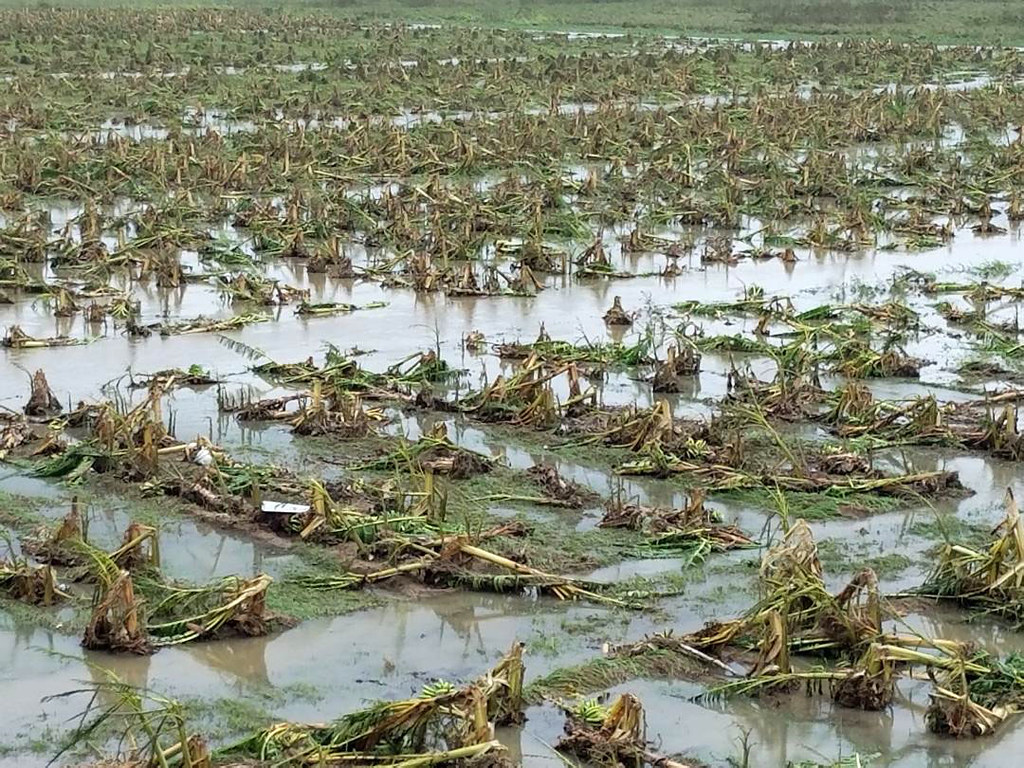
India - Maharashtra storms damage 18,121 hectares of bananas

Unseasonal rainfall, strong winds, and hailstorms have affected crops across more than 61,000 hectares in 27 districts of Maharashtra, India, with banana plantations accounting for a large share of the reported losses.

14.06.2026

Syngenta eyes deeper market expansion as Bangladesh agriculture embraces digital transformation

Company strengthens support for farmers through digital advisory platforms, crop insurance, mechanisation services, and climate-resilient agriculture initiatives.

04.06.2026

Why Tech-Driven Agro-Insurance Has Stumbled in Ethiopia

For decades, Ethiopia’s agricultural sector has remained trapped in a dangerous paradox.

04.06.2026

Kenyan Agro-Insurance Startup, Pula Raises US$ 20 Million in Series B Round

Pula, a Kenyan startup that offers insurance to small-scale farmers, aims to serve more than 100 million farmers in Africa after raising US$ 20 million in its Series B round.

EVENTS
ANALYTICS SEE ALL

UNDP - Analysis of the crop insurance system in Uzbekistan

08.01.2025

Agricultural production has historically been one of the high-risk sub-sectors of Uzbekistan’s national economy because the conditions and results of production and economic activity of agricultural enterprises are highly dependent on random, primarily weather-related factors. In this regard, the development of an agricultural insurance system as an element of sustainable agricultural production is relevant. 

A Practical Method for Adjusting the Premium Rates in Crop-Hail Insurance with Short-Term Insurance Data

25.10.2022

The frequency of hailstorms is generally low in small geographic areas. In other words, it may be very likely that hailstorm occurrences will vary between neighboring locations within a short period of time. Besides, a newly launched insurance scheme lacks the data. It is, therefore, difficult to sustain a sound insurance program under these circumstances, with premium rates based on meteorological data without a complimentary adjustment process.

Malta - Vegetable production dropped 7% in 2018

18.10.2019

Last year, Malta’s local vegetable produce dropped by 7% when compared to the previous year. The total vegetables produced in tonnes amounted to 58,178, down by 7% when compared to 2017. Their value too diminished as the total produce was valued at €30 million, down by 13% over the previous year. The most significant drop was in potatoes, down by 27% over the previous year. Tomatoes and onions were the only vegetables to have increased in volume, by 3% and 4% respectively but their value diminished by 9% and 24% respectively. The figures were published by the National Statistics Office on the event of World Food Day 2019, which will be celebrated on Wednesday. Cauliflower, cabbage and lettuce produce dropped by 10%, 3%, and 12% respectively. In the realm of local fruit, a drop of produce was registered here too apart from strawberries, which experienced a whopping increase of 58% over 2017. Total fruit produced in 2018 amounted to 13,057 tonnes, down by 1% when compared to 2017. The total produce was valued at €10 million, a 3% increase in value. Peaches produced were down by 35% and the 376 tonnes of peaches cultivated amounted to €0.5 million in value. Orange produce dropped by 10% and lemon produce dropped by 14%. There was no change in the amount of grapes produced and the 3,642 tonnes of grapes produced in 2018 were valued at €2.3 million. 70% of fruit and vegetables consumed in Malta is imported. The drop in local produce could be the result of deleterious or unsuitable weather patterns. Source - https://www.freshplaza.com

USA - Greenhouse tomato production spans most states

07.10.2019

While Florida and California accounted for 76 percent of U.S. production of field-grown tomatoes in 2016, greenhouse production and use of other protected-culture technologies help extend the growing season and make production feasible in a wider variety of geographic locations. Some greenhouse production is clustered in traditional field-grown-tomato-producing States like California. However, high concentrations of greenhouses are also located in Nebraska, Minnesota, New York, and other States that are not traditional market leaders. Among the benefits that greenhouse tomato producers can realize are greater market access both in the off-season and in northern retail produce markets, better product consistency, and improved yields. These benefits make greenhouse tomato production an increasingly attractive alternative to field production despite higher production costs. In addition to domestic production, a significant share of U.S. consumption of greenhouse tomatoes is satisfied by imports. In 2004, U.S., Mexican, and Canadian growers each contributed about 300 million pounds of greenhouse tomatoes annually to the U.S. fresh tomato market. Since then, Mexico’s share of the greenhouse tomato market has grown sharply, accounting for almost 84 percent (1.8 billion pounds) of the greenhouse volume coming into the U.S. market. Source - https://www.freshplaza.com