NEWS
871
of 1225
News
25.04.2016

Kenya - Sh252 million to cushion farmers from losses

APA Insurance will use Sh252 million ($2.5 million) winnings from the MasterCard Foundation Fund to extend its hedging programme used to cushion farmers from adverse weather and disease outbreaks. The insurer was one of the winners of the Fund for Rural Prosperity that awarded five companies more than Sh1 billion ($10.6 million) to boost their work meant to alleviate poverty, by increasing access to financial services for poor people in rural Africa. APA said it would go into expanding its bundled insurance products to guard rural population against weather and other natural risks, health related covers, and life insurance to enhance their livelihoods. HUGE BOOST "This grant is a huge boost to our efforts to create sustainable risk solutions and bring financial inclusion to a very important section of our population, the smallholder farmers. It will enable us to support them, to create and protect their hard work and help with their wealth and livelihoods," said Mr Ashok Shah, the chief executive of the Apollo Group. APA is involved with the government and other insurance companies in piloting the Area Yield Index Crop Insurance, Index-based Weather Insurance and Livestock Insurance in a bid to boost production. Source - allafrica.com

25.04.2016

Malaysia - Perak farmers expect to lose more than RM26m due to extreme heat

Over the padi fields of Gunung Semanggol and Selinsing, the sun is shining bright. But for the more than 1,800 padi planters, their mood is gloomy. Their fields, once green and lush with padi, now lie untended due to the extreme heat and sparse rainfall. The situation has now worsened, as the continuous hot spell over the last three months has decreased water levels at the Bukit Merah lake, which has been the primary source of irrigation for generations. Four months have passed and not even a seedling has been planted in Gunung Semanggol and Selingsing, which form parts of the Kerian district’s 17,000ha rice basin. According to Gunung Semanggol and Selinsing Farmers Organisation chairman Abdul Rahman Hamid, 1,878 planters had lost their main source of income because of the delay in planting. “We were supposed to plant in January but we had to delay the exercise three times because it did not rain. “We have been pushing the date further and we hope to start by May 15. But this will affect our need to harvest early and begin the second season. We are now left without any income,” he said. There are two harvesting seasons in a year, and a farmer can produce an average yield of 3.75 tonnes of padi per hectare. One tonne of padi is worth RM1,200, which means the planters, who own two to three hectares on average, stand to lose a sizeable amount if the drought persists until September, as predicted by the government. “We missed our first planting season. For sure, we will miss the second season, too. We have estimated the amount of losses we are going to suffer — it’s more than RM26 million.” The drought has caused the level at the Bukit Merah reservoir to fall below 6.15m, a class-three critical level which resulted in the state government deciding to stop the supply of water to padi fields in Kerian. Currently, 17,000ha of padi fields in the district have been affected and the farmers in Semanggol and Selinsing are the worst hit. “Padi farmers in nearby Bagan Serai and Tanjung Piandang areas are able to pump water from the Kerian and Kurau rivers, so they have some respite,” said Rahman. “We can’t obtain water from the rivers because we are too far away and there are no natural water sources nearby. We are at our wits’ end." He urged the state Drainage and Irrigation Department to find a way to channel water into their padi fields. Rahman said the farmers also wanted the Agriculture and Agro-based Industry Ministry to compensate the affected farmers for some of their losses. Abu Hassan Hamid, 48, said he hoped the authorities would do something to help the stricken padi farmers. “It’s been nearly three months with no income from the fields. I’ve have to find odd jobs on other people’s farms and plantations. “I have five kids, four of whom I still support. If the drought continues, I don’t know what I can do. We have never seen a prolonged dry spell like this before,” he said. “The farmers heard the drought might continue for a few more months. If the situation does not improve, it would be tough for us and our families. We pray to God to give us rain,” said 55-year-old farmer Roslee Sulaiman. Source - www.themalaymailonline.com

25.04.2016

Australia - Federal Government’s multi-peril pledge

THE Federal Government’s recent funding announcement for multi-peril crop insurance, won’t cover all farmers taking out policies. Federal Agricultural Minister Barnaby Joyce announced the $20 million program last month, which will “provide one-off rebates to help eligible farm businesses with the cost of independent and professional advice on an insurance policy”. The Managing Farm Risk Program will provide up to $2500 in funding against the costs incurred by an eligible farm business in securing, or attempting to secure, agricultural insurance. This includes payments to a professional service to undertake an assessment required by an insurance company, compiling historical farm financial performance and production data or an analysis of insurance options. This means growers will generally only be able to get the rebate once for any of these activities, and it will not subsidise premiums. The announcement appears to favour the three companies that charge for an upfront risk assessment or “farm survey”, which can cost about $4000 to $5500. Latevo charges a one-off $5500 fee for a full risk assessment of a farming operation before offering multi-peril crop insurance, while SureSeason requires a one-off upfront evaluation on the farm’s performance for the past five years, which costs growers $4400. Primacy PrimeGuard’s insurance may also require an extensive farm survey paid for by the grower, if growers miss certain cut-off dates. It also means growers, who have already paid for these upfront assessments in previous seasons will not be able to claim back the costs. CelsiusPro offers weather certificates against adverse events over a season or at a specific time. CelsiusPro chief executive Jonathan Barratt said they charged $1500-$2500 for a weather analysis of a client’s farm if they request it, part of which he believed could be claimed back under the new program. Latevo chief executive Andrew Trotter, who has been lobbying for this type of rebate since 2013, said the government incentive would help push a new wave of growers into taking out multi-peril policies. “Farmers are already buying single peril, (the Government) don’t need to support them — (the program) is only helping the upfront charges but not doing anything about the risk.” Source - www.weeklytimesnow.com.au

22.04.2016

USA - Federal livestock programs open for Anderson Creek Fire victims

Cattlemen south of Medicine Lodge, Kansas, move a herd of cows and calves to a safer spot in a pasture as spots of fires break out during the Anderson Creek Wildfires March 24. Desperately welcomed rains came to Barber and Comanche counties in Kansas over the weekend of April 16 to 17. And with them, some relief from the tinder dry conditions that allowed the Anderson Creek Fire to rage on for so long. As farmers and ranchers start the recovery, there are a few options open to them for federal assistance. On April 6, ranchers and landowners identified by the Farm Service Agency as having land in the path of the fires were invited to a special meeting at the Barber County Heritage Center in Medicine Lodge, Kansas, to go over what federal assistance options are available to them following the fire.  State and local officials from the Farm Service Agency, National Resources Conservation Service and U.S. Department of Agriculture were on hand to answer questions about the program funding and requirements to rebuild fences and infrastructure, compensation for livestock losses and any USDA loans that could tide producers over until their land is returned to productivity.  Blaine Rutherford with Kansas Farm Service Agency, Manhattan, covered the Livestock Indemnity Program and the Emergency Livestock Assistance Program available through FSA. The LIP, he explained, compensates for eligible livestock deaths due to the fires, while the ELAP covers losses that aren’t covered by LIP or the Livestock Forage Disaster Program. As he began, Rutherford, along with the rest of the slate of speakers, stressed the importance of documentation from participants.  “Documentation will make your participation a lot easier as you go into the county office,” he said. Documentation can include photos, but also any financial records proving ownership of livestock, veterinarian records pertaining to the death of the livestock in the fires or as a result of the fires and even tax records from previous years.  Livestock Indemnity Program It’s vital that if livestock owners suffered any losses from the fires they begin the two-part application with the FSA office as soon as possible. They have 30 days from when the loss of livestock is apparent to file a “notice of loss,” Rutherford explained. The second part is to apply for payment, and they can either file this at the same time as they notice of loss, or they can do it by the end of the application period, which is April 1, 2017. This can be difficult for some cattlemen who may still be covering the thousands of acres that burned looking for livestock losses, or who might have livestock co-mingled with other herds in the chaos of the wildfire efforts and are still sorting. To be covered under the LIP, eligible livestock that were maintained as part of commercial operations of a farm or ranch must have died no later than 60 calendar days from the ending date of the fire, or in the case of newborns, within seven days of the wildfire. And they had to have been owned by an eligible livestock owner on the day they died. So, for example, show cattle, rodeo stock or pets wouldn’t be covered under LIP. This is where it can get complicated, since many beef cattle herds in the affected counties were either in the middle or toward the end of spring calving season. Several ranchers in the room had questions about pregnant cattle that were nearing full term that were caught in the fire and died—does the unborn calf count for this program? It would depend on how close to term that cow was on the day she died in the fire, Rutherford said.  “If she had calved that day of the fire, would the calf have been viable?” Rutherford asked. “If yes, there could be some compensation. If not, then there would only be compensation for the mother.” Some cattlemen have heavy bred cows that have suffered fire-related injuries and they’re trying to nurse them along until the calves can be born. For those, it depends on the timing of the death of the livestock, if it happens within the allotted time period after the fire.  Rutherford stressed ranchers must contact their FSA offices with questions about these individual cases so they can meet program requirements and deadlines.  Additionally, the loss of livestock must exceed normal mortality rates for farms, which are set by the State Committee and can be found at the county FSA office, Rutherford explained.  One rancher had a question about losing calves to coyotes that had been pushed into new territory by the wildfires and were preying on concentrated groups of calves that had been gathered to save from the fires. “The program only reimburses livestock loss due to the weather event or reintroduced predators,” Rutherford said. “So, if it was a wolf, then yes. But it won’t cover loss from coyotes.” Another instance would be if a cattleman has more surviving calves than momma cows and he can’t keep up with feeding them, they die, but it’s not directly related to the weather event. Those losses wouldn’t be covered either.  He emphasized ranchers should still document these losses, because if they keep their application for payment open until April 17, 2017, and there is another eligible weather event between now and then, such as a tornado, their mortality rates could rise and they could be eligible for higher payments. As with every federal assistance program, there are payment limits per individuals and entities of $125,000 each, and they are ineligible for payments if the average adjusted gross income of the individual or entity is more than $900,000.  In filing for the application of payment, producers have to have proof of death, and this is where documentation is key to the process, Rutherford stressed. There are three categories of documentation that FSA can use: verifiable documentation; producer records with verifiable documentation; and third party verification. “Verifiable documentation can be checked with a third party,” Rutherford explained. That might include rendering truck receipts or certificates, veterinarian records, tax and other financial records or written contracts, among others.  “The documents must provide data that identify the type, kind, weight range and number of livestock,” he added. “These can be verified by a source. So we can go to the veterinarian and check, or go to the sale barn and look at their records, for example.” Another category of documentation would be the producer’s own records combined with verifiable documentation. So, that might include a sale catalog, calving journal, vaccination and branding records, dated pictures and the like. But they also must have verifiable beginning and ending records to back them up. So, purchase records of a number and type of cattle, as well as a veterinarian’s records for treatment of cattle after the fires might work. If the owner doesn’t have either of these two categories of records it’s possible FSA could accept third party verification. But, Rutherford explained, there has to be a verifiable document that shows the beginning and ending herd number, and the owner has to certify in writing no other proof of death is available.  “The third party has to complete, on their own, a form that has specific details about how they have knowledge about the deaths, the number, type, kind and weight ranges,” he said. And, the third party cannot be affiliated with the owner. Emergency Assistance for Livestock Rutherford explained the “Emergency Assistance for Livestock, Honeybees and Farm-Raised Fish Program,” or ELAP, covers losses that aren’t covered by other disaster assistance programs, like the Livestock Forage Disaster Program, or the LIP. There are four categories of loss covered by ELAP. But for this wildfire event, FSA is looking at this program to cover losses of feed and grazing due to wildfires on non-federal lands. “This would cover purchased forage or feed stuffs; mechanically harvested forage or feed that you would use for your livestock; and the cost of purchasing livestock feed above normal quantities,” he explained.  Again, documentation is key. Producers have to prove they owned, or cash-leased or had a contract to purchase the livestock in the 60 days before the beginning of the wildfires, that the feed was intended for those livestock and that those livestock are physically located in the eligible county. The loss had to have happened during the program year—which in this case is Oct. 1 to Sept. 30. And they have to prove that the feed losses happened because of the wildfires.  ELAP covers harvested forage, such as hay in bales, if it was produced by the applicant to feed his livestock that are physically located in either Barber or Comanche counties, and if it was destroyed by the wildfire after harvest.  “So, take cane hay in bales, if it burned up, you are covered,” Rutherford said. “But, if it was in a windrow and not yet baled, and the fire burned it up, you wouldn’t be eligible.” If a rancher had to purchase additional feed, those costs could be covered if the purchase was above normal quantities, and needed to maintain the livestock in the covered counties until feed becomes available, and if it was purchased during or after the wildfires.  As for the loss of grazing due to the wildfires consuming hundreds of thousands of acres of grassland, in Kansas the official grazing period begins May 1. And the rancher can’t get a grazing loss benefit on top of a payout for purchasing feed above normal costs. It’s one or the other. Like in LIP, documentation comes from either verifiable records—those that can be independently verified—or reliable records—those acceptable to the county FSA committee. And here’s where it can get complicated. In order to document the rancher lost feed he put up himself, he has to prove he had the ability to produce the kind and amount of forage lost, or he paid for that production of the forage he lost, and that he had indeed the amount of forage lost to fire. Rutherford explained proof might include documenting the rancher had the machinery to produce the bales, or had receipts from custom harvesters. It could get as deep as what type of forage, the number of acres harvested, the number of bales and how much they weight or the average tonnage produced in a year for that farm or ranch. If the rancher has to go out and buy feed to tide his herd over, he’s going to need to show original feed receipts, invoices, load summaries, warehouse ledger sheets, and they all must include the name and address of the seller or licensed feed vendor. And, these records need to be backed up with two years of purchase records in order for the FSA to establish what “normal” would be for the rancher in a year. One rancher asked if there’s a possibility CRP acres that didn’t burn could be opened up this spring for haying and grazing, and that authority needs to come from the national office. Typically, those acres aren’t opened up until July, but if there is a need to do so now, in April or May, that request has to come from the county FSA offices and committees, on up through the state and on to the federal level.  Rutherford also explained that unlike LIP payouts, which can be more timely, with ELAP there is a delay of a check to the applicant of up to a whole calendar year. And if any payments are made, they’re based on a minimum of 60 percent of the producer’s actual cost. Source - www.hpj.com

22.04.2016

USA - Florida citrus growers: 80 percent of trees infected by greening

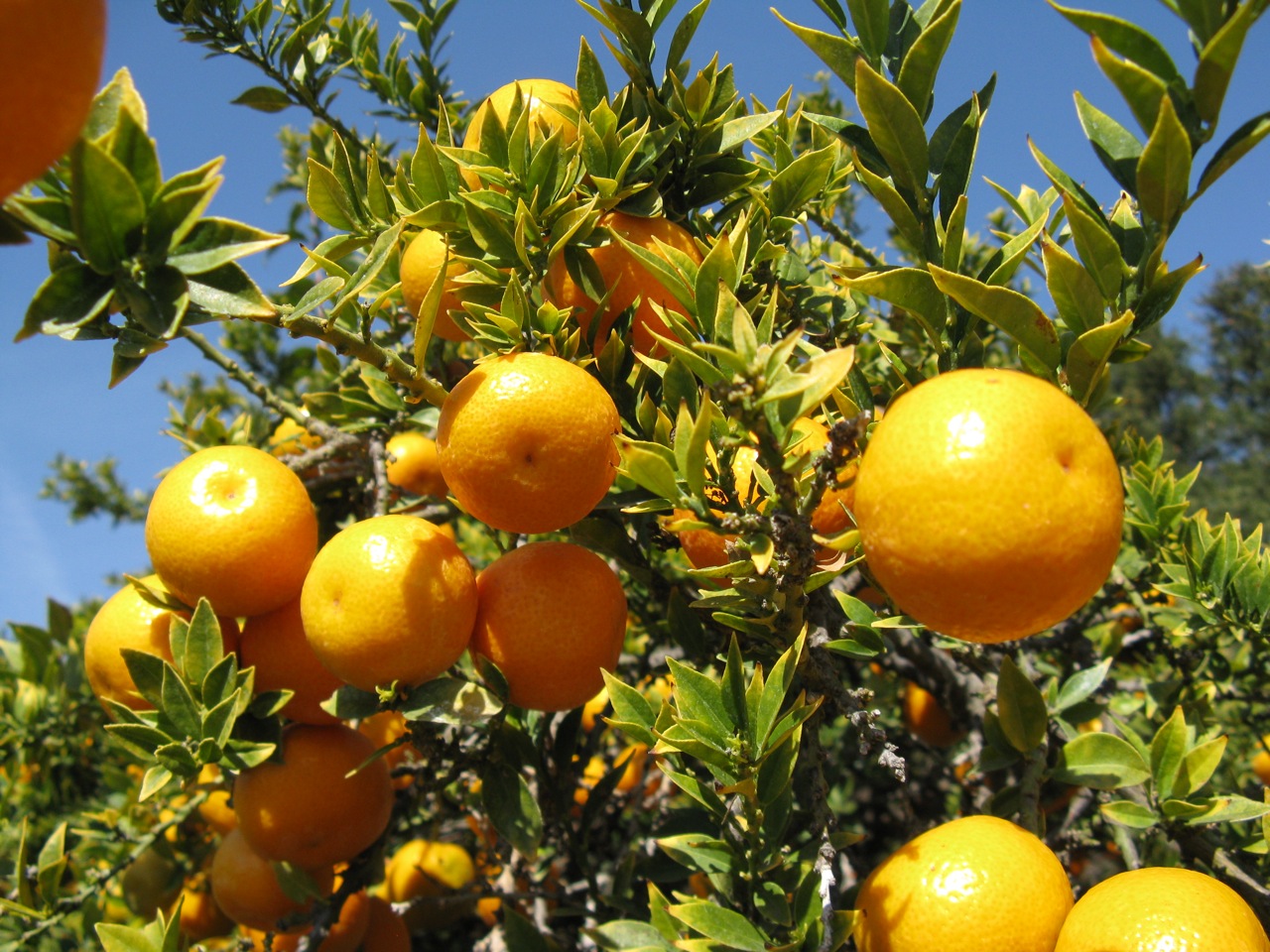
Florida’s citrus growers say as much as 90 percent of their acreage and 80 percent of their trees are infected by the deadly greening disease, which is making a huge dent in the state’s $10.7 billion citrus industry, a new University of Florida Institute of Food and Agricultural Sciences survey shows. The survey, conducted in March 2015, shows the first grower-based estimates of both the level of citrus greening in Florida and the impact of greening on citrus operations in Florida. “Even though the industry acknowledges that greening has reached epidemic proportions across the state, estimates of the level of infection and its impact on citrus operations are scarce,” the researchers wrote in the paper. Assistant professor Ariel Singerman and associate professor Pilar Useche, faculty members in the UF/IFAS food and resource economics department, surveyed about 200 growers to estimate their losses from the disease. They obtained about 76 completed surveys; those growers operate approximately 30 percent of Florida’s citrus acreage. They also estimate greening has reduced their yield by 41 percent. Surveyed growers said, on average, 90 percent of citrus acreage and 80 percent of trees in their operations had been infected, on average, in any given operation in Florida. Greening was first detected in Florida in 2005 and threatens to destroy Florida’s citrus industry. Florida has lost about $7.8 billion in revenue, 162,200 citrus acres and 7,513 jobs to citrus greening since 2007, according to UF/IFAS researchers. Orange production dropped from 242 million to 104 million boxes in 2014, UF/IFAS researchers say. The greening disease bacterium first enters a citrus tree via the tiny Asian Citrus Psyllid. When introduced into the plant by leaf feeding, the bacteria then moves through the tree via the veins of the tree. The disease starves the tree of nutrients, damages its roots and the tree produces fruits that are small and misshapen and have reduced quality, making it unsuitable for sale as fresh fruit or, for the most part, juice. Source - www.freshplaza.com

22.04.2016

India - PM Crop Insurance Scheme to be implemented from Kharif season

The state cabinet, on Thursday, decided to implement Prime Minister’s Crop Insurance Scheme from Kharif 2016 season in the state. The scheme would be compulsory for farmers who have taken loans and voluntary for others. As many as five clusters have been made by classifying districts in categories of less, medium and more risk prone. For implementation of scheme in clusters, Government of India would invite tenders from empanelled 11 crop insurance companies to provide crop insurance at actual premium rates. The farmers would pay premium at the rate of 2 per cent of the sum insured for foodgrains, oilseeds and pulses during Kharif season. Similarly, the premium would be paid at the rate of 1.5 per cent of the sum insured during Rabi season and 5 per cent rate for commercial crops through banks. The difference of actual premium rate and premium rate paid by farmers would be given as premium grant. The cabinet also gave its approval to the establishment of 2000 new sub-health centres across the state. A regular post of ANM was also approved for every sub-health centre. Contractual ANMs through National Health Mission would be posted at these centres. These centres would be opened soon in rented buildings. In the cabinet meeting, it was decided to increase compensation in cases of damage to human life by wild animals and loss of livestock. In cases of deaths, the dependents of the deceased would be given a relief of Rs 4 lakh. If death takes place during medication, then expenses made on treatment would also be covered. In cases of permanent disability, a relief of Rs 2 lakh and expenses on medication would be given.  The cabinet also gave its administrative sanction of Rs 1513.21 crore for various irrigation schemes. Source - www.freepressjournal.in

22.04.2016

Early planting raises risk of erosion

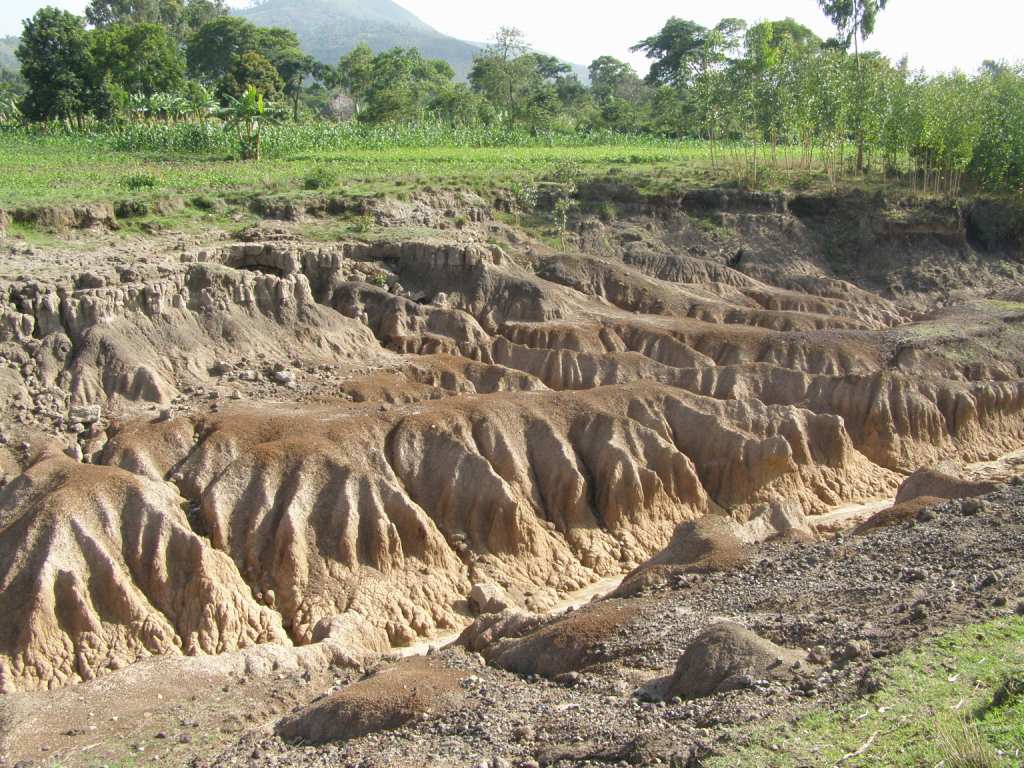
Recently, spring weather in upper Midwest has been warmer and dryer, leading farmers in Iowa, Illinois and Minnesota to plant corn in early April. According to the U.S. Department of Agriculture’s Crop Progress Report, since 2013 there's been a big rise in corn planted by mid-April, the earliest farmers in the region can plant and be eligible for federally subsidized crop insurance. Prepping a field for planting – clearing residue, plowing and fertilizing the soil – often leaves miles of exposed dirt. Planting earlier can lead to higher yields, but also leaves the soil exposed to heavy rain in May and June. Runoff following record storms in the last two years resulted in millions of acres losing tons of soil. Management practices such as grassed waterways and buffers slow down runoff and erosion, but too many farmers don't follow these practices, leaving fields completely exposed to heavy rains. Recent aerial images from Central Iowa show that seasonal gullies are already appearing all over the agricultural landscape (see images below). Source: Iowa - Google Earth, 10 March 2016 A recent EWG investigation found that relying on farmers to voluntarily take steps to stop erosion shows little lasting protection: grassed waterways and buffers appeared and disappeared on the same field in as little as four years. States should require farmers to practice a "basic standard of care" to give taxpayers some assurance that their dollars go to lasting conservation. In the fight for clean water, basic standards will provide a lasting foundation for voluntary practices to thrive. Early planting may give farmers peace of mind, but without basic standards to curb runoff, the consequences for water quality could be dire. We can't control the weather, but we can be smart about our response to it. Source - www.ewg.org

22.04.2016

Philippines - Small Negrense fishermen suffer 70% drop in catch due to El Niño

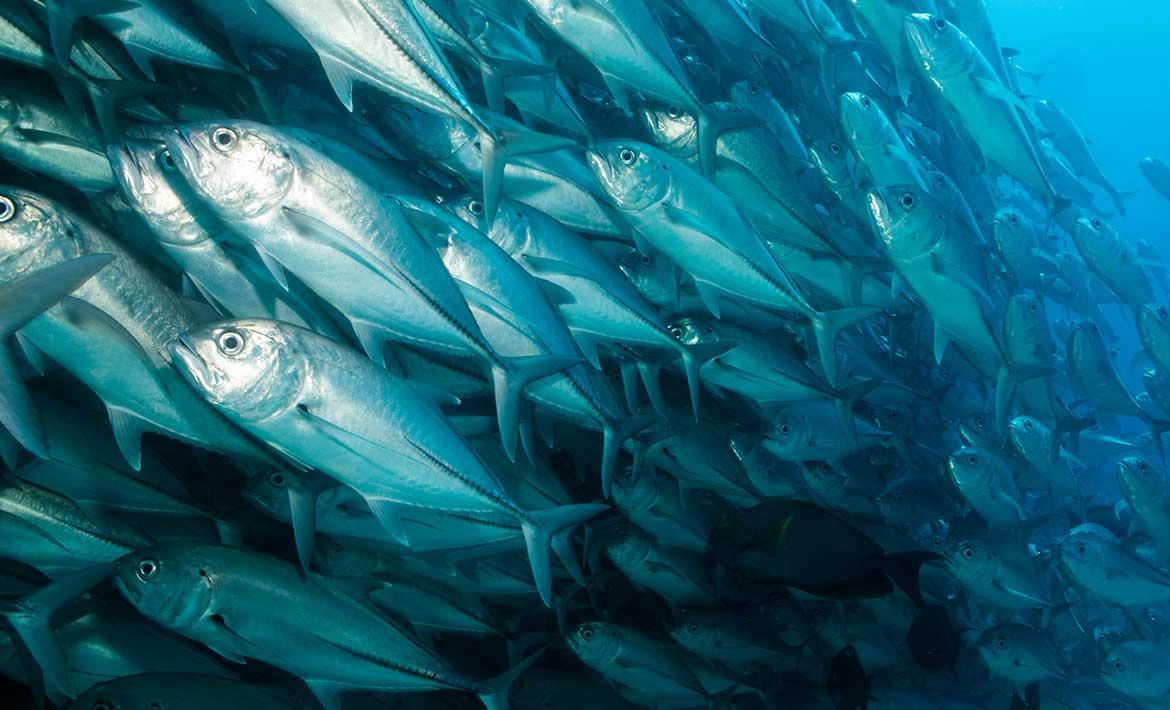
ASIDE from farmers and livestock raisers, small fisherfolk in Negros Occidental have also been affected by the persisting El Niño phenomenon, suffering a 70 percent drop in their average catch. Abcede Jardinico, chairman of the Negros Occidental Small Fishers Alliance (Nosfa), said Thursday, April 21, that extreme heat limits the fishing operation period of small fishermen in the province. He said that as warmer weather prevails, fishing becomes limited as high temperatures prompt marine animals, particularly fishes, to find deeper and cooler portions of the sea. “We have been suffering from El Niño effects since January this year and it’s getting worse now,” Jardinico said, citing that from a maximum of five standard fish containers (banyera) in one fishing operation, fisherfolk could barely fill two containers at present. Nosfa is composed of 120 fishers associations with about 4,800 members in the entire province. Because their livelihood has been severely affected by El Niño, many small-scale fisherfolk have resorted to finding other jobs, such as construction, Jardinico said. He cited that only a few members were covered by various insurance programs of the provincial government and thus able to avail of livelihood and financial assistance. “We are calling on the help of the provincial government and other concerned agencies to also look into the situation of the small fishery sector and extend necessary help for the affected fisherfolk,” Jardinico appealed, adding that “there are days that some of the fisherfolk families are already starving.” In terms of damage to aquaculture, the Bureau of Fisheries and Aquatic Resources (BFAR) has yet to gather the monitoring and assessment reports from different local government units and the Office of the Provincial Agriculturist. Carlito Delfin, assistant regional director of BFAR in Western Visayas and Negros Occidental, said on Thursday that his office has yet to forward damage reports to the central office, which would then assess the amount of possible assistance for affected fishermen. “Since we have no field fisheries technicians, what we are doing now is fast tracking the gathering of reports so that the BFAR central office can immediately take action,” Delfin added. Source - www.sunstar.com.ph

22.04.2016

Nepal - Agri insurance premium collection surges

Premium collection from sales of agricultural insurance products surged by a whopping 124.67 per cent in the first six months of the current fiscal year, as subsidy being extended by the government prompted many to buy these schemes. Non-life insurance companies generated Rs 109.28 million from sales of these products in between mid-July and mid-January, show the data of the Insurance Board (IB), the insurance sector regulator. This premium amount provided protection to assets worth Rs 2.27 billion. In same period of the last fiscal, insurers had sold agricultural insurance products worth Rs 48.64 million, covering risk of Rs 893.43 million. “The main reason for rise in demand for these products is subsidy that the government is extending upon purchase of agriculture insurance policies,” IB Deputy Director Kundan Aryal told The Himalayan Times. The government has been providing subsidy equivalent to 75 per cent of the premium amount to encourage people to purchase agricultural insurance products. In the first six months of the current fiscal year, the government extended Rs 81.96 million in subsidy. Non-life insurance companies have been selling various agricultural insurance products to cover the risk related to production of crops, including paddy, vegetables and fruits, poultry, livestock and fisheries ever since the IB introduced Crops, Livestock and Poultry Insurance Directive in January 2013. Of these insurance products, schemes on livestock insurance are becoming popular lately. In the first six months of the current fiscal year, non-life insurers generated Rs 95.52 million by selling livestock insurance products. The revenue collected from sales of these schemes is 87.41 per cent of the total income generated from sales of all agricultural insurance products, show the IB data. “Rising demand for livestock insurance product is good news. But we have now started to notice that risk is continuously building in the livestock sector. This can be seen through number of claims, which is continuously rising and has now reached an alarming level,” said Aryal. Insurers spent Rs 53.89 million to settle claims related to livestock sector in the first half of this fiscal year alone. This amount is 98.4 per cent of total money spent by insurance companies to settle all the claims of agriculture sector. Most of these claims, as per sources, are not being filed by individual farmers but organised businesses. Considering this, the IB is now planning to conduct a comprehensive study on the matter. Source - thehimalayantimes.com

21.04.2016

Australia - Crunch the numbers on multi-peril crop insurance

MORE multi-peril crop insurance products are being offered to grain growers than ever before, but farmers are being warned to crunch the numbers before signing up. Business consultant with ORM David Smith said multi-peril crop insurance was a “very good tool”, but it was just one in a number of options for grain growers. “It has some great advantages, but it comes at a cost, so it’s good to look at what the options are,” Mr Smith said. Alternatives to spreading risk ­include a livestock enterprise, off- farm investments, farm management deposits or growing hay to diversify. “Some of these other options may not be available and are long- term considerations … so sometimes that doesn’t work,” Mr Smith said. He said to take out multi-peril crop insurance growers needed good records, as most companies required detailed farm information from the past five years. [caption id="" align="alignleft" width="316"] Risk Management: Growers should analyse the benefits of multi-peril crop insurance before they sign up.[/caption] He said growers needed to analyse the multi-peril and single- peril insurance products to work out if it suited their businesses and if the cost of the premium was worth it. “As a consulting company we look at whether growers would have benefited if they had taken out multi-peril or a single (peril) insurance policy in the past five years,” he said. Latevo offers a multi-peril crop insurance product for all crops, which this season is being delivered by Rural Insurance Solutions. It can cover 40-85 per cent of a cropping income if the farm is impacted by a range of perils including frost, flood, heat, poor rainfall or failure to emerge. Latevo charges a one-off $5500 fee for a full-risk assessment of a farming operation, which is required if growers want cover higher than 40 per cent of revenue. Latevo has a different underwriter this year, after Allianz ended its multi-peril crop insurance underwriting agreement with the company last year, in favour of launching its own product under its subsidiary Primacy. Primacy PrimeGuard offers a form of yield-based multi-peril insurance product, where growers can cover a percentage of average yield, but only for wheat, barley oats, canola and triticale. New entrant this year ­SureSeason also offers a revenue protection multi-peril product, covering all winter crops, including pulses and hay, across all states.  The policy can protect 50-70 per cent of a grower’s potential crop income based on average yields, and requires a one-off assessment on the farm’s performance for the past five years, which costs growers $4400. Mallee-based Agronomise consultant Simon Craig said croppers should closely scrutinise the potential benefit of income protection multi-peril insurance. He said growers should know how often their total revenue had fallen below 40-80 per cent to work out if it was worth taking out an income protection policy. “Go back over your five- year history and work out what you need to cover,” he said. Mr Smith said the level of an insurance company’s cover could depend on the risk profile of a farm, and he knew of some growers who had been “refused 70 per cent cover because they are in a riskier area”. Other crop insurance products include ProCrop, which offers a single-peril insurance product to cover costs if a grower receives less than 50 per cent of the agreed historical average rainfall. ProCrop had paid out quite a few policies last year, and so has lifted premiums this year in certain areas, according to company director Bob Smith. CelsiusPro is another company offering protection against adverse weather. It is not strictly an insurance product, but a derivative, offering weather certificates for specific periods such as the growing season or events such as heat- waves, flooding or too much rain during hay production. Mr Craig said verifying claims could be time- consuming and required excellent record-keeping Latevo chief executive Andrew Trotter said while diversifying a business could mitigate risk, it still wouldn’t protect a farming business against weather risks. “If you are growing grain and you have debt at the bank, what will protect you again a dry spring, frost or a heatwave? “The only thing is an insurance contract,” he said.

21.04.2016

Kenya - Subsidized insurance bolsters herders against drought

At 7am, the Kubi-Qallo borehole near Goro Rukesa village in northern Kenya is already a hive of activity, as dozens of herders line up for their animals' turn to drink at the watering trough. Five years ago, it didn’t rain for a whole year in this part of Marsabit County. Scarcity of forage and water wiped out Ali Kula’s stock of 50 cattle and around 100 goats. “It was painful to see my cattle and goats die in the field for lack of grass,” he said. The government bought his few remaining cattle for 2,000 shillings ($20) each. By the time he received a payout for his two insured cows, it was too late. He couldn't save his cattle, and his family ended up depending on food aid. But the next time the rains fail, things will be different for Kula, now queuing at noon with his 10 cattle and 30 goats for water from the solar-powered borehole. Unlike in the past, when he didn't know what he would do if drought hit, the 38-year-old is confident at least some of his livestock would survive. That is because he has spent around $30 to insure one of his cattle and 10 goats through a new livestock insurance product. It uses satellite imagery to determine forage availability, with payouts triggered when a lack of rain shrinks grazing to less than 20 percent of ideal conditions. The index-based insurance program is run by the Kenya-based International Livestock Research Institute (ILRI), and funded by the British, U.S. and Australian governments and the European Union. The donors subsidize the cover to make it affordable for pastoralists. A range of insurance companies sell policies to herders across northern Kenya and southern Ethiopia. PROTECTION AGAINST LOSS ILRI first piloted index-based insurance in Marsabit in 2010. Then, clients received payouts after a drought, at the end of a failed rainy season, to help them replace their assets. By the time payouts were made, some or all of the clients’ cattle, sheep, goats and camels had died, causing households like Kula’s to lose their entire source of income. According to the Kenya Post-Disaster Needs Assessment for the 2008-2011 drought, there were substantial livestock deaths in that period, mostly in the north, worth an estimated KSH 56.1 billion ($561 million). That situation pushed ILRI to adjust the insurance product to pay out faster. "We are now providing asset protection,” said Andrew Mude, the principal economist in charge of the ILRI project. “The idea is to intervene before loss.” With the new product, livestock owners are compensated when satellite imagery reveals poor rains have caused forage to become scarce, meaning they receive the money before their animals starve to death. That has persuaded more herders to purchase the insurance, Mude said. Marsabit County again served as the test ground for the improved product. Edin Ibrahim, an insurance coordinator with APA Insurance there, said he had seen a significant increase in sales after the launch. Prior to the first payout under the new product in 2015, his agents made sales to 644 clients. This year, they have already sold 1,000 contracts. “Our clients now understand the concept better. When rain fails, they get payouts to sustain their livestock until the rain comes,” Ibrahim said. FREE COVER Even so, some households cannot afford the premiums to insure their livestock. Others like Kula can only cover a proportion of their animals. To help them, Kenya’s Ministry of Agriculture has enlisted financial support from donors to assist poor households in insuring at least five tropical livestock units (TLUs) for free. One unit represents either one cow, 10 goats, 10 sheep or 0.7 camels, with the payout per unit set at KSH 14,000 ($140). The amount is based on how much it would cost to keep animals alive rather than replace them. So far, the government has launched this assistance in Turkana and Wajir counties, where around 5,000 households have benefited from free insurance. “These households represent 420,000 people whose livelihoods have been safeguarded,” said Julius Kiptarus, Kenya’s director of livestock. He expects that by March 2017, poor households will have access to free coverage in northern Kenya's other counties, including Marsabit. Unlike in 2010, when Kula’s family had to depend on food aid, the herder can rest easy in the knowledge that his main source of income will remain intact at the end of the dry season. If drought comes, he already has his course of action figured out for when he gets his insurance payment. “I will buy enough feed for all my cattle and goats. I will also buy medicine for them, and use the rest of the money to buy household items for my family,” said Kula. (Reporting by Anthony Langat; editing by Megan Rowling. Please credit the Thomson Reuters Foundation, the charitable arm of Thomson Reuters, that covers humanitarian news, women's rights, trafficking, corruption and climate change. Source - reuters.com

21.04.2016

South Africa - Drought damage investigation launched

The Department of Agriculture will be embarking on a fact-finding mission into the devastating effects of the drought on informal traders and communal farmers. The DA is concerned about the informal traders and communal farmers that depend on their sales to support their families, for without their sales they will not have another option to put food on the table to sustain themselves and their families- much less the markets. The department has announced that the investigation will include and not be limited to: Oversight visits to all 22 fresh produce markets around the country in order to ascertain bottleneck issues affecting small traders; Visit every province to interview street vendors and informal traders on what action steps they need from government to stay in business and make a profit; Oversights to find fresh produce conducive sites for new potential fresh produce markets that is closer to rural areas; Finding red tape impediments in the current legislation affecting informal traders and communal farmers with the rezoning of rent-free trading locations being a priority. The Department of Agriculture has previously conducted oversights into street vendors selling fresh produce on the streets of Limpopo, Emalahleni and Gauteng. The following observations were deduced following discussions with market agents and vendors: One third of the small business associates have given up on their ventures. The turnovers for the small business owners still selling their wares have declined by more than 20%, and most of them say that they will close their little enterprise if there was any other opportunity to earn a living for their families. More than 30% of the traders have disappeared over the past 3 months. Those who are still in business only buy 50% of the quantity compared to last year. Source - freshplaza.com

21.04.2016

India - Crop insurance scheme a sham

The crop insurance scheme meant for farmers is nothing but a sham as the affected people are unable to claim compensation for farm losses under the terms and conditions of the policy, the PIL petitioner on drought has informed the Supreme Court. Arguing for the petitioner —NGO Swaraj Abhiyan, counsel Prashant Bhushan pleaded before a Bench comprising Justices MB Lokur and NV Ramana that farmers opting for crop insurance had to pay Rs 2,500 as premium for every hectare under cultivation.Bhushan said under the compensation clause of the insurance policy, the affected farmers were entitled to a compensation of Rs25,000 per hectare. But this would be paid only if the shortage of rainfall was to the extent of 75 per cent which was improbable. Even in the unlikely event of such a miserable failure of the monsoon, the hapless farmers would be paid the compensation only if the entire bloc of villages was affected, not just one or two villages. Every farmer took crop policies only to hedge his losses and that being so how the insurance companies were being allowed to link the compensation to the level of rainfall and farm output in a bloc of villages, he asked. In case the farmers qualified for compensation by meeting the unreasonable conditions, the amount they would get is just about 50 per cent of the input costs estimated by the government at Rs40,000-45,000 for most of the crops. Bhushan acknowledged that the government also paid a crop loss compensation of Rs13,500 for each hectare of irrigated land and Rs6,800 for un-irrigated land even if the farmers had no insurance. But the farmers stood to lose even if they got both compensations as the two together did not come close to the actual input cost, he said. Farming had become an unprofitable proposition even in the best case scenario of monsoon bounty and bumper crop if one were to take into account the cost of labour. Almost all the family members of the community were engaged in the activity, the petitioner pointed out.That was why farmers were doomed in the event of monsoon failure. This was borne out by the fact that 4,00,000 farmers had committed suicide in the past 15-20 years, Bhushan said yesterday. In view of all this, the government should extend all welfare schemes such as employment under MNREGA, supply of foodgrains under the Food Security Act and other benefits under the National Disaster Management Act to the 12 states hit by drought in 2015. But the Centre had released just Rs 7,000 crore so far for implementing the employment guarantee scheme in 2016-17 against the lowest estimate of Rs 58,000 crore, half of which should have been made available by now under the MGNREGA Act, Bhushan said. Arguing for the Centre, Additional Solicitor General PS Narasimha acknowledged that 33 crore people accounting for about 25 per cent of the country’s population had been hit by drought in 254 districts.The Bench has slated the next hearing for April 26. Source - tribuneindia.com

21.04.2016

Africa - Marsh urges farmers to take up insurance

Speaking at the launch of a competition where eight winners will be sent to attend the annual NAMPO in South Africa, Marsh managing director, Fritzgerald Dube said the partnership will go a long way to sensetise farmers. “Farming is very unpredictable hence the reason why it is important for farmers to insure their products as a way of protecting their investment. Most of local farmers lack education in regard to insurance and do not know the importance of insuring their products from either natural disasters,” he said. The Chairman of Botswana Sheep Breeders Association, Aobakwe Gofamodimo said farmers should start insuring their livestock, especially those who want to commercialise the business. “Local farmers need to start taking their farming seriously, and through this competition we will accord them an opportunity to go to one of the largest farming events in Africa, NAMPO, which has over 80, 000 people from all over the world to go and learn about commercial farming as well as the importance of insurance in farming,” he said. According to Gofamodimo, Marsh Botswana will be sponsoring eight farmers to attend the annual NAMPO at the tune of P50 000,00 which will cover the cost of accommodation for three nights. The competition, which will close on the May 20, is open to the association’s members, aspiring farmers as well as individuals. Botswana Sheep Breeders Association is a non-governmental organisation that deals with small stock farming. The association has over 200 members who pay annual subscription fees and will get an opportunity to attend workshops about commercial farming, insuring livestock just to mention a few throughout the year. Source - mmegi.bw

21.04.2016

USA - Plums, apricots hardest hits by earlier Michigan freezes

Fruit buds have burst, leaves and flowers are emerging quickly, and growers are finally able to assess how much damage was done during hard freezes of April 5 and April 9. It appears apples and grapes were unscathed, according to a new report from Michigan State University Extension fruit educators Bill Shane, Mark Longstroth and Brad Baughman. Apricots and plums were not so lucky. Here's their status report: Apricots are in bloom. Damage from freezes two weeks ago was widespread, but most growers report that they still have viable flowers and fruit set. As the first tree to bloom apricots are must likely to be hurt by spring freezes, but not all the flowers are needed for a full crop. If only 25 percent of the flowers become fruit, most growers would consider it a full crop which still needed to be hand thinned to remove small fruit and promote growth of the remaining fruit. Peaches are beginning to bloom with some sites and varieties already at full bloom. There seems to be light damage from the April 5 and 9 freezes, although some growers in less favorable sites report significant fruit bud damage. Peaches generally have many more flowers than are needed and they are thinned several times to ensure a crop of large fruit and prevent limb breakage. Growers will assess the crop in several weeks as the fruit emerges. Sweet cherry bloom has begun. Sweet cherries probably show the most damage of all the tree fruit from the early April freeze events. Damage appears worse in areas away from Lake Michigan which were more advanced due to warmer temperatures. Tart cherry flower buds are at green tip to bud burst. There was little if any damage to tart cherries. Crop potential for most sites is good to excellent. Japanese plums are blooming. Damage in Japanese plums varies greatly by variety and location. Some suffered considerable loss, others very little. Like peaches Japanese plums often require extensive hand thinning. Abundant flowers and fruit seen in some varieties may still provide a good crop. A more accurate assessment can be made several weeks after bloom when fruit set is apparent. European plums are at tight cluster to very early white tip, and suffered little damage from the freezes. Apples are at tight cluster. Early varieties such as Zestar, are at open cluster to first pink. Apples appear to have suffered little damage. Loss of the king bloom been reported in the early varieties. Pears are at tight to open cluster. Grapes Juice grape buds are at early swell, green can be seen on some buds. Vinifera wine grapes have not started to swell. There does not appear to be any damage to grapes from the winter or spring freezes. Blueberry flower buds are at bud burst (pinecone). There does not appear to be any damage from the winter or spring freezes in blueberries. Strawberry leaves are emerging from the crown. The flower trusses are visible in the crown. At this stage very cold temperatures down to about 10F would be required to injure the flower buds. Once the flower buds emerge they can be killed by temperatures in the 20s. Bramble growth is well underway. Leaves are unfolding in raspberries and the flower clusters can be seen. Warm weather later last week and through the weekend with highs near 80 and lows near 40 pushed plant development rapidly in the SW Michigan. The tree fruits are now susceptible to injury at temperatures in the mid to upper 20s. Bloom has begun in stone fruit. Warm temperatures are forecast for this week with highs in the 60s. Source - 

20.04.2016

Bangladesh - The role of micro-insurance in agriculture financing

Insurance is a crucial financial service for the poor, but it constitutes a much smaller market among poor and low-income populations than credit and savings. Insurance is a fundamentally different type of financial service than savings and credit, requiring different sets of skills, financing delivery and institutional expertise. Thus, design of the insurance product is crucial to get right kind of responses from the poor or low-income classes. Microfinance could help making a savings or financing products attractive to a particular class of people because of their vulnerability in handling particular types of uncertainties. Modern insurance products can substantially reduce the resulting welfare losses; however, much of this potential remains unfulfilled because extending access to basic insurance products among vulnerable populations is not free from challenge. Households in developing economies are exposed to risks that can generate extreme income volatility and design features matter in insurance products. This is particularly true in the case of covariate risks, such as droughts or natural disasters which affect large geographical areas or large segments of the population and are not adequately covered by informal insurance mechanisms. To the agriculture-dependent rural masses, agriculture insurance could help immensely.  Traditional agriculture insurance products have been indemnity-based, meaning the company insures against crop loss or damage. The farmer buys insurance up to a given amount of loss, and, if an event materialises that leads to that level of loss, the farmer receives the insurance once the validity of the claim is established. Some recent innovation could prove to be very effective. In recent times, an important innovation in agriculture insurance has been the introduction of index-based insurance products. The problem is that the moral hazard and adverse selection problems involved in this kind of insurance often lead to rationing or high premiums. Index insurance represents a particularly attractive alternative to financial innovations because it eliminates problems of moral hazard. However, understanding the potential benefits that index insurance contracts offer over conventional insurance requires a relatively high level of financial literacy. In a few African countries, farmers have started obtaining benefits by using index-based agricultural insurance products. In Kenya, index-based agriculture insurance product has been successful in protecting farmers against risks from drought or excessive rainfall, both of which can have disastrous effects on the harvest. Most insurance in Kenya is indemnity-based, meaning the company insures against crop loss or damage. This process involves the farmer buying insurance, reporting damage after it occurs, filing a formal claim and receiving a visit from an insurance agent to determine the validity of the claim. After the validity of the claim is established, the farmer receives a payout. The requirement of personal visits to remote, rural areas makes this costly and burdensome for the insurer. Indemnity-based insurance also leaves more room for tampering and fraud on the part of both the farmer and the insurer. The index-based insurance product that covers farmers' inputs in the event of drought or excessive rainfall, was developed by the Syngenta Foundation for Sustainable Agriculture and launched in partnership with Safaricom, the largest mobile network operator in Kenya, and UAP, a large insurance company based in Kenya. The insurance is a tool for farmers to avoid the risks associated with rainfall variability that directly affect their livelihoods. This insurance product is index-based, meaning payouts are determined by comparison to historical, regional rainfall patterns. During the planting season, actual rainfall is measured using a solar-powered weather station in the area. If the rainfall is determined to be too little or too much then there is a payout, the amount of which is based on the deviation from the rainfall index. This is a large departure from indemnity-based insurance, which is based on crop damage after the harvest. The product insures farming inputs, not outputs, and insurance payouts are independent of actual crop damage, meaning a farmer may receive a payout without experiencing crop damage and may not receive a payout when he does have crop damage. From an economic perspective, index-based insurance provides a buffer to protect the farmer against shocks that is similar to having savings. However, savings would be less convenient for weather protection if the farmer has not accumulated sufficient amount to cover his loss in the event of a drought. However, an uninsured farmer would have to compensate for 100 per cent of the losses by borrowing or depleting his savings. In Bangladesh, agricultural activities are the key sources of livelihood for most of the low-income people, and they are common victims of floods and droughts. In regard to the facilitation of agricultural financing in Bangladesh, there are two state-owned agricultural lending specialised banks to offer credit to the agricultural sector. Alongside this, all commercial banks operating in the country are now extending agricultural credit, directly, through regulated microfinance institutions (MFls) or through intermediaries in value chain. Agricultural credit at concessional interest rate is being extended by banks to farmers for growing several crops. Banks get interest subsidy from government through the Bangladesh Bank against loans for supporting production of selected agricultural produce.  In spite of some improvements, agricultural credit by banks face several challenges that include delay in loan processing, under valuation of collateral security, lack of motivation of the employees at the field level, and absence of insurance coverage for borrowers. Though the need for microfinance in the agriculture sector is a necessity, formal sector banks and insurance companies do not have any such services. One agricultural insurance product was introduced in the late 1970s by the Sadharan Bima Corporation that could not sustain. A few MFIs in the country are involved in delivering microfinance services on debt insurance to protect microcredit borrowers from indebtedness in case of borrowers' or primary earners' death. Some products of MFIs are also there targeting low-income people of the country. Moreover, generally loans by many MFIs are delivered at the doorstep and the processing time is much shorter as compared to the banks. Alongside handling other limitations, tagging microfinance with agriculture financing product or creation of risk fund to protect borrowers from indebtedness in case of death might be attractive to the rural masses. And very importantly, it is time to move towards index-based insurance products for the agriculture sector to protect farmers from crop damage due to drought, flood and risks associated with other natural calamities. Dr. Shah Md Ahsan Habib is Professor and Director (Training), Bangladesh Institute of Bank Management (BIBM). Source - thefinancialexpress-bd.com

871
of 1225