NEWS
915
of 1224
News
21.10.2015

Could Satellites Change Systems for Farming and Aquaculture?

Developments in satellite, space and tracking technology are starting to have repercussions far beyond field mapping for crops and GPS guidance systems for farm machinery. This new technology is now touching all aspects of food production from livestock and arable farming to aquaculture and along the food production chain through the processor to the consumer. According to Dave Ross, senior researcher at the Scottish Rural College, SRUC, speaking at the Satellites for Agri-Food Consortia Building Workshop in London, satellite technology could play an important role in meeting “the perennial food problem of the increasing population”. “One of the solutions to this is looking at technology that looks at sustainable crop, food and livestock production – sensing systems to accurately monitor all aspects of the food chain,” he said. He said that satellite technology can help in improvements in the yield and sustainability of crop and livestock food products by producing data on the variation in production with sensing systems to accurately monitor aspects of the production system, the acquisition of data and the conversion of this data into information. This will produce effective crop and livestock production management with production efficiency, better livestock health, sustainability and supply chain compliance, traceability and provenance. While satellite technology has been an integral part of the cereal and crop sector for some time with precision farming a major element in the concept, other sectors of the food, farming and aquaculture sectors are now looking at the potential the technology offers. In the cereal and crop sectors, satellites have been used to map fields, monitor and measure soils, help increase yields and cropping densities, understand nutrient imbalances and deficiencies, monitor suboptimal plants and understand and trace irrigation needs and flood risks. The technology has also been used to monitor weeds and pest movements and crop losses. Much of this information and these measurements have been gleaned using the European Space Agency’s Sentinel series of satellites orbiting the earth. However, according to Mr Ross, the capabilities of this satellite system can also help in livestock farming. The information from the satellites can be used in field monitoring of herd behaviour and livestock tracking and tracing. It can become an essential part of traceability in the supply chain with both complete herd and flock monitoring and tracking of individual animals. Through checking livestock movements, it can help in assessing herd health, numbers and feeding habits. It can help in checking isolation behaviour and identify parturition. The information received can also identify sub-herd activity and social hierarchies as well as pasture use. The data received from the satellites can also help monitor grazed area biomass and indicate feed habits and pasture quality. Mr Ross said that the systems could be used to remotely monitor losses of livestock. A study on severe lamb losses, “black loss”, in parts of Scotland conducted by the Highlands and Islands Sheep Health Association had found that up to 18.5 per cent of the lambs had disappeared through predators and illness and remote monitoring could help to reduce these losses and the financial loss that accompanies them. He added that the technology is now being used in Kenya to assist in insurance claims for livestock losses caused through drought. He said that insurance had not been an option for herders in Northern Kenya, because the insurance companies refused to go to the expense to justify claims by traveling great distances to count dead animals in the cases of drought related deaths. However, satellite imagery was deployed to assess pasture health and to pay out claims when the images confirmed severe drought conditions. He said a report on the situation described this use as: “An inspiring application of remote sensing technology to aid in economic development and to deliver a practical solution that makes sound business sense.” In other areas, data received from satellites has been used to monitor the spread of diseases and help prevent the spread by monitoring animal movements to prevent contact spread. The data can also be used to build models that would show the potential for the spread of diseases to enable precautionary measures to be put in place. In the aquaculture sector, the ability of satellites, such as the Sentinel series, to map not only land but oceans can give fish farms the information necessary to monitor algae blooms and jellyfish blooms that cause gill damage, depletion of oxygen and taints. The technology can also detect chlorophyll production, which is an indication of ecosystem productivity for shellfish farming. It can also help in weather forecasting and monitoring of sea conditions. Mr Ross said that satellite data can be used in the aquaculture industry for thermal and current imaging in assisting in site selection for fish farms and shell fish farms. As fish farms are often in remote environments satellites can be used in communications, remote sensing and data networks as well as exploring aquaculture interaction with the environment and animal tracking. It can give measurements of greenhouse gases in soil and oceans and give indications of ecosystems for the best shellfish production. Mr Ross added that for the aquaculture sector in particular, the satellite systems that are already available could be used by integrating imaging tools into future regulatory and planning systems and provide “aspirational strategies for satellite based technology to deliver step changes to existing infrastructure”. The workshop was the launch pad for a nationwide initiative and funding competition to find new concepts and uses for the data and technology available from existing and proposed satellites. The aim of the competition is to stimulate the development and adoption of new technologies and business models based on the innovative use of satellite technology to improve the productivity of the UK food and farming industries, while addressing the environmental impacts of increased land use and intensification. The projects have to be led by a business and have to be collaborative. Small businesses could receive up to 45 per cent of their project costs, medium sized businesses 35 per cent and large businesses 25 per cent. In all, £3.75 million is available from Innovate UK and the Natural Environment Research Council, with up to £750,000 in funds going to smaller-scale technical feasibility studies and the collaborative projects of up to £1 million sharing the remainder. Source - http://www.thepigsite.com
21.10.2015

Philippines - ‘Lando’ inflicts P6.0B worth of agricultural damage

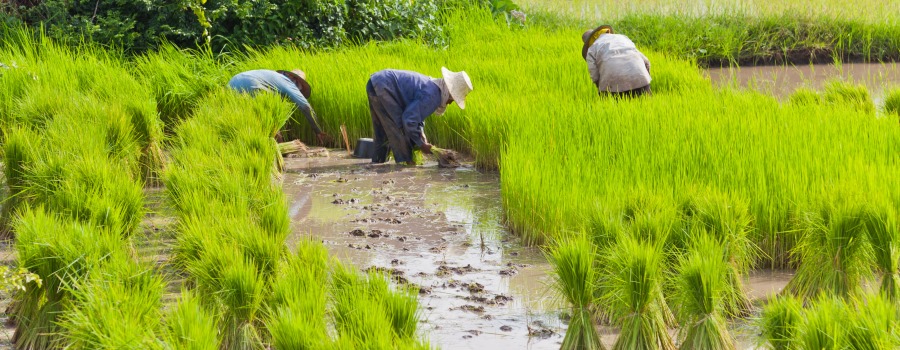
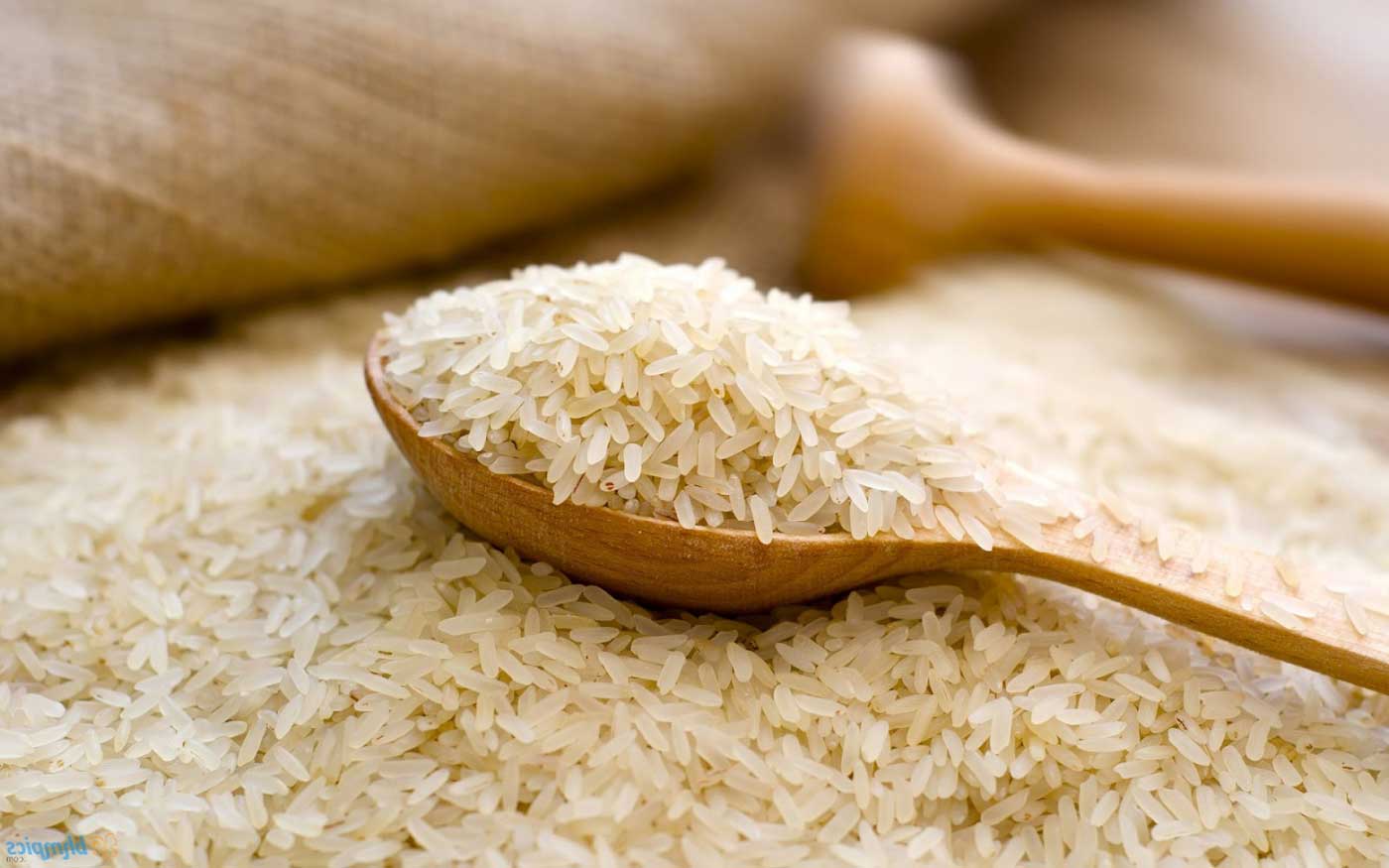
The partial amount of agricultural damage from “Lando” (international name “Koppu”) has reached almost P6 billion, affecting 277,060 hectares of agricultural areas and 386,834 metric tons (MT) of commodities in Regions 1, 2, 3, and Cordillera Administrative Region (CAR), according to the Department of Agriculture (DA). Rice crop production incurred the highest amount of damage estimated at P5.277 billion, equivalent to 359,362 MT of palay in the four regions severely affected by the tropical cyclone. DA said 258,493 hectares have a chance of recovery, while 1,330 hectares could not be revived. Bulacan incurred the biggest loss in rice crop production with P662 million, followed by Tarlac with P520.6 million, and Isabela with P212 million. The agricultural damage to corn was worth P84.49 million, affecting 5,636 MT, while damage to high-value crops was worth P528.9 million, affecting 21,836 MT. The highest amount of losses to corn production was in Quirino with P35.77 million, and followed by Nueva Ecija with P14 million. Aurora incurred the highest loss in HVCs with P253.9 million, followed by Tarlac with P141.8 million. Meanwhile, livestock losses reached P517,560. Based on the DA’s field validation, more than 98 percent of the total affected area still has chances of recovery. Source - http://www.mb.com.ph

21.10.2015

USA - Lower USDA Budget Spending Supports Crop Insurance

The White House says overall spending for USDA in the last fiscal year was $5.5 billion lower than expected. One of the reasons disaster spending which was $1.2 billion lower than estimated. South Dakota Corn Grower’s President Keith Alverson, who sits on the NCGA board, says that’s a good reason not to cut the crop insurance program. Alverson says they’ll be able to use these figures to show Congress how cost effective and reliable the risk management program is. The other reason USDA spending was lower in 2014 was because of less spending than estimated on the Supplemental Nutrition Assistance program. Source - http://wnax.com

21.10.2015

USA - Crop Insurance Resources Available for Minnesota and Wisconsin Farmers

USDA’s Risk Management Agency (RMA) reminds farmers that updated fact sheets are available for apples, cranberries, forage production, and tart cherries insured under the federal crop insurance program in Minnesota and Wisconsin. Crop insurance provides protection against crop production losses due to natural perils such as drought, hail, and excessive moisture. These crop fact sheets provide a summary of the insured crop, causes of loss, the insurance period, reporting requirements, important dates, coverage levels, premium subsidies, prices, unit divisions, insurance plans, a loss example, and contact information. The face sheets are a useful tools for farmers to quickly gain knowledge about insurable crops. Crop insurance is sold and delivered solely through private crop insurance agents. A list of crop insurance agents is available at all USDA Service Centers and online at the RMA Agent Locator . Source - http://www.minnesotafarmguide.com

21.10.2015

Australia - Hail destroyed 10% of pear crops in Goulburn Valley

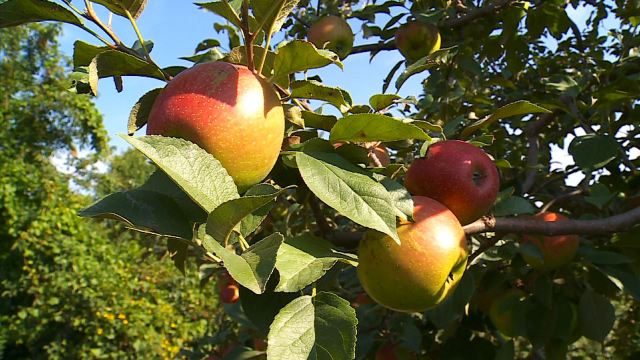
Up to 10% of the Goulburn Valley's pear crop may have been lost in the hail storm last week that tore through Ardoma and north Shepparton. It is estimated that around 16,000 tonnes of pears could be lost. One of the hardest hit areas was in North Shepparton where 53% of pears were lost and 49% of apricots. Fruit Growers Victoria statistics revealed that from 8 affected growers, about 76% of stone fruit were damaged and 65% of pears. Apple and Pear Australia LTD market developer, Olivia Tait has suggested that the growers develop a marketing plan to improve the effects of possibly more blemished fruit coming onto the market. She has suggested to promote the marked fruit as 'hail stone heroes' because the fruit survived the elements. Source - http://www.freshplaza.com

20.10.2015

USA - Crop insurance: How California Farmers Can Survive a Drought

The California drought has captured a lot of attention in the news. The media has focused on water consumption by households, but the water consumption of farmers is even more important. Drought is nothing new to farmers — it is always hard to predict how much rain a given year will yield. Furthermore, farmers care about more than just the amount of rain in a year. Different crops need different amounts of rain at the right time in order to develop properly. So while a drought is certainly bad for crops, even having rain is not enough to ensure a good harvest. The uncertainty of the weather is one of the oldest problems in farming. The basic problem is that farmers need to make all their capital expenses up front. They buy seeds, buy or rent farming equipment, and draw up labor contracts all before they can start planting. Then they plant and tend the crops for months. At the end of the season, they can finally harvest and sell their crop. There is a lag time between the investment the farmer makes up front and the money they collect at the end, with a lot of weather uncertainty in between. In addition, farmers cannot be quite sure of the price of their produce at the end of the season, so they don’t know how much they will make even if the weather is good. The leading solution to this problem is crop insurance. The risks associated with the weather and the price of crops are nothing special, from an insurance perspective. Insurance companies have been offering crop insurance to farmers since the 1800s. The probability of various types of weather is known in advance with a reasonable degree of certainty, so the insurance company can calculate the risk of adverse weather in advance. Predicting the future price of crops is harder, but still doable. Insurance firms help farmers mitigate the risk of a bad season. The farmer pays a premium to the insurance company, who, in turn, visits the farm a few times a year to examine the crop and estimate potential losses. If the farmer has a bad season, the insurance company will reimburse them according to their contract. This simple idea makes farmers’ lives much easier. When a drought like the one currently affecting California comes along, farmers are not simply out of luck. This situation is exactly what crop insurance is designed to help farmers overcome. The potential issues that can come up during a season are not limited to the weather or the price of the final product. Again, the underlying problem of a farmer is not the fact that they are vulnerable to the weather — it is that there is a major time lag between when they need to buy their capital and when they can sell their product. In the intervening time, any disruption can ruin a season and put the farmer in the red. There are many different things that can threaten a season in that intervening time. Some, like the weather, are particular to farming. Others are more traditional business risks. For example, as a location with heavy machinery and hands-on labor, farms are potential grounds for injuries and their related lawsuits. An incident with an expensive workmen’s compensation or liability case can be just as damaging as a drought. As with the weather, it is hard to see these incidents coming, but crop insurance can cover injuries and other events that can lead to lawsuits. Crop insurance covers all manner of events that affect the profitability of a farmer’s crop. Finding crop insurance online is simple. It is easy to get insurance quotes online because crop insurance is a standardized product. Of course, each farm has its own needs, but getting a baseline quote to understand the ballpark of crop insurance premiums is a good place to start. Crop insurance is the best way for a farmer to hedge against the variety of risks they face over the course of their season. Source - http://naija247news.com

20.10.2015

Netherlands - Fusarium ruins Dutch lettuce production

Lately, a persistent soil fungus has gained ground in the Dutch greenhouses: Fusarium. This disease is found in many open-field crops, and has already caused a lot of damage in Italy, Japan and the United States. Renting extra The greenhouses from Carlo de Jongh’s Slacollectief have been safe from fusarium so far. Carlo tries to keep the disease away by preventing contamination where possible: “First, we have the barrel washed at the nursery, before lettuce plants are grown in it. We also ensure that no goods from affected growers come here.” The grower does acknowledge that the lettuce sector now has quite a problem with fusarium: “Growers need to rent extra greenhouses to be able to meet the contract cultivation.” Throwing away harvest Ees de Winter of VOF de Winter is also no stranger to the fungus disease. “Several growers have already stopped growing greenhouse lettuce in the summer months. In the long run, this could lead to a shortage of lettuce,” Ees says. “Fusarium is a worldwide problem in many arable, vegetable and flower crops. Fusarium in lettuce was mainly predominant in Portugal, Italy and the United States at first. Because of our more moderate temperatures, we thought the Netherlands would be able to dodge the bullet. But unfortunately that’s not the case. Some growers had to throw away nearly their entire harvest. We are working hard on finding a solution.” Economic suicide According to Ruud van Amersfoort of Horti-Consult Int., the Netherlands is only really starting to feel the problems with fusarium now: Eight companies in the Netherlands have been seriously infected by the fungus. At half of these companies, growing butterhead lettuce is economic suicide. The acreage involved is about 8,5 hectares. The consultant says a few of them have stopped growing butterhead lettuce in summer, trying to balance out the production plan with other crops. “There is one grower, for instance, who has swapped 3 hectares with a radish grower’s land. That’s because the radish isn’t affected by the disease. Of the remaining 4 companies, steaming has taken place at a third of them already, a second will steam about 3,000 m², and another grower is having his entire company (3 ha) steamed, which means he will be out of action for 7 weeks.” Prevention For now, prevention seems to be the only method: “With 70% of the acreage affected, the grower has to switch to a different crop. The greenhouse then becomes so heavily affected that steaming probably isn’t a solution anymore. With a much lower degree of infection, steaming will suffice though. And the work will have to be done very hygienically. So spraying off tillage and planting machine first at the yard, before allowing them onto the recently disinfected soil. That also applies to all the materials in the greenhouse, by the way, like plant breeding trays, shoes and harvesting trousers. Keep everything separate for clean departments,” Ruud says. Overcropping Incidentally, Ruud sees a decline in head lettuce in retail: “I’ve seen less and less butterhead lettuce on shelves in particular in the last five years. On a tight market, large quantities of butterhead lettuce have been grown below the cost price for years. This applies to the entire horticultural sector, by the way. The lettuce sector needs to ask itself if they haven’t overcropped their land in recent years. This, as well as that monoculture, facilitates diseases. It’s the same with people who’ve been cropped up inside for too long. Ultimately it becomes a hotbed for illnesses.” Source - http://www.freshplaza.com/

20.10.2015

USA - Dry fall weather helps Indiana farmers after summer deluges

A stretch of dry fall weather that one farm economist calls "perfect" is helping Indiana farmers harvest their crops early following a summer of heavy rains that cut yields across many parts of the state. Purdue University agricultural economist Chris Hurt said Indiana farmers had harvested about two-thirds of the state's soybean crop and about half of its corn crop by last week. He estimated the summer's torrential rains inflicted about $200 million in crop losses in Indiana, but that's far less than initial loss estimates of a half-billion dollars. Hurt said the fall harvest that followed those deluges has been nearly ideal, with "perfect weather" for farmers eager to put the rainy growing season behind them. Decatur County farmer Harold Wilson told the Greensburg Daily News his southeastern Indiana farm has seen "wonderful weather" during the fall harvest. Wilson said the soybeans he planted early produced excellent yields, with some acres exceeding 70 bushels. But acres affected by ponding caused by heavy rains produced 40 bushels, and some produced nothing at all. Decatur County farmer David Miers, a former Indiana deputy commissioner of agriculture, said the dry fall appears likely to save farmers money because they won't be incurring expenses to dry their crops. Hurt said the latest U.S. Department of Agriculture estimates shows statewide soybean yields will be 51 bushels per acre, higher than the 50 bushels per acre expected in normal weather conditions. But he said the corn crop varies by region, with statewide estimates at 156 bushels per acre, about 10 bushels below a normal yield. Hurt said grain prices are now low and that will leave most farmers with tight margins and little profit. Bruce Beeker, who farms about 2,000 acres in southwestern Hancock County just east of Indianapolis, said some of his corn fields were hit so hard by flooding they're either devoid of plants or dotted with stunted corn plants. But he said he's now more optimistic about the fall harvest after waves of summer storms left standing water in his fields for days. "It's turning out a bit better than what we all expected," Beeker told the Greenfield Daily Reporter. "We didn't know if we were even gonna have anything to harvest at one point." Source - http://www.ibj.com

19.10.2015

USA - First drought, then flood cripple some state crops

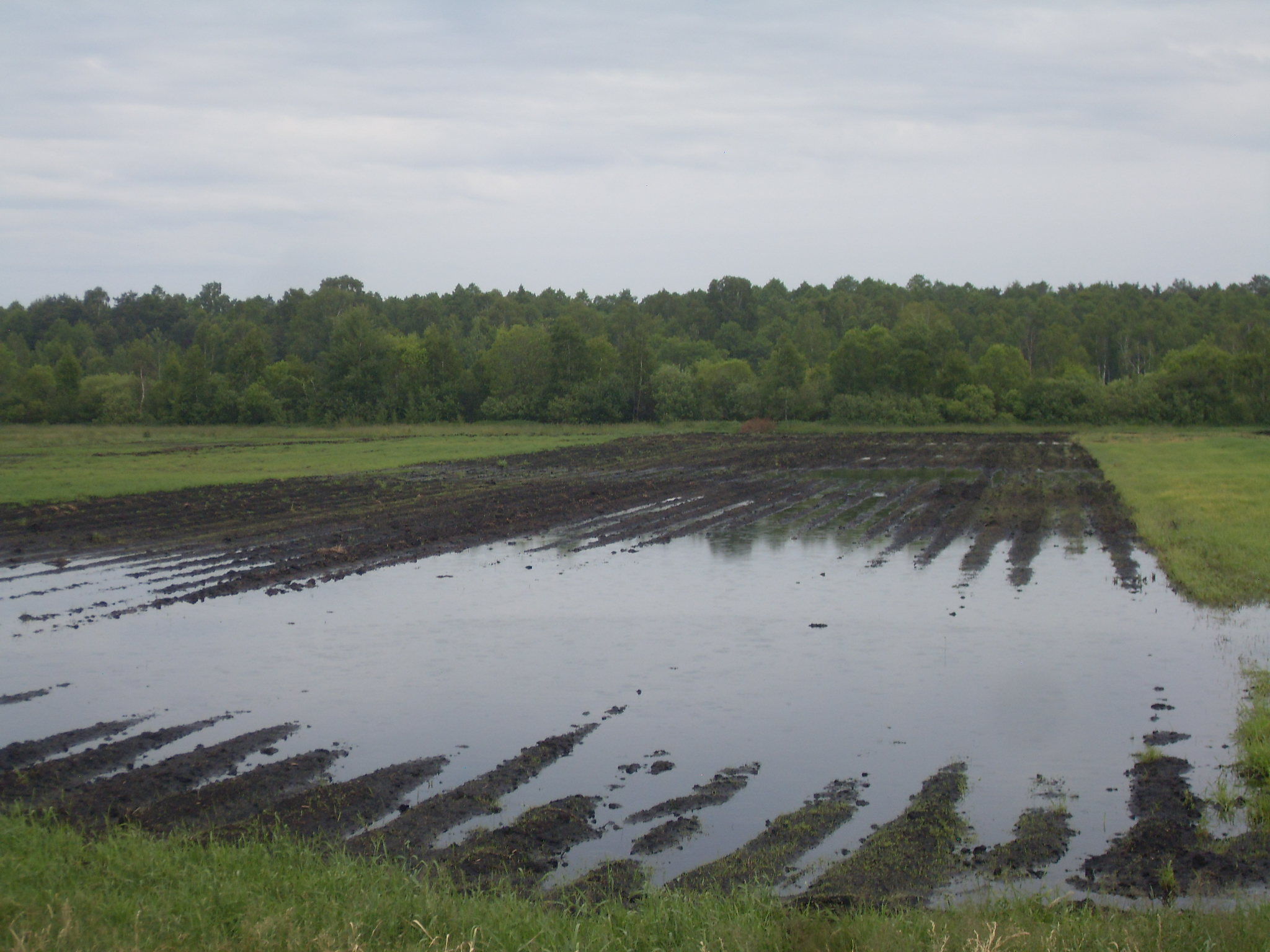
What farmers couldn’t see in January and February was a wet March and April that slowed the planting of crops, a dry spring and summer with 15 consecutive 100-degree days that caused a drought and heat damage to the crops that were planted, and an October rain storm of historic proportions. Annually, during the first couple of months of the year, farmers look at commodity prices and crop rotation schedules and plan what they will plant. This year, corn, soybeans, cotton, peanuts, tobacco topped their lists. The state had a wet April, David DeWitt, a farmer and Clemson Extension agent, said on a recent segment of SCETV’s “Making it Grow!” That segment addressed flood damage to crops in the state. In a conversation with show host and fellow agent Amanda McNulty, DeWitt went on to explain that, for instance, in Sumter County, there wasn’t another amount of measurable rain from April until July fourth. By then, most of the growing season was past, and 40 percent of the farmers in the state were affected. A federal disaster had already been declared for the state’s drought, DeWitt said. DeWitt is among those urging farmers to complete surveys being taken in the state to assess damage. Before facing the early-October flood, and more damage to crops, changes in the 2014 Farm Bill had also eliminated direct, guaranteed payments to farmers. Now, a press release from Clemson University said, the amount South Carolina farmers can recoup from the estimated $300 million in losses from the flood will depend on the private insurance they acquired. “The (federal) farm programs have changed dramatically,” S.C. Agriculture Commissioner Hugh Weathers explained recently. “We deal with risk mitigation through insurance now.” Weathers called his agency’s $300 million loss a conservative estimate. Water still stands in some Williamsburg County fields and where water has receded, the ground is too soft for farmers to bring in equipment. In Florence County, fields not too wet have had crops plowed under. Crops suffer from disease, insect damage, mold and fungus, Weathers said. In some cases, DeWitt said, it may not be worth harvesting the crops left in the field. Dave Lamie, Clemson associate professor and extension specialist with a focus in community economics, said that from his perspective the flood has possibly caused damage to upstream businesses, such as agricultural suppliers (feed, seed, fertilizer, fuel, etc.), as well as to downstream businesses, such as distributors and processors. “We are only just beginning to understand to what extent these important parts of the agriculture and food ecosystem are affected. Further, once we know more, we can begin to contemplate the indirect and induced effects (multiplier effects) on the surrounding communities, counties, and state,” he said. Harry Ott, state executive director of the Farm Service Agency, and a farmer who produces cotton, corn, and peanuts in Calhoun County, said most of the corn, tobacco, and sweet potato crop in Williamsburg County had been harvested before the flooding. However, cotton, peanuts, soybeans and late fall crops have been greatly affected by the rains. Some 75-80 percent of the county’s cotton and peanuts and between 60 and 70 percent of its soybeans are going to be a loss, Ott said. Aaron Wood, assistant commissioner with the state’s agricultural department, said sorghum was mostly harvested in the area as well, and round bales of hay may be damaged if they were being stored outside for use this winter. Crops unaffected by the rains will be perennial forage and pasture crops, he said. As for tree farms, Wood said, “There were reports of a few trees blown down because of the saturated ground, but otherwise established stands of plantation pine should be OK.” Some seedlings in newly replanted stands that were flooded may die, he added, but it will take a few months to really assess the damage to that crop. All agreed that the rain and residual wet fields will delay or prevent any small winter wheat, rye, oats or other grains from being planted. “Farmers simply cannot get into their fields,” Ott said. Agriculture, when timber is included, is the largest industry in the state, DeWitt said. As for the damaged crops, DeWitt said it may be better to leave it. “Don’t harvest it; don’t take it to market. Don’t spend any more money on it,” he said. Lamie said it will likely take state and federal resources to help put the agricultural sector back on its feet. “In many situations, this can occur quite rapidly; in others, it will likely take a while, perhaps more than a growing season,” he said. Farmers who started with a lot, DeWitt said, will have a little. Those who started in a hole will have a bigger hole. “Some of them (farmers) went into this situation with already-strained financial health. Some were in better shape and will likely find it easier to recover, so long as Mother Nature cooperates,” Lamie said. “Access to short-term credit is likely going to be essential for most. Every situation will likely be different, so I caution us from using sweeping generalities and encourage us to consider this on a case-by-case situation.” Source - http://www.scnow.com

19.10.2015

USA - Cucumber salmonella outbreak grows again

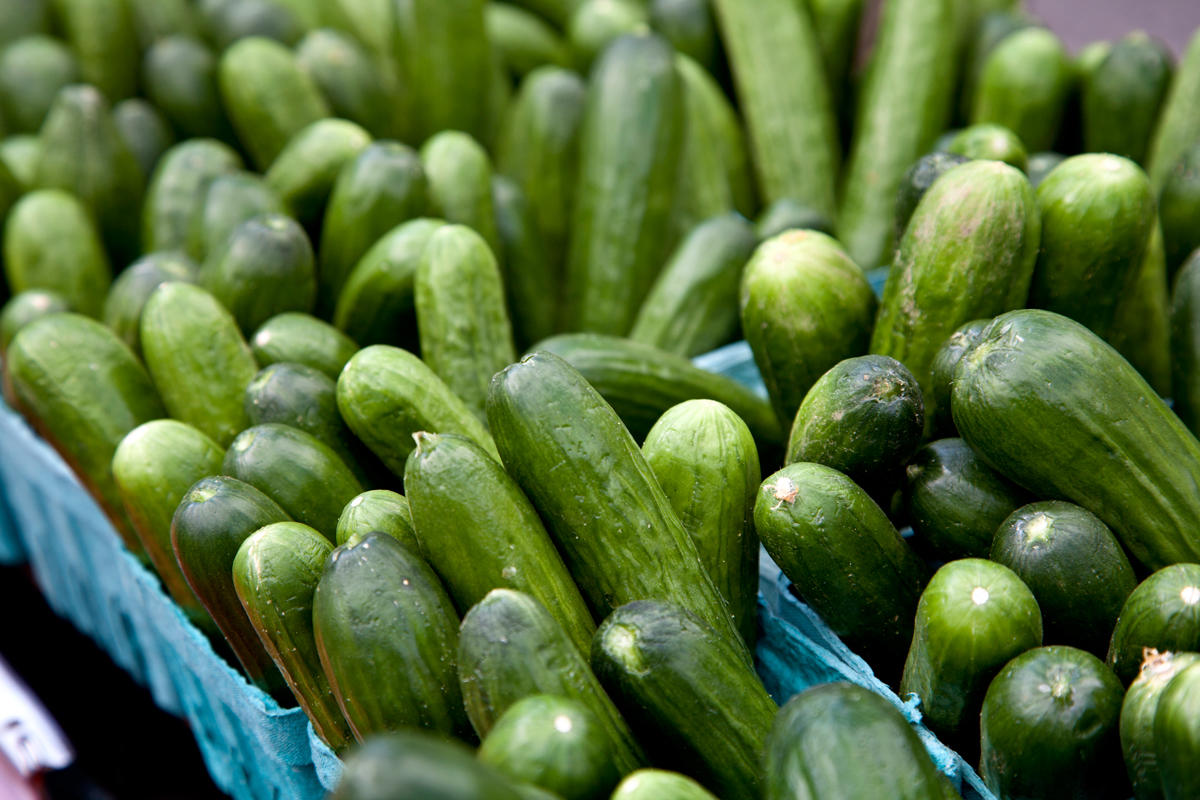
At least 767 people in 36 states are now part of the salmonella outbreak linked to imported cucumbers. Since the last update on October 6, the outbreak has expanded to a new state, Florida, and 35 new cases from 14 states have been added. There have been four deaths and 157 hospitalizations. About 50 percent of those sickened are children under 18. The Centers for Disease Control and Prevention (CDC) and the U.S. Food and Drug Administration (FDA) say the outbreak, which they have linked to cucumbers imported from Mexico and distributed by Andrew & Williamson Fresh Produce, is ongoing. Two cucumber recalls have been issued. The first, on September 4, 2015, by Andrew & Williamson Fresh Produce for cucumbers sold under the “Limited Edition” brand label during the period from August 1, 2015 through September 3, 2015. Source - http://www.freshplaza.com

19.10.2015

India - Uniform Package Policy for Farmers

Government is coming out with a special insurance cover for the benefit of agriculture sector, a top United India Insurance Company official said today. A Uniform Package Policy is being worked out for the benefit of farmers, which will cover crop, personal accident, health and agricultural implements, Chairman and Managing Director of United India Insurance Milind Kharat told reporters here. The insurance companies are in discussion with the agricultural ministry with regard to formulating the policy, which would be finalised in a few days, Kharat said. His company will shortly introduce an exclusive insurance product for the benefit of SME sector, Kharat said. "Instead of having separate insurance schemes for different things, like building, machinery, the risk cover will be in one package, which would benefit the sector, depending on the requirements," he said. Kharat was here to inaugurate a community hall as part of its Corporation Social responsibility in association with Rotary Central of Coimbatore at Kudanoor tribal village in Anaikatti on the outskirts. Asked about Government Insurance companies Third Party Administrator (TPA), the official said four insurance companies have already got approval from IRDA. The pilot project has been launched in Delhi and a full-fledged administrator will start functioning from April one next year, he said. To a question on company's performance, Kharat said it was growing at the rate of 11 per cent as against the general average of 10 per cent and expected the trend to continue during the coming years. Source - http://www.newindianexpress.com

19.10.2015

Australia - Up to 90% Goulburn Valley pear crop, 40% apples hail affected

Up to 90% of Australia’s Goulburn Valley pear crop, and 40% of the apple crop may have been affected by this week’s highly localized hail event in Victoria, but more assessment will be carried out in the next five weeks to determine how much of the budding fruit, due to hit stores in January, might be affected. “We need to wait to see the full extent of the damage,” says Tony Filippi, Industry Development Officer for Fruit Growers Victoria, who chaired the meeting, which included state parliamentarians, and representatives from peak industry bodies. “We’ve dealt with this in the past, some crop will be blemished, but we might also say that nationally, we’ve got enough fruit out there, and growers can apply for a slight variation to grading specifications.” Growers who play their cards right will be able to work together, and coordinate the efforts of packhouses and resellers of grade fruit consistently, and achieve a better return than if more fruit is automatically downgraded, Mr Filippi says. “There will be a slight shift in specifications, and a coordinated marketing effort to explain why the fruit looks the way it does when it hits the shelves. It could be a real boost for grower return if the consumer understands why they’re getting slightly blemished or odd shaped fruit.” Repeat sales are what will help growers, Mr Filippi adds, rather than trying to charge too high a price to consumers. Top of the list of questions from growers who were hit by the isolated hail belt was ‘can retailers sell my fruit? If they can, will they keep buying it and sell it for a decent return?’ says Mr Filippi. “With early stonefruit that was around 50% maturity we have another 6-8 weeks to go. That’s pretty well advanced, but pears and apples are only small fingernail size, still in the cell-division stage and very susceptible to damage.” Around 40 people, at least 25 of whom were growers, were present at last night’s meeting to discuss the impact of a hailstorm on the Shepparton and Goulburn Valley region. The meeting group also heard a presentation from an academic at Monash University about how to spot weather patterns form radar images, to give growers the best chance to prepare for future hail events. Source - http://www.freshplaza.com

16.10.2015

Swiss Re - The USD 1.3 trillion disaster protection gap: innovative insurance tools exist to support governments to be better prepared

Disaster risks are increasing but insurance hasn't kept pace: the estimated USD 1.3 trillion gap between insured and total losses remains stubbornly large, hampering a country's ability to recover Governments are uniquely exposed as they typically shoulder the cost of relief and recovery and also pay for reconstruction of infrastructure Uninsured losses following a catastrophe impact economic growth over several years, hampering a country's ability to bounce back Innovative insurance solutions can help countries, cities and individuals preserve hard-won development gains, even in the face of major natural disasters and climate change but it's crucial to arrange them before disaster strikes Governments increasingly use these solutions to manage their budgets and fiscal contingencies; successful examples can be found in many emerging markets as well as in OECD countries but more needs to be done Floods, earthquakes, hurricanes and droughts continue to ravage countries and destroy lives and economies. The gap between insured and total losses is widening, while many disaster-prone countries lack financial preparedness. Governments are uniquely exposed to these risks. Innovative insurance tools and solutions can help bridge this gap, but it's crucial to arrange them before catastrophe strikes, says a new Swiss Re publication launched at the World Bank /IMF annual meetings in Lima. In "Disaster risk financing: Smart solutions for the public sector" Swiss Re shows that the economic cost of natural catastrophes has grown markedly in the last 40 years. The protection gap – the difference between economic and insured losses – remains large despite the availability of innovative insurance solutions. Narrowing this gap helps strengthening a country's financial resilience. "The insurance industry is already rising to the challenge of underinsurance in both developed and developing countries through innovative risk management measures," said Swiss Re's Group Chief Executive Officer Michel M. Liès. "The risk landscape is becoming more and more complex as the world becomes more interdependent. No country can afford to be left unprotected." On average only about 30% of catastrophe losses have been covered by insurance over the last 10 years. That means that about 70% of catastrophe losses – or USD 1.3 trillion – have been borne by individuals, firms and governments. Governments typically shoulder the cost of relief and recovery, but also pay for reconstruction of infrastructure and, in the case of underinsured individuals or businesses, they even fund private rebuilding efforts. Yet, most governments will seek the funds only after a catastrophic event, and often revert to increasing taxes, borrowing or soliciting international aid, often incurring high costs and delays. These events can wipe out years of hard-earned development gains. Rating agency Standard & Poor's recently published a report warning that a country's disaster preparedness could be linked to its credit rating going forward. More needs to be done As a first priority, governments should enable a functioning insurance market. This will help absorb a major part of disaster losses suffered by individuals and businesses. Pre-event financing solutions can alleviate the remaining financial burden on governments. Post-disaster financing (such as debt financing or donor aid) should only come into play to cover residual losses once all other risk transfer solutions have been exhausted. "For risk protection to be effective, funds need to be quickly available in the wake of a natural catastrophe, meaning that financing arrangements must be in place already beforehand," says Martyn Parker, Chairman of Swiss Re's Global Partnerships, a unit that works with public sector clients. "Financial preparedness lowers the volatility of the state budget and improves planning certainty for the public sector, besides making a country more attractive to investors." The study – launched at the World Bank /IMF annual meetings in Lima – points to a number of countries working in collaboration with insurers to innovative solutions. Mexico, for example, is a pioneer in securitising earthquake and hurricane risk. Uruguay has developed an ingenious risk transfer mechanism to mitigate the risk of low rainfall on its hydroelectric power generation. Central American and Caribbean governments have insured their risk against hurricanes and earthquakes The Africa Risk Capacity insures several countries against drought risk. [1] On average, over the last 10 years, only 30% of catastrophe losses were covered by insurance and the remaining 70%, or around USD 1.3 trillion, were paid by individuals, firms and governments. Source - http://www.swissre.com

14.10.2015

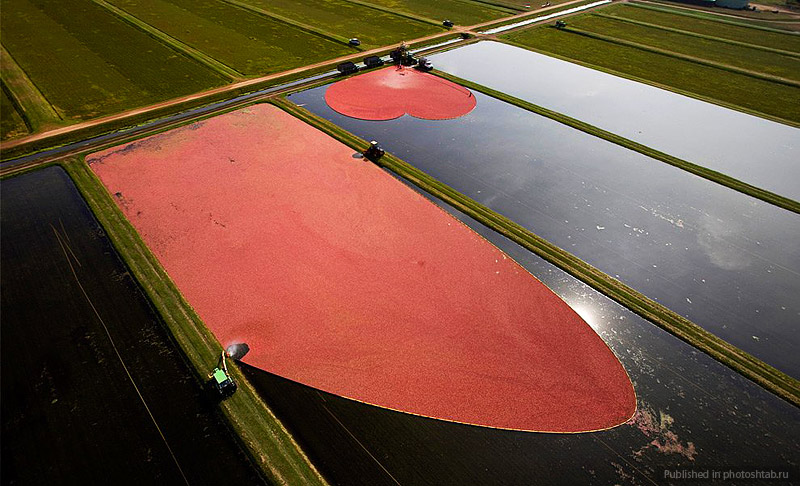
USA - Entire Wisconsin cranberry harvest filmed by a drone (video)

For those who have ever wondered exactly how cranberries are harvested, the wait is over. The entire process of the 2015 Wisconsin cranberry harvest was filmed by a drone. Source - http://www.gopheraerial.com

13.10.2015

El Nino could help California’s drought — but it will make India’s much worse

While Californians facing serious drought are hoping for storms and floods sent their way by El Niño, on the other side of the planet the infamous Pacific climate cycle is bringing severe dry spells, too. And for some of India’s poorest people, that’s a matter of life and death. The Indian Meteorological Department has worrisome news for the country’s farmers — 2015 will be India’s second consecutive drought year for the first time in three decades, because of the effects of El Niño on this year’s monsoon season. As warm currents in the Pacific Ocean cause pressure changes that suck the moisture out from over India, the June-September rainy season ended this year with a 14 percent deficit in rainfall. Parts of the country have had less than half their usual rain. Meanwhile after unexpectedly abundant rains in June, north and northeastern regions are suffering from flood damage. Both situations can prove fatal to the crops of millions of Indian farmers. According to a 2013 survey, roughly 500 million Indians, or 40 percent of the population, depend on agriculture for at least part of their livelihood. For 27 percent, it’s their main source of income. Yet the sector generated just under 14 percent of India’s GDP in 2013-14. The average farm household makes less than $100 a month. For farmers already living hand to mouth, the second drought year in a row stands to have devastating effects. Only around a third of India’s agricultural land is reliably irrigated, and farmers who depend on rain-fed fields will suffer from serious economic losses and hardship. The area with the highest rainfall deficit, Marathwada district of west-central Maharashtra state, has missed out on 52 percent of its rain this year. Crops of soya bean and sugarcane have been lost entirely, and over 70 percent of monsoon crops are expected to fail. In Karnataka state in the south, where rainfall deficit is up to 45 percent in the worst hit areas, some districts are seeing crop losses as high as 85 percent. Changes in farming practices have made farmers even more vulnerable to drought. Marathwada, for instance, is a “rain shadow” area which typically gets less precipitation — but, like most other regions in the country, it has moved toward “cash crops” like sugarcane and cotton which demand more water than pulses and grains. “As a result, the same water deficiency is causing more impact than in the past,” says Dr. Bandi Venkateswarlu, vice chancellor of Vasantrao Naik Marathwada Agricultural University. Losing crops means losing money, and not just for the people who own the fields they’re grown in. “There will be a shortfall in the income of the farmer, and landless laborers who depend on them for daily wages will also lose work,” said Venkateswarlu. “This forces them to migrate to the cities.” Rural migrants in India’s metropolitan areas typically look for work as day laborers and domestic helpers, and are often forced to live in slums or on the roads until they find work. Irrigated farmland is not immune to a bad monsoon, either. “We have had to draw more ground water, and the water levels have gone down further,” says Bhupinder Singh Mann, the national president of the Indian Farmer’s Union. Even in the prosperous and well-irrigated farmlands of Punjab, Mann explains, a bad monsoon means expensive construction of deeper wells, and more borrowing to meet these costs. With many farmers already compelled to take on debt to cover rising costs, crop price shocks and pest attacks, another loan can prove expensive. According to official data, more than half of all agricultural households in India are in debt. Once government and formalized bank loans are exhausted, money lenders become a last resort. They tend to be less forgiving about repayment. Precarious income, hardship and debt are some of the reasons cited for a shocking statistic about India’s ailing farmers: in the last two decades, some 300,000 of them have committed suicide. In Marathwada, ominously dubbed the farmer suicide capital of the country, as many as 628 farmers killed themselves between January and September this year. While no official statistics are available to show a correlation between drought and suicides, experts say that poor rains contribute to the burden of indebtedness, which is considered the leading cause of India’s farmer suicides. In Marathwada, more suicides have already been reported this year than in the whole of 2014. With the figure triple the number of cases in the year before that, this drought may have already claimed more lives than the authorities acknowledge. Source - http://www.dailynews.com

13.10.2015

USA - USDA Offers Assistance to Carolina Farmers and Ranchers Affected by Floods

The U.S. Department of Agriculture reminds farmers and ranchers affected by the recent floods in North and South Carolina that USDA has programs to assist with their recovery efforts. State and county staff in USDA’s Farm Service Agency, Natural Resources Conservation Service and Risk Management Agency stand ready to help. “The catastrophic flooding in the Carolinas has caused unimaginable hardship for many producers, including farmers who are waiting for fields to dry so they can assess the damage and harvest what is salvageable of their crops,” said FSA Administrator Val Dolcini. “I encourage producers who experienced losses to take advantage of available disaster assistance programs and loans to alleviate part of the financial burden caused by devastating floods.” Dolcini adds that farmers and ranchers should contact their FSA office to set an appointment during this busy season. He said it is important to learn what documents can help the local office expedite assistance, such as farm records, receipts and pictures of damages or losses. FSA administers a suite of safety-net programs to help producers recover from eligible losses, including the Livestock Indemnity Program, the Emergency Assistance for Livestock, Honeybees, and Farm-Raised Fish Program, Emergency Forest Restoration Program and the Tree Assistance Program. Additionally, the FSA Emergency Conservation Program provides funding and technical assistance for farmers and ranchers to rehabilitate farmland damaged by natural disasters. Producers located in counties that received a primary or contiguous disaster designation are eligible for low-interest emergency loans to help them recover from production and physical losses. Compensation is also available to producers who purchased coverage through the Non-insured Crop Disaster Assistance Program, which protects non-insurable crops against natural disasters that result in lower yields, crop losses or prevented planting. Producers should use form FSA-576, Notice of Loss, to report prevented planting and failed acres in order to establish or retain FSA program eligibility. Prevented planting acreage must be reported no later than 15 calendar days after the final planting date as established by FSA and RMA. Producers must file a Notice of Loss for failed acres on all crops including grasses in a timely fashion, often within 15 days of the occurrence or when the losses become apparent. Producers of hand-harvested crops must notify FSA of damage or loss within 72 hours of when the date of damage or loss first becomes apparent. USDA’s NRCS can also help producers with damaged agricultural lands caused by natural disasters such as floods. The NRCS Environmental Quality Incentives Program (EQIP) provides financial assistance to repair and prevent excessive soil erosion that can result from high rainfall events and flooding. Conservation practices supported through EQIP protect the land and aid in recovery, can build the natural resource base, and may help mitigate loss in future events. For declared natural disasters that lead to imminent threats to life and property, such as those declared this week in South Carolina, NRCS can assist local government sponsors with the cost of implementing recovery efforts like debris removal and streambank stabilization to address natural resource concerns and hazards through the Emergency Watershed Protection Program. “The flood event taking place in North and South Carolina is of historic proportions. As the flood waters recede, we may begin seeing land damage such as erosion that happened not only during the rainfall events, but was caused by the receding waters,” said NRCS Chief Jason Weller. “It is critical that farmers, ranchers and forestland owners have financial and technical resources available to protect their natural resources and operations now and as recovery from these disasters begins.” Producers with coverage through the RMA administered federal crop insurance program should contact their crop insurance agent. Those who purchased crop insurance will be paid for covered losses. “No one knows if or when situations like the floods that have devastated the Carolinas may happen. Federal crop insurance provides an effective farm safety net to help farmers recover,” said RMA Administrator Brandon Willis. Producers should report crop damage within 72 hours of damage discovery and follow up in writing within 15 days. They should have Farm Service Agency documents that provide the number of acres and locations of insured crops ready to show the adjuster Source - http://bladenjournal.com

915
of 1224