NEWS
873
of 1225
News
18.04.2016

India - Odisha to disburse Rs 6000 cr cooperative loans to farmers

The Odisha government has set a target to disburse Rs 6,000 crore cooperative loans to the farmers during Kharif 2016, which has already commenced from April 1 this year. The short-term cooperative credit has been playing a pivotal role in disbursal of farm credit over the years and it has a share of around 65 per cent in crop loan dispensation. “The government is keen that the cooperatives which provide around 65 per cent of the total crop loan disbursements in the state must extend their outreach to provide timely, adequate and hassle free credit to the farmer members of primary agricultural credit societies (PACS) during Kharif-2016”, Manoj Ahuja, secretary (cooperation) wrote to the district collectors. During Kharif 2015 season, against the target of Rs 5,500 crore crop loan disbursements, the cooperatives have disbursed Rs 5,077.41 crore to 17,34,847 farmers while all the commercial banks including the regional banks have financed Rs 2,155.239 crore to 5,04,569 farmers. The target of financing Rs 6,000 crore comes after the standing crops were battered due to deficiency of rains in the monsoon in last Kharif. In Odisha, 28 out of 30 districts have been affected by drought. As many as 15,35,902 hectares of crop area in 29,176 villages of 3,832 gram panchayats under 235 blocks in 28 districts and 412 wards under 55 urban local bodies have suffered crop damage to the extent of 33 per cent and above. Ahuja said, the commercial and regional rural banks would be given targets separately by the state-level bankers’ committee (SLBC) and communicated about it shortly. A new crop insurance scheme -- Pradhan Mantri Fasal Bima Yojana (PMFBY), will be implemented as per the operational modalities approved by the Union government and the State government, which would be communicated to all concerned separately, he added. Source - business-standard.com

18.04.2016

Canada - Risk Protection That Saves Time and Money

April 30, 2016, is the deadline to enrol in the 2016 AgriStability Program and pay program fees, without penalty. The AgriStability Program is a low cost option for securing a financial foundation for the farm. The program fee is $315 for every $100,000 of the farm’s historical margin.  Once signed up for AgriStability, producers can also participate in other business risk management programs, such as the Advance Payments Program. Saskatchewan farmers and ranchers enrolled in AgriStability have access to AgConnect, the web-based platform for conducting AgriStability business.  Through the secure AgConnect website producers can submit forms, review historical program information, view their detailed calculation of benefits and their Enrolment Fee/Notice. AgConnect has made it easier for producers to meet the requirements of the program and applications are processed quicker. SCIC is able to complete almost 75 per cent of the submitted files within 60 days. To remain enrolled in AgriStability, participants have until April 30, or 30 days from the date on their Enrolment/Fee Notice, whichever is later, to pay their program fee without penalty. If the annual program fee is paid after the initial deadline date, there will be a 20 per cent penalty added to the fee amount. The final deadline to pay the fee is December 31, 2016. Producers that want to participate in AgriStability for the first time or wish to re-join the Program must request a New Participant Package by April 30, 2016. Source - saskcropinsurance.com

18.04.2016

India - Insurers use drones for crop yields

Private insurance companies are using drones to photograph farms and if permitted by the agriculture ministry these could provide data to calculate crop yield. Insurers are using unmanned aerial vehicles as a pilot scheme. The agriculture ministry has called for use of such modern technology for the Pradhan Mantri Fasal Bima Yojana (PMFBY). Drones have not gained widespread commercial use, as individuals need permission from local governments and other regulatory bodies to fly them. The government is also keen on using technology such as smartphones and remote sensing to reduce crop cutting experiments and help cut delay in payments to farmers. The scheme, approved by the Cabinet, in January will have a uniform premium of two per cent to be paid by farmers for all kharif crops and 1.5 per cent for all rabi crops. For commercial and horticultural crops, the farmers’ premium is five per cent. The rest of the premium will be paid by the government. The government is planning to spend Rs 5,500 crore on the crop insurance scheme. In his Budget speech Finance Minister Arun Jaitley had said the farmers will pay a nominal premium for the coverage. It is expected additional weather-based devices and satellites will also be utilised by the ministry and government. The weather departments will also pay a crucial role in mapping anomalies caused by excessive rain, hailstorm or flood so that crop damage can be minimised. Anuj Tyagi, member of executive management at HDFC ERGO General Insurance, said his company had conducted a project with drones in Rajasthan. “We think using drones will be a successful experiment,” he added. He said in Rajasthan, his company had looked at data collected by drones as well as satellite images, and they were happy with the results. “However, this can be taken further only after more exhaustive testing.” Additional weather-based devices and satellites will be used by the government for crop insurance. The weather department will map anomalies caused by rain, hail storms and floods. ICICI Lombard, the largest private sector general insurance company, is also using drones for crop yield data. The company is a large player in crop insurance. “Instances of fraud have been reported in crop insurance where farmers provide incorrect yield data. Using drones will help cross-check claims,” said the chief executive of a large private insurer. PMFBY will have actuarial yield-based scheme with provision for upfront premium subsidy to be released to insurers. The sum insured will be same for both loanee and non-loanee farmers. Also, there would be no capping and there will be full claim amount paid against the sum insured. Source - business-standard.com

14.04.2016

USA - Late storm threat to local crops: Snow showers come after plants bloomed

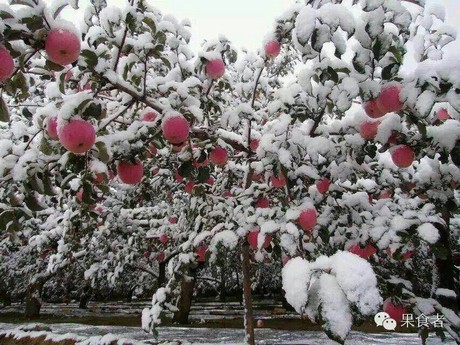
An unexpected winter storm is causing concern among local apple growers. A winter of warmth led flowers to bud early at local farms, but the sudden snow fall on Monday, April 4, has the potential to spoil an entire season of crops. Farmers say it is still too early to say whether the weather significantly damaged crops. Apple and blueberry crops are most at risk of damage, as those crops had just begun to bloom, and were thus most susceptible to the sudden temperature change. As many farms, including Indian Ladder Farm in Altamont, continue to recover from a severely cold spring in 2012, a second bad season of crops would be devastating for business. Its crops survival will largely depend on whether or not seasonal temperatures are maintained hereafter, and if the crops lost will fall within a normal range for the season. Farmers already routinely shear a large percentage of newly flowered buds to make room for higher quality crops to grow to full Grade A size, so potential crop losses could be a non-issue. Peter Ten Eyck, owner of Indian Ladder Farm, said his crops were in the “green tissue” stage, just before bloom, when the snow fell. “The issue is not the snow. Snow is our friend. The issue is the temperature. Various varieties of apples blossom at slightly different times. Some are far advanced and some haven’t even started yet,” said Ten Eyck. “The thing is trees are used to losing buds because of spring frosts. They can lose buds and still have enough to survive and have apples. If we’re in window of losing 70 to 80 percent [of buds], we can still work it out.” The plants are most susceptible to damage just as they move out of dormancy and into the budding stage. At 18 degree temperatures, about 10 percent of buds will die; At 10 degrees, about 90 percent of buds die. Temperatures reached 10 degrees that snowy night. Temperatures haven’t been that cold in April since 1956. Most recently, in 2012, a late April frost left Indian Ladder Farm with only 9 percent of its apple crops – the worst crop in the history of the farm. Even though the remaining crops that year were in perfect quality and the farm received crop insurance, the losses still set the farm back financially for a few years. “This is our 1000th year of apple farming at Indian ladder. That wasn’t so long ago,” said Ten Eyck, “so psychologically we’re very distressed.” Ten Eyck said it took the farm a full four years to recover from losing that season of profits. Since the farm has over 40 varieties of apples, it is still hard to determine whether any of them were disparaged by the cold weather. While varieties like Golden Delicious bloom very late, and were not very far along in the budding process, varieties like Empire are more worrisome. Those buds were just starting to sprout. Any remaining crops will still be of extremely high quality, so Ten Eyck hoped that locals will continue to support local farms like Indian Ladder. The closer buds get to bloom, the more susceptible they are to being spoiled by the warm weather. For example, temperatures in the mid-20s would be just as devastating for crops if they occurred closer to Mother’s Day, when buds are expected to be in full bloom. “Because March was really unusually warm, it accelerated the rate that plants like tree and berries were growing at,” said Laura McDermott, a horticulture expert at the Cornell Cooperative Exchange in Voorheesville. “Temperatures in the last couple days have not been horribly low, so if were looking at same the development last year, it would not have been a problem, but because of the warm weather, a lot of farmers are worried.” Some of the farmers she works with had temperatures in the single digits for several hours, which is a long time for plants, said McDermott. Farms in lower New York state, particularly in the Hudson Valley will have more damage, as their crops were further along, and McDermott was not yet sure what effect the weather would have in Western New York. “It really just points out how susceptible farmers are to changing climate, which just makes a complicated profession even more complicated.” Essentially, there is nothing farmers can do to keep there crops warm. Most of the farm’s other plants, such as its blueberries and raspberries, had not been planted yet. And the farm does not grow peaches or cherries, which would have been similarly effected by the weather. The farm’s hops crops, meanwhile, were just beginning to open, and could have been effected by the cold weather just as the apple crops may have been. Ten Eyck said so far, a few of their hops varieties, particularly the hardy East Coast ones, have been resilient. Yet, as those crops have seen a number of bad winters within the past four years, delaying the start of the farm’s new beer-making business venture, Ten Eyck is only cautiously optimistic. “There are a lot of variables. Even though it looks very bad, I’m rooting for the trees. They’ve been around for 100 years and they’re going to come up with something,” said Ten Eyck. McDermott works with many orchardists, including Ten Eyck, through her work with Cornell Cooperative Exchange, and said she has had reports from many concerned farmers. “We just don’t know. I’m trying to be optimistic and trying to keep them optimistic,” she said, adding that the weather may simply mean that farmers do less pruning this season, and that the fruit could be fine. “The real point that I would like to make is that we don’t know for sure and we won’t know for several weeks if there’s damage, and if so, how wide spread the damage is. It is not a good situation, but we don’t know for a fact.” Source - spotlightnews.com

14.04.2016

USA - Fruit growers trying to dodge frost damage

While the cold temperatures had many Ohioans shivering this last weekend, it had tree fruit growers quaking in their boots. The early warm-up in March followed by the plummeting temperatures in April generated plenty of concern about early blossoms being killed and jeopardizing a significant portion of the state’s apple and other fruit crops. Orchards further south had the most reason for concern from the recent cold snap as their trees were the furthest along in terms of blossom development. The crew at Hirsch Fruit Farm in Ross County was nervously checking trees on Monday to see how bad the damage was from the frigid weekend temperatures. “It is surprising that we have some live buds out there considering how cold it was and has been. That’s great,” said Steve Hirsch, of Hirsch Fruit Farm near Chillicothe. “The apples were all over the board. Some were in full bloom and some were not even pink yet. The ones that weren’t pink yet should hopefully be really good. The ones that were in bloom, I’m surprised how many of them are still alive which is great. There is some loss but if we had a full bloom we would have to thin them out anyway. We take 70% off of them anyhow and two out of five are alive. That is good considering how cold it was. We got down to 22 degrees. I don’t know how long it was at 22 degrees but it did get down that cold.” There are a number of strategies that can be employed to help protect the blossoms when temperatures drop, including spraying crops with water through irrigation, fans to cycle the air, and even helicopters flown over orchards. “When temperatures are that cold, though, it is tough to do anything to make a difference. We did not do anything. If it doesn’t get too cold we will spray water through irrigation sometimes, especially with the strawberries,” he said. “The orchard is on a hill and that elevation advantage helps too. I am just happy we have live blooms out there. We still have the potential for a full crop this year.” Hirsch also thinks the colder weather leading into the coldest temperatures on April 9 helped the blooms survive. “The fact that it got colder and we had several nights in the 30s may have helped to make the trees more cold hardy,” Hirsch said. “The temperature change was more gradual which helps.” In terms of the other fruit produced on the farm, the peaches also look to have survived and black and red raspberry blooms come out more gradually so they are still fine. “The raspberries usually bloom the second or third week of May. Several years ago we had a frost on May 22 and the king bloom was open and it killed them. We can do without that this year,” Hirsch said. “We are just pleasantly surprised that, as cold as it was, there are still some viable buds out there on the trees.” Ohio’s grapes were also a concern in the cold temperatures. Imed Dami, Ohio State University Viticulture Extension Specialist, said that during deacclimation in the spring, grapevines become increasingly sensitive to temperatures below freezing. The lethal temperatures vary with the stage of bud development — buds become more sensitive as they grow in early spring. The following is an example of critical temperatures that cause 50% damage of grape buds and young shoots: Budbreak —28 Degrees F; First unfolded leaf — 28 Degrees F; Second unfolded leaf — 29 degrees F; Fourth unfolded leaf —30 degrees F. “At the OSU research vineyard in Wooster, bud development has not moved much since last week. The earliest varieties, Marquette and LaCrescent are in the wool (doeskin) stage. Canes were collected from Cabernet franc (end of bud swelling stage) on April 1 to determine cold hardiness of bud and vascular tissues,” Dami said. “We observed 17% injury in primary buds at 21 degrees F, and 27% in secondary and 7% in tertiary buds exposed to 18 degrees F. Phloem sustained injury at 7 degrees F, but no xylem injury down to -4 degrees F. Let’s hope we dodge another freezing event. It’s daunting to realize that we’re only in the first of week of April and we still have four to six weeks of chances (diminishing though) of spring frosts.” Source - http://ocj.com

14.04.2016

Philippines - 462 farmers in NegOcc to get P2.7-M crop insurance claims

THE Philippine Crop Insurance Corp. (PCIC) in Negros Occidental is set to release about P2.7 million worth of crop insurance claims to 462 farmers in the province with farms affected by calamities, its official said Wednesday. Jose Maria Torres, manager of PCIC-Negros Occidental, said the awarding of claims will be held during the Sixth Pasidungog sa Panguma, Pangisda kag Pangkasapatan on April 16, which is part of this year’s Panaad sa Negros Festival events. Torres said recipient-farmers have composite areas of 532.44 hectares of farms hit by the persisting dry spell and pest infestations, all associated with the El Niño phenomenon. “Those with farms affected by typhoon and flooding in the last quarter of last year are also among those receiving claims during the awards night at the Panaad,” he added. The PCIC had earlier reported that it has already released almost P5.8 million worth of indemnity claims to 1,034 dry spell-affected farmers in the province through its various crop insurance programs. The recipients are among the 4,922 farmers enrolled by the PCIC-Negros Occidental and the Office of the Provincial Agriculturist (OPA) as of February 29 this year, with farms damaged by the prolonged dry weather. The bulk of the farmers who filed their notices of loss are enrolled under the Negros First Universal Crop Insurance Program (NFUCIP) and the Registry System for Basic Sector in Agriculture (RSBSA) program. The NFUCIP is being implemented in partnership with the provincial government while RSBSA is under the National Government through the Department of Budget and Management. In 2015, PCIC has paid P27.6 million in claims to 6,000 insured farmers in Negros Occidental. This year, insurance claims may reach more than P50 million for the province, Torres said. Source - sunstar.com.ph/

14.04.2016

Canada - Early spring jumpstarts seeding, but farmers fear drought

Seeding has started early in parts of Alberta but, for the second year in a row, some farmers and ranchers are worried about drought. Much of the southern half of the province – from Calgary as far east as Medicine Hat and south to Lethbridge — has received less than 40 per cent of normal precipitation levels over the past two months. The warm, dry weather has enabled farmers to get a head start on spring seeding, but it’s also making some producers nervous. “There’s a lot of concern, especially around the farm community,” said Trevor Hadwen, agroclimate specialist at Agriculture and Agri-Food Canada. “You’ve received extremely low precipitation compared to long-term normals. You’re looking at a situation that happens probably once every 25 to 50 years.” Last August, the Alberta government declared an agricultural disaster due to losses incurred by heat and dry weather in the early part of the growing season. While late-season rain offered a reprieve for many producers and prevented crop failure, overall yields were below average across the province. And, so far, spring conditions in 2016 are not encouraging. “In this area, there’s probably still adequate moisture I would say, but from Olds on south, they’re getting to the desperate stage,” said Jason Lenz, who farms north of Sylvan Lake in the Bentley area and serves as vice-chair for the Alberta Barley Commission. “And if it stays warm and windy, in two or three weeks we’ll be in the same condition here we were in last year.” Alberta Beef Producers chair Bob Lowe said last year’s drought virtually wiped out the hay crop in parts of east-central and northern Alberta. On his own ranch near Nanton this year, he’s already started seeding — but acknowledges some precipitation would be welcome. “There are no sloughs, there’s no water lying around anywhere,” Lowe said. “There’s no doubt about it — we need a rain.” Hadwen said the lack of winter snowfall can be attributed to the El Nino effect, which is expected to give way quite quickly to more normal weather patterns. However, Environment Canada is still predicting a dry spring, even though it would only take one or two good soaking spring rains to alleviate current concerns about crops. “If we do get that spring rainfall, we’ll be just fine,” Hadwen said. “But we’re not in a real favourable condition heading into spring.” The El Nino effect can also be credited for the abnormally warm temperatures that have some farmers out in their fields 10 days to two weeks earlier than normal. But Kevin Auch — who farms near Carmangay, north of Lethbridge — said it’s not unusual to see frost as late as the first week of May. “Temperatures are coming up and guys are getting eager to get out into the field,” said Auch, who is also the chair of the Alberta Wheat Commission. “But there is some danger in seeding this early in the year, just because of the chance of frost.” Alberta’s Agriculture Financial Services Corporation, the Crown corporation that administers crop insurance and farm income disaster assistance, has paid out more than $440 million to producers so far as a result of hailstorms and severe dry weather during the 2015 growing season. Globally, early forecasts suggest that 2016 will be another year of above-normal average temperatures — likely among the warmest years on record and possibly even warmer than 2015. Source - calgaryherald.com

14.04.2016

India - Fire destroys wheat crop on 443 acres

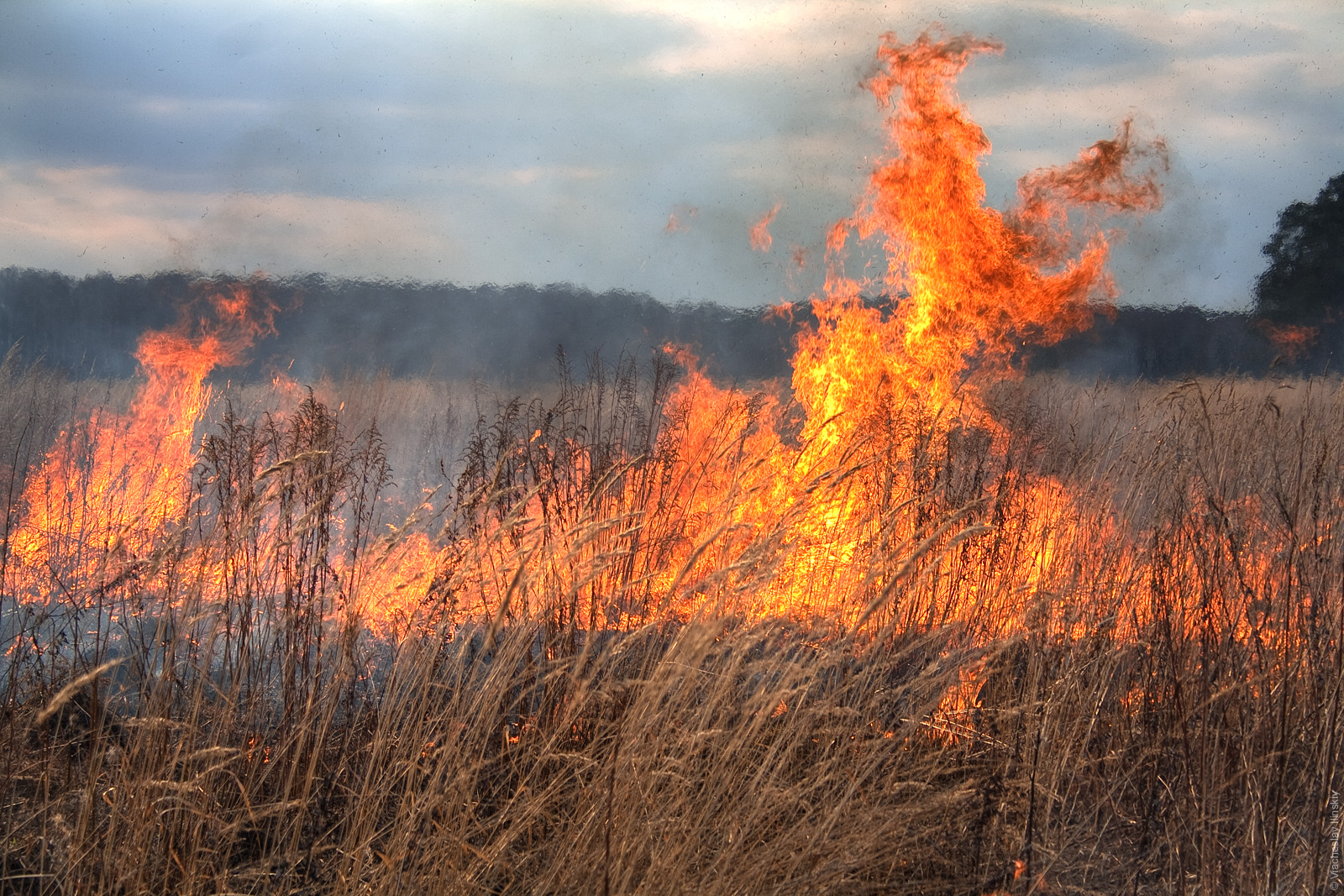
The festival of Baisakhi turned a nightmare for many farmers in Moga district on Wednesday with fires playing havoc with their crops.Standing wheat crop on 443 acres in Moga, Sangrur and Fatehgarh Sahib was destroyed in the fires.As per reports, the wheat crop, spread over more than 300 acres, was gutted in fires at Dhurkot Ransihn and its adjoining villages in the Nihalsinghwala sub-division of the district.The local people said that the fire broke out from the power lines passing over the fields allegedly due to short circuit.They alleged that many persons made phone calls to the fire brigade at the district headquarters in Moga immediately after the fire broke out, but the fire tenders reached the spot after the fire was controlled by the people with the limited resources available with them. Some people also alleged that the officials of the fire brigade did not attend their calls.Hardev Singh, who suffered heavy losses on 45 acres, said that most of the local people in the area had gone to Talwandi Sabo in nearby Bathinda district to celebrate Baisakhi, pay obeisance at the historic shrine of Damdama Sahib and participate in the public rallies conducted by the political parties, therefore the male population was very less at Dhurkot and its adjoining villages.Anyhow, more than 200 people gathered on the spot and tried to control the fire with locally available resources — water, sand and tree branches.The SHO of Nihalsinghwala police station Dilbagh Singh also reached the spot along with police force. Ambulances of the Health Department were summoned as a preventive measure.Farmers Jagdev Singh suffered losses on 50 acres, Soni over 30 acres, Jaswinder Singh on 3 acres and Bara Singh on 5 acres. The standing wheat crop of many other farmers was also gutted.In another incident, wheat crop on 11 acres was destroyed by fire at Rania village in the district.On April 9, wheat crop on 5 acres at Daudhar Garbi village in the district was also damaged.Sangrur: On Baisakhi, the standing wheat crop on about 135 acres was gutted in fire in Sohian Kalan village (near Sangrur), Bir Kalan village and Cheema village (near Sunam), and Khadial village and Mehlan village (Sunam).The villagers, showing solidarity and exemplary courage, controlled and extinguished the fire. The cause behind the fires in Bir Kalan, Cheema, Khadial and Mehlan villages could not be ascertained.In Sohian Kalan village (near Sangrur), standing wheat crop on about 50 acres was gutted in a fire this afternoon. The fire was reportedly controlled and extinguished by villagers and a fire tender.Sangrur Tehsildar Manmohan Singh said this evening that according to preliminary information, the fire started due to sparking in power lines. He said a Patwari had been deputed to assess the area where the damage had taken place.In the fields of Bir Kalan and Cheema villages, wheat crop of about six farmers, including Darshan Singh and Nirmal Singh, on about 40 acres went up in flames.Rajwant Singh, Station House Officer (SHO) of Cheema police station, said that the villagers controlled and extinguished the fire by using tractors even before the arrival of a fire tender from Sangrur.He said the villagers also demanded that during the wheat harvesting season, a fire tender should be parked at Sunam to meet any emergency.Standing wheat crop of five farmers on about 25 acres in Khadial village suffered the same fate. Besides, wheat crop on about 20 acres was also gutted in a fire at Mehlan village.Subegh Singh, Station House Officer, Chhajli police station, who reached the fire sites, said that the crop of about 10 farmers had been destroyed in fire in both villages. Source - tribuneindia.com

14.04.2016

USA - Farming in the South riskier than in Midwest

The regional differences between the Midwest and Southern agriculture are striking. One of the common phrases uttered during the 2014 Farm Bill development process was that a “one-size-fits-all” farm program would not work for the diversity of crops and production regions in this country. As a result, the bill included a revenue-based program that was theorized to work better for corn and soybeans and a price-risk based program that was designed to work best for rice, peanuts and perhaps wheat. Cotton was only eligible for a new crop insurance program due to trade-agreements with Brazil. Consider that Midwest crop production (Iowa / Illinois) benefits from a natural hedge between production and price. When the “I-States” have a large production problem like the 2012 drought, this futures market responds with higher commodity prices. A drought in Kentucky or the Southeast will not garner the same price response from the futures market unless the “I-States” also are included in the same drought.  This means that regional droughts and below-average production may be coupled with below-average prices. The Midwest also has lower yield risk and lower insurance premiums than any area outside of the core production region. Midwest farmers use trend-adjusted yield protection to continue to increase the APH coverage for their crops. Still, an indemnity may not be triggered most years, resulting in a low-cost actuarially fair insurance product. The yield risk in the South is much greater and indemnities are triggered more frequently. Hence, the actuarially fair crop insurance premium in the South is larger than the Midwest at a lower APH protection level. The increase of the biofuel industry throughout the Midwest coupled with the established livestock industry has changed basis patterns throughout the major production regions. Prior to the biofuel boom, many areas in the Midwest that were grain surplus had a much wider basis at harvest than other regions of the country including the Southeast. This increase in local use of corn has strengthened basis patterns even at harvest providing better pricing and profitability opportunities than before the biofuel boom. The Southeast, being a grain-deficit and soybean-meal-deficit region, tends to benefit from a strengthening and appreciating basis much sooner after harvest, rewarding those that have the capacity to store grain on-farm in good quality condition. Understanding basis seasonality and knowing your local basis is important in finding pricing opportunities after harvest. The other major difference in farming and risk between the two regions is reflected in land values. The Midwest with soils with larger yield potential and with lower yield variability has seen greater appreciation in land values and an opportunity for landowners to build equity. The lower yield potential and greater yield risk reduces land value appreciation in the South and limits the opportunity to build equity as in the Midwest. The ability to build and maintain equity is part of your business’s war chest for future business success. Source - southeastfarmpress.com

13.04.2016

Africa - SADC countries to benefit from AfDB $549m drought response package

SADC countries are set to benefit from a half a billion dollar African Development Bank (AfDB) relief package to 14 Southern and Eastern African countries most affected by an El Nino -induced drought. In a statement, the pan African development bank said the $549 million package will help an estimated 36 million people needing food assistance following the worst drought in decades that ravaged a number of countries in east and southern Africa. Most SADC countries were hit by abnormally high temperatures and a drought that scorched staple crops and led to the loss of livestock causing losses running into millions of dollars. The AfDB said the drought response package consisted of $5 million in emergency relief and $361 million in short-to-long term support from various windows of the bank’s financial instruments. “This amount represents new financial resources,” the bank said in a statement. The bank will also ensure faster disbursements of funds in ongoing projects, which were designed to build the affected countries’ resilience to drought. An additional amount of $183 million will also be availed in 2016. “The AfDB will put in place a mechanism that would ensure faster  disbursements of funds in on-going projects, which were designed to  build the affected countries’ resilience to drought,” the continental development bank said. Most African countries still depend heavily on rain-fed agriculture and experts say this scenario often leaves the countries highly vulnerable to fluctuations in rainfall patterns. “Currently, Eastern and Southern Africa are experiencing severe droughts that have disrupted crop and livestock production systems in  about 14 countries,” the bank said. The El Niño drought hitting most SADC countries is the worst in more than 50 years and has, apart from people, seen livestock in particular suffering from lack of grazing pasture and water. Some analysts fear that that it could be as bad as the 1991-92 drought when around a million cattle died across the region. Livestock updates from across the region all indicate that cattle, sheep and goats are dying as drought tightens its grip in the SADC region. In drought-prone parts in the SADC region, most dams have dried up and livestock was reported to be watered mainly from underground boreholes. Recent rains is most parts of the region have slightly improved pasture and water availability, slowing down livestock deaths. SADC countries will need more than US$3,6 billion to deal with food shortages in the 2016 to 2017 period following widespread droughts and flooding due to El Nino weather effects. Figures gleaned from government reports and other humanitarian agencies indicate that Zimbabwe will require US$1,6 billion, Botswana ($123m), Swaziland ($274m), Mozambique ($1,8m), Lesotho ($37m), Namibia ($60m), Malawi ($190m) and Angola ($26m) for drought relief as most countries in the region suffer the worst drought in memory. Governments have funding gaps ranging from 40 to 60 percent and have appealed to international humanitarian agencies for immediate and short-term support to avert starvation. The estimated US$3,6 billion figure excludes figures for South Africa, Zambia, Tanzania, DRC and three other island nations who are part of the 15-member economic bloc. Up to 50 million people face starvation as the worst drought in decades sweeps across the entire Southern Africa region, destroying crops and livestock, driving up grain prices and leaving millions of the poor hungry. According to the UN World Food Programme, the region has experienced massive crop failures largely as a result of the El Nino – induced drought. Most governments in the region have already drawn drought action plans and courted international donors to mobilise support for the poor who are the hardest hit. SADC member states have pledged to co-operate to implement measures to mitigate the effects of El-Nino to reduce food shortages and malnutrition. The countries made the pledge following a multi-sectoral stakeholder consultative meeting that was held in South Africa recently to develop a regional preparedness and response strategy to address the impact of El-Nino on agriculture, food and nutrition security in the region. The meeting was convened by SADC, in partnership with FAO and the World Food Programme. Speaking soon after the meeting, FAO Sub-regional Co-ordinator for southern Africa, David Phiri, said the region faced a predicament, which called for swift and co-ordinated action. “Crop and livestock production are already projected to decline sharply, triggering shortages, price hikes and threatening people’s livelihoods. “This could mean a reversal in recent gains made in reducing malnutrition and also leave an increased number of people vulnerable to food insecurity, particularly women, children and HIV-affected people. “In a region where 70 percent of the population depends on agriculture, the consequences are dire. Such a sharp decline in production is likely to result in increased malnutrition and hunger,” he said. The impact of the drought is severe for most SADC countries, particularly against a backdrop of declining economies and the fall of most currencies in the region against the United States dollar as a result of falling global commodity prices.

13.04.2016

India - Monsoon to be above average

Signalling robust farm output and benign inflation and giving hope to the rural populace reeling under an income contraction, the India Meteorological Department (IMD) on Tuesday predicted above normal rainfall this year at 106% of the benchmark Long Period Average (LPA), with a model error of ±5%. This comes after two successive years of deficient monsoon. “There is a 94% probability that southwest monsoon will be ‘above normal’ to ‘excess’. There is just 6% chance of monsoon being poor,” said LS Rathore, IMD director general. He added that rainfall during the monsoon months (June-September) would be “well spread out”, a prognostication that augurs well for the the agriculture sector. However, Rathore said that parts of northeastern and southern regions could get less than normal rainfall. According to DS Pai, head of long-range forecast division of IMD, El Nino conditions were still strong but would continue to decline and reach neutral levels by mid-monsoon. According to an Icra forecast, a cyclical upturn in agriculture would support rural demand and contribute to an uptick in growth of gross value added at basic prices to 7.7% in the current fiscal from 7.2% in the previous year. Above-normal showers will help farm and allied sector growth, which is estimated at just 1.1% for 2015-16 even on a favourable base (the sector had contracted 0.2% in 2014-15). Moreover, the gross value added in crops, an important component of the farm sector, will likely register healthy expansion after expected subdued growth in 2015-16 and a contraction of 3.2% in 2014-15. The farm and allied sector accounts for roughly 14% of the country’s GDP. Higher farm output is expected to rein in any surge in food inflation and consequently weigh on the headline retail inflation, which touched 4.9% in 2015-16, compared with 5.9% a year before. The monsoon rains are critical to India’s farm sector as 55% of farmland continues to be rainfed. The monsoon rains are crucial for kharif crops like paddy, pulses and oilseeds and help boost soil moisture for the rabi crop. The last two years’ deficit monsoon rains have already resulted in depleted water levels in the country’s 91 large reservoirs. Till last Thursday, water reserves were lower than a year ago by almost a third, a situation that has already impacted hydro power production. Indranil Pan, chief economist at IDFC Bank, said: “This is just the first estimate and we need to see the second estimate, which will be closer to the monsoon time, for clarity on its impact on growth and inflation. I don’t expect any change in RBI’s policy stance based on this monsoon forecast as they have just lowered the interest rates and will wait the second round of forecast.” The met department will issue the second-stage forecast in early June. Along with the second forecast, separate forecasts for the monthly (July and August) rainfall over the country as a whole and seasonal (June-September) rainfall over the four geographical regions of India will also be issued. “The El Nino conditions over equatorial Pacific ocean that established in April, 2015 reached to strong condition in July and peaked in December 2015. Thereafter, the El Nino conditions started weakening even though sea surface temperatures over the Pacific Ocean are still above normal,” IMD said in a statement. The department’s forecast seems to be in the line with that of private weather forecaster Skymet which on Monday predicted that the southwest monsoon is likely to remain ‘above normal’ at 105% of LPA, with a model error of ± 4%. Because of deficient monsoon rains in last two years, the country’s foodgrain production declined to 252 million tonnes and 253 million tonnes in 2014-15 and 2015-16, respectively, from a record production of 265 million tonnes in 2013–14. In 2009, when the monsoon rainfall was 23% below normal, the production of foodgrain dropped to 218 million tonnes from 234 million tonnes in the previous year, a decline of 6.8%. In a statement, CII director general Chandrajit Banerjee said that the prediction of an above-normal monsoon would be a great mood changer for industry, as revival of rural demand leads to a turn in the investment cycle. “This would take the economy to a higher trajectory of around 8% growth,” he said. According to IMD, the monsoon is categorised as normal if cumulative rainfall during the June-September period is in the range of 96-104% of the LPA. Other categories are: Deficient (below 90% of LPA), below normal (90-96% of LPA), above normal (104-110% of LPA) and excess (more than 110% of LPA) According to US Awasthi, managing director of fertiliser cooperative Iffco, fertiliser consumption will improve in 2016-17 season, especially due to better demand for winter-sown crops like wheat. “Imports of fertilisers will not rise despite good demand as we have ample inventory. The drought had squeezed sales last year,” he said. Vandana Bharti, associate vice-president, SMC Global Securities, said: “This year’s rainfall is crucial in bringing down prices of some commodities like pulses. Timely and well-spread rainfall can moderate imports of pulses and edible oils. It will also help in maintaining exports of rice, cotton and sugar.” Source - financialexpress.com

13.04.2016

USA - Freeze-related crop damage being evaluated in Delaware

One week after a late-season freeze, Delaware farmers and growers are still evaluating the likely crop damage... "Some of the orchards were hurt, losing 40- or 50-percent of their crop, and certain orchards maybe 80- or 90-percent or even higher." Delaware Secretary of Agriculture Ed Kee tells Delaware1059's Jake Smith that conditions vary from field to field, with the peach crop apparently the most vulnerable. Damage was also likely caused to local strawberries, and some apple blossoms also were knocked down. Blueberries are probably OK. Kee says most farmers and growers know the importance of crop insurance, which unfortunately may be a necessity this year. Source - delaware1059.com

13.04.2016

USA - Farmers get biggest subsidy check in decade as prices drop

The agriculture slump is getting so bad in the U.S. that farmers are about to get more government aid than at any time in the past decade, signaling the rising public cost of crop surpluses and cheap food. About $13.9 billion of net farm income this year will be federal payments, or about 25 percent of total profit estimated at $54.8 billion, according to estimates by the U.S. Department of Agriculture. That's the biggest payout and highest ratio since 2006, as programs authorized by Congress two years ago cost more than originally forecast. Farmers will earn less than half what they did just three years ago, before global surpluses sent commodity prices plunging. Corn and soybeans, the biggest U.S. crops, are so cheap that farmers are expecting to lose money on every acre they plant this season. That's putting a bigger strain on government safety nets for agriculture. "This is a sign of a weak farm economy that is much weaker than even a couple years ago," said Patrick Westhoff, director of the Food & Agricultural Policy Research Institute at the University of Missouri in Columbia. Read Wednesday's Arkansas Democrat-Gazette for full details. Source - nwaonline.com

13.04.2016

Philippines - Western Visayas agriculture suffers P2-billion El Niño damage

Damage to agriculture in Western Visayas as a result of the adverse El Niño climate phenomenon has come to nearly P2 billion. Department of Agriculture in Western Visayas (DA-6) Regional Director, Roy Abaya said agriculture in the region has incurred losses mainly among rice and corn farmers in Panay and Guimaras islands. Combined total damage to rice and corn farmers in Aklan, Antique, Capiz, Guimaras, and Iloilo provinces is pegged at P1.6 billion. The remainder of the nearly P2 billion in damage refers to other types of agricultural crops. Last March, estimated damage to agricultural products in the region as a result of the prolonged dry season was estimated at only P1.27 billion. Western Visayas Map (Photo courtesy of Google Map) Of the five provinces in the region, Iloilo suffered the biggest damage to rice crops, that is, worth P898 million. Capiz ranked second with losses estimated at P107.8 million. Combined damage in terms of corn production is pegged at almost P74 million. These damages were recorded starting October 2015, when the first wave of El Niño started, until March 2016, when farmers were supposed to have started harvesting their crops. Abaya said DA-6 has about P42 million in funds which is meant to be used for curbing the ill effects of El Niño to the region’s agricultural sector. The fund, he said, is mainly for supplemental irrigation as well as distribution of climate change resilient types of rice seeds. Meanwhile, the agency is cautioning local government units in the region not to hurriedly declare a state of calamity just because of crop damages. Source - mb.com.ph

12.04.2016

India - Despite severe setback to the crops on account of natural calamities, total food grains production had been increased to 253.16 million tones in FY16

The farmers have worked hard and produced enough food grains in spite of adverse circumstances- Shri Singh Union Agriculture & Farmers Welfare Minister, Shri Radha Mohan Singh said that government is taking concrete steps to remove debt problems of the farmers. He further said that Government has increased Agricultural Credit target Rs. 9 lakh crore for the year 2016-17 to bring the farmers within institutional fold. He added that government is taking long term measures to remove the problems of the farmers. Shri Singh observed that inspite of a severe loss to the crops owing to unseasonable rainfall, hailstorm and other natural calamities, the whole food grain production which was 252.02 million tons in 2014-15 as per second advance estimate (15 February 2016), it has been increased to 253.16 million tones on 2015-16. He said that, the government has to double the farmers income in the next five years as is announced in the budget 2016-17. Hon'ble Prime Minister has suggested 7 points to achieve the target. Increase in Production: The Government has increased budgetary provision in irrigation sector. Government aims at 'more crop per drop'. Government policy is focused on water preservation and irrigation. Government is working hard to increase the productions of other crops along-with paddy and oilseeds. More income less input: We can get higher productivity from the seeds when it get right amount of nutrients from the soil. Soil health card scheme can help in this regard. We are providing useful information to the farmers. In this programme, farmers will invest less and get more. It is necessary to regularize the cost of farming and to maintain the productivity of crops. Soil health promotion programme has been initiated for the preservation of soil health. Government has decided last year to produce only neem coated urea so that plants get nutrients easily. Rs 20,000 per acre are being provided to the farmers to encourage them to adopt organic farming. To increase the income of farmers by reducing their marketing expenditure: A national agriculture market is being set up for electronic trading. In this programme, 585 agriculture mandis of India will be connected to each other. The farmers will get maximum price of their crops and the interference of mediators will be reduced to a greater extent. Direct foreign investment is also being encouraged in this field. Agriculture risk security: Under Prime Minister Fasal Bima Yojana, the farmers will be benefited on account of natural calamities like storms, earthquake and cyclone etc. To reduce post-production losses production: The government of India has promoted region based strategy according to the climatic diversity of every state and region by implementing unified Horticulture Development Mission so as to develop horticulture sector as a whole. Under this mission, the government aims to promote technical setup, extension of area under horticulture crops, post-harvest management, processing and marketing etc. India ranks second on global scenario in horticultural crops after China. Value addition: Government is promoting processed food industry so as to make value addition in agricultural products. Not only this, but government is also chalking out its programme through different schemes to increase the production of fruits and vegetables and its processing with assistance of Ministry of Food Processing Industry. The government aims to increase it to 25% by 2025 in comparison of 10% in existing scenario. Auxiliary Activities: With Hon'ble Prime Minister's vision, this task will be executed partly through livestock, dairy, poultry, bee keeping, agriculture ponds and fisheries. Simultaneously, the efforts are being made to increase the income of farmers by planting trees in fields and installing solar panels there. Shri Singh informed that to increase availability of seeds in north east states, National Seeds Corporation had asked Govt of West Bengal, Jharkhand and Bihar to provide land to establish production centres. West Bengal and Jharkhand have given land and it is hoped that Bihar will do the same. Minister also said that to establish an institution like Central Institute of Agricultural Engineering, Bhopal, Maharashtra, Gujarat, Bihar were requested to provide land. Maharashtra, Gujarat and Uttar Pradesh have given land and it is hoped that Bihar will provide the land for the same. Source - business-standard.com

12.04.2016

Philippines - More than 23K farmers secure insurance from dry spell

THE top official of the Philippine Crop Insurance Corp. urged farmers to enroll in their program in order to avail of aid to cover their crop and livestock losses. “This year we have seen the most number of people from the agribusiness sector affected by the worsening dry season. The program seeks to mitigate those losses,” Philippine Crop Insurance Regional Director Cresencion Deligero said. Deligero said that crop insurance coverage includes insurance protection for farmers against losses arising from natural calamities, plant diseases and pest infestations of their palay and corn crops as well as other crops and livestock. Of the more than 23,000 enrolled in Central Visayas, 2,576 of them have filed their notice of loss due to the El Niño dry spell. Source - cebudailynews.inquirer.net

873
of 1225